
The Cannes Film Festival officially begins tomorrow, May 12, but The White Lotus already seems to understand the spirit of the event before a single cast member has stepped onto the red carpet. HBO’s fourth season, currently filming in the south of France, has already accumulated exactly the elements Cannes turns into spectacle every year: glamour, ego, insecurity, image reinvention, chaotic backstage drama, and an entire industry trying to control its own narrative while simultaneously surviving public scrutiny.
That may be precisely what makes this new season so fascinating. For the first time, The White Lotus appears to be looking directly at Hollywood itself and at the system that transforms artists into emotional commodities. After using luxury resorts to dissect privilege, sex, money, spirituality, and social colonialism, Mike White is now shifting his satire into an environment where absolutely everything revolves around attention, validation, and relevance. Who commands the world’s attention? Who can monopolize it? Who still matters within the industry? And who is desperately trying to continue looking important?

According to executive producer David Bernad, Mike White’s original vision for the season was to explore “the life of an artist,” including loneliness, emotional pain, and the sacrifices made in pursuit of fame. And honestly, Cannes may be the most perfect possible setting for that kind of narrative exploration.
For two weeks every year, the festival transforms actors, directors, journalists, influencers, and executives into hyper-performative versions of themselves. Everything there exists simultaneously as art, competition, prestige, commerce, and public validation. Bernad has said the season examines exactly what society values and how fame can become corrosive, reshaping relationships, priorities, and even the way people understand love, recognition, and intimacy.
There is something especially cruel about this dynamic within the context of Cannes because the festival sells glamour while functioning through an extremely rigid emotional hierarchy. Who gets invited to certain parties? Who receives applause? Who becomes a headline? Who is photographed every day? Who still inspires desire within the industry? And who slowly begins to exist merely as somebody else’s plus-one.
Perhaps that is the central irony of The White Lotus: the series was never really about wealthy people on vacation or murders inside luxurious resorts. Its real subject has always been human behavior under performative pressure. Now that pressure takes on an even larger dimension in Cannes, an environment where absolutely everything depends on the ability to maintain a desirable public image.
According to Bernad, several characters will be reflecting on the sacrifices they made in the name of art, while others will be entering this universe of fame and public validation for the very first time. That idea feels directly connected to the festival itself, a place where careers are rebuilt, destroyed, or repositioned in real time in front of cameras, critics, and executives.
Unsurprisingly, the season will also dive into cultural tensions between Americans and the French, something that apparently emerged quite organically during location scouting. Bernad revealed that he and Mike White had a very specific interaction with a waiter and a maître d’ in Cannes that ultimately “unlocked” the entire season for them. The experience was apparently so defining that they immediately abandoned other location possibilities and committed fully to the French Riviera.
In many ways, that also feels deeply White Lotus: small moments of social discomfort transforming into full studies of power, class, humiliation, and behavior.
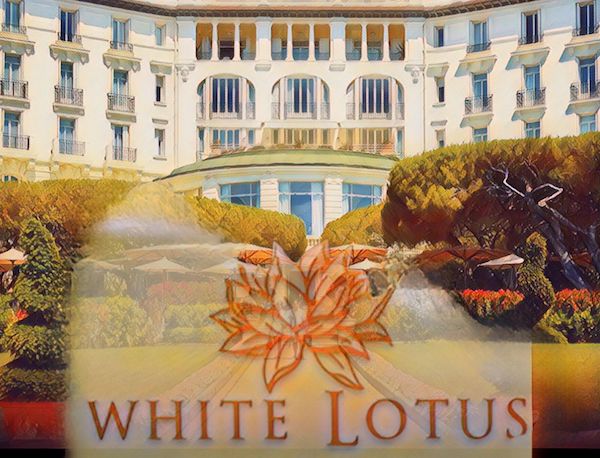
Filming is taking place between the Hôtel Martinez, which becomes the fictional White Lotus Cannes, and the Château de la Messardière in Saint-Tropez, which will serve as the White Lotus du Cap. The two hotels represent very different versions of luxury, one tied to the public spectacle of the festival and the other to the isolated sophistication of the European elite.
But while the series explores fame and identity onscreen, its own production has already begun reproducing the exact kind of dynamics the show so often satirizes.
Helena Bonham Carter’s sudden departure after only one week of filming quickly became a major industry story. She was originally set to play a fading actress attempting to construct a comeback narrative in Cannes, which honestly sounded almost too perfect for the series. Then came reports that the character “wasn’t working” within the dynamic Mike White had envisioned.
Steve Coogan recently explained that the decision was mutual because the role and the overall story ultimately moved in a different direction. According to him, the part was completely rewritten from scratch. HBO later officially stated that, once filming began, it became clear that the character created for Helena Bonham Carter “did not align” with the narrative structure of the season.
Days later, Laura Dern stepped into the role.
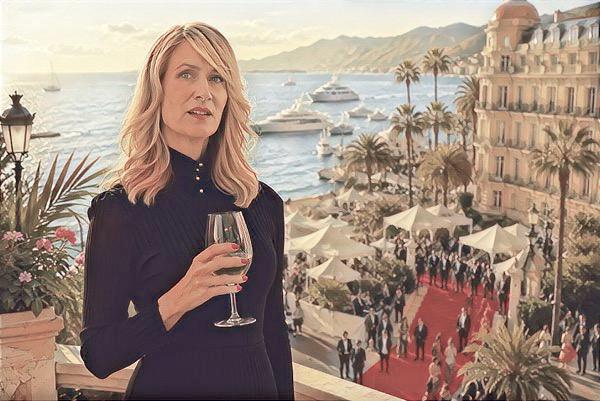
And there is something almost inevitably meta about all of this. A series obsessed with public performance, image control, and power dynamics has ended up creating its own offscreen drama involving creative restructuring, replacement, and narrative adaptation happening in real time.
Perhaps that happens because very few places in the world combine glamour, social anxiety, artistic ambition, and the desperate need for approval as intensely as Cannes.
And perhaps no contemporary series feels more prepared to transform all of that into tragedy than The White Lotus.
Descubra mais sobre
Assine para receber nossas notícias mais recentes por e-mail.

