
Tina Turner’s story has already been told through different formats, from cinema to documentaries, but theater imposes another layer: it demands presence, exhaustion, and physicality. And it is precisely within that territory that Tina – Tina Turner, the Musical, now playing at Teatro Santander in São Paulo, finds its most powerful core. Because here, it is not simply about revisiting a familiar trajectory. It is about going through it.
Before arriving in Brazil, the production had already established its international strength. It premiered in London’s West End in 2018, produced by Tina Turner herself alongside Phyllida Lloyd, and quickly became a major audience success. The following year, it crossed the Atlantic and reached Broadway, cementing itself as one of the most significant recent musical biographies. Tina closely followed the project’s development and even attended early performances, ensuring that the story preserved not only the facts of her life but the spirit of who she was.
That same trajectory had already been immortalized in another form through What’s Love Got to Do with It, which helped transform her life into a global narrative. The musical builds from that familiar material, but broadens the perspective, especially by centering not only the artist, but the woman who had to rebuild her entire existence after leaving Ike Turner, facing violence, racism, and an industry that considered her “too late.”
It is at this point that the Brazilian production gains another dimension, and where the exclusive conversation with Analu Pimenta finds its place.
An actress with more than fifteen years of experience in musical theater, Analu takes on her first major leading role here. And not by coincidence. At 39, she finds herself in a moment that directly echoes Tina’s own story: a turning point that does not arrive at the expected time, but when it does, it reorganizes everything. In portraying Tina, Analu is not simply trying to reproduce recognizable gestures or vocal tones. What she builds onstage is a delicate balance between fidelity and distance, between memory and presence, between myth and lived experience.
And perhaps that is exactly why this encounter works. Because Tina Turner was never just a voice. She was a survivor who transformed rupture into language. And that dimension, onstage, cannot be simulated. It has to be felt.
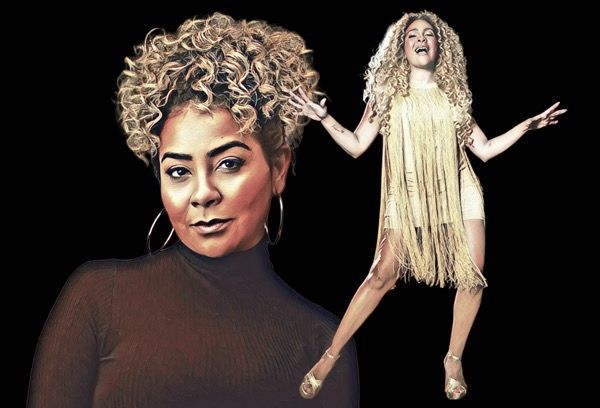
Tina Turner is such a strong presence in the collective imagination. How do you balance fidelity and creative freedom?
I think that’s the hardest part of my work: achieving a level of fidelity that allows people to access their emotional memory, immerse themselves in the story, and believe in it. But at the same time, having the creative freedom, as an actress, to understand that I am not her. I am not Tina Turner. I am Analu, and I will never be Tina, but we need to find a balance between telling the story and humanizing it so people can also see themselves within it. And then, in some moments, really trying to be faithful to who she was, in her voice, in her body, in her image, so that people can be moved.
You’ve been part of very different musicals throughout your career. What makes Tina occupy a special place in your trajectory?
Well, Tina occupies a special place in my story. First because this is my first leading role after more than fifteen years in musical theater. And also because of the story we are telling. I have many similarities with Tina in my own life, and that brings me very close to the character. It allows me to humanize her because there is so much of my own truth in her story.
She was a woman whose career turning point happened after she turned forty. I just turned thirty-nine, and I’m playing my first leading role. So there is a very special connection because I carry so much of Tina’s story within my own. And telling the story of such a strong woman, someone who endured so much violence and still achieved victory, is incredibly meaningful.
What surprised you the most when you immersed yourself in her story beyond the public image everyone knows?
What impressed me the most was her certainty, her confidence in continuing forward, her decision to always keep moving ahead. We know that an artistic life is not easy and that many times we want to give up. But she always had this certainty that she needed to keep going. That’s what brought her to where she ended up. So that was the most surprising part of her story to me. In her hardest moments, she chose to look ahead.
Is there a particular phase of Tina’s life — before, during, or after Ike — that you connected with most deeply?
I connected very deeply with the part of her story when she separates from Ike, when she has to go back to zero and rebuild her career as a Black woman in her forties at that time. It was a journey filled with rejection. And she was already Tina Turner. Even then, she still heard “no” over and over because, for the industry, she was considered old. That was the part I connected with most profoundly.
Is there a song that challenges you more emotionally than technically?
Yes. The song that moves me the most emotionally is also the one that challenges me the most technically: “River Deep Mountain High.” That song affects me deeply because it feels like a transformation. As an actress, it is the moment when I find the strength for her to begin changing and finally leave Ike. Technically, it is also extremely difficult to sing. So holding onto the emotion while still thinking about the technique becomes a very challenging moment.
The show reinforces the idea of resistance by a Black woman facing violence and racism. How does that affect your performance?
It was very difficult. We really went through an intense process of building these scenes. Our bodies and our brains do not understand that we are “pretending” to do theater. We are still sending signals of aggression to ourselves. So the process was very difficult, both for César and for me, especially because it also involves children. Being hit in front of children, being attacked in front of them, even technically and choreographed, was extremely difficult.
But we had a very careful and respectful process from both the direction and the production. Whenever we needed moments to protect ourselves or recover emotionally, those spaces existed for us. So it was difficult, but also deeply enriching. It affects me in a very powerful way. Especially now, in Brazil, with so many stories involving femicide, rape, domestic violence, and so many other forms of abuse happening constantly, it is very powerful to portray that reality onstage with such honesty. And racism affects me every single day.
So there are days when we can perform it technically, but every day carries a different emotion, just like racism itself. Every time we go through something, we react differently. Some days we answer back. Some days, we keep it inside. Some days we cry. Some days it enters through one ear and leaves through the other. It is the same with the show. Every performance feels different emotionally.
You once said your goal is to make the audience feel as if they are at a real Tina Turner concert. At what moment do you realize that happens?
I think the first moment when the audience truly feels like they are at a Tina concert is during the first transformation with the iconic wig, when I sing “What’s Love Got To Do With It.”
That is when I can hear the audience reacting with those little “wow” moments. It really feels like the beginning of a concert experience. The first act is very focused on telling her life story. So I think “River Deep” is the first moment when people begin recognizing a closer resemblance to Tina. Before that, her younger version is not really part of the audience’s emotional memory yet. And the voice still does not fully carry Tina’s signature characteristics. But the first time they truly recognize a Tina Turner concert is during “What’s Love Got To Do With It.”
What is your routine like during the run of the show, considering the emotional and physical demands of the role?
My routine during the season is very disciplined. I need to take great care of my voice. I do steam inhalation, workouts, nebulization, speech therapy — everything within my reach to keep both my body and voice healthy. And at the theater, before the performance, we also have preparation with vocal and physical warmups. I also need rest. I’m really at a point where social life has become very limited because rest has to come above everything else.
After living Tina Turner so intensely, what do you take from her into your personal life?
What I take from her into my own life is resilience. That ability to keep moving forward, to keep looking ahead and believing that something exists further down the road. Those difficult moments eventually pass and become just a small part of our history behind us.
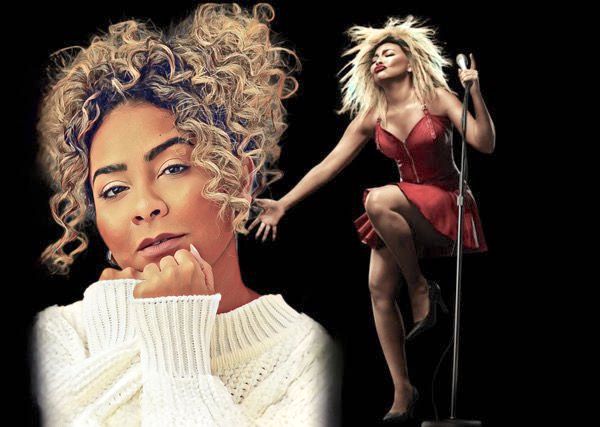
If you could summarize Tina in a single word — not the artist, but the woman — what would it be?
If I could summarize her in one expression, it would be: force of nature. Strength.
What do you hope audiences carry with them after leaving the theater?
I hope audiences leave feeling filled with many emotions. A feeling of hope that difficult stories can still become victorious ones. The emotion of having witnessed such a beautiful and powerful story. And also a feeling of adrenaline, energy, almost like a hurricane, which is how the show ends. I hope people leave feeling overwhelmed in the best possible way, carrying that energy with them.
Descubra mais sobre
Assine para receber nossas notícias mais recentes por e-mail.
 miscelana.com