
I’m having difficulty evaluating Half Man. Not because the series is bad, empty, or irrelevant. Quite the opposite. Richard Gadd remains one of the most interesting showrunners to emerge from British television in recent years precisely because he insists on looking at emotional territories that almost nobody wants to touch. The problem may be something else: Baby Reindeer was so extraordinary, so precise, and so emotionally devastating that any work that comes after it inevitably enters into dialogue with it, even when perhaps it shouldn’t.
And I still haven’t completely escaped that trap.
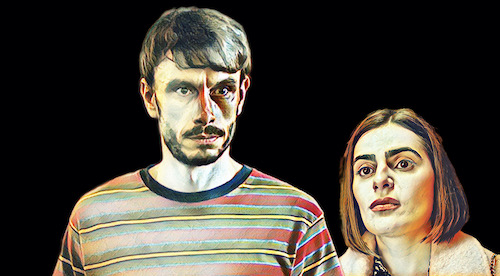
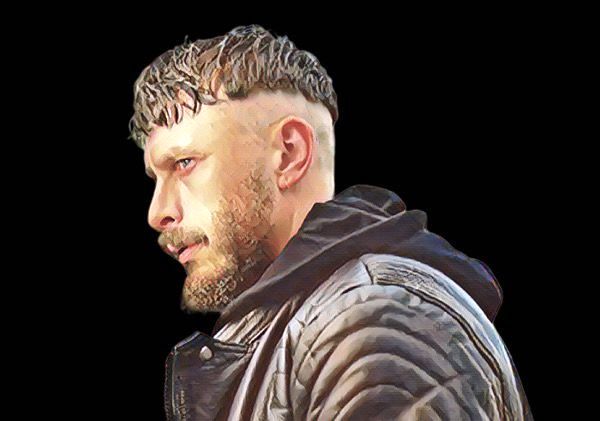
At its core, the story of Half Man is relatively simple. Two boys grow up surrounded by violence, emotional repression, toxic masculinity, and homophobia. There is attraction, fear, resentment, desire transformed into aggression, and an almost unbearable difficulty existing outside the masculine codes surrounding them. What Gadd seems interested in exploring here is not only “external” homophobia, but also the homophobia that continues to exist within the queer community itself, including among gay or bisexual men incapable of fully accepting their own sexuality.
And perhaps that is precisely the series’s most uncomfortable — and most interesting — aspect.
Much like recent productions such as The Beast in Me and Pluribus, Gadd completely rejects the idea of LGBTQIA+ characters designed to be “representative,” sympathetic, or pedagogically organized. His characters are contradictory, resentful, and at times deeply cruel toward one another. There is something genuinely courageous in the decision to portray queer people who have not necessarily found community, belonging, or emotional peace simply because they came out.
The problem is that, while these elements feel realistic, they can also feel emotionally distant for viewers who have never experienced this specific kind of inner conflict themselves. And I think Baby Reindeer managed to overcome exactly that barrier.

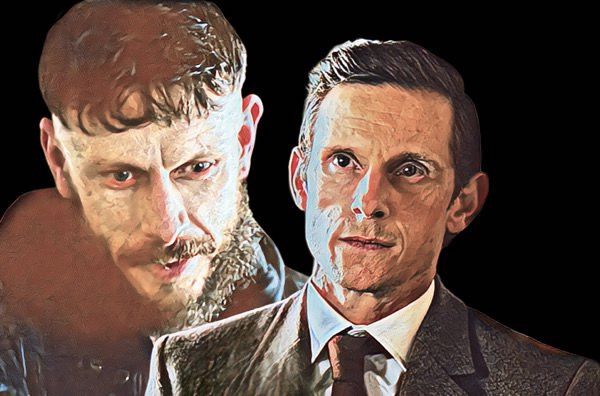
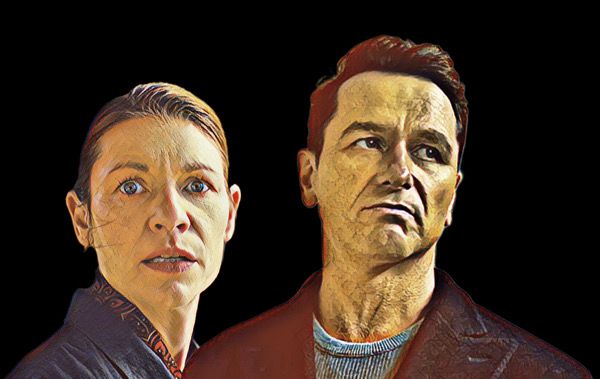
Even when dealing with stalking, sexual abuse, shame, or repressed sexuality, that series found a way to transform those experiences into something universally recognizable. Humiliation. The need for approval. Self-deception. The desire to be loved even within destructive relationships. There was such emotional precision that the experience stopped belonging solely to Richard Gadd’s specific trauma.
In Half Man, that bridge does not always materialize.
There is a constant sense of construction. Of atmosphere. Of narrative machinery. The slow motion sequences, the threatening stares, the loaded silences, the ever-present tension of impending violence. It often feels as though the series is repeatedly underlining something the audience already understood long before it did. The emotional “mystery” rarely feels truly mysterious.
And perhaps that becomes even more evident in the nonlinear structure.
It’s no secret that I’m not particularly fond of the excessive use of fragmented timelines dominating contemporary television. Not because I need stories to be rigidly linear or conventional, but because chronological disorientation has increasingly become an automatic shorthand for psychological depth. And for me, when the device is used constantly, it begins to lose precisely the force that once made it effective.
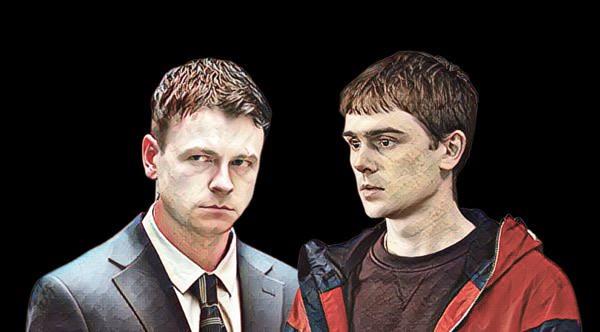
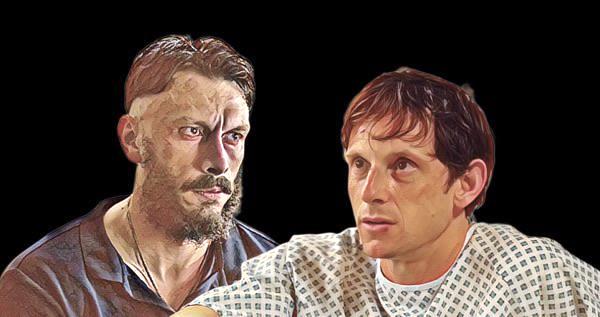
In Half Man, that becomes particularly noticeable. Did Ruben die? Yes? No? Why are Niall and Ruben still fighting if they seemed reconciled? Does the sexual tension between them still exist? Will it return? In many moments, the series feels less interested in emotionally deepening these questions than in simply suspending them in order to manufacture mystery.
And perhaps that is where it most sharply diverges from Baby Reindeer. That earlier series also withheld information, but it never felt built around suspense. The impact came from emotional exposure. From the deeply uncomfortable feeling that Gadd was willing to dismantle himself in front of the audience.
Half Man is more opaque. More stylized. More aware of its own construction.
Still, there is something genuinely valuable about it. Because Richard Gadd remains a remarkably rare kind of creator: someone capable of portraying emotionally destroyed men without automatically turning them into martyrs, perfect victims, or heroic figures. He understands something very few contemporary series truly capture: coming out does not automatically resolve shame, resentment, or internalized violence.

And much of that works because of Jamie Bell’s dense, powerful, almost relentless performance. Bell has deserved a role this controversial, emotionally ambiguous, and challenging for years. There is something profoundly unsettling in the way he portrays repression, desire, fear, and violence without ever reducing Niall to someone easily decipherable or conventionally sympathetic. Even in moments when the narrative structure feels overly calculated, Bell keeps the series emotionally alive. His Niall never feels like an archetype or a thesis; he remains far too human for that.
Perhaps that is exactly what makes Half Man so uncomfortable. And perhaps it also explains why it feels less emotionally immediate than Baby Reindeer. That earlier series felt like an open wound. Half Man, by comparison, sometimes feels like a scar being examined from too much distance.
But I still find myself wondering whether the series is actually lesser, or whether I simply haven’t yet stopped watching everything Richard Gadd creates, expecting to once again experience the almost impossible emotional impact of Baby Reindeer.
Descubra mais sobre
Assine para receber nossas notícias mais recentes por e-mail.
 miscelana.com