
Outlander ends as it started: between ghosts, war, and eternal love
After eight seasons, the Starz series brings Jamie and Claire Fraser’s story to a close by embracing the supernatural, dividing fans with major departures from the books, and leaving the door open for the franchise’s future with Blood of My Blood
After eleven years on the air, eight seasons, Jacobite wars, Revolutionary War battles, time travel, assaults, losses, children separated by centuries, and an almost unbelievable amount of physical and emotional suffering for its protagonists, Outlander came to an end, trying to answer the question that had sustained the series since 2014: what exactly binds Jamie and Claire Fraser together?
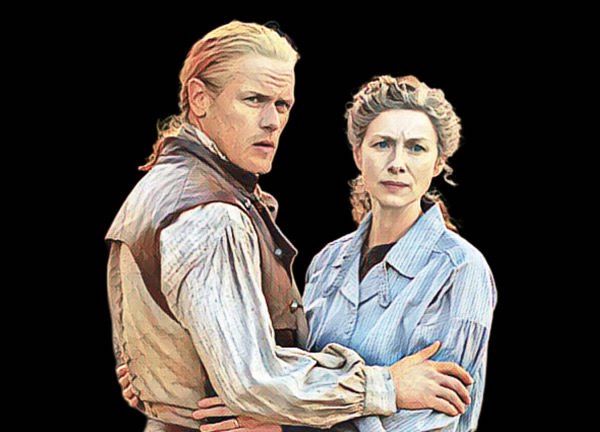
The answer found by the Starz adaptation is less rational than emotional. And perhaps it could never have been anything else.
The final episode turns the Battle of Kings Mountain into a farewell already written by fate. Jamie Fraser enters the conflict believing he will die there because Frank Randall had historically documented his death on that battlefield decades earlier. The series then slows down completely to allow both the characters and the audience to experience grief before death even arrives. Jamie writes his will, says goodbye to his family, and spends the night beside Claire as if they both know it will be their final moment together.
When Jamie is finally shot, Outlander does something rare for contemporary television: it sustains pain without irony. Claire remains wrapped around his body through the entire night, refusing to leave him, in a sequence staged less like a war scene and more like a ritual of love. Then comes the supernatural element the show had been holding onto for more than a decade: Jamie is revealed to be the ghost Frank saw watching Claire through the window in Inverness in the pilot episode. The cycle finally closes.
But the ending also exposes exactly what made Outlander one of the most divisive and passionately defended series of the last decade.
The unlikely Starz phenomenon
Very few recent productions managed to survive for so long outside the HBO/Netflix ecosystem without completely losing cultural relevance. Outlander premiered in 2014 as a niche adaptation of Diana Gabaldon’s novels and quickly found an intensely loyal audience, especially among women, during a period when television still treated epic romance with a certain degree of critical condescension.
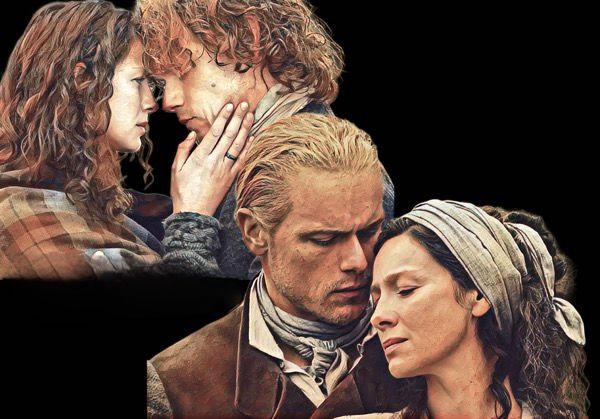
The series blended historical melodrama, eroticism, fantasy, politics, and trauma in a way that was almost impossible to categorize. For years, many tried to reduce Outlander to “a female version of Game of Thrones,” but the comparison never truly fit. While Game of Thrones was about power, Outlander was always about intimacy.
Its success also came from the chemistry between Caitríona Balfe and Sam Heughan. Few television couples have sustained such a central emotional connection for so many years without the show collapsing under the natural exhaustion of long-running storytelling. Jamie and Claire endured because the narrative understood early on that their romance could not remain trapped in youthful idealization. Their marriage aged alongside them.
The seasons and the series’ transformation
The early seasons are still considered the strongest by most viewers.
The beginning in Scotland combined romance, political tension, and an almost ethereal portrait of the Highlands. The second season expanded the scale through Paris and Culloden, while the third plunged into the devastating separation between Jamie and Claire after twenty years apart.
From that point onward, however, the series slowly began changing its identity.
Once the Frasers arrive in colonial America, Outlander becomes less a story of impossible passion and more a multigenerational family saga. Brianna, Roger, Young Ian, and William gradually take up more narrative space, while the tone grows increasingly political and melancholic.
Part of the audience embraced that expansion. Another part never fully accepted the loss of the Scottish atmosphere that defined the earlier years.
The controversies surrounding the series
No discussion about Outlander exists without addressing the extreme amount of sexual violence present throughout the narrative.
Over the years, the series was repeatedly criticized for using assault as a recurring mechanism for dramatic development. Claire, Jamie, Brianna, Fergus, and several other characters endure traumatic experiences so frequently that many viewers eventually began seeing it as exploitative and emotionally exhausting.
Diana Gabaldon always defended the violence as historically grounded, but the debate never disappeared.
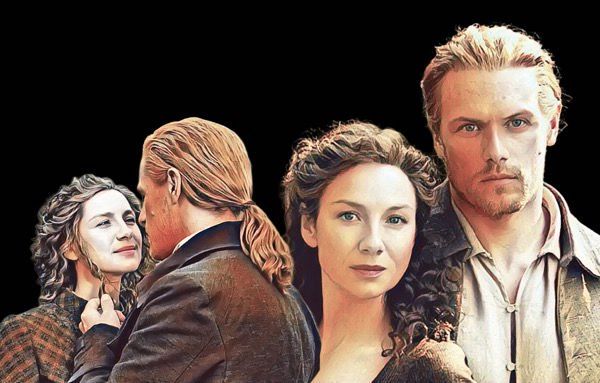
Another recurring controversy involved the idealization of Jamie Fraser himself. For years, part of the fandom constructed him as the “perfect man,” while the series itself often portrayed a deeply violent, possessive character shaped by the patriarchal structures of the eighteenth century.
There were also criticisms regarding the pacing of the later seasons, which increasingly condensed massive storylines from the books while simultaneously trying to craft an ending before Gabaldon had even completed the literary saga.
The biggest differences from the books
The series finale diverges significantly from the published material.
In the novels, Jamie does not die at Kings Mountain. The mystery surrounding the ghost also remains officially unresolved by Gabaldon. The adaptation chose to answer two of the franchise’s largest mysteries on its own.
The series also made highly controversial late-stage decisions, including the revelation that Faith — Claire and Jamie’s lost daughter in Paris — had actually survived thanks to Master Raymond. That never happens in the books.
Another major change was Fergus’ death, which sparked strong backlash among readers.
Even so, the adaptation attempted to preserve the emotional spirit of the source material. The ending makes clear that Outlander was never truly interested in explaining time travel scientifically. Fantasy always functioned more as a metaphor for emotional connection, memory, and destiny.
The spin-off
The universe continues with Outlander: Blood of My Blood.
The new series functions as a prequel following two parallel love stories: Jamie Fraser’s parents in Scotland and Claire’s parents during World War I. The strategy feels very deliberate on Starz’s part, reclaiming the epic romance and nostalgic visual identity audiences most strongly associate with the early seasons of Outlander.
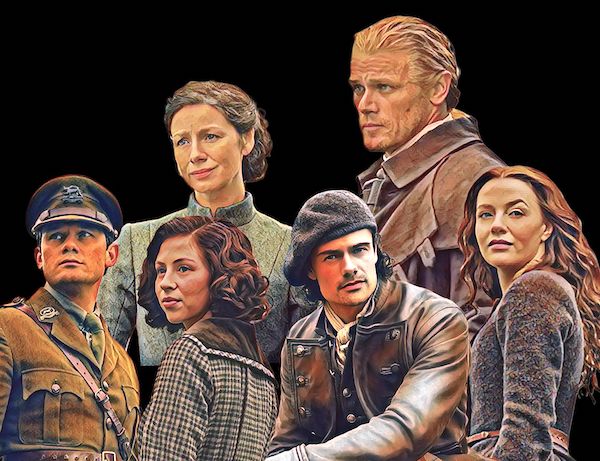
The production also attempts to solve the franchise’s unavoidable problem after the original series’ ending: Jamie and Claire became almost inseparable from the identity of Outlander itself. Expanding this universe without Sam Heughan and Caitríona Balfe will be an enormous challenge.
What remains unresolved
Even while closing several mysteries, the series still leaves important questions unanswered.
We never fully understand the rules of time travel.
It also remains ambiguous what exactly Claire did to bring Jamie back after the final battle. The sequence suggests some kind of spiritual healing ability connected to powers hinted at throughout the series, but it deliberately avoids definitive explanations.
William’s relationship with Jamie also does not receive a complete resolution. Their connection ends still marked by resentment and emotional distance.
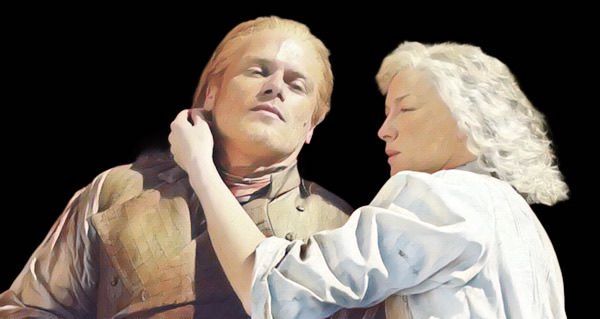
And there is something deeply interesting about the ending itself: despite concluding the central storyline, Outlander finishes with a feeling of continuation. There is no true sense of finality. Instead, the impression is that Jamie and Claire will continue living somewhere beyond the screen, growing old together after the narrative simply chose to stop watching them.
Perhaps because the series understood something rare about long romances: at a certain point, the real ending is neither death nor separation. It is simply remaining.
Descubra mais sobre
Assine para receber nossas notícias mais recentes por e-mail.

