
As published on Blog do Amaury Jr./Splash UOL
The return of La Fille Mal Gardée to the stage of Rio de Janeiro’s Theatro Municipal confirms the enormous interest carioca audiences still have in grand narrative ballets. The work stands as a particularly interesting example of the city’s long-standing connection to lighter, theatrical, and emotionally accessible productions.
Because, unlike the more solemn image often associated with classical ballet, La Fille Mal Gardée belongs to a very different tradition within dance. It is a comic ballet, deeply connected to everyday life. Works like Coppélia, Don Quixote, and Le Corsaire have always occupied this space of strong popular identification in Rio, and La Fille seems to have rediscovered that same connection with contemporary audiences. Its recent return even helped reestablish the title more consistently within the Municipal’s programming.
Because, in theory, the ballet should not have survived our era so well.
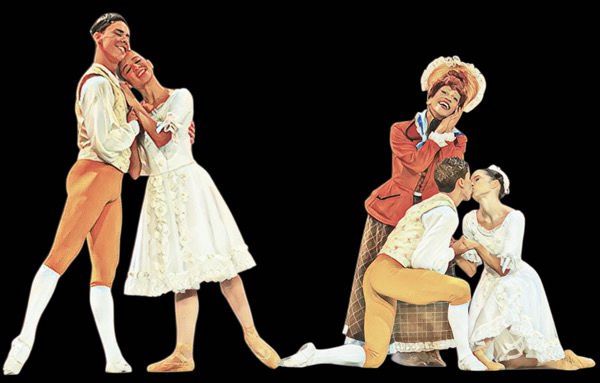
Originally created in July 1789, just two weeks before the French Revolution, La Fille Mal Gardée did something almost unthinkable: it broke paradigms. While much of the classical repertoire revolved around cursed princesses, impossible love stories, ghosts, and romantic tragedy, La Fille survived by focusing on something much simpler: a young peasant woman trying to escape an arranged marriage to stay with the man she loves.
The story can seem almost small beside the grandeur of works like Giselle or Swan Lake, but perhaps that is exactly why it still works so beautifully. It represented a quiet artistic shift, deeply tied to the spirit of that historical moment, because audiences already seemed interested in seeing themselves reflected on stage.
More than that, while so many classical works are structured around female destruction, Lise remains a surprisingly modern character. Rebellious, ironic, passionate, and active within her own story, she does not go mad, die, or sacrifice herself. She outsmarts her mother, manipulates the situation in her favor, and ends up beside Colas, who is equally intelligent and determined.
In a way, La Fille Mal Gardée has always been an anti-Giselle.
How revolutions saved the ballet from disappearing
Curiously, the longevity of one of the oldest classical ballets still in production came from something even more improbable: real political revolutions.
The ballet escaped extinction because it found a second life in Imperial Russia, where it was absorbed into the Russian repertoire and passed down between generations of dancers precisely when France had nearly forgotten it existed.
And having a peasant woman as its protagonist allowed La Fille Mal Gardée to survive relatively naturally within the Soviet repertoire. In a strangely twisted way, this would eventually bring the ballet back to England, where Frederick Ashton rediscovered it and created what is now considered the definitive version of the production.
It is impossible to discuss La Fille Mal Gardée without mentioning Ashton.
His staging for the Royal Ballet transformed the work into a modern classic by balancing technical virtuosity and humor almost perfectly. In 2026, beyond Rio’s Theatro Municipal, companies like the Royal Ballet itself — which recently brought the work on its Asian tour — and the Birmingham Royal Ballet continue to keep the production in repertory, reinforcing how La Fille still occupies a rare place within the international ballet landscape.
The invisible difficulty of lightness
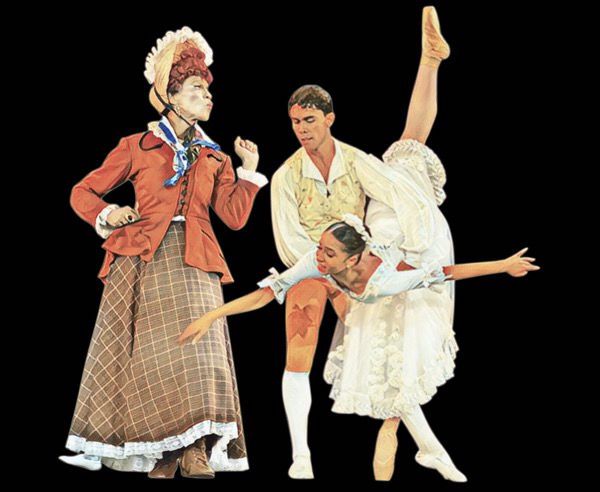
Ashton understood something fundamental: the ballet’s lightness did not reduce its difficulty. Quite the opposite. Few works demand as much musical control, physical precision, and acting ability as La Fille. Everything appears spontaneous, but absolutely nothing is simple.
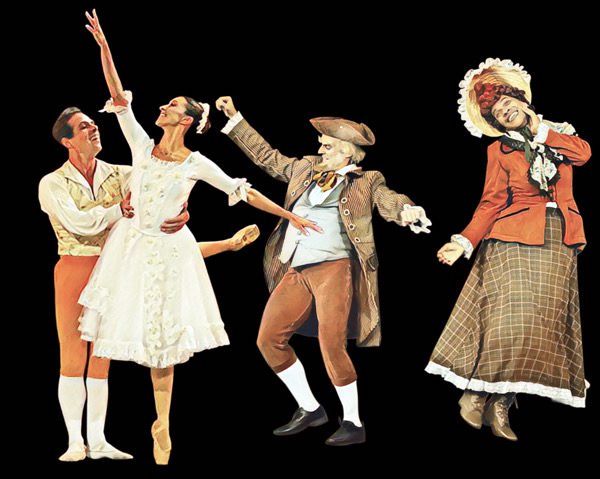
The ribbon dances, mime sequences, comic timing, pastoral delicacy, and even Widow Simone’s famous clog dance require immense technical refinement precisely because the performance can never feel heavy.
Perhaps that is what keeps the ballet so beloved by audiences. La Fille Mal Gardée offers something rare within classical dance: genuine joy. Not as superficiality, but as sophisticated aesthetic construction. There is something profoundly difficult about creating convincing lightness.
That apparent naturalness may actually be the hardest aspect of the production. Principal dancer Juliana Valadão notes that La Fille demands a rare balance between technical precision and theatrical spontaneity, since the characters must feel alive at all times rather than simply executing choreography.
“We are on stage almost constantly, and the greatest challenge is overcoming exhaustion, because it can affect both the technical and artistic sides,”
The ballerina explained to Blog do Amaury Jr. via Miscelana during final rehearsals.
Beside her, principal dancer Cícero Gomes, who plays Colas, agrees that the challenge also lies in building comedy without exaggeration.
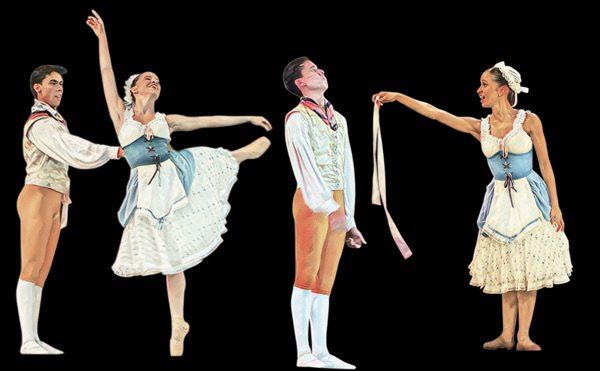
“There is something particularly complicated about making such a light ballet feel so natural on stage. It is extremely challenging, but also incredibly pleasurable,”
He reflects.
And the truth is that the production only works when its characters remain human and emotionally recognizable.
“Because it is a comic work, the main focus was helping the dancers find naturalness rather than performing in a caricatured way,”
says Hélio Bejani, director of the Ballet of Rio de Janeiro’s Theatro Municipal.
That makes sense. La Fille Mal Gardée requires dancers who know how to act as much as dance. The humor depends less on caricature and more on the ability to make its characters emotionally recognizable. Widow Simone, Alain, and Lise herself, only work when they feel human enough for audiences both to laugh at them and identify with them.
The Rio production and the reunion with audiences
In Rio, the current staging is directed by Ricardo Alfonso, the Cuban dancer and choreographer based in Brazil, who adapted the ballet’s English tradition to the dramaturgical and interpretative profile of the Municipal’s company.
“Ricardo Alfonso’s version looks beyond technique in its interpretative approach, with remarkable musicality and a sense of humor closer to Brazilian personality, partly because he himself is South American,”
Bejani praises.
With small dramaturgical adjustments and scenic adaptations, the production directly dialogues with the English tradition while still finding its own identity by emphasizing the theatrical side of the narrative.
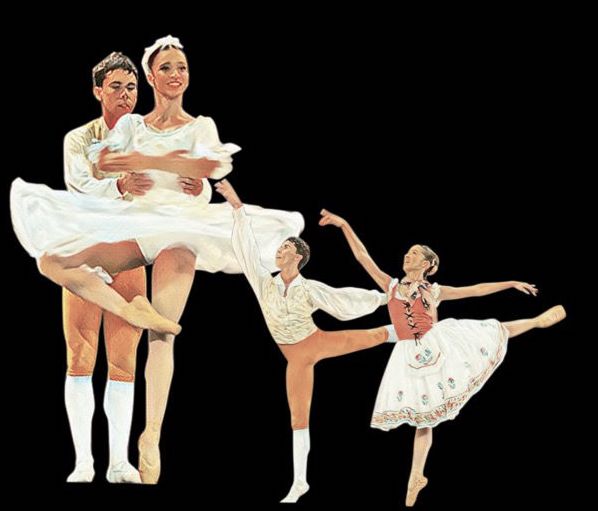
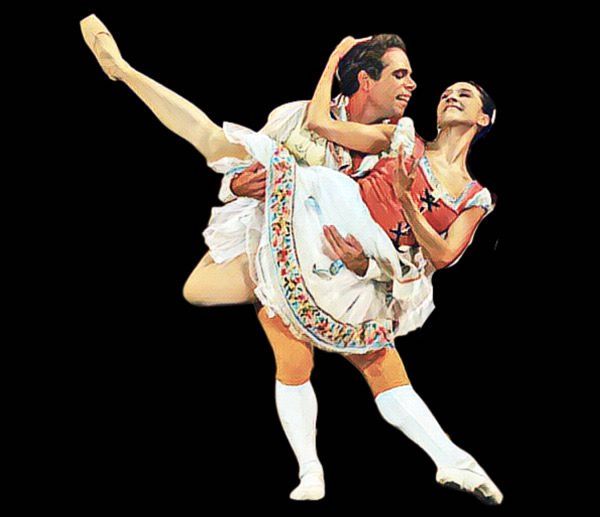
There is another interesting detail in this revival at the Municipal: the ballet’s own history inside the theater. It is no coincidence that La Fille Mal Gardée remained one of the most beloved titles in Rio’s repertoire for decades, even after disappearing from the stage for many years. Its return in 2024 feels less like simple repertory recovery and more like part of a larger movement by the Municipal to reconnect audiences with major classical productions.
“They are distinct versions, with specific technical and artistic characteristics, but the balance lies in the quality achieved in both interpretations,”
Bejani says about the ballet’s many stagings over the decades.
And perhaps the recent seasons of the Ballet of Rio’s Theatro Municipal have revealed something important about today’s audiences.
For a long time, there was an almost automatic assumption that classical ballet would survive only as an institutional tradition or cultural niche. But the response from carioca audiences suggests something else entirely: there is still enormous demand for productions that are visually grand, emotionally accessible, and artistically sophisticated.
At a moment when contemporary entertainment is increasingly defined by fragmentation and speed, the success of these seasons may also reveal an opposite desire: the wish to once again experience narratives built through time, music, bodies, presence, and collective ritual.
In that sense, the continued success of La Fille Mal Gardée no longer feels improbable.
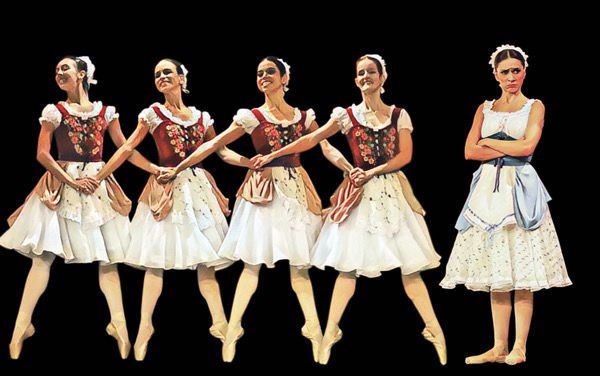
After 237 years, the ballet still reminds us of something classical repertory occasionally forgets: lightness also demands sophistication. And perhaps that is exactly why the work continues to find new audiences.
“I believe that, above all, it is because this is a ballet about ordinary people rather than winged and ethereal beings. That fact brings audiences closer, allowing them to experience the story as if they were part of it,”
Bejani summarizes.
In a historical moment dominated by speed, fragmentation, and sensory overload, there remains something profoundly powerful about watching bodies occupy a stage to tell a simple, human, and musically constructed story in front of a live audience.
Descubra mais sobre
Assine para receber nossas notícias mais recentes por e-mail.


1 comentário Adicione o seu