
The series that always seemed like the absolute opposite of its own title finally comes to an end next Sunday, leaving behind exactly what it cultivated since 2019: discomfort, division, and morbid fascination. Because Euphoria was never really about happiness, freedom, or the intensity of youth. The title always sounded like cruel irony. A bad joke about characters condemned to exist in an endless cycle of addiction, sex, abuse, violence, humiliation, and self-destruction.
And perhaps that explains why the show remains so heavily discussed, even after years of behind-the-scenes chaos, delays, and an increasingly convoluted narrative. There is something almost impossible to ignore about Euphoria, even when it seems deliberately interested in testing the audience’s patience.
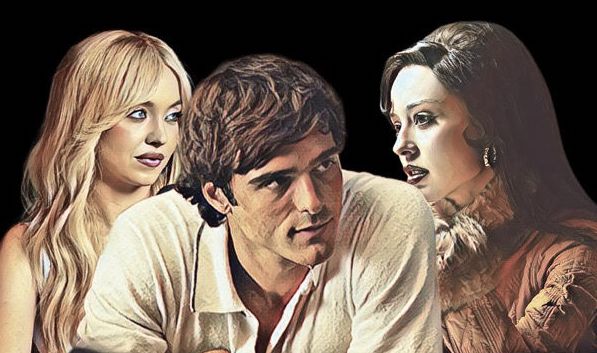
It is also important to remember something: Euphoria was not originally created by Sam Levinson. The series is an adaptation of the Israeli production created by Ron Leshem, Daphna Levin, and Tmira Yardeni. But Levinson transformed that foundation into something even crueler and more stylized, as if every episode needed to emotionally outdo the previous one. The constant feeling was of watching characters being crushed not only by their own traumas, but by the series’ gaze upon them.
Over six years, we followed a group of friends — or enemies — trying to survive youth, only to meet them again as adults who are even more lost, empty, and desperate. There is no real growth in Euphoria. There is exhaustion. Emotional erosion.
And it is fascinating to realize that while the show helped turn Zendaya, Sydney Sweeney, and Jacob Elordi into three of the biggest young stars in Hollywood, it also seemed determined to imprison those characters inside the worst possible versions of themselves. The performances have always been brilliant. The cinematography remains stunning. The soundtrack, camerawork, and feverish neon aesthetic are hypnotic. But there is no relief. No humanity. And often, no meaning.
Because suffering alone is not deep.

Euphoria frequently confused brutality with emotional complexity. Every character seemed condemned to endure an endless sequence of increasingly shocking tragedies simply because the series needed to outdo itself in its ability to disturb. The result is that, at many points, suffering stops revealing anything human and starts feeling manipulative instead.
Nothing summarizes this better than Nate Jacobs’ death in the penultimate episode.
It is impossible to deny that Nate deserved punishment. The character spent years terrorizing women, emotionally destroying people, and reproducing violence as a mechanism of power. But Euphoria never knew how to portray punishment without turning it into a sadistic spectacle. And what Levinson does here goes beyond psychological tragedy into something closer to deliberate public humiliation.
There is something almost aggressively personal in the way the series destroys Nate. Jacob Elordi is probably one of the biggest young stars in the world right now, a symbol of desire, beauty, and contemporary masculinity. And Levinson seems interested precisely in dismantling that image in the most grotesque way possible, as if there were pleasure in humiliating that idealized male figure in front of the audience.
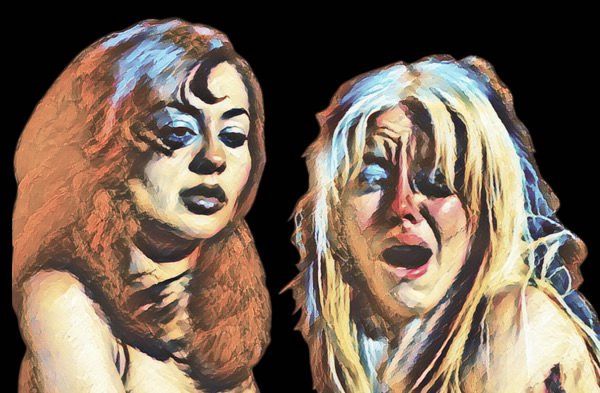
Naz, the dealer collecting Nate’s million-dollar debt, buries him alive underneath a construction site after giving Cassie 72 hours to save him. Nate appears mutilated, missing his ring finger and part of his foot, trapped inside a coffin while a rattlesnake slowly enters. The snake attack turns the sequence into one of the most agonizing — and absurd — deaths in recent television history. Even for Euphoria, always fascinated by excess, it feels cruel beyond measure.
And perhaps the most uncomfortable part is realizing how much the production itself seems entertained by it. In HBO’s behind-the-scenes footage, Jacob Elordi describes the death as “a cool way to go,” while the crew discusses increasing the claustrophobia of the scene. The snake used inside the coffin was actually a boa constrictor with a fake rattle, while close-up shots featured a real rattlesnake appropriately named “little bitch.” It is hard to imagine a better metaphor for Euphoria: a series so obsessed with its own shock value that it turns even cruelty into aesthetic performance.
And the violence does not stop there.
Cassie spirals into even deeper degradation, is kidnapped, turns to prostitution, and loses what little emotional autonomy she had left. Maddy, who had already lost Nate to her own best friend, now loses stability, work, and security as well. Still, she tries to help the couple and ends up indebted to Alamo, the dealer Rue repeatedly warned everyone to stay away from.
In the end, Nate is dead. Naz is murdered, too. And Maddy and Cassie now belong to even more dangerous men. We know exactly what that means in this universe.
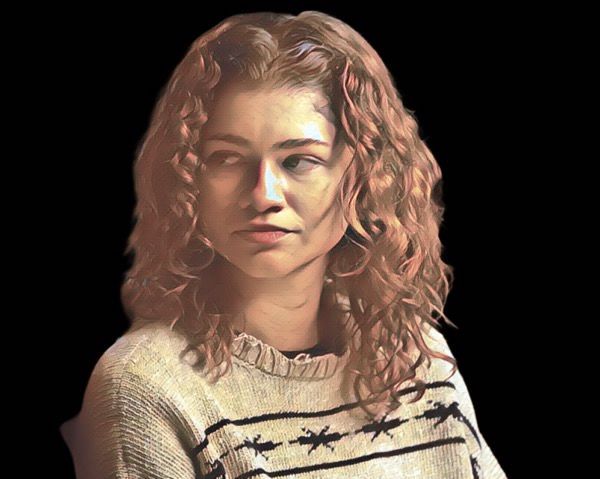
Rue, of course, also ends up trapped once again. After attempting to cooperate with federal agents and acting as a sort of double agent between Laurie and Alamo, she discovers dozens of IDs belonging to young women hidden inside a safe, in a cliffhanger suggesting something even darker for the finale. The series still attempts moments of emotional depth through Ali’s past, revealing flashbacks of his own addiction before becoming Rue’s mentor. But even these more human moments are buried beneath the constant need to amplify danger, shock, and tragedy.
Perhaps that is Euphoria’s greatest problem: nobody learns, nobody escapes, and nobody truly exists outside suffering. The series transforms trauma into a permanent aesthetic prison. There is no possibility of a future. Only repetition of pain in increasingly violent forms.
That is why ending Euphoria may actually feel like relief.
But forgetting the image of that rattlesnake slowly entering the coffin? Honestly, that will be much harder.
Descubra mais sobre
Assine para receber nossas notícias mais recentes por e-mail.


1 comentário Adicione o seu