
Few films have aged as paradoxically as Gilda. Released in 1946, the noir remains one of the most seductive movies in Hollywood history, still capable of surviving almost entirely on Rita Hayworth’s magnetic screen presence. At the same time, eight decades later, it has also become impossible to ignore the problems of a film built around female humiliation, possessive jealousy, and romanticized emotional abuse. The fascination remains. But the reading has changed.
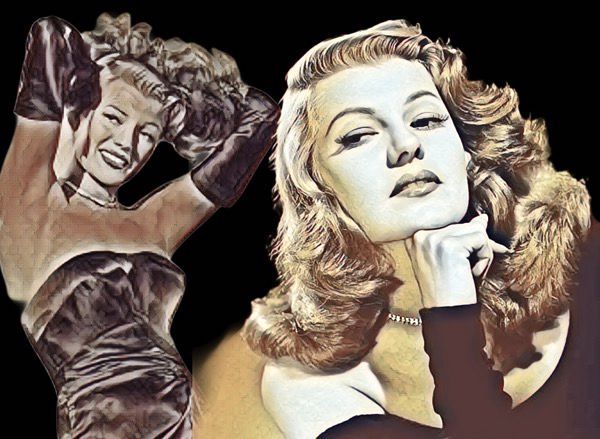
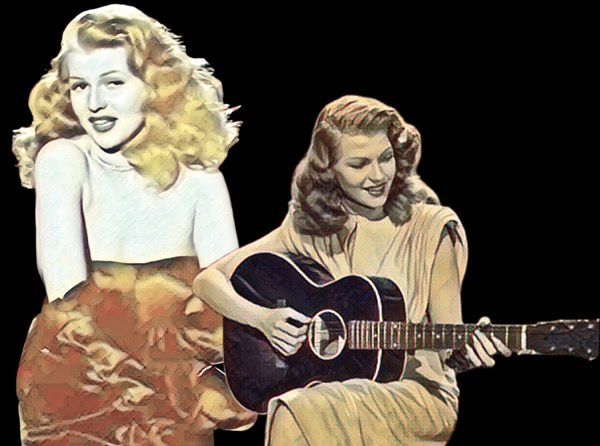
There is something almost hypnotic about revisiting Gilda today because the film works simultaneously as male fantasy, toxic melodrama, and carefully calculated erotic spectacle. It is no coincidence that it crossed generations as a symbol of Hollywood’s golden age. Rita Hayworth did not simply star in Gilda: she became Gilda. And perhaps that was exactly the problem.
Produced by Columbia as a “vehicle” to definitively transform Hayworth into a superstar, the film was built entirely around her image. Producer Virginia Van Upp specifically developed the project with the actress in mind, since she had previously been associated mostly with musicals and light comedies. The result was a luxurious noir filled with smoke, glamour, and sexual tension, set in a stylized Buenos Aires that bore little resemblance to the real Argentina and much more to Hollywood’s postwar imagination.
Behind the scenes, the atmosphere was as intense as the film itself. Rita Hayworth and Glenn Ford began an affair during production, starting a relationship that would continue on and off for decades. Many believe part of the electric chemistry between Johnny and Gilda comes precisely from that mixture of real desire and performed resentment in front of the cameras.
But no sequence crystallized the film’s mythology more than “Put the Blame on Mame.” It is impossible to discuss Gilda without mentioning the striptease, which, ironically, is barely a striptease at all. Rita removes almost no clothing. The scandal came less from nudity and more from attitude. From the way she sings, she challenges, provokes, and seems to completely control the male gaze surrounding her.
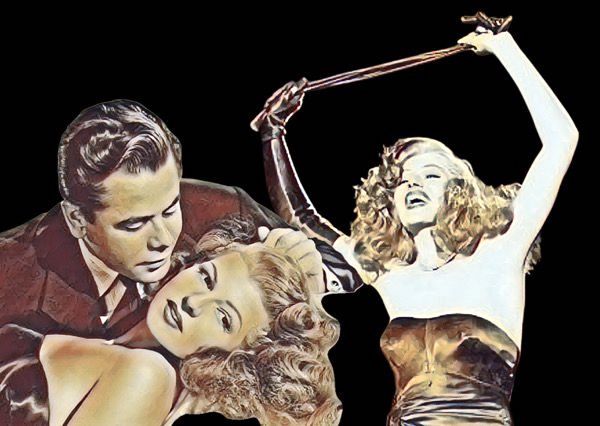
The scene was designed almost as a provocation against the Hays Code. Hollywood censorship at the time imposed strict limits on sexuality, so director Charles Vidor and choreographer Jack Cole relied entirely on suggestion. Rita slowly removes only one glove while singing “Put the Blame on Mame,” yet the sequence entered film history as one of the most erotic scenes ever shot.
The most curious detail is that Rita Hayworth was not actually singing. Her vocals were dubbed by Anita Ellis. And yet audiences never separated one from the other. The myth was larger than reality itself.
And of course, there is the dress.
The black strapless gown designed by Jean Louis may be one of the most famous costumes in Hollywood history. The designer himself called it “the most famous dress I ever made.” By modern standards, the design is relatively simple, but the combination of black satin, opera gloves, and Rita’s flowing hair created an eternal image. It was not merely elegance. It was a fantasy construction.
Hollywood in the 1940s fully understood the power of manufacturing goddesses. And few women were manufactured as efficiently as Rita Hayworth.
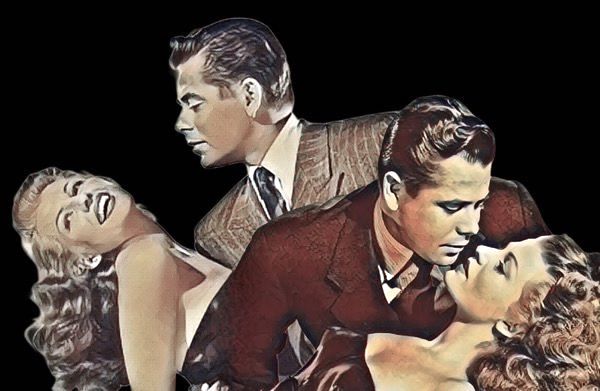
The problem is that Gilda also carries the most uncomfortable marks of that system. Watching the film today, it becomes strikingly clear how cruel Johnny Farrell is toward Gilda from beginning to end. The movie transforms obsessive surveillance, psychological manipulation, and emotional punishment into proof of love. Johnny controls her movements, orders men to follow his wife constantly, and seems incapable of seeing her as a person beyond the projection of desire and resentment he has created in his own mind.
For decades, much of the criticism framed Gilda simply as a classic noir femme fatale. Today, the character feels far more complex — and even deeply tragic. She performs freedom, sensuality, and provocation because she understands that the male world around her had already condemned her long before listening to her.
Perhaps that is why the most famous quote associated with Rita Hayworth has survived for so long:
“Men go to bed with Gilda, but wake up with me.”
The line summarizes not only her relationship with the film, but with her entire career. Gilda was an enormous success. The film grossed around $6 million worldwide and cemented Hayworth as one of the biggest stars on the planet. But becoming a sex symbol came at a devastating personal cost.
Nothing illustrates this better than the most disturbing episode connected to the film’s legacy: the atomic bomb called “Gilda.”
In 1946, during Operation Crossroads, an atomic bomb tested at Bikini Atoll was named after the film and decorated with an image of Rita Hayworth taken from Esquire magazine. At the time, the gesture was treated publicly as a compliment. Rita was horrified.
According to Orson Welles, then married to the actress, she initially believed it was a Columbia publicity stunt and “almost went insane with rage” upon discovering her image had been associated with a nuclear weapon. It is difficult to imagine a more brutal symbol of the way Hollywood consumed women: transforming the era’s greatest sex symbol quite literally into an explosion.
And yet Gilda survived the passing of time in a rare way. It was preserved by the Library of Congress as a work considered “culturally, historically, or aesthetically significant.” It inspired films, television series, Stephen King, David Lynch, and even Michael Jackson, who once planned to digitally insert himself into the “Put the Blame on Mame” sequence for the This Is It concerts.
Perhaps because the film still functions as a kind of capsule of Hollywood itself: a place capable of creating eternal images while quietly destroying the people behind them.
Eighty years later, Gilda remains fascinating precisely because it no longer fits into a simple reading. It is an absolute classic, a visual spectacle, an elegant noir, and a cultural landmark. But it is also a document of an industry that transformed women into collective fantasies long before allowing them to be human.
Descubra mais sobre
Assine para receber nossas notícias mais recentes por e-mail.

