
There is a Billie Eilish lyric that perhaps explains contemporary culture better than many academic treatises. In the song “TV,” she casually sings: “I put on Survivor just to watch somebody suffer.” The brutality of that honesty lies precisely in the fact that nobody finds the line strange. On the contrary. It sounds funny because it feels recognizable. Everyone immediately understands what she means. We do not watch only to find out who wins. We watch to witness exhaustion, humiliation, emotional collapse, betrayal, fear, and punishment. Suffering has become such a normalized spectacle that it no longer needs to hide behind sophisticated moral justifications.
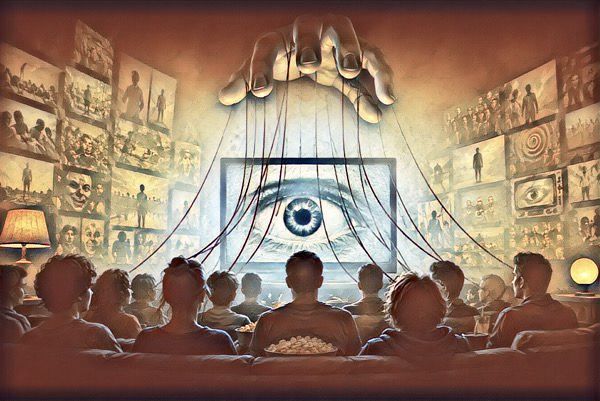
That is precisely what Euphoria pushes to such a symptomatic extreme. Sam Levinson’s series has always functioned less as a teenage drama and more as an aesthetic machine of suffering. From the beginning, the show constructs a universe in which every character seems condemned to some inevitable form of psychological destruction. Drugs, abuse, violence, compulsive sex, manipulation, depression, public humiliation, nervous breakdowns. Everything in Euphoria is organized around excess. There is no emotional relief because the series itself depends on the constant maintenance of discomfort.
The case of Nate Jacobs is particularly revealing because it transforms sadism not only into a narrative tool but into an audience mechanism. Nate was built as the show’s absolute antagonist, someone designed to absorb collective hatred. Violent, manipulative, cruel, and controlling, he quickly became the target of the audience’s fury. What Sam Levinson does, then, is recognize that desire and amplify it back to viewers. Nate did not simply need to be punished. He needed to suffer as much as possible.
The rattlesnake sequence is one of the clearest representations of this in recent television. Nate’s death does not function merely as dramatic closure. It is staged as a ritual of public punishment. Before that moment, Levinson had already subjected him to successive physical, emotional, and psychological humiliations throughout the season. The suffocating, slow, grotesque, and painful death becomes almost a collective catharsis for viewers who wanted to see him destroyed. And the most disturbing part is that it worked exactly that way. The scene generated enormous online searches, endless debates, virality, shares, and collective shock. Suffering became engagement. Pain became traffic.
Levinson himself practically admitted this when he said he wanted to make Nate “suffer as much as possible,” almost as a response to the audience’s hatred for the character. There is something deeply revealing in that statement because it dismantles any more sophisticated pretension about what is happening there. This is not exactly an investigation of violence, toxic masculinity, or destructive impulses. It is the feeding of an affective economy based on punishment. The viewer wants to watch the monster suffer, and the creator delivers it in the most extreme way possible.
But there is an important detail here: Levinson seems incapable of truly reflecting on the sadistic mechanism he himself mobilizes. Instead of discussing sadism, he reproduces it while hiding behind the rhetoric of artistic provocation. Almost as if he were saying: “You wanted this.” And they did. The problem is that pointing the finger at the audience does not dissolve the responsibility of the person building the machine. If anything, it may intensify it.

That is why Euphoria often feels so empty despite all its aesthetic sophistication. The series obsessively thinks through its visual surface, its lighting, its framing, and its imagery, but rarely reaches anything beyond the excitement of suffering itself. Shock exists only to continue producing shock. Pain exists only to continue being consumed. Levinson may be one of the clearest contemporary portraits of sadism disguised as prestige art because his work constantly confuses emotional depth with visual intensity.
Few contemporary series transformed sadism into spectacle as emblematically as Game of Thrones. And perhaps no recent television character embodies this more completely than Ramsay Bolton. Unlike villains who are merely impulsive or violent, Ramsay is structured around cruelty. Intelligent, unpredictable, manipulative, and visibly pleased by other people’s suffering, he does not simply hurt his victims. He destroys subjectivities.
Theon Greyjoy’s arc remains one of the most psychologically brutal experiences ever produced by mainstream television. For more than an entire season, Ramsay does not merely torture Theon physically. He slowly dismantles his identity. The character loses his name, autonomy, language, desire, and dignity until he becomes “Reek,” almost a human remainder defined only by fear. What is most interesting is that Game of Thrones creates an emotionally complex movement through this process: Theon was previously hated, arrogant, cruel, and often unbearable. But Ramsay’s violence becomes so extreme that the audience gradually shifts from hatred to pity.
That is revealing because it shows how sadism reorganizes the moral gaze of the viewer. Theon does not become innocent. What changes is the scale of cruelty being inflicted upon him. Ramsay’s extreme sadism completely displaces the emotional axis of the narrative.
And Ramsay remains singular precisely because his violence never feels merely strategic. There is visible pleasure in emotional destruction. He does not simply want to defeat enemies. He wants to break them internally. He wants to watch psychological degradation happen in front of him. Erich Fromm described precisely this when differentiating defensive aggression from sadism itself. The sadist is not satisfied with victory. He wants total domination over the vulnerability of the other.
Not surprisingly, Ramsay remains one of the most memorable villains in contemporary television. Not because he is “powerful,” but because the series constructs him as someone almost without internal limits for cruelty. And the most uncomfortable realization is how much fascination this produced collectively. Audiences hated Ramsay, but simultaneously anticipated his scenes with excitement. Sadism repels and captivates at the same time.
This becomes even more disturbing during the Battle of the Bastards. Ramsay strategically defeats Jon Snow throughout most of the battle. Jon survives less because of military superiority and more because of Sansa Stark and Littlefinger’s intervention. And there is a deeply dark irony in this: Sansa defeats Ramsay by using another cruel manipulator to her advantage.


Sansa herself is essential to understanding how these narratives function emotionally. Before Ramsay, she had already been victimized by another emblematic sadist of contemporary television: Joffrey Baratheon. Joffrey may have been less intelligent than Ramsay, but he was equally organized around the pleasure of humiliation. He enjoyed public suffering. He enjoyed psychological terror. He enjoyed absolute power over the vulnerability of others.
The deaths of Joffrey and Ramsay reveal something important about the audience’s own sadism. Joffrey is poisoned in front of everyone, slowly choking while blood pours from his mouth. Ramsay is devoured alive by starving dogs while Sansa silently watches. These are two deeply uncomfortable sequences to witness. And yet both were collectively celebrated almost as moments of emotional reward.
The most important detail may be this: contemporary television has learned that brutal punishment generates enormous audience satisfaction once a character has been transformed into an absolute object of hatred. Suffering ceases to be merely a narrative consequence. It becomes an event. A spectacle anticipated by viewers.
Few films understood the relationship between sadism, spectacle, and collective fascination as radically as A Clockwork Orange. Stanley Kubrick does not merely depict violence. He transforms violence into a seductive aesthetic experience and forces the viewer to confront their own pleasure in witnessing it.
Alex DeLarge remains one of the most disturbing characters in cinema history precisely because his cruelty is intertwined with charisma, intelligence, humor, and visual magnetism. Kubrick’s films assault, rape, and humiliation through sophisticated framing, classical music, aesthetic irony, and an almost hypnotic visual beauty. The viewer often realizes they are fascinated before they are even able to morally process what they are watching.
No sequence represents this better than the scene in which Alex invades a house, assaults a man, and rapes his wife while singing “Singin’ in the Rain.” Kubrick completely destroys the comfortable separation between pleasure and horror. A song associated with the joy of classic Hollywood becomes the soundtrack for brutality. The result is emotionally disturbing because the viewer becomes aware of something deeply uncomfortable: violence can also be consumed as a seductive spectacle.
And this directly connects A Clockwork Orange to the functioning of contemporary entertainment. The film constantly asks not only why Alex is violent, but why we continue watching. There is fascination in cruelty. There is emotional capture in excess. Sadism rarely functions through repulsion alone. It also seduces.

Freud would help us think of Alex as the radical expression of drives unrestrained by civilization. Lacan would see in him a figure organized around absolute jouissance, someone who surpasses every symbolic limit in search of satisfaction. And what is most disturbing is that Kubrick does not limit sadism to the protagonist. When the State subjects Alex to the Ludovico Technique, transforming him into an object of psychological torture, the film dismantles the fantasy that only individual monsters occupy the sadistic position. Science, morality, institutions, and even the spectator can also derive pleasure from violence once it appears legitimized.
That is precisely what differentiates Kubrick from much of contemporary entertainment. In many current productions, suffering functions merely as efficient emotional fuel to generate shock, engagement, and audience response. In A Clockwork Orange, Kubrick transforms the viewer’s own discomfort into the central subject of the work. The film gives the audience back its own voyeuristic reflection.
And here the psychoanalytic question becomes unavoidable: why does this produce pleasure?
Freud already understood that pleasure and displeasure were never truly separated. Human drives were never organized solely around comfort. There is also fascination with destruction, traumatic repetition, and contact with what threatens us. Later, in Beyond the Pleasure Principle, Freud realizes something even more disturbing: subjects frequently return to suffering even when it clearly causes pain. Repetition compulsion dismantles the idea of human beings as rationally organized around well-being. There is psychic insistence on trauma, excess, and destruction.
This helps explain Euphoria. Nate is not simply an external aggressor. He himself seems organized around a profoundly self-destructive structure. And Levinson transforms that destruction into consumable spectacle. Suffering is not incidental. It is the emotional engine of the series.
Lacan radicalizes this discussion even further by shifting the debate from pleasure to jouissance. And jouissance, in Lacan, does not mean happiness. It often means excessive suffering. Subjects can derive jouissance from another person’s pain, but also from their own suffering. There is something almost addictive about emotional excess. This explains why certain violent narratives do not repel audiences but capture them even more deeply.
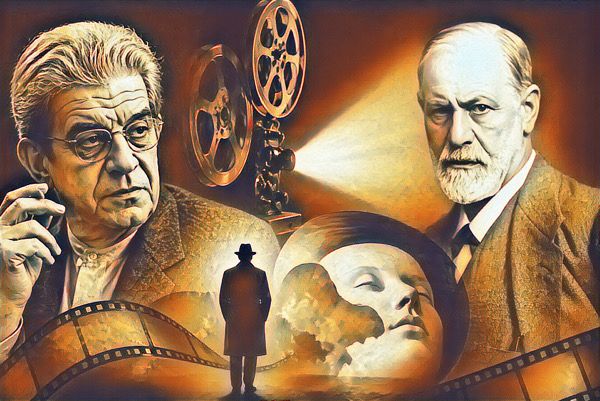
Contemporary sadism is also profoundly voyeuristic. Reality shows, true crime, public humiliation videos, online cancellations, and digital mob attacks all involve pleasure in watching others exposed. Viewers look because another person’s suffering produces a narcissistic sense of superiority, control, or safety. Watching someone else collapse creates the temporary illusion that we ourselves remain protected.
Few cultures transformed this into a spectacle as efficiently as contemporary culture. The emotional consumption of pain has become a business model. One only needs to observe how serial killer documentaries dominate streaming platforms, how true crime becomes a collective obsession, how public scandals generate millions of views, or how reality television survives through continuous emotional degradation.
Melanie Klein offers another important framework for understanding why this works so deeply. Klein realized that love and aggression emerge together very early in psychic formation. The infant loves the object, but also feels rage toward it. The infant wants total possession of what it desires and, when frustrated, fantasizes about controlling, attacking, or destroying the desired object. Aggression does not arise solely from society. It is constitutive of human experience itself.
This also helps explain contemporary fandom culture. Many audiences “love” series, celebrities, and fictional characters in profoundly possessive ways. The relationship stops being mere admiration. It becomes a desire to control narratives, demand punishment, humiliate hated characters, and even persecute real people associated with fiction. Affection easily transforms into symbolic violence.
Nate Jacobs illustrates this perfectly. Audiences did not merely want accountability. They wanted emotional destruction. There is an important difference between narrative justice and punitive pleasure. And perhaps Euphoria crossed that line precisely because it realized that extreme suffering generates enormous emotional and commercial return.
Wilhelm Reich adds another layer by linking social repression to violence. For Reich, highly repressive societies frequently displace frustrated desires into aggressive emotional discharge. Part of the contemporary fascination with public punishment can be understood exactly this way. Deeply frustrated subjects find indirect satisfaction in watching emotional degradation.
This helps explain why digital culture seems obsessed with exposure, cancellation, and moral lynching. Another person’s suffering creates a collective sense of discharge. Whether we are talking about a fictional character, a reality contestant, or a celebrity undergoing public scandal, the emotional mechanism is often the same.
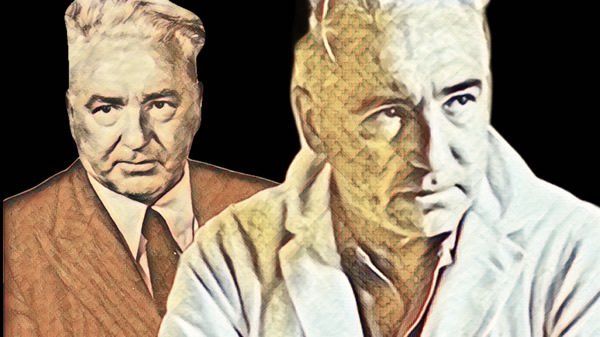

Erich Fromm is one of the most important thinkers for understanding social sadism specifically. In The Anatomy of Human Destructiveness, he differentiates defensive aggression from genuinely sadistic destructiveness. For Fromm, the sadist does not merely want to hurt. He wants complete domination over the other person, reducing them to a vulnerable and powerless object. There is pleasure in controlling another person’s fragility.
This appears with disturbing clarity in contemporary reality television. Audiences frequently select “villains” who must be emotionally crushed week after week. Elimination is not enough. They must be humiliated, ridiculed, exposed, and symbolically destroyed. Collective pleasure emerges precisely from this position of permanent tribunal in which millions observe someone emotionally deteriorating in front of cameras.
Television realized early on something brutal: suffering creates instant narrative. When someone is emotionally stable, there is less dramatic tension. When someone collapses, collective attention immediately fixes itself there. Contemporary sadism no longer depends exclusively on explicit violence. It operates through the constant observation of emotional deterioration.
And this also helps explain the appeal of horror. Horror offers a relatively safe space in which viewers can experience fear, death, destruction, and anxiety without real consequences. Audiences approach violence knowing they will ultimately leave unharmed. But it would be naïve to reduce this only to catharsis. There is also voyeuristic fascination in observing what threatens humanity itself. We want to look at the grotesque because it confronts us with something repressed within ourselves.
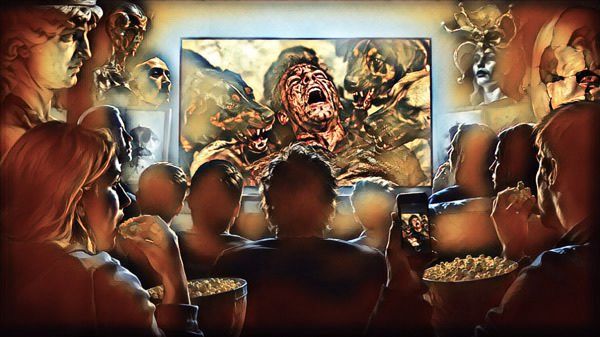
Slavoj Žižek, mixing Lacan with pop culture, helps explain how contemporary capitalism has learned not merely to tolerate emotional excess, but to profit directly from it. The system transforms shock, violence, fear, and suffering into highly efficient emotional commodities. Intense narratives generate intense engagement. Viewers feel they are accessing something “real,” “raw,” or “authentic,” even when everything is already deeply mediated by spectacle.
Perhaps that is why so many contemporary works confuse emotional intensity with artistic depth. The more devastating the experience, the greater the sensation of cultural relevance. Suffering has become proof of authenticity.
Social media intensified this process even further by transforming outrage into algorithmic currency. The greater the outrage, the greater the sharing. The more violent the emotional reaction, the greater the reach. Algorithms quickly learn that suffering captures attention. It does not matter whether the content provokes hatred, shock, or anxiety. What matters is keeping the subject watching.
Perhaps that is why contemporary culture seems so obsessed with public punishment. Series, reality television, crime documentaries, viral scandals, digital lynch mobs. Everything functions through the same emotional logic: watching someone fall produces a strange sense of collective moral satisfaction. Another person’s suffering becomes a legitimized spectacle because it is almost always accompanied by the idea that the victim “deserved it.”
This is probably the most dangerous aspect of contemporary sadism: it rarely presents itself as sadism. It appears disguised as moral justice. “He deserved it.” “She needed to be exposed.” “It’s karma.” “I want to watch them suffer.” This allows cruel pleasure to be experienced not as violence, but as ethical virtue.

This is precisely what makes Sam Levinson’s statement so revealing. Because it partially removes that mask and openly admits the logic of punitive spectacle. Nate’s suffering is not merely a narrative consequence. It is an emotional reward offered to viewers. And the most disturbing part is that much of the audience not only accepted it, but eagerly desired every second of the character’s destruction.
And this is exactly why Euphoria becomes so symbolic of our time. Nate Jacobs is monstrous. The series makes that clear. But when the character’s suffering becomes collective pleasure consumed as spectacle, something more complicated emerges. The viewer stops merely condemning violence and begins to enjoy it as well. Sadism shifts from the character to the audience itself.
Perhaps the most uncomfortable realization is that contemporary entertainment no longer merely represents violence, fear, and emotional degradation. It has learned how to transform those experiences into highly efficient products of emotional consumption. The more intense the suffering, the greater the engagement, debate, and circulation. And once pain becomes such a profitable emotional commodity, the line between critique and exploitation slowly begins to disappear.
Descubra mais sobre
Assine para receber nossas notícias mais recentes por e-mail.

