
Brazil 70: The Saga of the Three-Time Champions had every ingredient to become just another nostalgic production capitalizing on the approach of a new World Cup. The story is familiar, and so is the outcome. We know Brazil will become world champions. We know Pelé will lift the Jules Rimet Trophy. And we know that team will go down in history as one of the greatest ever assembled.
Even so, the series achieves something rare: it transforms a story whose ending everyone already knows into a genuinely moving experience.
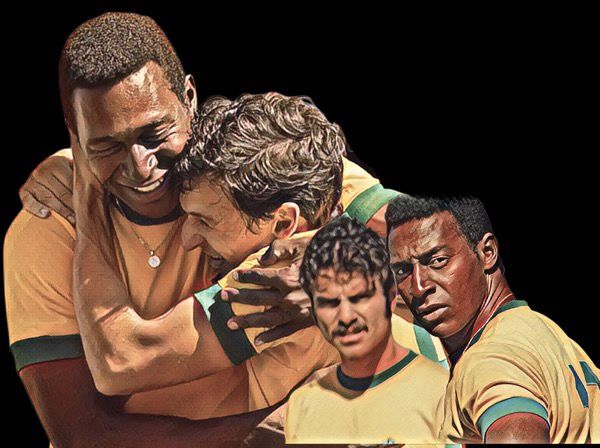
Perhaps that is because the saga of Brazil’s third World Cup title carries a different meaning for Brazilians. It happened 56 years ago, yet it still occupies a place that neither the fourth title in 1994 nor the fifth in 2002 has managed to reach. Not because those victories were any less important, but because the 1970 national team remains a kind of collective ideal. It is the dream team. The squad that still appears on international lists of the greatest football teams ever assembled. The Brazil that enchanted the world when the entire world was watching.
Releasing the series on the eve of another World Cup feels like an obvious decision, but it is also a brilliant one. Few sporting stories possess this level of emotional power. Even fewer are so universal. Even people who do not follow football recognize names such as Pelé, Jairzinho, or Tostão. Even those who have never watched a match understand that there is something almost mythical about that triumph.
Perhaps that is why the production works so well.
I am the sister of a sports commentator. I was married to a sports journalist. I grew up hearing stories about that team, about João Saldanha, about Zagallo, about the behind-the-scenes drama of the World Cup and the larger-than-life personalities who surrounded it. As an intern, I even had the opportunity to meet and work with Gérson. Many of the situations portrayed in the series were familiar to me long before I watched the first episode. And yet I found myself moved again and again, as though I were discovering those stories for the very first time.
That happens because the production understands something fundamental: the 1970 World Cup is not simply a sequence of football matches. It is a story about people.
It is about Pelé arriving in Mexico carrying criticism, doubts, and the burden of being considered the greatest player on the planet. It is about João Saldanha watching from afar a team he helped build. It is about families trying to understand the pressure those men were under. It is about a country living under a military dictatorship while using football as a way to project an image of greatness to the world.
The series succeeds because it refuses to turn its characters into monuments.
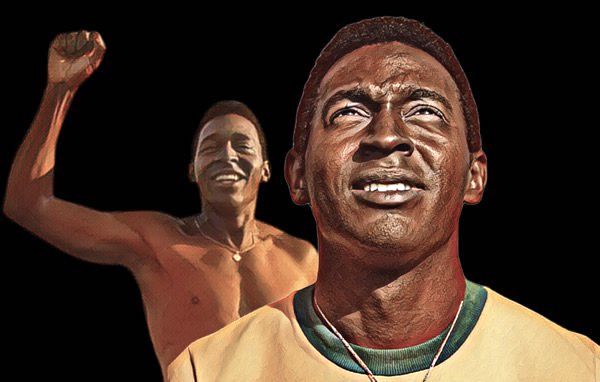
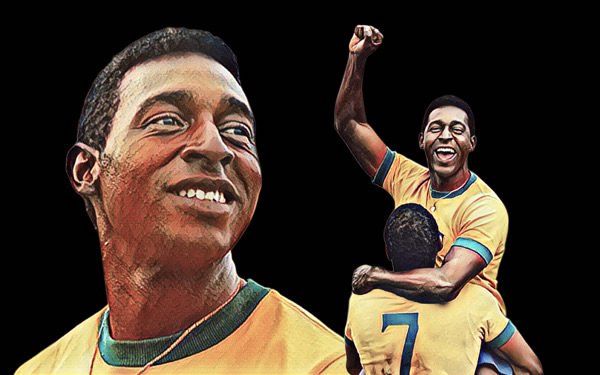
The clearest example is Pelé himself. Played with remarkable sensitivity by Lucas Agrícola, he emerges as a brilliant man, but also a vulnerable one. The production does not ignore his genius, but neither does it reduce him to it. There is insecurity. There is physical exhaustion. There is psychological pressure. For the first time in a very long while, we see a dramatization interested in portraying Pelé as a human being rather than simply as a myth.
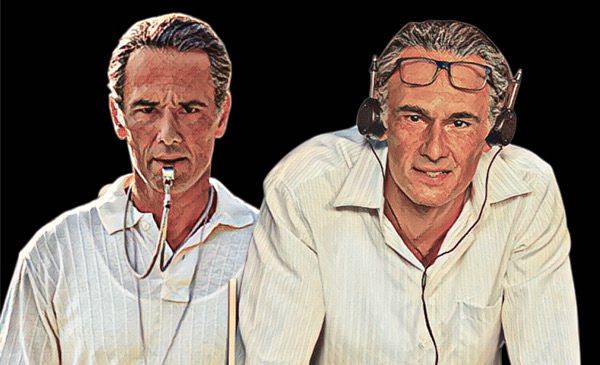
The other great triumph of the series is Rodrigo Santoro.
His João Saldanha is extraordinary.
Santoro finds a difficult balance between charisma, intelligence, arrogance, humor and volatility. The character could easily have fallen into the caricature of the rebellious communist or the coach unfairly wronged by history. Instead, he becomes something far more complex. A brilliant man, but also a difficult one. Someone capable of understanding the game before everyone else, while also turning almost any disagreement into a battle.
The series understands that the story of the 1970 World Cup cannot be told without him.
The period reconstruction is equally impressive. Costumes, locations, television broadcasts, hotels, training camps, and even the cinematography help create the sensation that we are observing a Brazil that feels both distant and familiar at the same time. The cast, overall, works extremely well, especially considering the challenge of portraying figures so deeply embedded in the Brazilian imagination.
Perhaps the most surprising aspect is realizing that we have finally found a way to tell our own sporting stories.
The British have been doing this for decades. They have produced great films about football, motor racing, boxing, and the Olympic Games. Americans turned sports stories into a cinematic genre long ago. Brazil, a country that built one of the most admired football traditions on the planet, always seemed incapable of doing the same.
Until now.
Brazil 70 answers a question many of us have been asking for years: why did it take us so long to realize that our sporting stories were good enough for film and television?
That does not mean the series is perfect.
Whenever the narrative leaves the national team’s training camp and the world of the players to focus on the streets, the fans, and the public reaction, it often drifts closer to comedy than reality. There is something difficult to explain to anyone who has never lived through a World Cup in Brazil. The country changes. The rhythm changes. Conversations change. Football becomes a kind of temporary national language. The series attempts to recreate that atmosphere, but it does not always capture the almost religious intensity that accompanies the tournament here.
Even so, this remains a minor limitation when compared to the overall achievement.
What lingers after the final episode is the feeling that the production truly understood the human dimension of that triumph. It is not simply about football. It is about memory. About national identity. About politics. About family. About friendship. About rivalry. About the creation of a legend. Perhaps that is precisely why it is so moving.
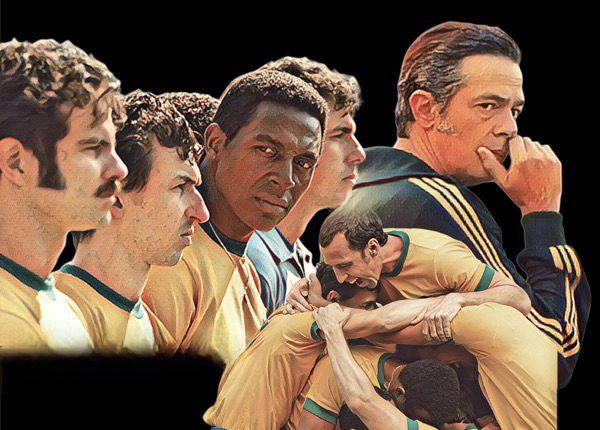
The 1970 World Cup remains one of the most beloved stories in football history. But for Brazilians, it is something even greater. It is a shared memory. A chapter of our history was passed down from one generation to the next.
Brazil 70 understands that perfectly and transforms that memory into one of the finest Brazilian series of recent years.
Descubra mais sobre
Assine para receber nossas notícias mais recentes por e-mail.

