
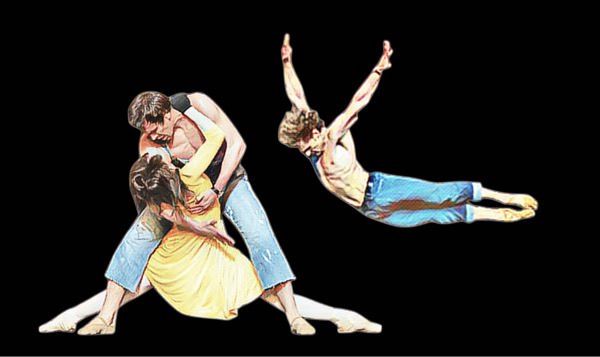
On June 25, 1946, few could have imagined that a one-act ballet set in a shabby Parisian garret and centered on a desperate young painter would become one of the most influential works in the history of dance. The world was still struggling to rebuild itself after World War II when Le Jeune Homme et la Mort premiered at the Théâtre des Champs-Élysées. The ballet lasted little more than fifteen minutes, yet its impact would be felt for generations.
Eighty years later, the work created by Roland Petit from a libretto by Jean Cocteau still feels remarkably contemporary. Perhaps that is because it is not about princes, castles or enchanted worlds. It is about obsession. Desire. Loneliness. The inability to imagine a future after loss. In other words, it explores emotions that remain as recognizable in 2026 as they were in 1946.
How Le Jeune Homme et la Mort Was Born
The ballet emerged during an extraordinary moment in French cultural history. Paris was recovering from Nazi occupation, and a new generation of artists was determined to break away from the conventions of the past. Among them was Roland Petit, who was only twenty-two years old.
The son of Rose Repetto, whose ballet slippers would become famous around the world, Petit had received a rigorous classical education at the Paris Opera Ballet. Yet he had little interest in repeating established formulas. His ambition was to bring ballet closer to theatre, cinema, literature, and contemporary life.
His collaboration with Jean Cocteau proved transformative.
Poet, playwright, filmmaker, and one of the defining cultural figures of twentieth-century France, Cocteau conceived a story that was simple and devastating. A young artist waits for the woman he loves. When she finally arrives, she cruelly rejects him. Unable to endure the loss, he hangs himself. In the final scene, after death, he encounters Death itself wearing the face of the woman he adored.
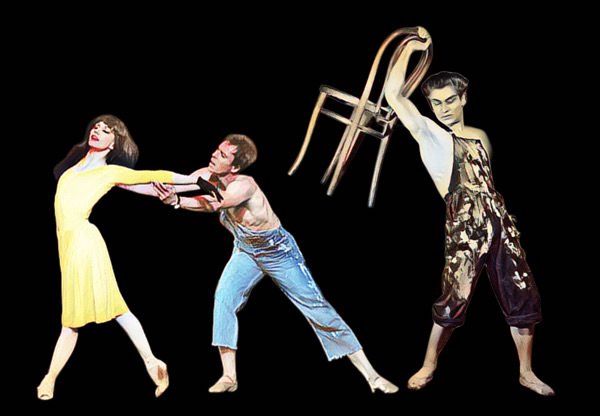
The plot can be summarized in a few sentences, but its meaning is far more complex.
Cocteau viewed dance as a language capable of replacing words. In his writings on the ballet, he described movement as a physical translation of speech, a universal form of communication. It is no surprise that critics have often viewed Le Jeune Homme et la Mort as a distillation of his artistic universe.
The relationship between desire and destruction had already appeared throughout works such as Orphée and The Blood of a Poet. In each, the artist is haunted by a figure who is simultaneously muse and menace, inspiration and ruin, love and death.
The Ballet That Changed Dance Forever
What makes Le Jeune Homme et la Mort revolutionary is not simply its story. The ballet represented a profound break from what audiences expected to see on stage.
At a time when much of the classical repertoire remained populated by princesses, sylphs, and aristocratic heroes, Roland Petit placed a poor young artist in a rundown Paris apartment beneath the city’s rooftops. There were no palaces, no crowns, no fairy-tale kingdoms. Instead, there was a mattress, a clock, a noose, and a man falling apart.
The set designed by Georges Wakhévitch looked as though it had been lifted from a film. The characters smoked, argued, stumbled, pushed one another, and expressed recognizable emotions. Everyday gestures entered the choreography and brought dance closer to the reality of postwar urban life.
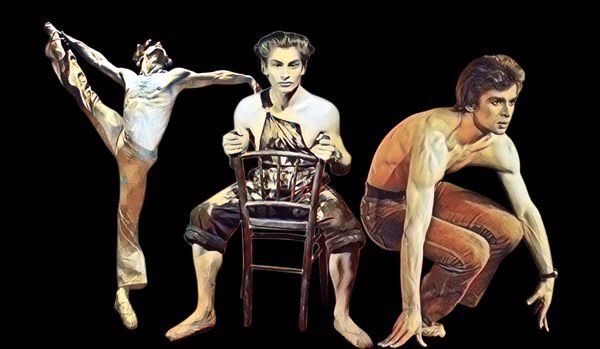
The protagonist wore paint-stained overalls rather than the elegant costumes traditionally associated with ballet heroes.
In many ways, Petit was doing in dance what Italian neorealism was doing in cinema. The result was immediate. Audiences recognized themselves on stage.
Jean Babilée: The Survivor Who Became a Legend
It is impossible to tell the story of Le Jeune Homme et la Mort without Jean Babilée.
Born Jean Gutmann in Paris, the son of a Jewish doctor, he studied at the Paris Opera Ballet School before the war interrupted his youth. During the Nazi occupation, he narrowly escaped deportation, adopted his mother’s surname professionally, and spent years fighting with the French Resistance.
When he returned to the stage after the liberation of France, he was not merely a promising dancer. He was a survivor. That experience helped shape his legendary interpretation of Cocteau’s young painter.
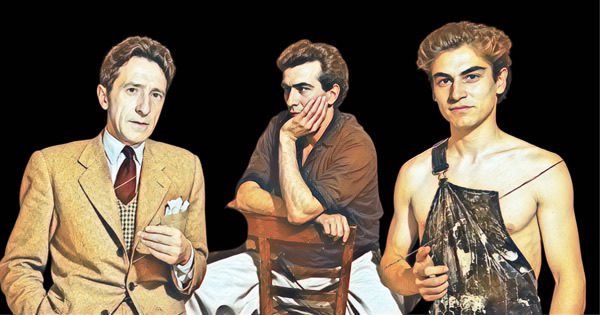
Critics often described Babilée as the first great male dancer of the postwar generation. Possessing extraordinary athletic gifts, he was frequently compared to Vaslav Nijinsky for the height and lightness of his jumps, while his stage presence carried an intensity that few dancers have matched.
During the premiere of Le Jeune Homme et la Mort, he performed the suicide scene so realistically that he remained suspended from the noose for nearly a full minute before the audience. He later admitted that the experience terrified him. Yet that sense of danger became part of the ballet’s power. Babilée did not appear to be acting in despair. He seemed to embody it.
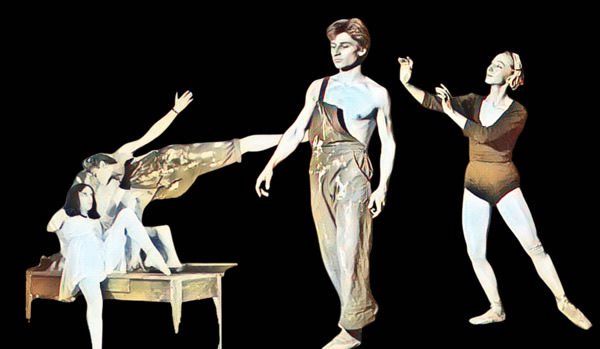
Later generations would see dancers such as Rudolf Nureyev, Mikhail Baryshnikov, and Roberto Bolle take on the role. Nevertheless, many dance historians still regard Babilée’s original performance as unmatched.
Perhaps that is because he represented more than a character. He embodied a generation of young Europeans who had experienced war, violence, and uncertainty firsthand.
Zizi Jeanmaire: The Muse Who Redefined the Ballerina
The history of Le Jeune Homme et la Mort cannot be separated from Zizi Jeanmaire.
Born Renée Jeanmaire, she met Roland Petit when they were both nine years old at the Paris Opera Ballet School. Their artistic and personal partnership would last a lifetime.
Ironically, Petit originally conceived the ballet with her in mind, yet she did not perform at its premiere. The role was instead danced by Nathalie Philippart. Even so, Jeanmaire would become inseparable from the work.
Over the decades, and especially in the celebrated 1966 film adaptation opposite Rudolf Nureyev, she transformed the female character into something far more complex than a cruel lover.
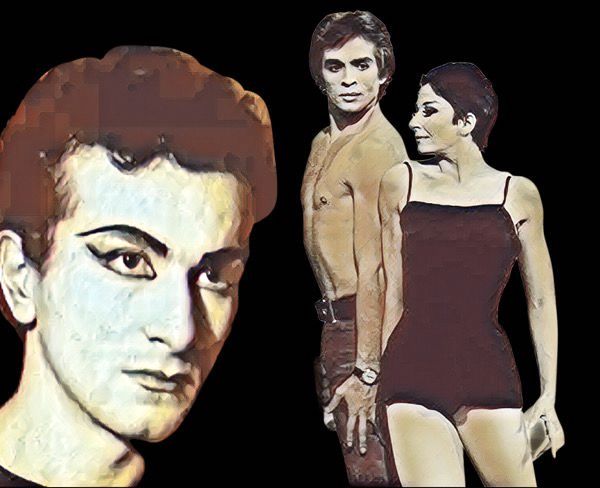
Her presence suggested desire, seduction, and menace all at once. The woman in the ballet does not directly destroy the young man. She merely points him toward his own destruction. That ambiguity became one of the defining qualities of Jeanmaire’s interpretation.
She would later revolutionize the image of the ballerina through works such as Carmen, also created by Petit, becoming an international star of dance, music, and popular culture.
Why the Ballet Still Feels Modern Eighty Years Later
Perhaps the best way to understand the enduring power of Le Jeune Homme et la Mort is to look at its legacy.
Since its premiere, the ballet has entered the repertory of many of the world’s most prestigious companies, including the Paris Opera Ballet, the Bolshoi Ballet, the Mariinsky Ballet, American Ballet Theatre, and English National Ballet.
Its significance, however, extends beyond dance. The work anticipated conversations that remain strikingly relevant today. It explores emotional dependency, obsessive love, masculinity, psychological suffering, and the relationship between artistic creation and self-destruction.
At the same time, it remains visually modern. Its setting still feels cinematic. Its characters remain recognizable. Its emotional conflicts remain universal.
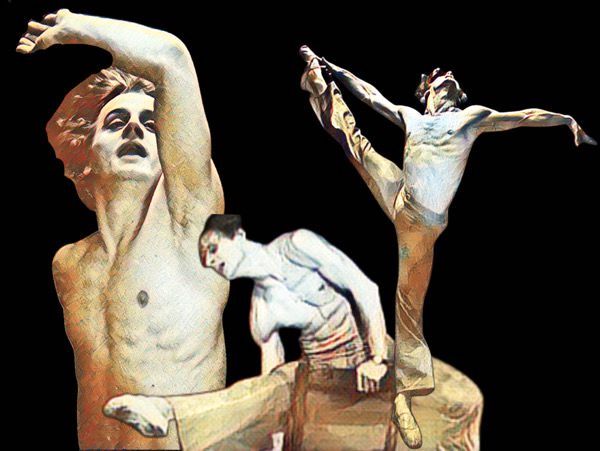
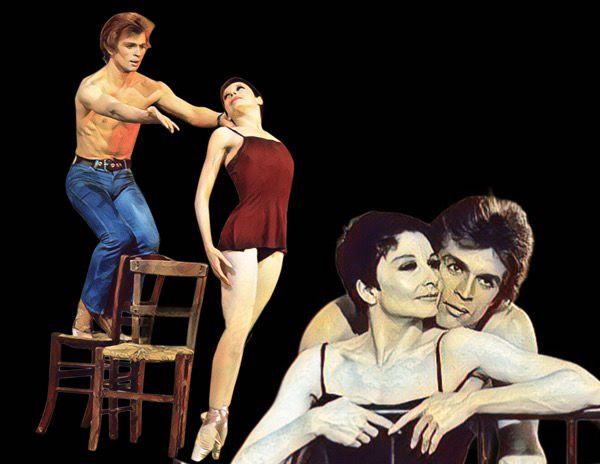
The young man created by Cocteau and Petit is not a distant prince from another era. He is someone we could still encounter today. That may be the secret of the ballet’s longevity.
The world has changed dramatically since 1946. Empires have disappeared, technologies have transformed daily life, and countless artistic movements have risen and fallen.
Yet desire, loneliness, obsession, and grief remain unchanged.
Eighty years after its premiere, Le Jeune Homme et la Mort continues to remind us of that truth. Few ballets can claim the same achievement.
Descubra mais sobre
Assine para receber nossas notícias mais recentes por e-mail.

