
As published on the Blog de Amaury Jr./Splash UOL
Over the years, whether in June or not, I have returned more than once to Marilyn Monroe’s story, interviewing curators, authors, and fans on different occasions. Reaching the centennial of her birth is surprisingly emotional because, despite having been portrayed, analyzed, and revisited almost exhaustively, both Marilyn Monroe and Norma Jeane remain a mystery to every generation of admirers.
I have always found it curious that I became an admirer of an actress who was already an icon to my grandmother. Even more curious is realizing that millennials and younger generations continue to be fascinated by her. It makes me think there may be an unavoidable irony at the heart of Marilyn’s story: the artist who was dismissed by part of the critical establishment of her time, manipulated by studios, intellectually underestimated, mistreated in her relationships, and ultimately found dead, alone, at the age of 36, became one of the only truly eternal stars in world cinema. I say this without exaggeration: I do not see anyone else surviving quite the way she has. Marilyn Monroe’s face may well be Hollywood’s ultimate symbol.
And that did not happen because she lived a triumphant life. Quite the opposite. Marilyn knew she had the unconditional love of the public, but what she desperately wanted was the respect of colleagues, directors, and collaborators—something she never fully found during her lifetime. When she died in August 1962, she was regarded by part of the industry as difficult, unstable, unreliable, and outdated. She had few close friends and was navigating an extraordinarily painful personal and professional crossroads. Yes, countless conspiracy theories surround her sudden death, but anyone even remotely familiar with her biography understands that her life had been marked by abandonment, loneliness, and suffering long before fame arrived. At times, it is difficult not to wonder whether Norma Jeane was simply exhausted.
Because when we talk about Marilyn Monroe in 2026, the year she would have turned 100, we are inevitably talking about Norma Jeane Mortenson as well: the girl who never truly knew who her father was, who barely knew her mother—committed to psychiatric institutions and diagnosed at the time with schizophrenia—who moved through orphanages, abusive foster homes, failed marriages, and romantic relationships often shaped by pain, emotional dependence, and abandonment.
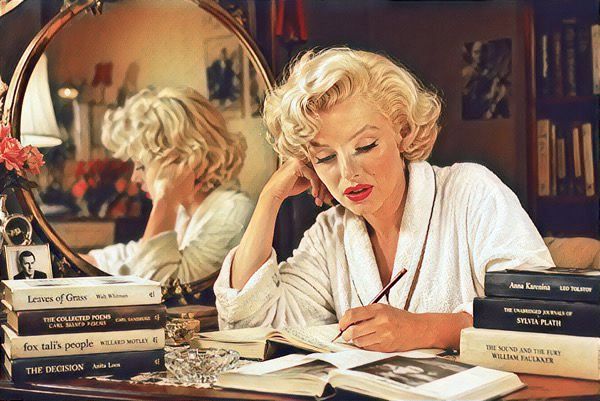
In 2010, I wrote an article about Fragments, the book that collected poems, letters, notes, and personal writings left behind by the actress. The project emerged from an almost cinematic coincidence. After Marilyn died in 1962, many of her personal belongings remained locked away in boxes by Lee Strasberg, her mentor at the Actors Studio. Decades later, when Anna Strasberg discovered the material, she immediately realized there was something far deeper there than mere Hollywood memorabilia.
At the time, I spoke with Bernard Comment, the Swiss writer responsible for the European edition of the project, who told me something I have never forgotten: “Until now, we have always seen Marilyn from the outside in, through the perceptions of the public or her friends. With this book, we can see her the other way around: how she saw herself and how she saw others.” Perhaps that was exactly what made Fragments so moving and fascinating. The book dismantled the “dumb blonde” caricature because, for many readers, it offered the first opportunity to hear Norma Jeane’s own voice: insecure, intelligent, melancholic, frequently lonely, and far more self-aware than Hollywood ever allowed audiences to see.
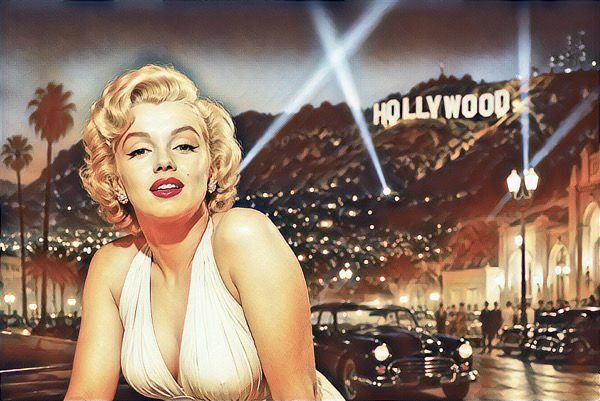
That may be why it feels so meaningful, in 2026, to speak with the curator of Marilyn Monroe: Hollywood Icon at the Academy Museum in Los Angeles, which I consider the most important tribute ever dedicated to the actress. There is something deeply symbolic about Marilyn—who attended only one Academy Awards ceremony during her lifetime, and only as a presenter—finally receiving a major institutional celebration from the very industry that so often rejected her. She was never nominated for an Oscar. She never received a posthumous tribute from the Academy. And yet she remains one of the most recognizable faces on the planet more than six decades after her death.
The Academy Museum exhibition seeks to correct part of that historical distortion by emphasizing Marilyn not only as a myth, but as an artist. Rather than reducing her story to the iconic white dress or the sensual persona manufactured by the studios, the exhibition highlights her professionalism, her relentless pursuit of improvement, her awareness of image-making, and her constant effort to be taken seriously within an industry that often profited from her vulnerability while ridiculing her insecurities.
“I think it is important for people to understand Marilyn as someone who was deeply involved in building her own career,” the exhibition’s curator explains. “She studied acting, paid attention to framing, discussed costumes, lighting, and photography. There was an extraordinarily conscious artist there.”
Perhaps that is precisely what continues to fascinate so many generations. Marilyn Monroe was never just a star. She was a woman trying to survive her own transformation into a symbol. And perhaps no other face in popular culture represents so completely the meeting point between fantasy and tragedy that Hollywood sold to the world throughout the twentieth century.
Descubra mais sobre
Assine para receber nossas notícias mais recentes por e-mail.


1 comentário Adicione o seu