
Marilyn Monroe is certainly one of the greatest stars in cinema history, but perhaps her timelessness allows for an even rarer claim: that she became the definitive figure of Hollywood mythology itself. This is not simply a matter of debating talent, awards, or performances, although her career was frequently underestimated for decades, but of understanding the symbolic dimension Marilyn reached within popular culture.
More than 60 years after her death, she remains one of the most recognizable faces on the planet across generations, languages, and countries. Very few artists have survived so completely through the transformations of time, the industry, and even the collapse of the studio system that created them. Marilyn transcended cinema. She became visual language, aesthetic reference, collective fantasy, and Hollywood’s own emotional projection to the world.

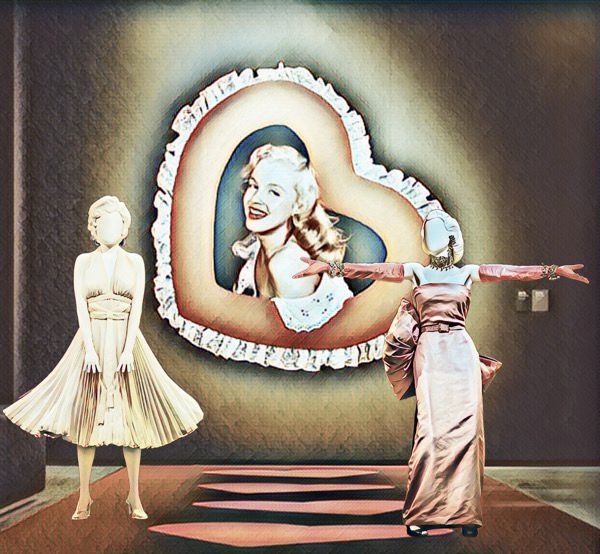
Perhaps that is why her centenary does not feel like a merely nostalgic celebration, but almost like an inevitable reunion with an image that popular imagination has never truly been able to let go of. And it is precisely this Marilyn — more complex, strategic, and conscious of her own image as an icon — that the new exhibition Marilyn Monroe: Hollywood Icon, opening at the Academy Museum in Los Angeles, seeks to revisit.
Despite the countless films, books, and documentaries about her short life of only 36 years, Marilyn Monroe may still remain one of the most analyzed and, paradoxically, least understood figures in pop culture. The Academy Museum exhibition proposes precisely to help audiences see her as a woman who built, negotiated, and managed her own persona within the most rigid system in cinema history.
Marilyn Monroe: Hollywood Icon celebrates Marilyn as a visionary actor and creator of her own image, examining the many ways she shaped and constructed her public persona within the classical Hollywood studio system. The exhibition features hundreds of original objects, including posters, portraits, photographs, production documents, letters, and rarely seen personal materials — many displayed publicly for the first time.
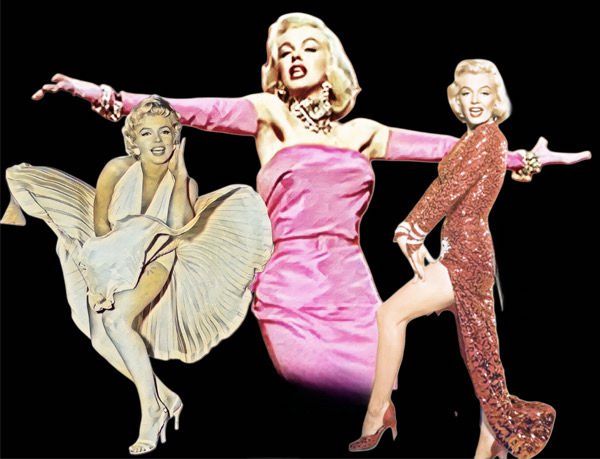
The exhibition also presents an extensive collection of costumes worn by Monroe on screen, ranging from a dress featured in Love Happy (1949) to pieces from her unfinished final film, Something’s Got to Give (1962). Highlights include two Orry-Kelly costumes from Some Like It Hot (1959) and the famous pink dress designed by William Travilla for Gentlemen Prefer Blondes (1953), rarely exhibited to the public.
Assistant curator Simran Bhalla spoke exclusively with CLAUDIA about the exhibition’s attempt to revisit Marilyn beyond the myth. In the interview, Bhalla discusses the actress’s strategic intelligence, her obsessive relationship with photography, costume design, and image construction, as well as the exhibition’s desire to present Marilyn not merely as a sex symbol or victim of fame, but as an artist deeply aware of her own career — and one of the first women in Hollywood to fight for creative autonomy within the industry.
CLAUDIA: The exhibition emphasizes that Marilyn was not only a movie star, but a visionary actor and image-maker. Why is it important to frame her this way in 2026, the centenary of her birth?
Simran Bhalla: Because the Academy Museum is focused on cinema, we really wanted to highlight Marilyn Monroe’s film career and her contributions to film history. When Sophia Serrano, the lead curator of the exhibition, and I began researching Marilyn more deeply and looking at the way she built her career, we realized that even within a very restrictive Hollywood studio system, Marilyn still managed to carve out a path for herself and shape her career to a certain extent.
And I think that’s an important story to tell because it dispels some of the myths about her that reduced her to the “dumb blonde” characters she portrayed in some of her films. That simply wasn’t true.
The truth was much more complex, and she was an incredibly interesting figure who worked extraordinarily hard to build the career she had. Her constant practice and effort as an actress really become evident when you watch all of her films.
CLAUDIA: That’s true, but there’s still often a very narrow and stereotyped image of her. Which aspects of Marilyn’s intelligence, artistic control, and self-construction do you feel history has most overlooked? And what can audiences discover about that through this exhibition?
Simran Bhalla: One major story is that Marilyn Monroe founded her own production company, Marilyn Monroe Productions, in 1956. That was relatively uncommon for women and actresses at the time. She founded the company alongside photographer Milton Greene, one of her primary collaborators.
Marilyn entered the industry the way most stars did at the time, signed to a studio. In her case, she was briefly signed to Columbia, but spent most of her career at 20th Century Fox. Studio executives played a huge role in typecasting her into those “dumb blonde” or “blonde bombshell” roles, however you want to define them. But Marilyn always wanted to explore different kinds of characters and famously said she would have loved to star in an adaptation of The Brothers Karamazov, which of course never happened.
She was self-educated and deeply well-read, but understood that the only way to advocate for herself was by building this iconic image alongside photographers, costume designers, makeup artists, and other collaborators. Once she achieved enough fame, she was finally able to establish her own production company.
They produced or co-produced The Prince and the Showgirl, filmed in the UK with Laurence Olivier. And even when her later films were not made through her company, Marilyn used the autonomy she had gained to negotiate contracts that allowed her to choose the directors and cinematographers she wanted to work with.
So we tell that story. We talk about her collaborations in constructing her image through costumes, makeup, objects, and photography. She had significant control over which photographs were published.
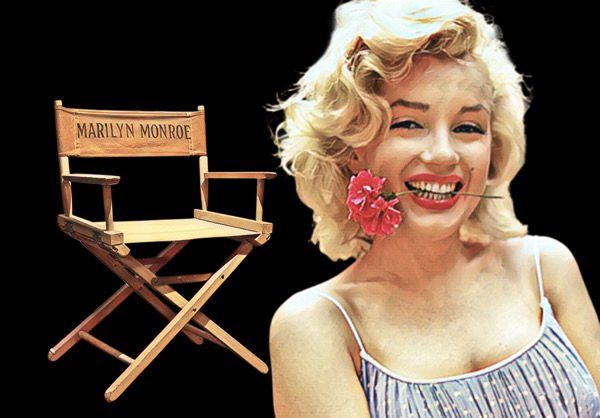
We also discuss the production company through original materials, including contracts, her director’s chair, and annotated scripts. So we have many different kinds of objects that help flesh out this story.
CLAUDIA: That changes everything. She was so underestimated throughout biographies and documentaries because, as you said, she had agency and intention behind everything she did.
Simran Bhalla: She absolutely did. Of course, she was still limited in ways that were outside of her control. And she struggled in many ways as well. But within that system, she certainly did everything she could to continue making interesting films and giving interesting performances.
CLAUDIA: It’s true. And I often think about how she remains a major star across generations. From my grandmother, while she was still alive, to me, and now younger generations still continue falling in love with Marilyn. A lot of that comes from what she understood about photography and image-making. So that connects to the exhibition. Was there anything particularly surprising for you during this process? You seem very young!
Simran Bhalla: (laughs) That’s very kind. It’s funny, you’re not the first interviewer to ask that. I think people are fascinated by how different generations continue discovering Marilyn Monroe. And as you said, every generation finds her.
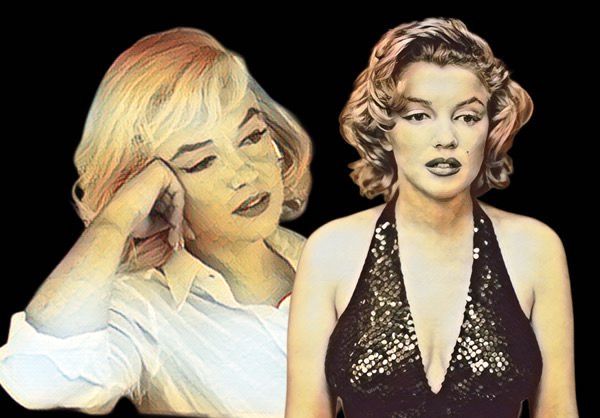
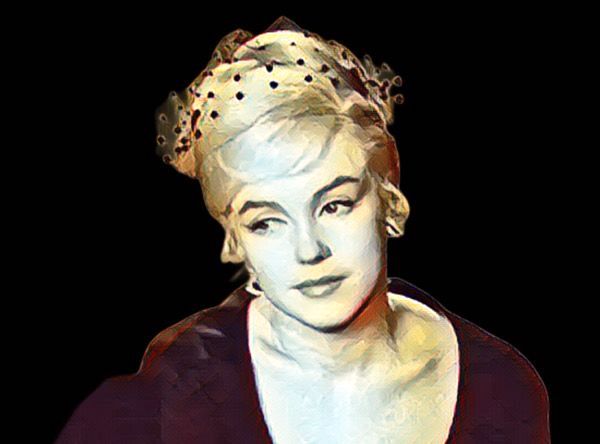
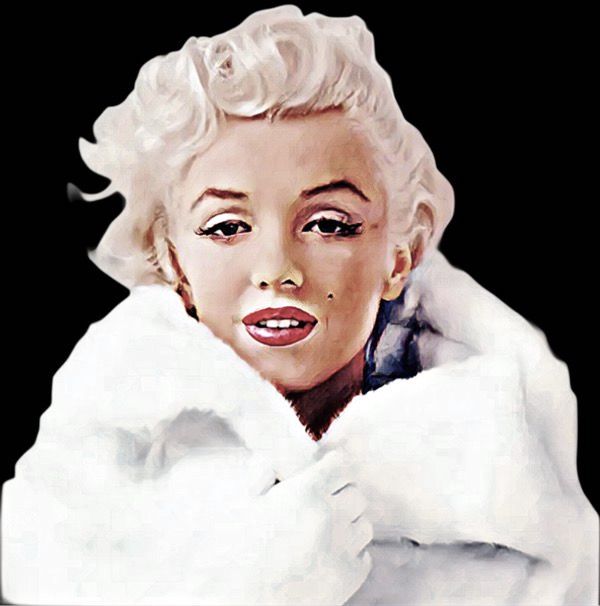
One of the things we really wanted to address is how her image remains. Everyone recognizes Marilyn Monroe’s face. Artists constantly reference her in pop culture, and her photographs continue circulating everywhere.
So we wanted to explore how she created such a consistent, recognizable, iconic image, and what role she herself played in shaping it.
We also wanted to focus on the films because we feel people know the image today more than they know the films. Maybe they’ve seen one or two, but there is so much to appreciate in her film career.
CLAUDIA: Do you have a favorite?
Simran Bhalla: I do. My favorite is probably still Some Like It Hot, which is one of the more famous ones. But while researching this exhibition, I completely fell in love with one of her lesser-known early noirs, Don’t Bother to Knock, in which she gives an incredible performance.
CLAUDIA: Yes, an incredible performance. Very overlooked by the Academy in a way. I think mine is Niagara.
Simran Bhalla: Yes, I was going to say she does such an amazing job there in that femme fatale noir role. Over time, that performance became somewhat overlooked. But we absolutely love those early films and were lucky to highlight them in the exhibition.
CLAUDIA: Going back to the objects and costumes. The pink dress from Gentlemen Prefer Blondes is in the exhibition, and it’s so iconic. Do you have any theory as to why it became so powerful?
Simran Bhalla: That’s a great question. That was not actually the original planned costume for “Diamonds Are a Girl’s Best Friend.” There was a much racier outfit that costume designer William Travilla had originally created. It was made of mesh and rhinestones, and we actually have part of that original costume on display as well.
But during the filming of Gentlemen Prefer Blondes, the press discovered that several years earlier, Marilyn, still trying to establish herself as an actress, had posed nude for a photographer. At the time, those images circulated through calendars and pin-up publications.
And the studio said, “We don’t want her wearing anything scandalous. We want something more modest.” So at the last minute, Travilla created the pink dress.
But it became an enormous sensation. I think it was a combination of his brilliance, the fact that Marilyn was perfectly suited for it, the choreography, and the set design of that sequence. All those elements came together to make the dress as famous as it became.
CLAUDIA: It’s perfection. One of those moments in film history that feels absolutely perfect. It works every single time. You stop and watch. And she looks beautiful in it.
So much of Marilyn’s legacy exists in fragments, unfinished projects, and conflicting narratives. How do you recover the person behind one of the most reproduced images of the 20th century? Because it feels like we know so much about her, we’ve seen everything, but she still remains a mystery. What was it like putting together that puzzle?
Simran Bhalla: I think ultimately we know it’s impossible to ever fully know a figure like Marilyn Monroe.
The exhibition is really focused on her career and her films. We talk a little about Norma Jeane and Marilyn’s personal lives behind the scenes, but all of that is tied into the story of how she built her film career.
For example, we have objects from her childhood. She collected cigarette cards in the 1930s. Children collected those cards, which featured movie stars and small biographies.
Marilyn had an album of those cards, including stars she idolized, like Bette Davis, whom she would later work with. It shows how, even as a young girl, she loved Hollywood, loved films, and idolized female stars like Jean Harlow and Marlene Dietrich. She modeled aspects of her look after them.
So we use these behind-the-scenes stories to construct a larger portrait of her cinematic persona.
CLAUDIA: Thinking about the TikTok generation and social media, what do you hope people take away from this exhibition?
Simran Bhalla: That’s a great question. I think different aspects of the exhibition will resonate with different people.
I hope audiences leave the exhibition interested in watching her films and discovering more about her than they knew before entering.
I also think people will be fascinated by the costumes, by the craftsmanship involved in creating them, and by how Marilyn collaborated with costume designers to shape the look of each film.
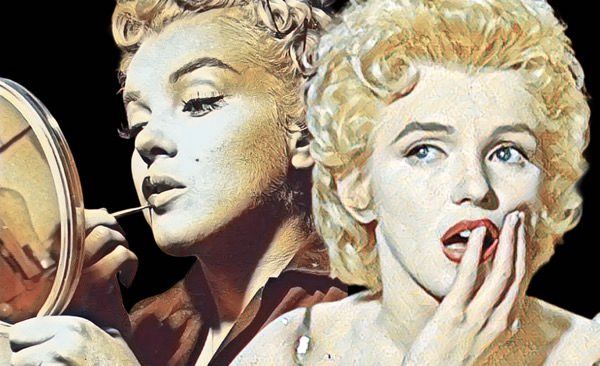
We also have makeup products that belonged to her, and we discuss how she and her makeup artist, Alan Snyder, developed that iconic Marilyn look. I think younger generations will find that especially interesting.
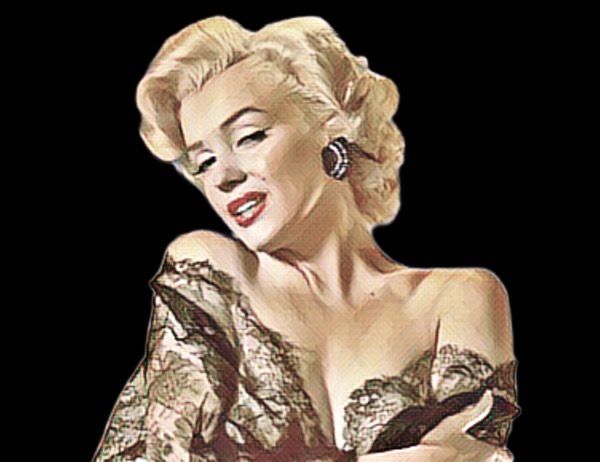
CLAUDIA: She spent her entire career trying to be taken seriously. One of the sentences that has always stayed with me comes from her final interview, when she says, “Please don’t make me look like a joke.” She truly wanted to be taken seriously.
Do you think the industry has finally caught up? Is it finally ready to look at her more seriously instead of simply exploiting her image?
Simran Bhalla: I hope so. I think we hope we’ve done justice to her and that our admiration and respect come through in the exhibition.
I can’t necessarily speak for the rest of the world, but I do think people are reconsidering Marilyn and recognizing that she was extremely talented and very intelligent.
CLAUDIA: After spending so much time immersed in Marilyn’s archives and personal history, what do you think people still misunderstand about her?
Simran Bhalla: I think that while she was a serious and talented actress, it’s also true that she was a sex symbol and embraced her sexuality.
At the time, audiences saw those things as contradictory. But now we can understand that she was incredibly intelligent in the way she managed her image as a sex symbol while simultaneously aspiring to be taken seriously as an actress.
And I think we should respect both of those things.
CLAUDIA: And what do you personally take away from this experience?
Simran Bhalla:
It was fascinating to peel back the layers of someone I also mostly understood as an icon, but not necessarily as an industry professional — someone whose work was truly her life.
Looking beyond the famous roles and famous image to see everything else she did throughout her career, including this incredible body of photography she helped shape.
Maybe before this, I only had a vague understanding of that, but after being immersed in this world, I have enormous admiration for her.

CLAUDIA: So the exhibition opened on May 31? What is the programming for Marilyn’s birthday on June 1?
Simran Bhalla: We’ll have two events. One is a book launch by Joshua Miller and Mark Fortin. They co-authored a book about Marilyn Monroe’s relationship with photographer Bruno Bernard, also known as Bernard of Hollywood. Joshua Miller is Bruno Bernard’s grandson and also a producer and actor.
After that, there will be a conversation with journalist Nancy Jo Sales and actor Jack Huston, followed by a screening of The Asphalt Jungle, considered one of Marilyn’s breakout roles.
And on May 31, the museum will screen Gentlemen Prefer Blondes. But beyond the incredible costumes and portraits, we also have a gallery dedicated to the publicity and media coverage surrounding Marilyn Monroe during her lifetime, as well as some of her most important public moments.
We have sections dedicated to “Happy Birthday, Mr. President,” her tour in Korea in the early 1950s, and her honeymoon in Japan with Joe DiMaggio.
We also have a section focused on her final interview for Life magazine. We included audio excerpts from that interview, photographs from the publication, and objects from her Brentwood home — the only house she ever bought and decorated herself, using objects she found in Mexico.
So there’s a very personal feeling there, almost as though you’re inside her space listening to this interview where she opened herself to the public.
I think those are really special elements as well.
Descubra mais sobre
Assine para receber nossas notícias mais recentes por e-mail.
 miscelana.com
2 comentários Adicione o seu