
For decades, the idea of a couple who did everything together would have been met with suspicion. Working together, spending nearly all their free time together, raising children together, sharing the same social circles, and even seeing the same therapist would likely have appeared in a psychology textbook as a potential warning sign. Today, however, the reaction seems very different. In an era marked by loneliness, dating apps, and the growing difficulty of building lasting relationships, stories about inseparable couples often inspire admiration.
That is precisely the conversation reignited by Mark Duplass and Katie Aselton in a recent interview for Modern Love, The New York Times’ long-running series on relationships. Married for nearly twenty years, the two describe a life that is deeply intertwined. They make films together, raise their children together, spend as much time together as possible, and openly acknowledge a level of emotional fusion that many therapists might classify as codependency.
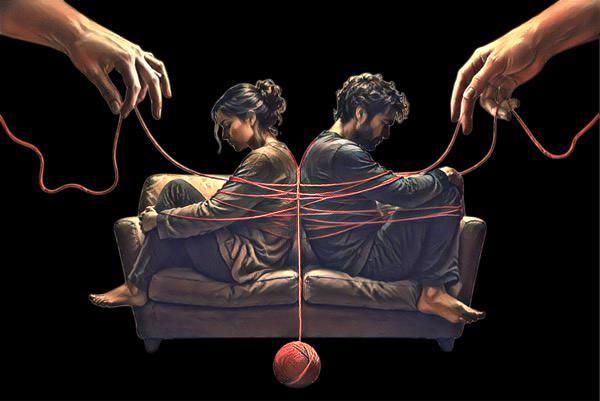
The choice of Modern Love as the setting for this conversation is hardly incidental. Created in 2004 by The New York Times, the column became a cultural phenomenon by publishing real-life stories about love, marriage, divorce, friendship, grief, and every imaginable form of human connection. Its success eventually led to books, a popular podcast, and a television adaptation produced by Amazon Prime Video.
The first season, released in 2019 and embraced by many viewers during the pandemic, transformed real stories into episodes starring actors such as Anne Hathaway, Dev Patel, Tina Fey, and Andrew Scott. The second season received a more muted response but remained faithful to the original mission of the column: exploring the ambiguities of human relationships without offering easy answers. Perhaps that is precisely why Duplass and Aselton’s story found a home there. Modern Love has never been interested in perfect romances. Its focus has always been the contradictions of real love.
Speaking about her relationship with Duplass, Katie jokingly remarked that the couple is on a mission to rehabilitate the image of codependency, much in the same way kale went from being an overlooked vegetable to a symbol of healthy living.
The comment is amusing, but it touches on a serious question. At what point does emotional closeness stop being intimacy and become dependency? Is there a clear line between the two? Or are we dealing with a concept that says more about the anxieties of a particular era than about relationships themselves?

The term “codependency” was not originally created to describe deeply connected couples. Its roots lie in studies of alcoholism and substance abuse conducted during the 1970s. Psychologists observed that family members of addicts often began organizing their entire lives around the destructive behavior of the person struggling with addiction. The suffering no longer belonged only to the addict; it spread through the entire family system. The wife hiding bottles, the husband inventing excuses for his partner’s absences from work, the parents whose lives revolved entirely around managing a child’s crises. Gradually, these individuals lost a sense of self that existed independently of the other person’s problems.
Over time, however, the concept expanded so broadly that it became a catchall term for almost any form of intense emotional attachment. The result was a curious dilution of its meaning. Today, perfectly functional relationships are sometimes labeled codependent simply because they involve a high degree of closeness or mutual reliance.
This is where psychoanalysis offers a particularly valuable perspective.
Freud would likely have found today’s obsession with emotional independence somewhat strange. For him, dependency is not an unfortunate feature of adulthood but the original condition of human existence. We enter the world entirely dependent on another person for survival and spend the rest of our lives searching, in one form or another, for echoes of that early sense of security. In other words, love always involves some degree of dependency. The modern fantasy that emotionally healthy individuals should need no one might have seemed to Freud just as problematic as excessive dependence itself.
Donald Winnicott would take the argument even further. Few thinkers understood the importance of human bonds as deeply as he did. He famously argued that there is no such thing as a baby without a mother—not because the mother must always be physically present, but because human identity is formed within a relationship. For Winnicott, maturity does not mean absolute independence. It means developing what he called the “capacity to be alone.” Here lies a fascinating paradox: only those who have experienced sufficiently secure relationships are truly capable of being alone without emotional collapse. Healthy autonomy does not emerge from the absence of attachment but from its presence.
Lacan, meanwhile, would likely approach the discussion from a less comforting angle. In his view, all human beings carry a fundamental sense of lack. There is something within us that can never be completely filled, and it is this absence that drives us to seek completion in another person. Love, in many ways, is the attempt to find outside ourselves what feels missing within. The problem, of course, is that no human being can fulfill that promise. When we believe another person can make us whole, we are constructing a fantasy destined to disappoint us. From this perspective, many relationships labeled codependent are not simply excessively close; they are desperate attempts to eliminate a lack that is inseparable from the human condition itself.
Perhaps this is why contemporary culture maintains such a contradictory relationship with the subject. Never before have we spoken so much about emotional independence. Never before has autonomy been celebrated so enthusiastically. We are constantly encouraged to prioritize ourselves, establish boundaries, preserve our individuality, and avoid any form of emotional dependency. At the same time, rates of loneliness, isolation, and difficulty forming meaningful connections continue to rise.
The impression is that much of the twentieth century was spent trying to escape the prison of suffocating relationships, only for the twenty-first century to become haunted by the opposite fear: the possibility that we may no longer need anyone at all.
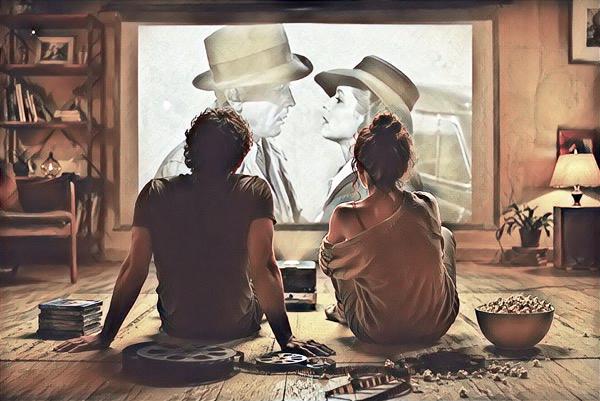
Perhaps that is why popular culture remains so fascinated by stories that occupy this ambiguous territory between love and dependency. Some portray unmistakable forms of codependency. Others are more compelling precisely because they resist any simple diagnosis.
In Big Little Lies, for example, the relationship between Celeste and Perry demonstrates how emotional dependence, violence, and trauma can become inseparable. The bond survives not despite the abuse, but partly because of the psychological dynamics created by it, something often observed in relationships shaped by cycles of control and reconciliation.
In Maid, Alex spends much of the story trying to understand why it is so difficult to leave Sean behind permanently, even when the relationship repeatedly proves destructive. The series offers a particularly sensitive portrait of how financial, emotional, and familial dependence often become intertwined.
Normal People, meanwhile, occupies a far grayer area. Marianne and Connell are not exactly codependent, but theirs is a relationship marked by insecurity, missed opportunities, and the recurring feeling that each finds in the other something unavailable anywhere else. The result is one of the most honest portrayals of the difficulty of separating love, emotional need, and the construction of identity.
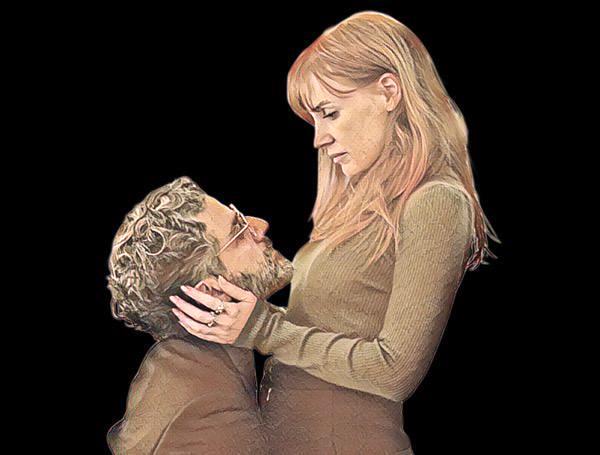
Perhaps the most sophisticated example of all is Scenes from a Marriage, originally created by Ingmar Bergman in 1973 and revisited decades later in HBO’s acclaimed adaptation starring Jessica Chastain and Oscar Isaac. Marianne and Johan in the original version—or Mira and Jonathan in the contemporary reinterpretation—remain connected not because they are incapable of moving on. In fact, they do move on. They remarry, build new lives, and attempt to reinvent themselves. Yet they remain emotionally tied by something neither fully understands. Bergman was less interested in diagnosing a relationship than in exploring a more unsettling question: why do some people continue shaping who we are long after they have ceased being part of our daily lives? What makes both the original miniseries and the modern adaptation so powerful is their refusal to reduce that connection to a single explanation.
And if we look closely, even Succession can be read through the lens of codependency. Although the series revolves around wealth, power, and corporate warfare, its true engine is the inability of Logan Roy’s children to abandon their endless search for a father’s approval that never fully arrives. In many ways, it is one of television’s most striking portraits of emotional dependence.
What all of these stories share is a refusal to offer simple answers. None suggests that complete independence is either possible or desirable. None argues that emotional fusion is inherently healthy. Instead, they reveal something much closer to lived experience: we spend our lives negotiating the distance between autonomy and belonging, between the need to be individuals and the equally profound desire to matter deeply to someone else.
Perhaps that is what makes Mark Duplass and Katie Aselton’s provocation so compelling. Not because they have discovered that codependency is healthy, but because they force us to reconsider a question that often goes unexamined. When we describe a relationship as codependent, are we identifying a genuine problem, or are we merely expressing discomfort with the intensity of a bond?
The answer likely differs from one relationship to another. Some relationships suffocate, control, and erase individuality. Others simply challenge the modern belief that happiness depends upon maintaining near-total independence. Between those extremes lies a much larger, more complicated, and more deeply human territory than social media discourse often allows.
Because perhaps the real question has never been how much we need one another. The real question is whether we remain capable of existing as individuals while choosing to share our lives with someone else. Love will always involve some degree of dependency. The challenge lies in discovering how much of that dependency strengthens the bond—and how much of it begins to erase who we are.
Descubra mais sobre
Assine para receber nossas notícias mais recentes por e-mail.
 miscelana.com