
In recent weeks, a relatively new term has begun appearing more frequently in discussions about celebrities, influencers, and social media: posture parenting. The expression is typically used to describe parents who appear more concerned with publicly demonstrating certain values about raising children than with responding to the actual needs of their children. As with many internet-driven concepts, the term can be unfair, simplistic, or weaponized as a form of criticism. Even so, it points to a cultural shift that deserves closer examination.
Parenting has always been subject to public scrutiny. For centuries, parents were judged by relatives, neighbors, teachers, and religious communities. What has changed is not the existence of judgment but its scale. Social media has transformed child-rearing into something potentially public, permanent, and open to evaluation by thousands or even millions of people simultaneously. Every decision can be photographed, filmed, shared, and debated. Every choice can become a statement of values.
This is where psychoanalysis offers an especially interesting perspective.
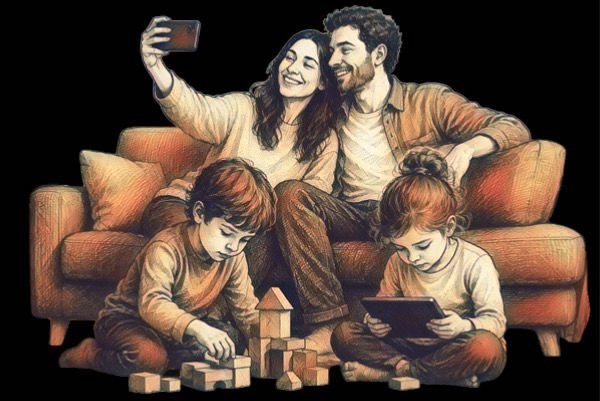
In On Narcissism (1914), Freud observed that children occupy a privileged place within parental narcissism. He famously described the child as “His Majesty the Baby,” an object of affection, projection, expectation, and idealization. Parents often see their children as a chance to fulfill desires left incomplete by their own lives. This is a deeply human and universal mechanism. The problem is not its existence but the excesses it can produce.
Social media has introduced a new element into this dynamic. The child is no longer only someone who is loved, protected, or idealized. The child can also become an extension of the parents’ public identity. Their diet, school, routines, clothing, habits, and even opinions can function as visible signals of the values parents wish to communicate about themselves.
In that sense, the debate surrounding posture parenting is not really about children. It is about adults.
Lacan helps explain why. For him, the subject is profoundly shaped by the gaze of the Other. We build our identities not only from who we are but also from how we imagine we are perceived. Social media has amplified this mechanism on an unprecedented scale. The gaze of the Other is no longer represented only by family members or close social circles. Today, it can take the form of followers, likes, shares, and comments.
When that happens, the question “What does my child need?” can begin sharing space with a less explicit question: “What does this choice say about me?”
This is where accusations of posture parenting emerge. The issue is not raising a child according to certain values. The issue arises when publicly demonstrating those values becomes almost as important as the child’s actual experience.
This logic appears across different social groups and political perspectives. Some parents turn their children’s diets into symbols of environmental consciousness. Others use education as a showcase for intellectual superiority. Some present motherhood as evidence of emotional perfection, while others turn parenting into proof of political or moral virtue. Despite their differences, these examples share a common feature: the child ceases to be solely a subject and becomes part of the construction of a parent’s public identity.
The most concerning consequence may not be exposure itself but what it represents. Every child eventually needs to escape the expectations projected onto them. They need to build an identity of their own, separate from the dreams, values, and desires of their parents. When a child becomes a central component of a public narrative, that process can become more difficult.
Winnicott offers an important counterpoint. His concept of the “good enough mother” emerged precisely as a critique of perfection. Healthy development does not require perfect parents, flawless awareness, or ideal decisions. It requires adults who are sufficiently available to recognize their limitations, tolerate failure, and allow their children to exist as separate individuals.
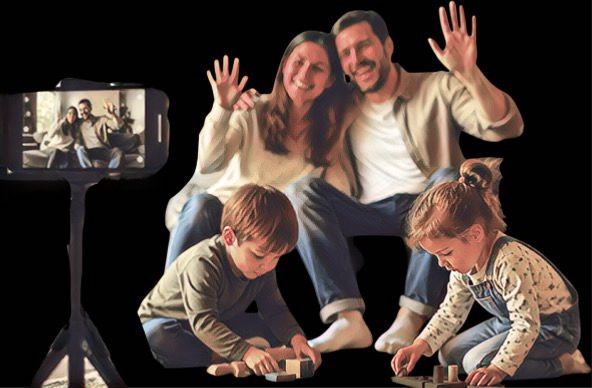
Perhaps that is what the debate over posture parenting is really trying to express, even if often imperfectly. The central question is not whether certain parents are better or worse than others. The question is what happens when raising children ceases to be simply a relationship between parents and children and becomes a relationship performed before a permanent audience.
Psychoanalysis would probably not condemn the public sharing of children in absolute terms. However, it might ask a simple yet uncomfortable question: when we talk about our children, are we trying to understand who they are, or are we trying to show others who we wish to be?
That may be the most important question hidden beneath a term that initially appears to be just another passing internet trend. In reality, it reveals something much deeper about how we construct identity in an age when almost everything—including parenting—can become a performance.
Descubra mais sobre
Assine para receber nossas notícias mais recentes por e-mail.

