
When Martin Scorsese remade Cape Fear in 1991, many believed that version had become the definitive adaptation of John D. MacDonald’s The Executioners. After all, the film was already a reinterpretation of the 1962 classic, pushed violence and sexuality further than its predecessor, and featured one of Robert De Niro’s most unforgettable performances. Thirty-five years later, Apple TV has taken an even bolder step, transforming the story into a limited series produced by both Scorsese and Steven Spielberg. The obvious question was: why stretch such a straightforward story into nearly ten hours of television?
After the first two episodes, the answer seems to be Max Cady himself.
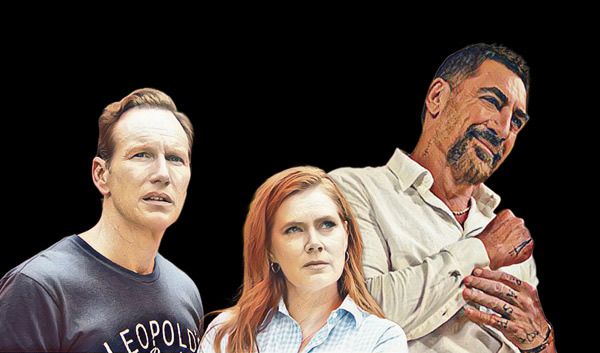
The basic premise remains the same. Max Cady is released from prison after serving a lengthy sentence and returns, determined to destroy the lives of the people he believes are responsible for putting him there. But the series significantly expands the narrative. Here, Anna Bowden (Amy Adams) is not simply a terrified wife. She was one of the attorneys connected to the case that resulted in Cady’s prison sentence. Her husband, Tom Bowden (played by Patrick Wilson), served as the prosecutor. When new information begins to cast doubt on what really happened years earlier, Cady returns not merely as an ex-con seeking revenge, but as a man convinced he was betrayed by an entire system.
That shift makes the series feel almost like an inverted version of The Count of Monte Cristo. In Alexandre Dumas’ novel, we follow a man who has been wronged as he seeks revenge against those who destroyed his life. In Cape Fear, the structure is similar, but the man pursuing justice is a predator and a deeply dangerous one. A monster. And that is precisely what makes the story so unsettling.
The greatest advantage of the television format is the opportunity to spend more time inside Cady’s world. Both films presented him as a threat. The series chooses something slower and, in many ways, more disturbing. The horror does not come solely from physical violence. It comes from the certainty that he is always several steps ahead. He infiltrates spaces, manipulates people, plants doubts, and gradually transforms the Bowdens’ lives into a waking nightmare.
The iconic Bernard Herrmann score, originally written for the 1962 film and famously reused by Scorsese in 1991, returns once again. The music functions almost like a warning signal. Every time those familiar notes appear, viewers know something terrible is about to happen. Decades later, it remains one of the franchise’s most effective tools for generating dread.
And then there is Javier Bardem.
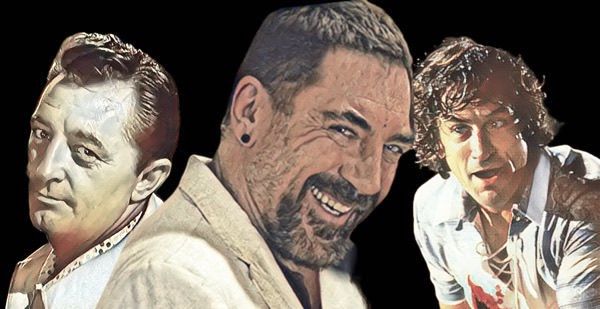
Stepping into a role forever associated with Robert Mitchum and Robert De Niro seemed like an impossible task. Bardem wisely avoids imitation. His Max Cady feels entirely different. He remains terrifying, but he is less explosive and more calculating. There is an inevitability to him, a sense that he has already won before the game has truly begun. Bardem finds an unsettling balance between charisma and menace that makes it impossible to look away. Several critics have already highlighted that quality, praising his ability to make Cady simultaneously magnetic and frightening.
After Anton Chigurh in No Country for Old Men and Silva in Skyfall, Bardem once again proves that few contemporary actors can embody evil with such ease. An Emmy nomination already feels all but certain.
Amy Adams and Patrick Wilson, however, have not entirely convinced me yet. Perhaps that is because their characters spend much of these opening episodes reacting to the chaos Cady creates. Or perhaps Bardem’s presence is simply too overwhelming. Either way, both actors feel overshadowed by the sheer force of the antagonist.
The differences from the films are substantial. Anna Bowden now occupies a much more central role. The characters’ histories are expanded. The series also introduces contemporary themes involving social media, true-crime culture, digital manipulation, artificial intelligence, and public reputation warfare. Rather than merely updating the story, creator Nick Antosca attempts to transform it into a reflection on modern paranoia, misinformation, and the fragility of truth in the digital age.

Critical response has been largely positive, though not unanimous. Some reviewers have hailed the show as one of the year’s most effective psychological thrillers and praised its ambitious reinvention of the material. Others have questioned whether the story truly required ten episodes, arguing that the expanded format occasionally dilutes the relentless tension that made the films so effective, which may be my biggest reservation as well.
I have never been convinced that Cape Fear needed six, eight, or ten hours to tell its story. The concept has always worked because of its simplicity: a deeply dangerous man decides to destroy a family. The longer we spend in the company of a predator like Max Cady, the more suffocating the experience becomes. Then again, perhaps that discomfort is exactly the point.
The graphic violence is intense. The psychological tension is relentless. And there is something profoundly unsettling about knowing that we are still only at the beginning. Cady has not yet reached his final confrontation. He is still playing the game. More importantly, he is still winning.
I am going to suffer my way through the rest of this series, but perhaps that is the highest compliment I can give it. If Cape Fear did not leave me anxious, uncomfortable, and dreading what comes next, it would have failed.
So far, it is doing exactly the opposite. The quality is undeniable.
The nightmare is too.
Descubra mais sobre
Assine para receber nossas notícias mais recentes por e-mail.

