
What do you listen to when you are alone? Not the music playing in an elevator, a supermarket, or during a workout, but the song you actively seek out when you are happy, heartbroken, nostalgic, in love, or simply trying to understand what you are feeling. That question may reveal far more about a person than we realize.
We live in a time when music is everywhere. It accompanies us while we work, walk, drive, study, cook, or try to fall asleep. We create playlists for road trips, breakups, moments of concentration, and celebrations. Some songs disappear from our lives almost as quickly as they arrive, while others stay with us for decades. They survive changes in cities, careers, relationships, and even identity itself. They remain because they seem to hold something that goes far beyond musical taste.
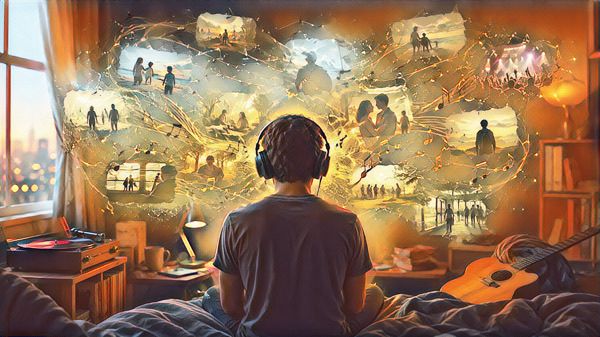
Psychoanalysis offers an interesting clue as to why this happens. It suggests that our relationship with music is not merely aesthetic. It is also emotional, affective, and deeply connected to the unconscious. Freud wrote relatively little about music, yet he left behind a revealing observation: he admitted that certain compositions could move him profoundly without his being able to explain why. For someone who devoted his life to uncovering the hidden mechanisms of the mind, something was fascinating about being overwhelmed by an emotion whose source could not be fully translated into words.
Perhaps this happens because music reaches regions of psychic experience that exist before language itself. Long before we learn to speak, we respond to rhythms, pauses, voices, and melodies. A baby does not understand the meaning of the words spoken to them, but recognizes the musicality of a caregiver’s voice. There is a sonic experience of the world that precedes speech and continues to accompany us throughout life. This may explain why a song can move us even when we do not understand its lyrics or speak the language in which it was written.
Jacques Lacan developed a reflection that helps illuminate this process. For him, the voice possesses a power that extends beyond the meaning of words. Tone, rhythm, and sound carry something capable of touching the subject directly. In many cases, what affects us in a song is not necessarily what it says, but how it resonates within us. Perhaps that is why certain songs seem to choose us rather than simply being chosen by us.
This relationship becomes even more evident when we think about the way music connects to memory. There are songs capable of transporting us instantly to specific moments in our lives. The first few notes can take us back to a childhood road trip, a youthful romance, a memorable night with friends, or a particularly difficult chapter. We are not simply remembering what happened. We are often flooded by the emotions that accompany those experiences, as though they had been preserved somewhere, waiting to be awakened.
That idea is precisely what made me think of The Greatest Hits, the 2024 film starring Lucy Boynton. In the story, Harriet discovers that certain songs literally function as portals through time. Whenever she hears them, she is transported back to specific moments in her relationship with Max, the boyfriend she lost two years earlier. As she realizes what is happening, she begins revisiting those memories repeatedly in the hope of finding a way to change the past and prevent the tragedy.

What makes the film compelling is not the fantasy itself, but the fact that it turns into narrative reality, something that most of us already understand emotionally. Who has not heard a song and felt instantly transported to another time? Who has not been surprised by a melody that brought back a person, a stage of life, or an older version of themselves that seemed long forgotten? The film simply takes to its logical conclusion something we experience all the time. Music may not open portals through time, but it certainly opens psychic ones.
A psychoanalytic reading of The Greatest Hits becomes even richer when we realize that Harriet is not merely trying to save Max. In many ways, she seems to be trying to preserve the version of herself that existed before the loss. When someone dies or when a relationship ends, we do not lose only the other person. We also lose plans, expectations, and imagined futures. An important part of grief consists of accepting that certain possibilities no longer exist. Harriet keeps returning to the past because, in a sense, she is still trying to negotiate with that reality.
This idea connects directly to one of Freud’s most famous concepts: repetition. Freud observed that we often revisit experiences not because they bring us pleasure, but because we are still trying to understand or work through them. Not every repetition is enjoyable. More often, it represents an unconscious effort to organize something that remains unresolved within us. Perhaps this is why so many people listen to the same song dozens of times after a breakup, a loss, or a profound disappointment. From the outside, it may look like a simple attachment. From the inside, however, it is often an attempt to give shape to feelings that have not yet found an adequate language.
In that sense, sad music does not create sadness. It provides a way of inhabiting it. It organizes scattered emotions, gives form to difficult experiences, and transforms chaos into narrative. This may explain why artists such as Leonard Cohen, Françoise Hardy, and The Cure continue to find devoted listeners across generations. They do not promise solutions to suffering or offer easy answers. What they do instead is something much rarer: they transform pain into something that can be shared.

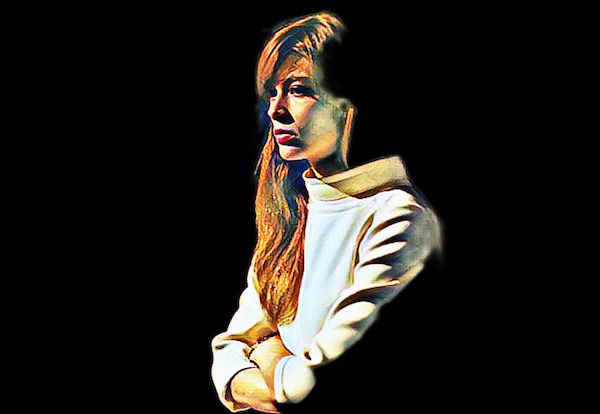
Erich Fromm would likely have seen something even deeper at work in this phenomenon. Throughout his writings, he argued that much of human suffering arises from universal conflicts involving love, loneliness, belonging, and the fear of separation. This may be one reason why certain songs continue to resonate across generations and cultures. When a song speaks about loss, longing, desire, heartbreak, or hope, it is not merely telling the story of the person who wrote it. It is touching experiences that belong to the human condition itself. Music moves us because we often discover within it not only our own stories, but also dilemmas shared by countless others who came before us and countless others who will come after.
Donald Winnicott would add another layer to this discussion by arguing that art occupies an intermediate space between external reality and the inner world. It is a realm where we can experience intense emotions in relative safety without having to act on them.
This dynamic becomes especially visible during adolescence, when many of our deepest musical attachments are formed. It is no coincidence that so many people remain profoundly connected to the artists they discovered at fifteen or sixteen years old. Adolescence is also the period when we are trying to answer the question of who we are and who we hope to become. The musicians who accompany us during that time often become woven into the very fabric of our identity. When someone criticizes a band or artist that defined our youth, the reaction can feel disproportionate because it does not seem as though they are criticizing a work of art. It feels as though they are questioning part of our personal history.
Digital platforms have made this relationship even more intriguing. Today, algorithms know which songs we listen to, how often we repeat them, and even which tracks we choose at different moments of the day. They can map behavioral patterns with astonishing precision. What they remain unable to explain is why a particular song moves us, why a specific voice stays with us for decades, or why certain melodies continue to live inside us long after they have disappeared from the charts.
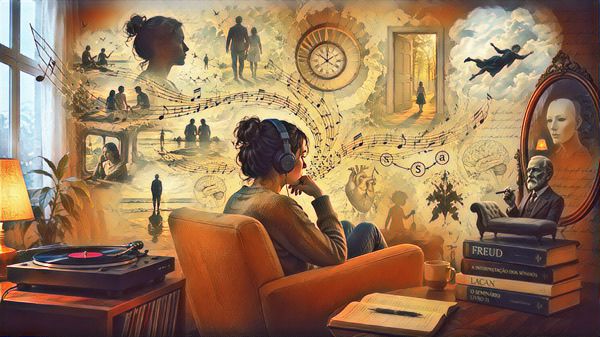
Perhaps psychoanalysis does not offer definitive answers to those questions, and perhaps that is not its purpose. Its interest lies precisely in the mystery that exists between music and the person listening to it. When we hear a song, we are rarely dealing with a sequence of sounds alone. More often, we are coming into contact with memories, fantasies, losses, desires, and experiences that remain alive within us, even when we believe they have long been left behind.
That may be why a playlist can function as a more honest emotional diary than many autobiographies. It records not only who we were, but also who we wished to become, whom we lost along the way, and what we continue to search for throughout our lives. In the end, few things reveal as much about a person as the music they choose to listen to when no one is watching.
Descubra mais sobre
Assine para receber nossas notícias mais recentes por e-mail.

