
If there is a question even more complicated than the age-old chicken-and-egg dilemma, it is our attempt to understand what happiness actually is. My recent studies in psychoanalysis have led me to think about this subject more deeply, making me increasingly attentive to how it appears in films, books, social media posts, songs, and even in conversations with friends and family.
For centuries, philosophers, writers, and artists have tried to define something profoundly subjective and yet universal and timeless. The search for fulfillment is part of the human experience, whether understood in earthly or spiritual terms. Aristotle believed that happiness was the ultimate goal of human life, a proposition that still feels remarkably persuasive.
Freud offered a far less optimistic perspective. In Civilization and Its Discontents (1930), he argued that what we call happiness can only exist as an episodic phenomenon. Satisfaction emerges, lasts briefly, and soon gives way to new desires. In other words, the problem is not that we are never happy, but that our enduring dissatisfaction makes it difficult to remain in that state for very long.
Yet the more I think about the subject, the more the question shifts. Is that really the central issue?
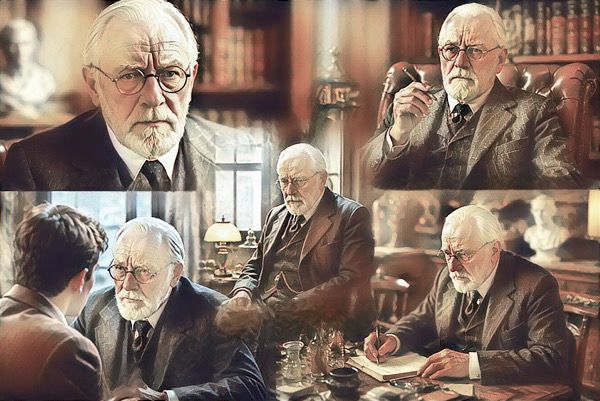
Perhaps the problem is not happiness’s brevity, something most people would readily acknowledge. Perhaps Thornton Wilder was remarkably precise when he asked, in Our Town, whether the obstacle lies not simply in happiness’s fleeting nature, but in our inability to recognize it while we are living it. We often identify and value happiness only after it has disappeared.
Wilder explores this through Emily Webb, who is allowed to revisit an ordinary day from her life after death. She does not choose an extraordinary birthday or a historic event. She chooses an ordinary breakfast. And it is in that seemingly mundane and fleeting moment, one she cannot fully savor the way she wishes, that Emily realizes something devastating: everything she had ever been searching for was already there, and she failed to see it in time.
“Do any human beings ever realize life while they live it—every, every minute?” she asks.
The answer is one of the most heartbreaking in American literature:
“No. Saints and poets, maybe—they do some.”
Even before that revelation, Wilder offers another extraordinary insight through one of the dead characters, who advises Emily:
“No, at least choose an unimportant day. Choose the least important day in your life. It will be important enough.”
It is one of the most beautiful observations ever written about ordinary life. We spend so much time waiting for the extraordinary that we fail to notice that life itself is taking place in the seemingly insignificant moments.
Emily Webb’s realization finds an echo in Dido’s 2009 song The Day Before the Day, in which she mourns the missed opportunity to say goodbye to someone she would never see again because everyday obligations got in the way.
“I couldn’t say goodbye on the day before the day,” she sings. “I was rushing to get to work on time; that’s why I left and missed the most important thing you ever tried to say. I lived my life with no regrets… until today.”
Another remarkable work that explores this question is Michael Cunningham’s The Hours, published in 1998 and adapted into a film in 2002. At one point, Clarissa realizes she spent years believing that happiness was still ahead of her, when in fact she had already experienced it.
“I remember one morning getting up at dawn. There was such a sense of possibility,” she recalls. “You know that feeling? And I remember thinking to myself: So this is the beginning of happiness. This is where it starts. And of course there’ll always be more. It never occurred to me that it wasn’t the beginning. It was happiness. It was the moment. Right then.”
In cinema, Frank Capra’s It’s a Wonderful Life, which celebrates its 80th anniversary in 2026, revolves around George Bailey, who is convinced that happiness exists in the life he never had: the trips he never took, the opportunities he missed, and the dreams he abandoned. Only when he imagines a world in which he never existed does he realize that what he considered ordinary was precisely what gave meaning to his life.

What is striking is that none of these works is really about wealth, success, or fame. On the contrary, they suggest that happiness is rarely found where we expect to find it. Citizen Kane spends an entire lifetime accumulating power only to discover, in the end, that his most meaningful memory has nothing to do with money or influence, but with a sled named Rosebud and a childhood moment he could never recover.
The temptation is to look at these examples and conclude that the message is simply that happiness should not be measured by material possessions. But the issue feels deeper than that. What if, to paraphrase Wilder, the challenge is not understanding what happiness is, but recognizing it while we are living it?
The problem is that before we even manage to answer that question, we have added new complications. For much of human history, happiness was treated as a desirable ideal. Today, it has also become an obligation. It is no longer enough to experience happiness; we are expected to display it. It is no longer enough to feel content; we must appear content. It is no longer enough to build a meaningful life; that life must be validated through likes, comments, engagement, and social approval.
This shift has produced a curious consequence. If unhappiness was once understood as an inevitable part of the human condition, it is now frequently interpreted as a sign of personal failure. In a culture that turns well-being into a permanent goal, productivity into a virtue, and happiness into a personal brand, sadness, uncertainty, and dissatisfaction are often treated as problems that need immediate correction.
Perhaps that is why expressions such as “toxic positivity” have become so common in recent years. Not because happiness itself is toxic, but because the relentless demand for happiness can become suffocating. Remember that Freud warned us that human satisfaction is necessarily limited and temporary. Yet contemporary culture continues to insist on the opposite promise: that there exists an ideal version of life capable of eliminating lack, frustration, and suffering altogether.

If we bring together Freud, Lacan, Capra, Wilder, and so many others, perhaps the questions no longer revolve around defining happiness, understanding its transience, or even learning how to identify it when it appears. If happiness inevitably comes to an end, perhaps the real question becomes: how do we fully experience it while it exists?
This may be the great paradox of contemporary life. For a long time, we believed happiness was always somewhere else—in the future, in success, in the next achievement. Today, when we finally recognize the value of certain moments, we often try to capture them, document them, or preserve them. But happiness cannot be frozen. It exists in the lived moment, not in a future memory or a digital archive.
Perhaps the common lesson shared by all these examples is less about happiness and more about presence. Some of the most important experiences in life do not ask to be stored away. They ask only to be lived.
Descubra mais sobre
Assine para receber nossas notícias mais recentes por e-mail.
 miscelana.com