
For fans of classic rock, those opening chords of The Who‘s Love, Reign O’er Me struck an even deeper note when the song appeared in the trailer for the final season of The Bear. The choice hardly feels accidental. In fact, it is one of those inspired musical decisions that seem to reveal something essential about the series itself. Because, at its core, The Bear has never really been about food. Nor has it been simply about a gifted chef trying to save a restaurant. From the very beginning, Christopher Storer‘s series has been about wounded people searching for a place where they belong and, with tremendous difficulty, learning to let others into their lives.

Released in 1973, “Love, Reign O’er Me” closes Quadrophenia, The Who‘s second rock opera, written by Pete Townshend. In the story, the protagonist Jimmy reaches his breaking point. Disillusioned, isolated, and no longer certain of who he is, he finally abandons the illusion that he can control everything around him. That is when the song arrives. Not as a romantic declaration, but as a prayer. A plea. A surrender to the realization that no one can carry the weight of the world alone.
There is something deeply familiar about that for anyone who has followed Carmy Berzatto’s journey. Over the course of four seasons, he has tried to control the restaurant, his brother’s legacy, his own emotions, and even the memories that haunt him. The harder he pursued perfection, the more everything slipped through his fingers. Perhaps that is why the song’s inclusion feels so moving. Because “Love, Reign O’er Me” is not about victory. It is about acceptance.
Pete Townshend wrote the song under the influence of the spiritual teachings of Meher Baba, who associated rain with grace and divine blessing. Roger Daltrey, meanwhile, transformed what was originally a more delicate composition into one of the greatest vocal performances in rock history. The result is a song that permanently exists somewhere between vulnerability and catharsis, between prayer and a scream. And that tension is precisely where The Bear has always lived.
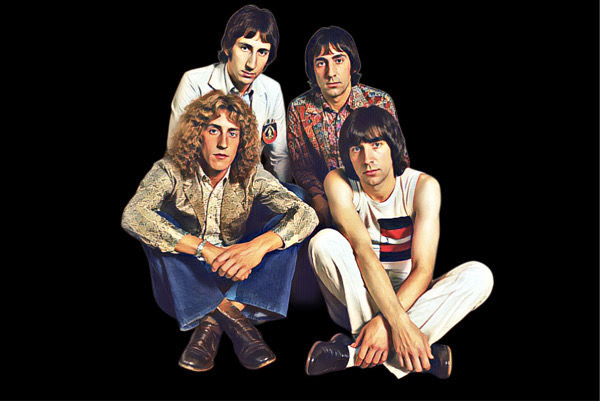
For years, Carmy believed excellence could save him. Yet the series gradually suggested otherwise. Richie found purpose in service. Marcus turned grief into art. Natalie became the emotional center of that improvised family. Sydney learned that leadership also requires trust. Little by little, the story moved away from the idea that perfection could be the answer and embraced something far more human: the need for connection.
When Richie says in the trailer that they may not have money, but they still have one another, it is hard not to feel as though the line could have come straight from Quadrophenia. Because “Only love can make it rain” has always been less about romance than about belonging, friendship, community, and the painful discovery that no one saves themselves alone.
Perhaps that is why “Love, Reign O’er Me” remains so powerful more than fifty years later. Much like Staind‘s “Outside” or Nine Inch Nails‘ “Hurt,” it offers no easy answers and promises no grand triumphs. Instead, it speaks about continuing to live even when the pain never completely disappears. About embracing vulnerability. About accepting that being human also means needing other people.
There is something particularly fitting about hearing this song at the conclusion of The Bear. The earlier seasons were driven by grief, guilt, anxiety, and perfectionism. The farewell, at least judging by the trailer, seems to be driven by something different. Perhaps love. That does not necessarily mean Carmy will be healed or that everything will end happily. It simply means that, after spending years trying to save the restaurant, he may finally discover that what he really needed to save was himself.
The Bear is only the latest chapter in the long relationship between “Love, Reign O’er Me” and film and television. The most famous example remains Reign Over Me, the 2007 drama starring Adam Sandler and Don Cheadle, whose title itself references the song. The film, which explores grief and friendship in the aftermath of September 11, uses the track as an emotional centerpiece and even features a version recorded by Pearl Jam‘s Eddie Vedder.
The song also appears naturally in Quadrophenia, the 1979 film adaptation of The Who‘s rock opera, and later surfaced in the 2011 musical drama Hunky Dory. More recently, it gained renewed attention when it was used in the first trailer for The Hunger Games: Sunrise on the Reaping, underscoring themes of loss, survival, and hope.
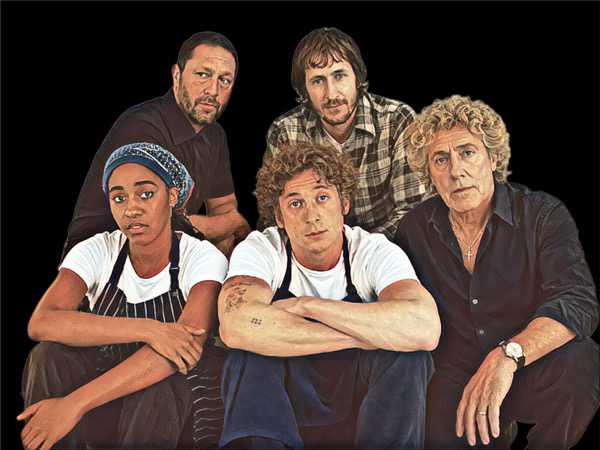
Even so, it is difficult to imagine a more fitting pairing than the one found in The Bear. After all, a song written more than fifty years ago about a young man lost within his own emotional chaos turns out to be the perfect soundtrack for another story about a man who is equally lost and trying to learn how to live.
Perhaps Pete Townshend understood something universal without fully realizing it. Because in the end, when talent is not enough, when perfection proves impossible, and when control finally fails, what remains is what both Jimmy and Carmy seem to learn the hard way: only love can make it rain.
Descubra mais sobre
Assine para receber nossas notícias mais recentes por e-mail.

