
Every June, the first couple of weeks inevitably revolve around some form of curation for Valentine’s Day viewing and reading recommendations. The holiday is a purely commercial anchor, but it also encourages repetition. And repetition, after all, lies at the heart of psychoanalysis. In 2026, I decided to revisit the subject through a slightly different lens.
Over the years, I have written about the role of chance in romantic comedies, about Jane Austen’s nearly inescapable influence on the love stories we consume today, about Nora Ephron, Ted Lasso, and even about television’s apparent inability to keep happy couples together for more than a season or two. Yet while revisiting old classics and watching newer releases, I began to suspect that all of these discussions might point toward a larger question. The issue is not simply why writers insist on separating couples, nor why so many love stories depend on artificial obstacles to keep moving forward. The question that stayed with me is more unsettling: are we confusing love with narrative?

At first glance, the idea sounds strange. The more I thought about it, however, the harder it became to dismiss. Most of the great love stories that have endured through generations are not stories about successful relationships, partnerships, or shared lives. They are stories about desire. They are stories about people trying to obtain something they do not yet possess, preserve something they are losing, or recover something they believe has slipped away.
When we think of the most famous couples in Western literature, we rarely imagine people building a life together. We think of Romeo and Juliet dying before reality has a chance to catch up with them. We think of Anna Karenina abandoning everything for a passion that promises liberation and delivers suffering. We think of Gatsby devoting his entire existence to a fantasy. We think of Cathy and Heathcliff trapped in a dynamic that many adaptations have insisted on presenting as an epic romance, although I have always seen something much closer to obsession and destruction.
Perhaps this happens because love and narrative follow different rules. Since Aristotle, we have understood that stories depend on conflict, transformation, and resolution. A narrative exists because something is out of balance and needs to be restored. The hero must find something, win someone over, solve a problem, or survive a threat. Once the central question has been answered, the story ends.
Love, however, often begins at precisely that point.
A shared life emerges once the initial obstacles disappear, once the couple finally gets together, and once the question that sustained the narrative ceases to exist.
It is no coincidence that so many romantic comedies end with a first kiss, a wedding, or a declaration of love. Pride and Prejudice ends when Elizabeth Bennet and Darcy overcome the misunderstandings that kept them apart. When Harry Met Sally ends when both characters admit what the audience has known all along. Sleepless in Seattle spends two hours building anticipation for a meeting that takes place in the final moments. Even contemporary stories continue to rely on the same structure. What matters is not the relationship itself. What matters is the conquest.
It would be unfair, however, to claim that art has never tried to examine what comes afterward. In fact, much of twentieth-century culture can be understood as an attempt to answer that exact question. The problem is that when writers, playwrights, and filmmakers decided to follow couples beyond the moment of union, they did not always find what romantics hoped they would find.

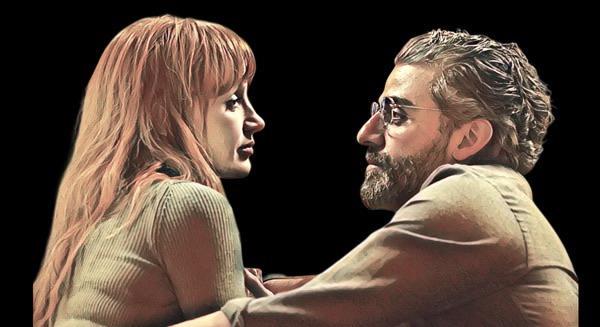
Ingmar Bergman may be the most famous example. Rather than ending the story when two people get together, he chose to explore what happens afterward. In Scenes from a Marriage, marriage is not the destination but the starting point for a brutal investigation of intimacy, resentment, desire, frustration, and incompatibility. What Bergman discovers is not proof of eternal love, but the ongoing difficulty of keeping two people emotionally aligned over time.
Something similar happens decades later in Before Midnight, when Richard Linklater takes Jesse and Céline into territory romantic narratives rarely explore. After two films built around the magic of encounter and the promise of a shared future, the inevitable question finally emerges: what happens when everyday life arrives?
Perhaps no work has answered that question as devastatingly as Revolutionary Road. Richard Yates’s novel and its film adaptation remain among the harshest portraits ever created of a love unable to survive the collision between fantasy and reality. What makes Frank and April Wheeler’s story so disturbing is that they do not fail because they lack love. They fail because love does not solve everything.
For much of the story, they believe they share a dream, a vision of the future, and an identity built in opposition to the mediocrity they perceive around them. When reality begins dismantling that fantasy, they discover that wanting the same idealized life is not the same thing as being capable of building it together. Yates’s novel is particularly cruel because it dismantles one of modernity’s most seductive promises: the belief that a better life is waiting just beyond the next decision. For April, Paris functions less as a real place than as a vessel for the fantasy that happiness exists somewhere else. The problem, of course, is that reality has an unfortunate habit of following us wherever we go.
This may be one of the hardest ideas for romantic culture to accept. We like to believe that finding the right person solves life’s fundamental problems. Romantic literature, Hollywood, and much of popular culture have been built around that promise. Yet Bergman, Yates, Cassavetes, and many others spent decades questioning exactly that assumption. Love may exist and still not be enough. Two people may admire one another and still fail. Shared dreams may not survive the demands of everyday life. Meeting the right person does not automatically erase differences, limitations, or frustrations.
Perhaps this is where the original question finally finds its answer.
Love and narrative are not the same thing, but we have learned to understand love through stories. For centuries, novels, poems, plays, films, and television series have taught us how to recognize passion, heartbreak, reunion, and loss. We learned to identify love through narrative structures, and as a result, we often expect emotional life to follow the same rules as fiction.
The difference is that narrative exists to record transformation. A story begins when something changes and ends when that change produces a consequence. Love, by contrast, is constantly tested by what happens after the transformation. If narrative is interested in the event itself, love must survive its consequences.
Narrative is what happens when something changes. Love is what must survive after the change.
Perhaps that is why so many people feel disappointed by modern relationships. For centuries, the dominant fantasy was that happiness depended on finding the right person. Today, particularly in the digital age, we seem to be moving toward an opposite simplification. If culture once promised completeness through love, it now often suggests that the solution is not needing anyone at all.
The logic remains binary. Either love is total fusion, or independence is the only acceptable form of emotional freedom. In both cases, the complexity of human experience disappears.
What makes this shift especially interesting is that it has occurred alongside a growing awareness of concepts such as emotional dependency, anxious attachment, toxic relationships, and codependency. This evolution is important, particularly because destructive behaviors were romanticized for decades. Yet there is also a risk of creating a new trap. If every intense emotion was once celebrated as proof of true love, today any need for another person can be treated as weakness or pathology. As so often happens in contemporary life, nuance becomes the first casualty.
This is where psychoanalysis still offers valuable insight. Freud never believed in absolute independence. Neither did Winnicott. And Lacan, despite the simplified interpretations often attached to his work, did not argue that the solution to human suffering was the elimination of desire. What these thinkers recognized, each in their own way, is that lack is built into the human condition. We seek connection because we are relational beings. We seek recognition because we need it. We seek love because shared life remains one of the deepest forms of human experience.
Perhaps the popular reading of Lacan has produced one of the most seductive simplifications of all. We often hear that we desire what we do not have, as though desire were merely a pursuit of the absent object. The reality is more complicated. Often, we desire not the object itself, but the fantasy built around it. That may explain why so many people spend their lives chasing the next experience, the next passion, the next possibility, or the next version of themselves. Desire feeds on absence. Love, however, is confronted daily by presence.

This does not mean permanence is easy, nor does it mean Bergman was wrong. On the contrary, perhaps the twentieth century was the moment when culture realized that “happily ever after” was less a destination than an ongoing task. Modern art did not abandon love; it became suspicious of it. Bergman, Yates, Baumbach, and countless others were not claiming that love was impossible. They were questioning whether love alone could sustain all the expectations we project onto it. Perhaps that question remains unanswered.
The more I think about it, the less convinced I am that the problem lies with love stories themselves. They do what narratives have always done: organize conflict, desire, and transformation. The real issue may be the way we use them as models for understanding our own lives. We expect love to produce the emotional peaks we encounter in fiction. We expect real relationships to replicate the intensity of extraordinary encounters. We expect happiness to follow the structure of a satisfying story.
Relationships rarely work that way.
Perhaps that is why we keep returning to the same stories. Not because they explain love, but because they attempt to give form to something that resists being organized. Narrative is exceptionally good at talking about desire. It is equally good at talking about loss, failure, and separation. What remains rare are stories capable of treating permanence as something as interesting as conquest or as dramatic as rupture.
Perhaps that is because narrative was built to record moments of transformation, while love, most of the time, is built through continuity.
Perhaps love is not a story.
Perhaps it is what happens after the story ends.
Descubra mais sobre
Assine para receber nossas notícias mais recentes por e-mail.

