
As the world marks the 145th anniversary of Anna Pavlova’s birth in 2026, the Russian ballerina continues to occupy a unique place in the history of the arts. Nearly a century after she died in 1931, few figures remain so closely associated with the very idea of ballet as the woman who transformed The Dying Swan into one of the most famous solos of all time. Yet there is another fascinating aspect of her legacy that is rarely discussed: her unexpected relationship with cinema.
The connection between ballet and film has always been a curious one. Unlike popular music, theater, or opera, classical dance never truly found a natural extension on screen. Hollywood has produced relatively few films about dancers, and even when it has, it has rarely managed to capture the experience of witnessing a live performance. Perhaps that is because ballet depends on physical presence, space, and that unrepeatable bond between artist and audience.
Which is precisely why Anna Pavlova occupies such a special place.
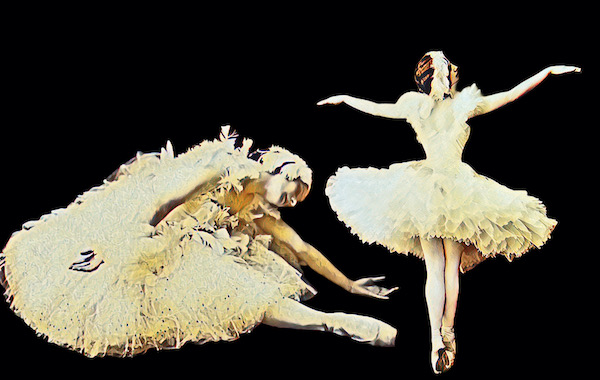
The greatest dance legends of the nineteenth century belong, in many ways, to the realm of imagination. Of Marie Taglioni, Fanny Elssler, and Carlotta Grisi, only portraits, paintings, and the passionate accounts of those fortunate enough to see them perform remain. Something similar can be said of figures such as Sarah Bernhardt, Eleonora Duse, and even Enrico Caruso. We know they were giants in their respective fields, but we can never fully witness what so captivated their contemporaries.
Pavlova belonged to a transitional generation. By the time she achieved international fame, cinema was still in its infancy, but it was already capable of preserving movement. And the ballerina quickly understood the potential of these new technologies. She posed for photographers, distributed postcards, gave interviews, and allowed her performances to be filmed. In many ways, she behaved like a modern celebrity decades before Hollywood perfected the star system.
In 1916, she starred in The Dumb Girl of Portici, directed by Lois Weber, one of the pioneers of American filmmaking. More important than the film itself, however, were the surviving recordings of her dancing. Thanks to them, Anna Pavlova became one of the first artists in history to leave behind not merely still images, but movement itself.
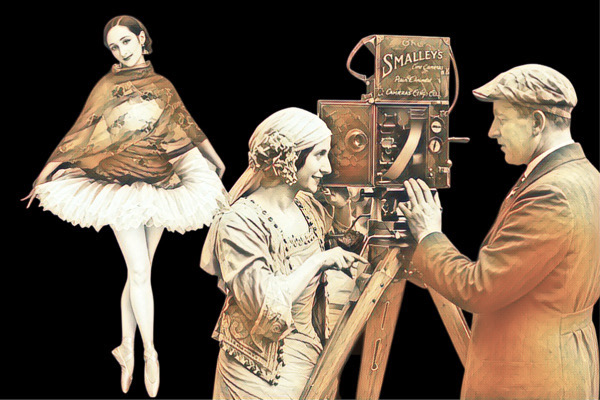
Which means that more than a century later, we can still observe her delicate arms, her musicality, her port de bras, and the interpretation that turned The Dying Swan into an immortal work. These fragments are naturally imperfect and limited by the technology of the era, yet they are enough to create an extraordinary bridge between the nineteenth, twentieth, and twenty-first centuries.
The irony is that cinema never truly fell in love with ballet. Maria Callas, Edith Piaf, Judy Garland, and Leonard Bernstein have all inspired films and television series. Sarah Bernhardt, another giant of the performing arts, recently received a French biopic. Yet the woman who may have been the greatest star in the history of dance is still waiting for a production capable of doing justice to the scale of her legend.
Perhaps because Pavlova herself had already achieved something few artists ever have. While Taglioni, Grisi, and so many others survive only in portraits and descriptions, Anna Pavlova continues to dance.
And perhaps there is no more beautiful form of immortality for a ballerina.
Descubra mais sobre
Assine para receber nossas notícias mais recentes por e-mail.

