
To this day, one of the most fascinating questions surrounding House of the Dragon remains one of the hardest to answer. After all, who truly betrays Rhaenyra Targaryen during the Dance of the Dragons? Or does she, in the end, become paranoid and unjust? There is room for both interpretations, at least in the book, but what makes the story so compelling is watching Rhaenyra’s emotional and strategic deterioration in her quest for the Iron Throne.
Some names are obvious, but others have remained the subject of debate among Fire & Blood readers for years because there are also those who never abandoned the queen, yet ended up being treated as traitors during her darkest moments. Since the series is changing certain events and presenting different perspectives, it is worth revisiting the list (with SPOILERS).
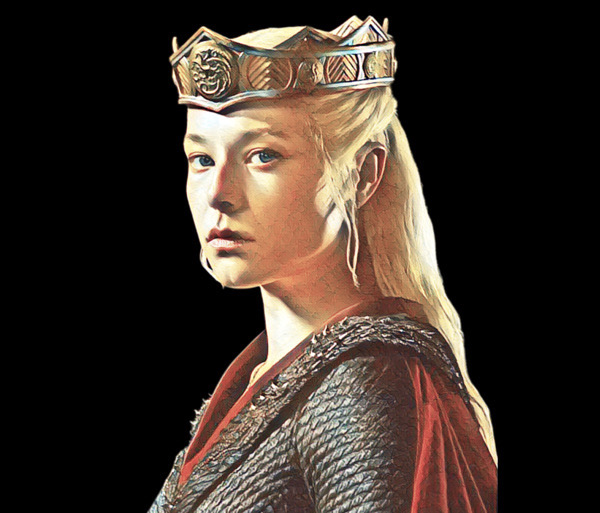
Because the greatest tragedy of the Targaryen civil war lies precisely in this uncertainty: Rhaenyra is indeed betrayed by some of the men and women around her, but as the losses mount and paranoia takes hold, she begins to see enemies everywhere. And, in some cases, that mistrust ends up creating the very betrayals she fears most.
The Real Enemies
Alicent Hightower
The relationship between Alicent and Rhaenyra is probably the most complicated in all of House of the Dragon, precisely because the word “betrayal” never belongs exclusively to one side.
In the books, Alicent is older than Rhaenyra and assumes an almost maternal role after marrying Viserys. Once her own children are born, however, the relationship between stepmother and stepdaughter deteriorates rapidly, and Alicent openly begins defending the idea that Aegon II should inherit the Iron Throne.

The HBO series chose a far more tragic route. Alicent and Rhaenyra begin as best friends, and the first great wound between them occurs when Viserys decides to marry Alicent. Although the young woman is obeying her father, she hides her meetings with the king from Rhaenyra and becomes the new queen. Their friendship would never fully recover.
Curiously, Alicent is not initially the obedient daughter Otto wishes her to be. For years, she has hesitated to pressure Viserys into changing the succession and naming Aegon heir. There is no way of knowing whether she could have convinced her husband, but the mere existence of three sons already placed Rhaenyra’s position at risk.
On the other hand, Rhaenyra herself contributes to the final rupture. Her nighttime escapade with Daemon, the loss of her virginity to Ser Criston Cole, and, above all, the lie — or at least the omission — before Alicent destroyed whatever trust remained between them. When Viserys orders moon tea prepared for his daughter, and Alicent discovers what happened, she concludes that she has been deceived by her former friend and begins to see her in a completely different light. From that moment on, Alicent decides to protect the interests of her own children.
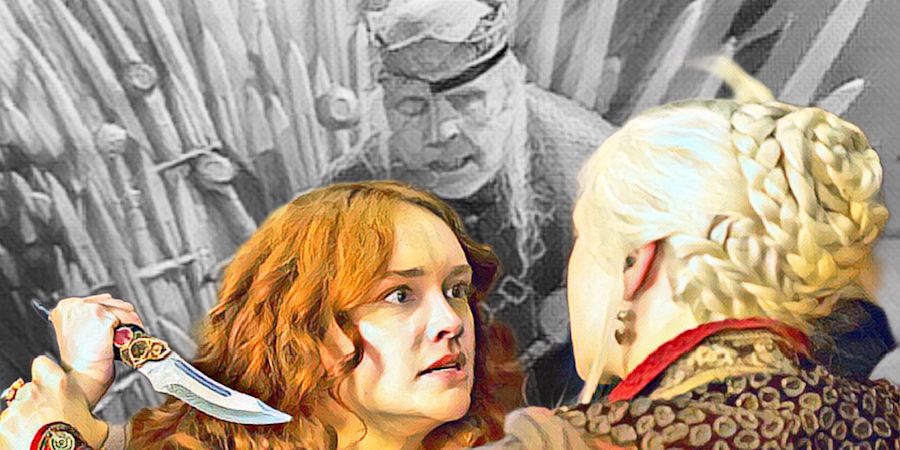
In the books, that decision is clear and deliberate. In the series, however, the writers choose to make everything more ambiguous. Alicent continues judging Rhaenyra for what she sees as moral failings, but she also misinterprets Viserys’ final words and believes she is carrying out her husband’s wishes. In doing so, she becomes directly involved in the usurpation of the throne, though not in the cold and calculated way described by George R. R. Martin.
Yet it is impossible to ignore that Rhaenyra herself contributed to destroying the trust between them. First came the lies and omissions of their youth. Later, after marrying Laenor Velaryon, Rhaenyra continued openly defying the conventions of Westeros by having three children clearly fathered by Ser Harwin Strong, exposing Alicent, her children, and the entire court to a situation the queen consort considered not only morally offensive but politically dangerous.
Years of accumulated resentment transformed a genuine friendship into a relationship defined by mutual pain, broken promises, and a profound sense of betrayal on both sides.
And the irony continues after Aegon II’s coronation. Once her son assumes power, Alicent discovers that the men she helped place in command no longer need her. Little by little, she realizes that the conflict she imagined she could control has become a devastating civil war. The regret that follows does not necessarily come from a change of heart regarding Rhaenyra, but from the realization that the consequences have become far greater than she ever imagined.

By the second season, Alicent even promises to surrender Aegon II and King’s Landing to prevent further bloodshed. But, as has happened so many times throughout her life, she discovers too late that she no longer controls events.
And, in a way, this becomes yet another promise she cannot keep. Another unintentional betrayal in a relationship marked by love, resentment, and mutual disappointments.
Otto Hightower
Long before the war began, Otto Hightower had already decided that Rhaenyra should never sit on the Iron Throne. Even after Viserys repeatedly reaffirmed his daughter as heir, Otto spent years building alliances and laying the groundwork for Aegon II’s coronation.
In many ways, the Targaryen civil war begins with Otto’s refusal to accept the king’s wishes and his determination to place his own bloodline on the throne.
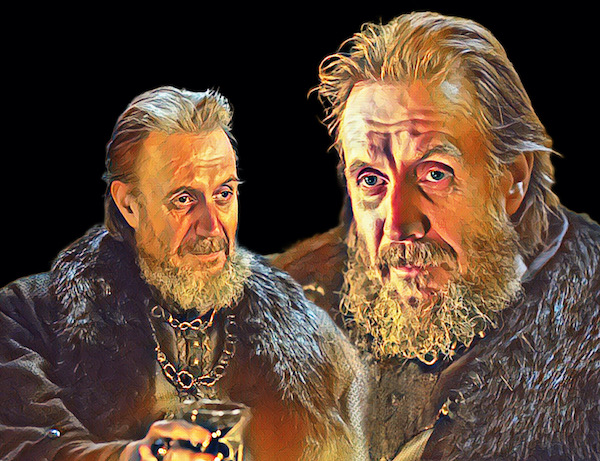
Aegon II Targaryen
And forgive me for always returning to the book, but Rhaenyra and her brothers never exactly shared an affectionate relationship. They lived together for years, but rivalry existed from the beginning. In House of the Dragon, this dynamic becomes even more tragic. Rhaenyra resents the birth of Aegon II because she correctly understands that the boy will one day be used against her. Still, the fifteen-year age difference means they grew up almost as strangers. Aegon spends more time with his nephews than with his older half-sister and, truth be told, seems to despise almost everyone around him.
The series’ version of Aegon is far more interesting than the one presented in Fire & Blood. For most of his youth, he shows no interest in the throne Otto Hightower, Alicent, and so many others insist is his by right. On the contrary. He grows up under the shadow of his father’s rejection, aware that Viserys never hid his preference for Rhaenyra, and under the rigid, suffocating upbringing imposed by his mother. The result is a deeply unhappy young man, given to drink, surrounded by bastards, and accused of abusing women in service to the court. And still, he shows no genuine desire to rule.
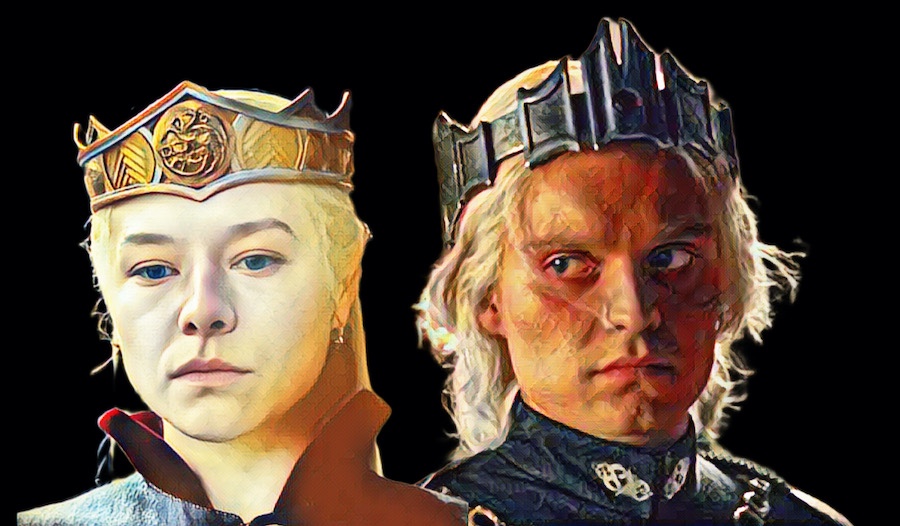
Everything changes with Viserys’ death. Convinced by Alicent that his father had changed his mind in his final moments and believing he is merely carrying out the king’s wishes, Aegon accepts the crown and claims the Iron Throne for himself. From that moment on, he becomes his half-sister’s greatest rival and the figure around whom the entire war revolves.
But perhaps that is precisely why the word “betrayal” becomes more complicated when it comes to Aegon II. From Rhaenyra’s perspective, there is no doubt that her brother stole what had always belonged to her by right and destroyed the Targaryen family by accepting a crown that was not his.
From Aegon’s perspective, however, the story is different. Raised from childhood to believe he was the rightful heir, convinced by his mother that Viserys had changed his mind, and surrounded by men who told him that his very survival depended on becoming king, Aegon probably never saw himself as a traitor.
Perhaps that is what makes the relationship between the two so fascinating. Because, more than in any other case during the Dance of the Dragons, the answer depends entirely on which side of the story one chooses to tell.
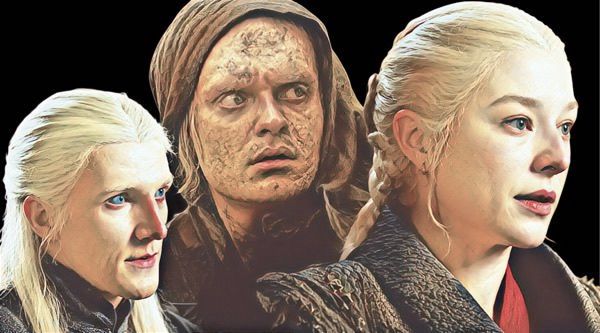
Aemond Targaryen
If Aegon represents war, Aemond represents the definitive destruction of any hope of reconciliation. Even more than in the book, House of the Dragon transformed Alicent’s second son into a figure who is at once fascinating and deeply disturbing, allowing viewers to witness how this monster was shaped over the years.
Raised without any positive feelings toward his older sister and even less toward his nephews, whose bastardy was a source of contempt among the Greens, Aemond was never an important piece in the line of succession. But perhaps he was the one who prepared the most to rule. More disciplined than Aegon, more studious, and more devoted to the arts of war, he dreamed of the crown more than his brother and, at certain moments, even more than Rhaenyra herself.
The problem is that, ignored by his father and often neglected by his mother, Aemond grew up carrying countless insecurities. The greatest of them was the humiliation of not having a dragon while nearly everyone around him did. Everything changes when he claims Vhagar, the most powerful living dragon in Westeros. What should have been the happiest moment of his life quickly turns into tragedy. After all, in Baela and Rhaena’s eyes, Vhagar rightfully belonged to the memory of Laena Velaryon. The confrontation between cousins and nephews escalates into violence and ends with Aemond losing an eye. In return, however, he gains something far more dangerous: the deadliest dragon in Westeros.
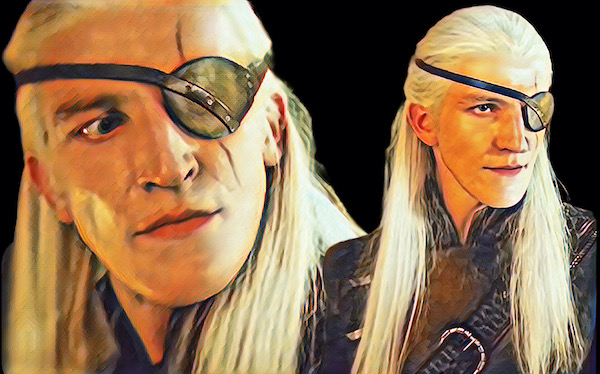
And, as Viserys had warned so many times, the notion that the Targaryens control their dragons is an illusion. The immense power acquired by Aemond soon proves a threat to everyone around him. The death of Lucerys Velaryon at Storm’s End transforms a political dispute into a bloody and irreversible war. Whether accidental or not, the death of Rhaenyra’s son is felt by the queen in her very soul. From that moment onward, she no longer wants negotiations or compromises. She wants her brother’s head.
In the second season, House of the Dragon makes Aemond even darker than his literary counterpart. By taking control of the Greens and attempting to kill his own brother, he makes it clear that his willingness to betray is not limited to his enemies. Aemond ultimately betrays Aegon, Alicent, and practically everyone around him in the name of what he believes is his duty and his right.
And perhaps that is one of the character’s greatest ironies. Because from Rhaenyra’s perspective, Aemond is a monstrous traitor, responsible for Luke’s death and much of the destruction that follows. But from Aemond’s own point of view, betrayal is a word that simply does not exist. To him, everything he does is necessary. Everything he does is his duty. And everything he does is, above all, what he believes is his right.
Ser Criston Cole
Formerly Rhaenyra’s protector and, in the series, also her lover, Criston Cole becomes one of the most important men within the Green faction. It is no accident that history would remember him as the Kingmaker. Few betrayals possess such a personal dimension.

Fabien Frankel himself often jokes that House of the Dragon seems determined to expose all of Criston Cole’s flaws. His anger, wounded pride, resentment, and the role he plays in building the hatred between siblings and nephews are among the aspects most emphasized by the series.
And there is a curious irony in all of this. Among all the men in Westeros, perhaps Criston was one of the very few who never doubted that Rhaenyra was Viserys’s chosen heir. After all, he accompanied her on the hunt during which the legendary white stag appeared before the princess, a symbol interpreted by many as divine confirmation of her legitimacy.
More than that, Criston was practically inseparable from Rhaenyra. Half in love and half seduced by his closeness to the future queen, he ultimately gives in to the princess’s advances and breaks his vows as a member of the Kingsguard. Consumed by guilt, he attempts to turn that single night into a love story. In his mind, the two of them could flee King’s Landing, abandon the succession, and live a simple, happy life far from the obligations of court.

Rhaenyra, however, rejects the proposal without hesitation. She chooses to remain heir to the Iron Throne, marries Laenor Velaryon for political convenience, and, later, openly carries on a relationship with Ser Harwin Strong. In Criston’s eyes, it was not merely his love that had been rejected. It was the sacrifice he believed he had made for her.
Perhaps that is precisely why Criston Cole’s transformation is so bitter. Wounded by pride and consumed by jealousy and envy, he begins to seize every possible opportunity to humiliate, weaken, and harm Rhaenyra. The man who once swore to protect her becomes one of the principal architects of Aegon II’s coronation and the strengthening of the Greens.
And, at least in HBO’s version, everything suggests that his role in the tragedies of the Dance of the Dragons will be even greater than what was described in the pages of Fire & Blood.
I confess that, in this case, it is difficult to feel sorry for him.
Larys Strong
Here is Rhaenyra Targaryen’s greatest enemy and, ironically, one she may never have truly recognized. Unlike Otto Hightower, Criston Cole, or Aemond Targaryen, Ser Larys Strong never raises a sword against the queen. His battlefield has always been different: dark corridors, secrets, and the weaknesses of those around him.
Brother to Harwin Strong, Rhaenyra’s lover, and son of Lyonel Strong, the Hand of the King, Larys never demonstrates true loyalty to anyone but himself. Manipulative and opportunistic, he adapts to any political circumstance and makes survival his only cause. His betrayal is permanent because he never truly belongs to any side.


From early on, it is through him that Alicent learns of Rhaenyra’s lies and omissions. It is also thanks to the privileged access he possesses through his father and brother that Larys becomes aware of the future queen’s secrets. Yet, in a display of cruelty that defines his entire life, he arranges the murder of the very two men who should have been closest to him. The deaths of Lyonel and Harwin Strong not only eliminate political rivals but also deprive Rhaenyra of an important ally and the man she loved.
Underestimated since childhood because of his physical disability, Larys learns to transform what others perceive as weakness into a weapon. Ignored by many and considered harmless by others, he reveals himself to be one of the most dangerous men in Westeros.
Nor does his influence end with Aegon II’s ascension. After the king is gravely injured and abandoned by almost everyone around him, including his own mother and brother, it is Larys who ensures his escape. In doing so, he betrays not only Rhaenyra but also Alicent, the Greens, and any traditional notion of loyalty.
And his betrayals are far from over.
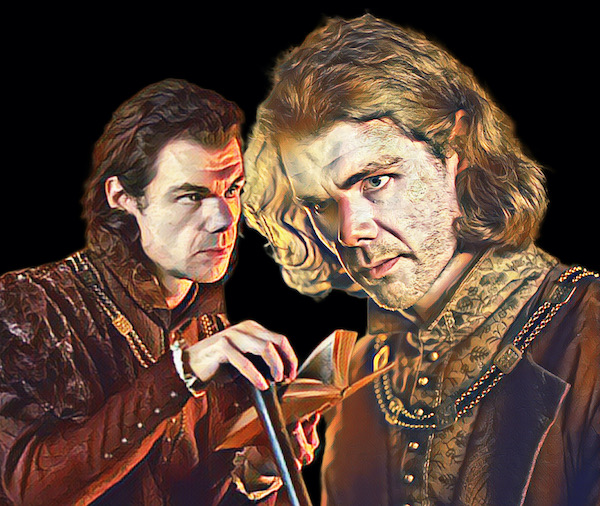
In the years that follow, Larys will continue spreading mistrust, manipulating people, and deepening divisions within both court and kingdom. His talent for turning rumors into weapons and secrets into power helps cement the terrible reputation that will surround Rhaenyra for generations. Indirectly, his actions will also contribute to the deaths of countless innocents and to the perpetuation of the wounds left open by the Dance of the Dragons.
Ser Larys Strong betrays simply because it is what he knows how to do. In his case, traitor is practically both his first and last name.
Borros Baratheon
House Baratheon had sworn loyalty to Rhaenyra decades before the war. But when the time came to honor that promise, Borros Baratheon chose the Greens in exchange for political advantages and marriage alliances. His decision represents yet another broken oath in a war built upon forgotten promises.
In the books, Rhaenyra and Borros never shared a close relationship, but the princess had every reason to consider Baratheon support guaranteed. After all, his father, Lord Boremund Baratheon, had been one of the strongest defenders of his niece’s claim during the Great Council of 101 and remained loyal to Viserys and his daughter until his death. His son, however, proved far more pragmatic.

When Lucerys Velaryon arrives at Storm’s End as an envoy for the Blacks, he finds a Borros Baratheon with little interest in old promises and far more willing to negotiate the future of his own house. While the Greens offer him a marriage alliance, Luke has nothing but a letter and the expectation that an oath sworn decades earlier might still hold some value.
The reception could hardly have been more humiliating. Borros dismisses the young prince before his entire court and allows Aemond Targaryen to turn a diplomatic visit into a personal reckoning. Though he refuses to shed blood beneath his roof, the Lord of Storm’s End does nothing to prevent Uncle from pursuing Nephew through the skies. It was that omission that changed the history of the Seven Kingdoms.
Because Lucerys’ death at Storm’s End does not merely represent the loss of a boy. It destroys any hope of reconciliation between the two sides of the family and plunges Westeros into a war with no return. For Rhaenyra, it is the most traumatic betrayal of the conflict’s early months. Her son had departed as a messenger, protected by the laws of hospitality, and never returned home.
Aemond was indeed the one who killed Luke. But Borros Baratheon created the conditions that made it possible. By choosing to ignore an ancient oath and turning a blind eye to the growing hatred between uncle and nephew, he played a decisive role in one of the most painful tragedies of the Dance of the Dragons.
Hugh Hammer
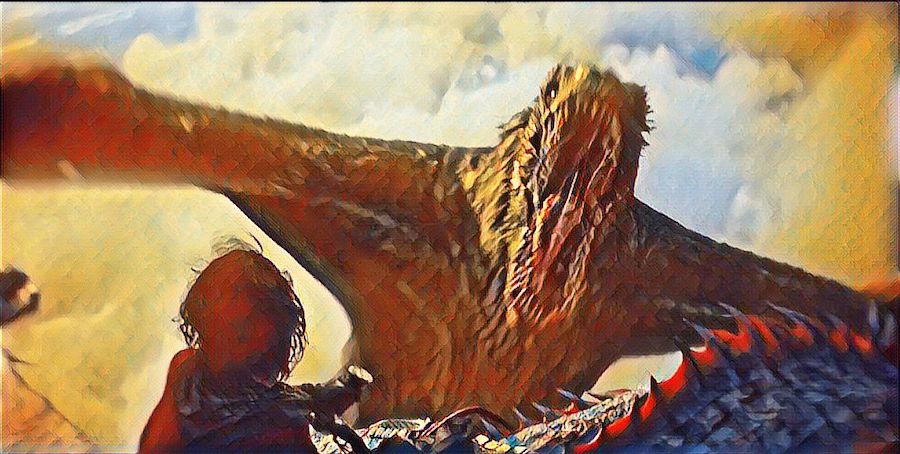
Among all the names associated with betrayal, none is more famous than Hugh Hammer. Initially an ally of the Blacks, he claims Vermithor and becomes one of the most powerful Dragonseeds. His change of sides is so infamous that, alongside Ulf the White, he would go down in history simply as one of the Two Betrayers.
In George R. R. Martin‘s books, the immense power Hugh acquires awakens his ambition. A bastard of humble origins, he comes to believe that the blood of the dragon runs through his veins just as surely as it does through Rhaenyra’s or Aegon II’s, and concludes that he might be more worthy of the crown than either of them.
House of the Dragon, however, seems determined to make his story more complex. Long before becoming a dragonrider, Hugh is introduced as an ordinary man crushed beneath a war waged by the powerful. Hunger and the lack of medicine destroy his family, and everything suggests that his wife will become yet another innocent victim of the conflict. It is difficult to imagine that such a succession of tragedies would not influence his choices.
Disillusioned with the Blacks and convinced that the Targaryens are sacrificing thousands of lives over a family dispute, Hugh abandons Rhaenyra during the First Battle of Tumbleton and joins the Greens, inflicting one of the most significant defeats of her reign. His defection changes the course of the war and destroys much of the advantage the Blacks had gained through the Dragonseeds.
But the betrayal does not end there.
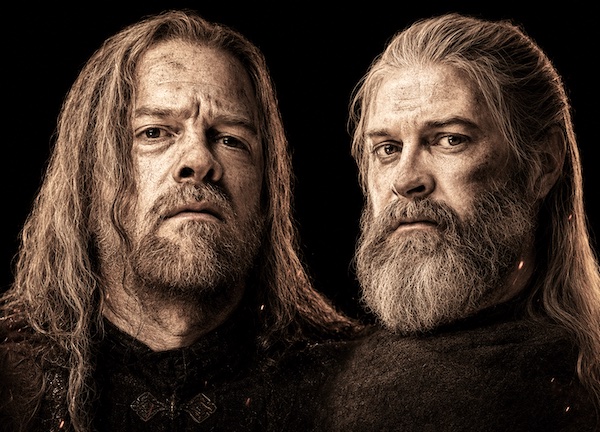
Once on the other side, Hugh begins dreaming of something greater. His arrogance grows to such an extent that he starts wearing a black crown and behaving as though he himself is destined to become king. The man who might initially have been viewed as a victim of war ends up consumed by the same hunger for power that destroyed the Targaryens.
House of the Dragon may transform Hugh Hammer into a more tragic figure than the one described in the pages of Fire & Blood. But that does not change the essence of his story.
Hugh may be a tragic traitor, but he remains a traitor. And, ironically, the greatest damage caused by his actions may not be the defeat at Tumbleton. The betrayal of Hugh and Ulf destroys Rhaenyra’s faith in all Dragonseeds, plunging the queen into a paranoia that would produce consequences even more devastating. In a sense, Hugh Hammer begins destroying Rhaenyra long before Sunfyre finishes the job.
Ulf the White
Detestable both on the page and on screen, Ulf the White emerged in House of the Dragon as one of those characters who seem to carry the word “traitor” in every line, gesture, and decision. Loud, lazy, and convinced of his own importance, he never hides the fact that his loyalty comes with a price.
As the rider of Silverwing, Ulf follows Hugh Hammer in changing sides during the First Battle of Tumbleton. In theory, his motives are less grandiose than those of his companion. While Hugh dreams of the Iron Throne, Ulf appears driven mainly by resentment, drink, and the conviction that he deserved greater rewards for his services.

Like so many characters in the Dance of the Dragons, Ulf believed the war would finally bring him wealth, prestige, and a better life. When he realizes that the promises made by the Blacks do not translate into the future he imagined, his loyalty disappears with astonishing ease.
Alongside Hugh, he helps destroy Tumbleton and contributes to one of the most devastating defeats suffered by Rhaenyra. The two men alter the course of the war and, more importantly, destroy the queen’s trust in her own Dragonseeds.
Frankly, in this case, there is not much more to say.
Ser Alfred Broome
Here is a character many viewers of House of the Dragon overlooked, yet one who demonstrates a remarkable ability to change sides from very early on. Throughout much of the second season, Ser Alfred Broome presents himself as a loyal supporter of Rhaenyra. However, when he is tasked with bringing Daemon back from Harrenhal, he quickly reveals his true convictions.
Upon meeting the prince, Broome does not attempt to persuade him to return to Dragonstone. Quite the opposite. Convinced that a woman cannot rule and believing Daemon would be the more suitable choice, he practically encourages him to seize the crown for himself. In other words, he betrays Rhaenyra before even completing the mission he had been given. Only for his calculations to prove disastrous.

When Rhaenyra personally arrives at Harrenhal and Daemon, transformed by his visions and by Alys Rivers’ influence, finally abandons any ambition to rule, Broome finds himself in a deeply embarrassing position. After saying aloud what should never have been spoken, he watches helplessly as the prince kneels before his wife and renews his loyalty to the Blacks. In the series, the shame is so obvious that Alfred is seen quietly leaving the room while everyone else swears allegiance to the queen.
In the books, his resentment takes on an even more dangerous form. Convinced that he never received the prestige and rewards he believed he deserved, Broome develops a growing bitterness toward Rhaenyra. And that is precisely what makes his betrayal so devastating.
When the queen loses King’s Landing and returns to Dragonstone, believing she has found one final refuge, she discovers too late that Alfred Broome has already chosen another side. It is he who eliminates her last defenders and delivers Rhaenyra herself to Aegon II.
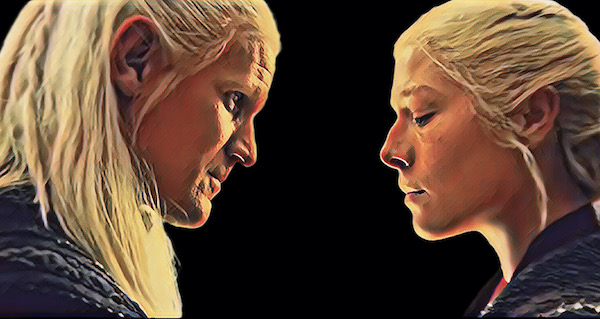
In a war marked by spectacular betrayals, dragons, and bloody battles, Alfred Broome’s betrayal is almost banal in origin because it’s born from the wounded pride of a mediocre man who believed he deserved more. Perhaps that is why his betrayal becomes one of the most decisive of the entire Dance of the Dragons.
Alfred Broome does not merely betray Rhaenyra; he is the last man to do so, and the queen’s final betrayal ultimately becomes the one that leads her directly to her death.
Tyland Lannister
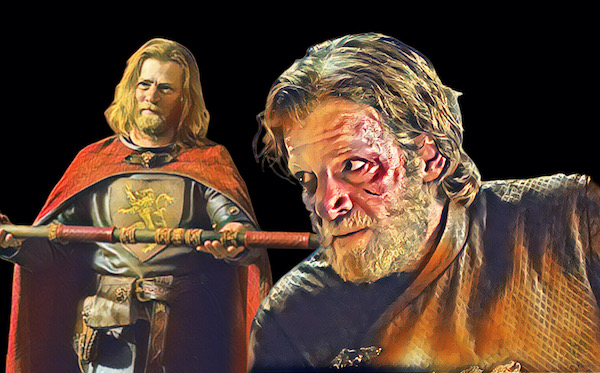
Tyland deserves a prominent place on this list. A member of Viserys’ Small Council and Master of Coin, he plays a direct role in the conspiracy that places Aegon II upon the Iron Throne. More importantly, he helps hide and disperse the royal treasury before Rhaenyra arrives in King’s Landing.
That decision proves crucial. When she finally captures the capital, Rhaenyra discovers that she has inherited a throne with virtually no money. The lack of resources forces her to raise taxes, alienates the population, and contributes to the collapse of her government.
Tyland never displays the slightest sympathy for the princess’s claim. His betrayal is calculated, intelligent, and devastatingly effective. Ironically, however, he would eventually become one of the few Greens to earn the respect of even his enemies, serving as Hand of the King during Aegon III’s reign.
Jason Lannister
Jason is far simpler. Lord of Casterly Rock and Tyland’s twin brother, he openly opposes Rhaenyra from the very beginning. Even during Viserys’ lifetime, he makes it clear that he believes Aegon should succeed his father and never hides his discomfort with the idea of a woman sitting on the Iron Throne. It hardly helps that he was one of the suitors rejected by Rhaenyra. But House Lannister swore to recognize her as heir, and failing to honor that oath is betrayal.
During the war, he places the full strength of the Westerlands behind the Greens, and he will pay dearly for it.
Mysaria
If anyone still had doubts about how much Mysaria deserves trust, it is probably because they have not read Fire & Blood or have forgotten the first season of House of the Dragon. Long before being spared by Rhaenyra and earning the queen’s trust, Mysaria had already betrayed more than one person. Daemon Targaryen included.
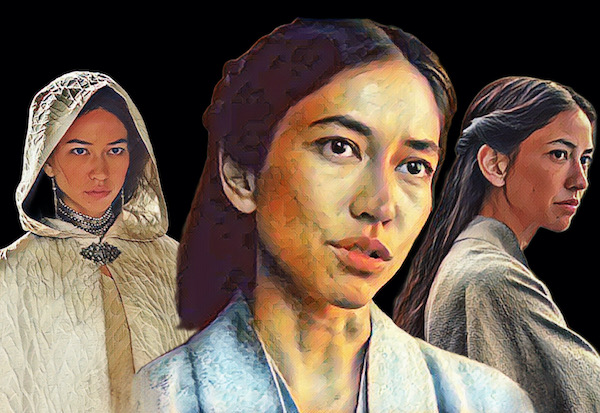
One of the most ambiguous figures of the entire Dance of the Dragons, Mysaria is a spy, a lover, a double agent, a counselor, and above all, a survivor. Her true loyalty never belonged to the Blacks, the Greens, or the Targaryens. It always belonged to Mysaria.
It is she who brings Otto Hightower the story that Daemon toasted the death of Baelon, the newborn son of Viserys and Aemma Arryn. We never actually see this happen in the series, nor do the books confirm the episode. We only know the account of what Daemon allegedly said. Still, the information is enough to provoke yet another rupture between the brothers, send Daemon into exile once again, and, ironically, strengthen Rhaenyra’s position as heir, something Otto Hightower always believed would be temporary.
Later, Mysaria once again serves the interests of the Greens by helping Otto search for Aegon II following Viserys’ death. Like Varys centuries later, she tends to justify her actions by claiming they are for the good of the people, but the truth is that Mysaria always seems to choose the side that best guarantees her survival.
Because of Daemon’s miscalculation, as he never explains to Rhaenyra just how dangerous his former lover can be and remains absent in Harrenhal for much of the war, Mysaria gradually grows closer and closer to the queen. House of the Dragon pushed this relationship even further by introducing a kiss between the two women, making the connection emotional and physical and reinforcing how seductive, influential, and dangerous Mysaria can be. And it is precisely when everyone appears suspicious that she becomes one of the people closest to Rhaenyra. Perhaps too close.
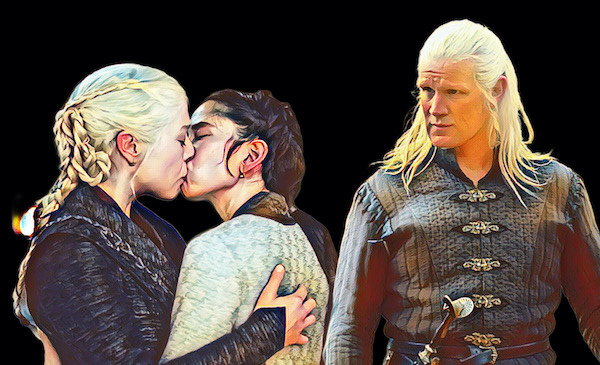
Several accounts in Fire & Blood suggest that Mysaria helped feed the queen’s suspicions regarding Nettles and contributed directly to the paranoia that would ultimately destroy the Black Council. If Hugh Hammer and Ulf the White shattered Rhaenyra’s trust in her allies, Mysaria may have been the voice that transformed that mistrust into obsession.
As with almost everything involving Mysaria, the truth remains shrouded in shadows. George R. R. Martin never provides definitive answers; frankly, I find it difficult to believe that House of the Dragon will choose subtlety. On the contrary. I suspect the series will make the destructive influence Mysaria exerts over the queen far more explicit.
For that reason, I have no hesitation in including her among Rhaenyra’s traitors.
Those Rhaenyra Considers Traitors
Addam Velaryon
Unlike in the book, Addam has already entered Rhaenyra’s life in the television series. He is chosen by Laenor’s dragon, which both reveals that she is probably a widow — in the series, Laenor fakes his death and escapes — and leads to the revelation, once Rhaenyra confronts him and brings him to Dragonstone, that he is the bastard son of Lord Corlys Velaryon.
If there is one clear example of Rhaenyra’s paranoia, which I believe will be fueled by Mysaria, it is Addam. Everything happens rather quickly. After the defection of Hugh Hammer and Ulf the White, the queen becomes convinced that all bastard dragonriders will eventually do the same, which is why she orders his arrest.
The suspicion, however, is entirely unjustified. While Rhaenyra believes she is eliminating a future traitor, Addam is gathering men in the Riverlands to save her cause. He will die fighting the real traitors at Tumbleton. His grave will bear only a single word.
“LOYAL.”
Nettles
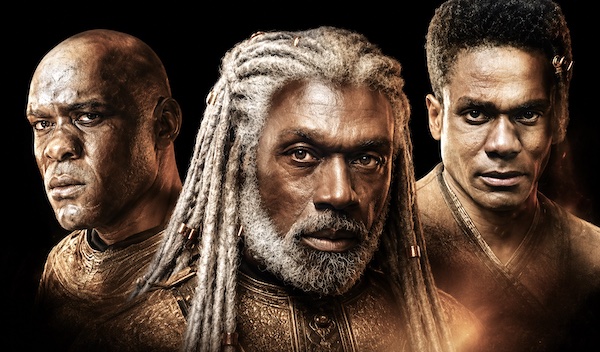
This is one of the most important characters removed from the series, with much of her storyline seemingly transferred to Rhaena, Daemon’s daughter. As a result, the betrayal Rhaenyra believes she sees in the young woman — whom she suspects of being Daemon’s lover in the books — is born out of jealousy and paranoia.
That raises an intriguing question about how the series will handle the situation, because in Fire & Blood, Rhaenyra orders the girl’s death, calling her a witch and a traitor.
Yet George R. R. Martin never provides any proof that Nettles actually betrayed the queen.
I will return to what may happen when discussing Rhaella.
Those Who End Up Betraying Rhaenyra Because of Her Own Decisions
Daemon Targaryen
Daemon Targaryen may be the most complicated case of them all. Throughout much of House of the Dragon, the impression is that, between Blacks and Greens, Daemon was simply red. Or, more precisely, that he always belonged to Team Daemon. Even if the third season is expected to show him fully embracing his role as general and consort, it does not erase a long history of betrayals that came before.
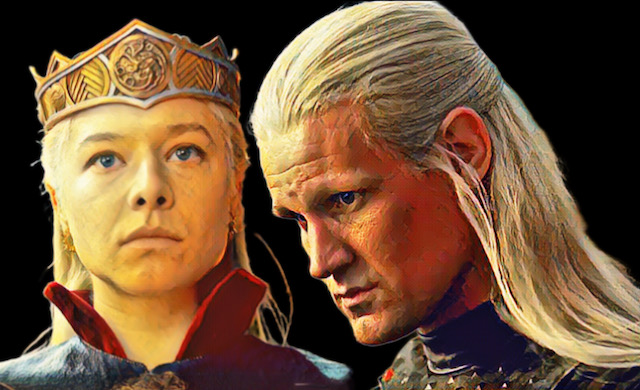
In the first season, consumed by jealousy and resentment after being passed over in favor of Rhaenyra, his intentions during the infamous night at the brothel remain ambiguous. By seducing his niece and bringing her into a public setting, Daemon places both her reputation and future at risk. Even though he ultimately refuses to consummate the relationship, when confronted by Viserys, he allows his brother to believe the worst. The lie — or at least the omission — represents a profound betrayal of his niece.
Daemon indeed asks for Rhaenyra’s hand, but Viserys correctly interprets the proposal as something driven as much by ambition as by desire. It would have been so much easier if the story had ended there, but it does not.
Once married to Rhaenyra, Daemon remains incapable of accepting that his wife might rule differently from the way he would. He ignores her during Visenya’s labor, physically attacks her when she refuses to follow his plans, and later disappears to Harrenhal, gathering an army in his own name rather than hers. For months, he has not even answered the messages sent from Dragonstone. In an ordinary marriage, that alone might be considered betrayal. During a civil war, it borders on rebellion.
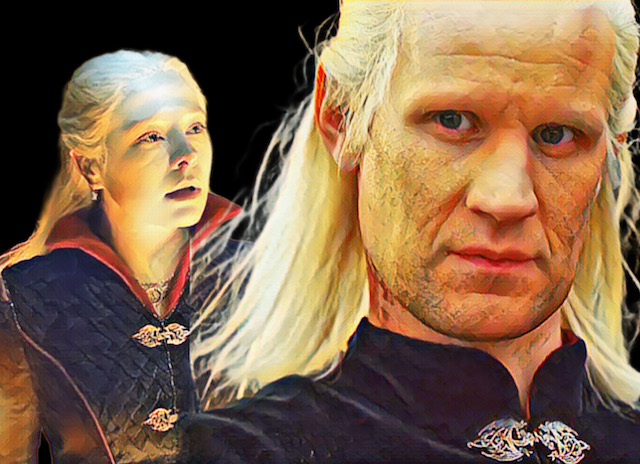
The second season indeed ends with an apparent reconciliation. Transformed by his visions and by Alys Rivers’ influence, Daemon finally seems to understand that he is not the hero of the prophecy and renews his loyalty to his wife. Everything suggests that we will see a more disciplined and committed version of Daemon in the battles to come.
But that is precisely where we enter dangerous territory, because without Nettles, House of the Dragon will have to reinvent the final great controversy surrounding Daemon Targaryen.
In the books, when Rhaenyra orders Nettles’ death, convinced that the young woman is both her husband’s lover and a potential traitor, Daemon chooses to disobey his wife. Rather than carrying out the order, he helps Nettles escape and rides alone toward his final confrontation with Aemond. For some readers, it is his final act of honor; for others, Daemon simply refuses to participate in an injustice. I have never been able to see redemption in Daemon. In fact, in my reading, he betrays Rhaenyra twice.
First, by saving Nettles and placing the girl above the authority of his queen. And then, by throwing himself into death above the Gods Eye, abandoning his wife when she needed him most, even if he does take Aemond with him. For those who believe Daemon survives and flees with Nettles to live an anonymous life together, the conclusion becomes even crueler. After all, how can that not be called betrayal? Perhaps that is precisely why Nettles’ absence from the series is so interesting.

With Rhaena apparently inheriting much of the storyline of the Sheepstealer rider, everything suggests that Daemon will be confronted with a different choice. Instead of choosing between his wife and a younger lover, he may have to choose between Rhaenyra and his own daughter. I have no doubt which choice he will make.
When that moment comes, Daemon will betray Rhaenyra again. But this time, the betrayal will mean something different. It will not be the selfish escape of an aging man chasing one final romance. It will be the choice of a father who finally learns to love a daughter he neglected for years, but instead, it will be a form of redemption. Perhaps that is why Daemon remains the most fascinating character in the entire Dance of the Dragons, because he never truly belonged to either side. Daemon Targaryen always belonged only to Daemon Targaryen.
Lord Corlys Velaryon
Perhaps no story is as tragic as that of Lord Corlys Velaryon. For decades, the Sea Snake was one of Rhaenyra Targaryen’s most important allies, although House of the Dragon has chosen to portray him as more hesitant and pragmatic than he appears in George R. R. Martin‘s books.
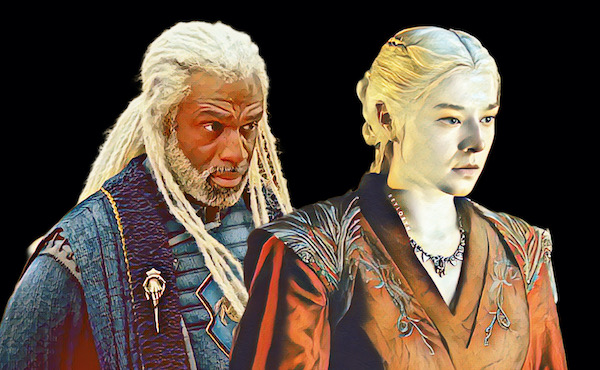
And that makes sense. Because, as much as Corlys loved Rhaenys, it is impossible to ignore that he always desired the crown. His marriage to the Queen Who Never Was was a union built on love, but also between two people who believed that, as the daughter of the heir, she should succeed Jaehaerys. When Rhaenys was passed over because she was a woman, Corlys immediately shifted his support to Laenor. The Great Council chose Viserys.
Years later, when Viserys became a widower, Corlys and Rhaenys did not hesitate to offer Laena, then only seven years old, in marriage to the forty-seven-year-old king. And even after that proposal was rejected, the relationship between House Velaryon and the Crown only truly recovered when Rhaenyra married Laenor, and the future kings would continue to bear the Velaryon name.
For that reason, it is difficult to argue that Corlys was motivated solely by conviction in the cause of the Blacks. Like so many great lords, he was also an ambitious man, determined to see his bloodline as close as possible to the Iron Throne. But the war would eventually force upon him a far more painful choice.

With no legitimate children left and with Rhaenys’ blessing to embrace the bastards as part of the family, Corlys ultimately finds an unexpected heir in Alyn and Addam Velaryon. Once Rhaenyra legitimizes him and names him heir to House Velaryon, Addam ceases to be merely an ally or a dragonrider. He becomes family.
That is why, when the queen, consumed by paranoia following the betrayal of Hugh Hammer and Ulf the White, orders Addam’s arrest, Corlys finds himself facing an impossible decision. Paranoid or not, right or wrong, it was an order, and he chose to disobey. Unable to stand by and watch the young man he considered his son executed, Corlys helps Addam escape.
Naturally, upon discovering what happened, Rhaenyra has the Sea Snake imprisoned for high treason. And, from a strictly legal point of view, she is not wrong. Corlys had disobeyed his queen, but it is precisely at that moment that something breaks forever. From then on, Corlys truly abandons Rhaenyra. Trust disappears, the Velaryon fleet ceases to sustain the war, and King’s Landing descends into chaos from which it will never recover, and it is here that George R. R. Martin delivers one of his cruelest ironies.
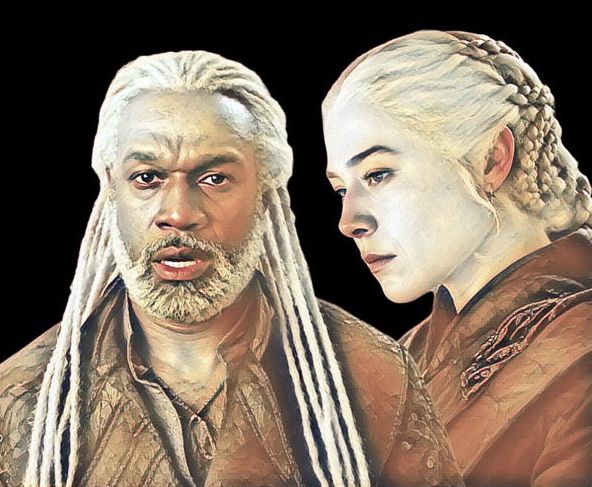
Addam Velaryon never betrays Rhaenyra, but the mistaken conviction is that he would ultimately create a real betrayal.
And a fatal one, as Rhaenyra ends up losing one man who would die fighting for her and another who had supported her for decades, and perhaps that is precisely what makes his betrayal the saddest of the entire Dance of the Dragons.
HBO’s Potential “Traitors”
Rhaena Targaryen
With Nettles removed from the series, everything suggests that House of the Dragon will transfer much of her storyline to Rhaena Targaryen. And if that interpretation proves correct, the change fundamentally alters not only the meaning of these events, but also the very list of Rhaenyra’s traitors.
In the books, the conflict between Rhaenyra and Nettles is born from jealousy involving Daemon. In the series, that possibility simply does not exist, but that does not mean betrayal has disappeared. On the contrary, it may become even more devastating.
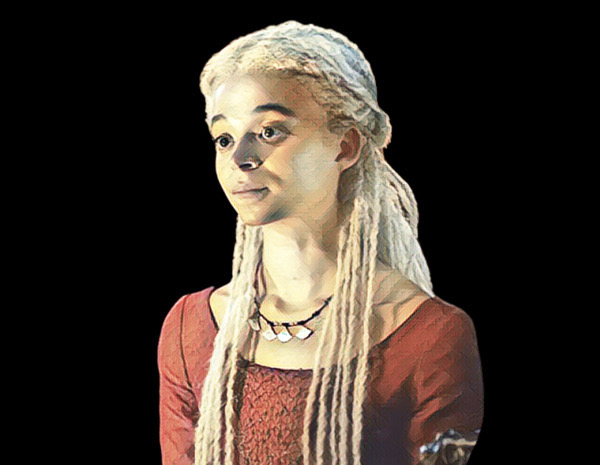
Rhaenyra trusts Rhaena. More than that, she entrusts her with one of the most important missions of the entire war. It falls to the young girl to take Aegon, Viserys, and the dragon eggs away from the conflict. In other words, she is entrusted with the future of House Targaryen itself.
The problem is that Rhaena never sees the mission that way.
Humiliated by the fact that she does not have a dragon, feeling inferior to Baela, Jace, and nearly everyone around her, she interprets her exile in the Vale as yet another sign that she has been left behind. Even when Rhaenyra explains that she is placing in her care the most precious thing she possesses — her heirs and the future of the dynasty — the young girl cannot hide her frustration. And it is precisely this mixture of impulsiveness, immaturity, and resentment that may produce one of the greatest tragedies of the series.
At the crucial moment, when the princes must leave Westeros, Rhaena apparently abandons her responsibility to claim Sheepstealer and join the war. From Rhaenyra’s perspective, it is difficult to imagine a more serious act of disobedience. After all, this is not a simple matter of insubordination: it concerns the safety of the queen’s children and heirs.
And according to reports regarding the first episodes of season three, the tragedy does not end there.
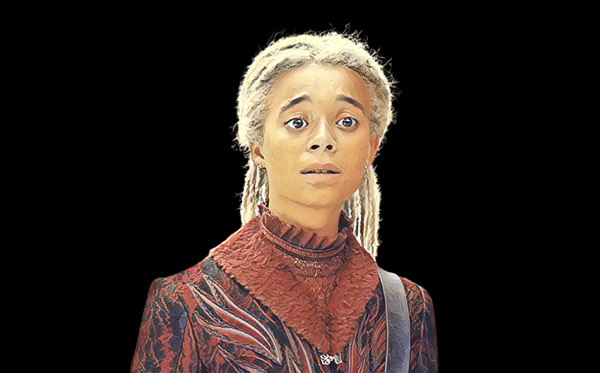

Without fully controlling Sheepstealer, Rhaena would take part in the Battle of the Gullet and inadvertently attack her own grandfather’s fleet. Forced to fly lower to escape the flames, Jacaerys Velaryon would be brought down and killed. Meanwhile, the two princes she had been entrusted to protect would be presumed dead, with Viserys II disappearing into enemy hands.
If those events truly unfold, it is difficult to imagine a more devastating blow for Rhaenyra.
In a single chain of decisions, Rhaena would contribute to the death of the queen’s heir, the disappearance of another son, and the destruction of part of the Black forces. And all of this at the very beginning of the war.
That is why I find it difficult to imagine House of the Dragon reproducing exactly the execution order Rhaenyra gives for Nettles in Fire & Blood. Nevertheless, the trailers already hint at profound consequences. Baela appears deeply furious, and the relationship between Daemon’s daughters and the queen may never recover.
And there is a curious irony in all of this.

In the books, Rhaena is practically the opposite of this tragic figure. Sent to the Vale for her own protection, she remains far removed from the war, witnesses the birth of Morning, and becomes a symbol of hope after nearly all the dragons have perished. Following the conflict, she becomes enormously popular in King’s Landing, marries twice, and lives a relatively long and peaceful life, far removed from the intrigues that destroy the rest of her family.
House of the Dragon appears determined to tell a very different story.
What Is the Result of All These Betrayals?
In the end, Rhaenyra’s greatest tragedy is that some traitors were easy to identify, but far more devastating than obvious enemies were the mistaken suspicions, divided loves, and loyalties placed under impossible strain.
In Westeros, not every betrayal is born out of hatred. Some of the deepest wounds are inflicted by people who genuinely believe they are doing the right thing. The problem is that, as the war becomes increasingly brutal, Rhaenyra herself begins making decisions driven more and more by fear. And it is precisely that mistrust which produces some of the most irreparable fractures of the entire conflict. In that sense, Rhaenyra ultimately betrays herself, and perhaps that is the greatest tragedy of the Dance of the Dragons.
Descubra mais sobre
Assine para receber nossas notícias mais recentes por e-mail.

