
The return of House of the Dragon has brought one of Westeros’ oldest questions back to the center of fan discussions: is Rhaenyra Targaryen truly descending into madness, or has the so-called curse of the dragonlords always meant something far more complex than simple insanity?
“Whenever a Targaryen is born, the gods toss a coin into the air and the world holds its breath to see how it will land.”
The saying is repeated at different points and by different characters throughout the saga, but in the books, it is Ser Barristan Selmy who recalls it to Daenerys herself. According to him, her grandfather, King Jaehaerys II, used to say that “madness and greatness are two sides of the same coin.”
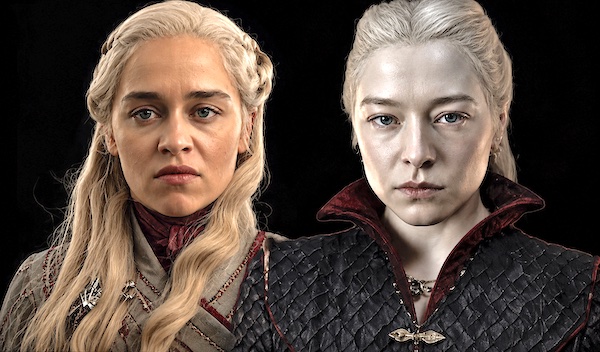
The shadow of insanity seems to hang over every Targaryen, the ones we love and the ones we do not, and in Game of Thrones, it eventually became a popular explanation for the extremes of the dynasty. Over the years, many fans came to treat it as an almost inevitable genetic rule. George R. R. Martin, however, has always appeared far more interested in the family’s ambiguities than in offering easy answers.
The question becomes even more fascinating because the third season of House of the Dragon seems determined to explore that uncomfortable boundary. After the deaths of her children, the betrayals, the isolation, and the devastation brought by war, Rhaenyra grows closer and closer to the figure described in Fire & Blood. Yet the portrait that emerges from Martin’s pages is far removed from a new version of Aerys II. What we see instead is a woman shattered by grief and surrounded by both real and imagined enemies, trapped in a world where survival and paranoia often become difficult to separate. In some ways, the ambiguity surrounding her fate echoes the controversy that surrounded Daenerys’ downfall in Game of Thrones.
The discussion becomes even more timely with the upcoming stage production Game of Thrones: The Mad King. Produced by the Royal Shakespeare Company, the play will revisit the final years of Aerys II and the events surrounding the Tourney at Harrenhal, one of the pivotal moments that led to the fall of the dynasty. Decades after the events of House of the Dragon, it would be Daenerys’ father who cemented the family’s dark reputation.
Not every Targaryen who flirted with the extremes, however, followed the same path. It is worth remembering some of those who earned that reputation over the centuries.
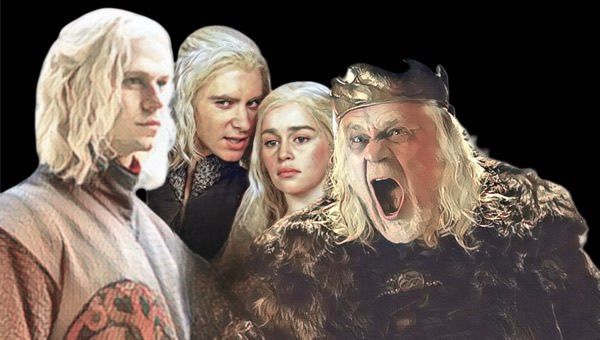
Maegor I, the Cruel (born 12 AC)
The son of Aegon the Conqueror, Maegor was the first Targaryen associated with extreme behavior. His reign was marked by executions, torture, and massacres. He ordered the deaths of former allies, slaughtered the builders of the Red Keep, and was accused of murdering two of his wives. Despite his brutality, many historians of Westeros regard him as a bloodthirsty tyrant rather than a truly insane man.
Baelor I, the Blessed (born 144 AC)
His extreme religiosity raised concerns even among his contemporaries. He fasted for long periods, imprisoned his sisters to preserve their purity, and ruled according to his faith. Some saw him as a saint; others as a fanatic.
Rhaegel Targaryen (born 185 AC)
He is one of the earliest members of the family explicitly described as eccentric and mentally unstable in Fire & Blood and The World of Ice and Fire. Accounts claim that he danced naked through the halls of the Red Keep and behaved strangely even by the standards of his own family.
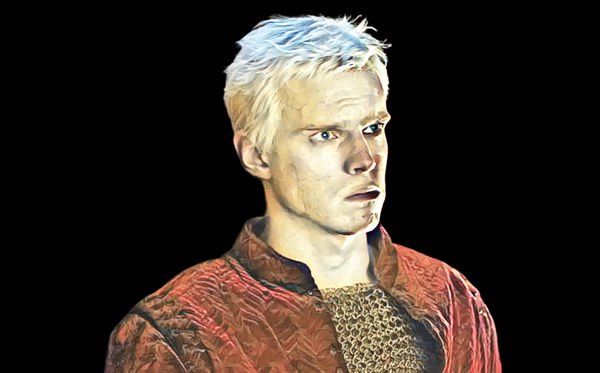
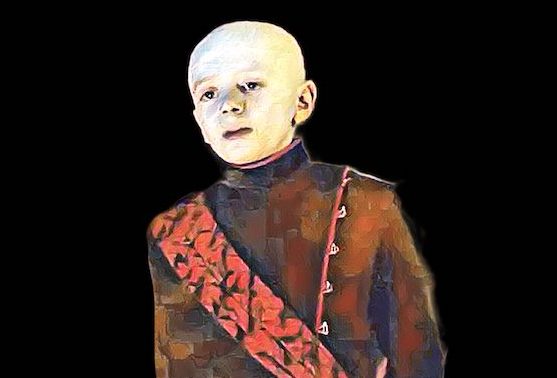
Aerion Brightflame (born 198 AC)
We have recently met him in A Knight of the Seven Kingdoms as an arrogant, cruel prince utterly convinced of his own superiority. Aerion is probably the first indisputable case of madness within the family. He ultimately drank wildfire, believing it would transform him into a dragon. Few examples of delusion are more obvious.
Aegon V, the Unlikely (born 200 AC)
Many readers may be surprised to find Egg on this list. After all, the young prince introduced in A Knight of the Seven Kingdoms would become one of the most beloved and reform-minded kings in Targaryen history. But his ending tells a different story. In his later years, Aegon V became increasingly determined to bring dragons back into the world. He died at Summerhall alongside his heir and several relatives and companions, including Ser Duncan the Tall, during an attempt involving wildfire and dragon eggs. Some see this as an obsession. To me, it looks disturbingly close to madness.
Aerys II, the Mad King (born 244 AC)
The most famous case in the dynasty is, naturally, the Mad King himself. Initially charismatic and ambitious, he became increasingly paranoid after the Defiance of Duskendale. He saw enemies everywhere, developed a fascination with fire, and took pleasure in watching people burn. His downfall led to Robert’s Rebellion and the end of Targaryen rule. It also permanently stained the lives of his children, especially Daenerys.

Viserys III Targaryen (born 276 AC)
Daenerys’ abusive older brother spent his life consumed by the loss of the Iron Throne. Violent and cruel, he constantly humiliated his sister while convincing himself that the world owed him a crown. Exile, trauma, and his obsession with power turned the Beggar King into an increasingly unstable figure, until Khal Drogo finally gave him the golden crown that would take his life.
Daenerys Targaryen (born 284 AC)
In the books, her story is still unfolding. In Game of Thrones, however, the destruction of King’s Landing led many viewers and characters alike to see her as a repetition of her father’s tragedy. Others argue that her downfall was shaped by repeated losses, isolation, and the growing belief that fear was the only thing that could secure her reign. It may well have been both.
Rhaenyra Targaryen (born 97 AC)
In Fire & Blood, Rhaenyra is not portrayed as another Aerys II, although her enemies do label her “Maegor with teats,” which is hardly flattering. She is depicted as a woman devastated by grief, war, and betrayal. Her growing paranoia and distrust make her one of the most ambiguous figures in Targaryen history, precisely because it is difficult to know where trauma ends and what the people of Westeros would call madness begins. It remains to be seen how House of the Dragon will choose to tell that story.
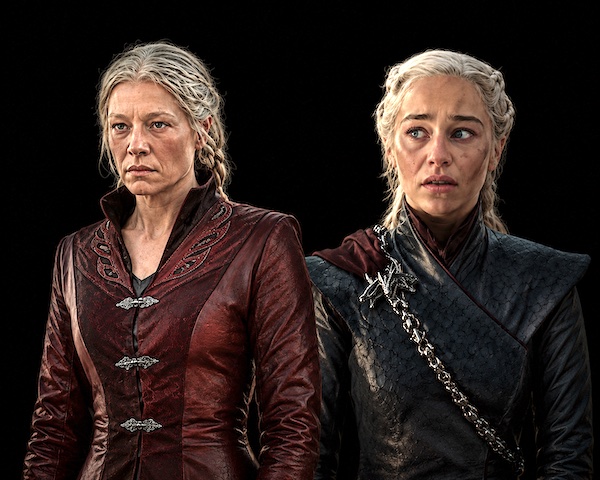
In the end, the gods’ coin may never have separated the sane from the insane. More often, it seems to produce extremes. Visionaries and fanatics. Martyrs and tyrants. Men driven by prophecy and women shattered by grief. Rhaegar had his visions. Baelor had his faith. Aegon V had his dragons. Daenerys had her conviction that she would save the world.
The greatest irony of the Targaryens is that nobody is born as the Mad King. Not even Aerys II entered the world as the man who would become infamous for wanting cities burned to the ground. The lovable Egg did not carry the ghosts of Summerhall as a child. And it would have been impossible to look at the young Rhaenyra of the first season and imagine the traumatized woman the war would eventually create.
George R. R. Martin seems far less interested in a genetic curse than in something profoundly human. After all, when a family grows up believing it has been chosen by the gods, commands dragons capable of destroying cities, and convinces itself that the fate of the world rests upon its shoulders, the real question may never have been which side of the coin came up.
The real question is how long it keeps spinning.
Descubra mais sobre
Assine para receber nossas notícias mais recentes por e-mail.

