
I’m already late to comment on something men probably hate, but women notice immediately. Yes, there are fashion trends on the football pitch, too. They usually show up in the length of the shorts, the height of the socks, and even the cut of the jerseys, but the visual signature of the 2026 FIFA World Cup is on the players’ feet. Or rather, on their boots. La Vie en Rose might as well be playing: all you have to do is watch a few matches to notice that many national teams are literally stepping into pink.
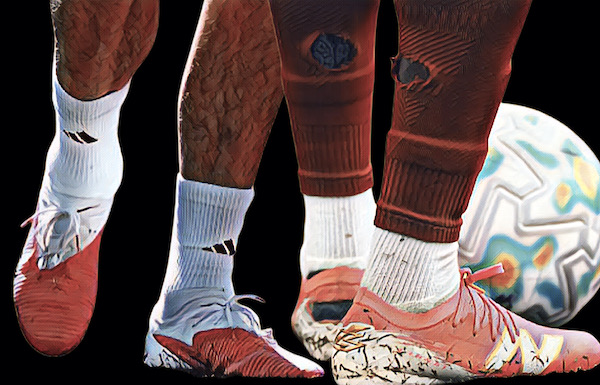
It may sound like a small detail, but it isn’t. For much of football history, boots were practically invisible. Black, heavy, and made of leather, they belonged to an era when players expressed their personalities more through talent than appearance. Pelé, Garrincha, Beckenbauer, Cruyff, and Maradona spent their careers wearing models that would look almost identical to today’s fans. For decades, no one imagined that the color of a football boot could become a topic of conversation.
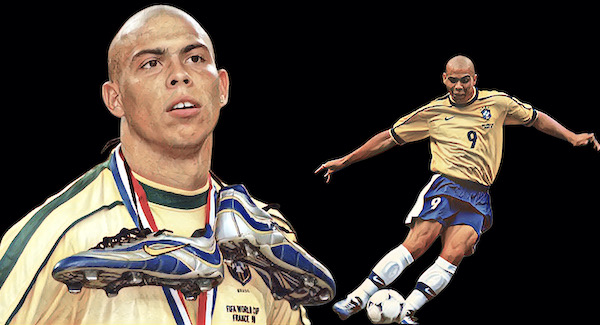
That reality began to change in the 1990s, when manufacturers realized that players’ feet could also serve as a showcase. The transformation coincided with an era in which athletes were becoming global celebrities, and in 1998, Ronaldo helped usher in a new chapter when he appeared at the World Cup in France wearing the silver Nike Mercurial. The image of the Brazilian star in those metallic boots became iconic and demonstrated that a football boot could inspire desire in much the same way as a pair of sneakers.
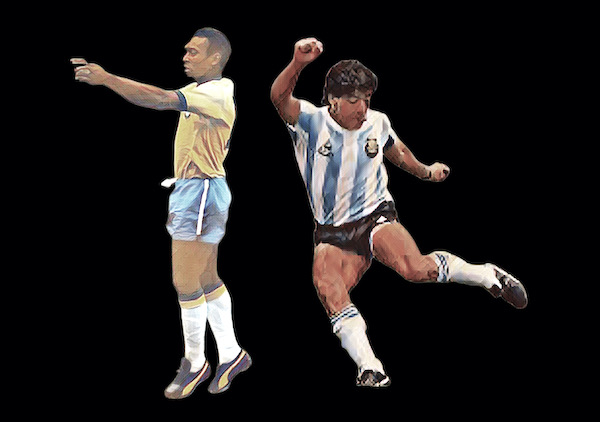
A few years later, David Beckham helped break another taboo by appearing in white Adidas Predator boots. What initially seemed extravagant soon became a trend. Gradually, black stopped being the only option and made way for gold, red, electric blue, fluorescent yellow, and orange, as the industry began releasing collections much like the fashion world.
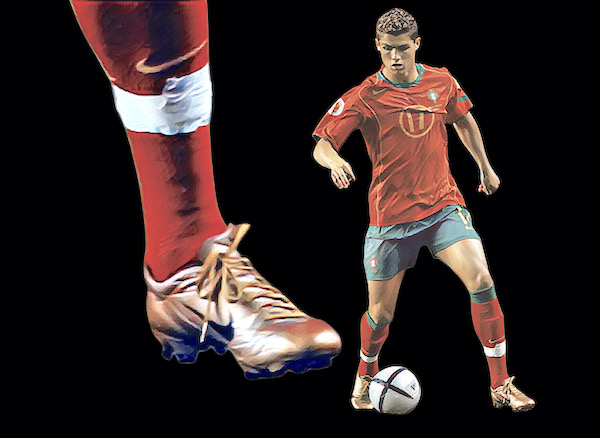
In the 2010s, Cristiano Ronaldo and Neymar took the process to another level. Boots ceased to be merely sporting equipment and became part of the players’ visual identity. Special editions, exclusive colors, and customized designs turned into marketing tools and symbols of style.
The rise of social media accelerated this shift even further. In an era dominated by short videos, high-definition broadcasts, and instantly shared images, attracting attention became a valuable asset. And few colors achieve that better than pink.
If a pink football boot had been considered extravagant decades ago, by 2026, it had become almost the World Cup’s unofficial uniform. Vinícius Júnior, Jude Bellingham, Erling Haaland, and countless other players have embraced shades of pink, fuchsia, and lilac without raising any eyebrows. What has changed is not simply the color of the boots. It is the very idea of what it means to be a football star.
And this is not just any shade of pink. The tournament seems to have embraced the same vibrant hue that fashion has nicknamed “Barbie pink.” Somewhere between fuchsia and magenta, the color had already conquered runways, red carpets, and menswear collections following the cultural phenomenon sparked by the film starring Margot Robbie. In 2026, it made its way onto the pitch as well. What was once seen as extravagant is now regarded as modern, stylish, and perfectly masculine. If the World Cup has an unofficial color, it is certainly pink.
Not everyone, however, has joined the trend. In what is likely his final World Cup, Lionel Messi remains faithful to more understated designs, a choice that places him closer to a tradition represented by players such as Luka Modrić and, to some extent, Cristiano Ronaldo. Even when they wear special or commemorative editions, all three remain connected to an era in which boots were viewed primarily as tools of the trade rather than extensions of personal branding.
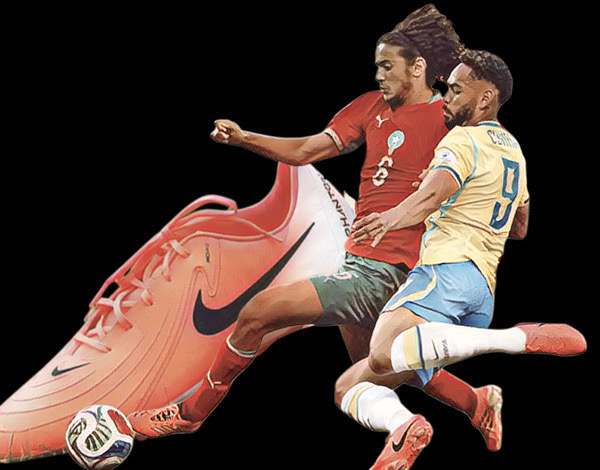
The contrast may reveal a generational shift. If Messi belongs to a lineage whose signature was defined mainly by what happened with the ball at his feet, the generation of Vinícius Júnior and Jude Bellingham has grown up in a world where style, personal branding, and social media presence are also part of the spectacle.
Because if Pelé represented an era in which everyone looked more or less the same, 21st-century players are encouraged to build their own identities. And, curiously, one of the most visible ways to do that is exactly where few people expected to look: their feet. In the end, even football, one of the world’s most resistant to change, has discovered that fashion takes the field, too.
Descubra mais sobre
Assine para receber nossas notícias mais recentes por e-mail.

