
As a horror-comedy, Widow’s Bay arrived on Apple TV in late April surrounded by understandable curiosity. After all, a series that attempts to make audiences laugh and feel terrified at the same time is always a risky proposition. What few could have predicted was that Katie Dippold’s creation would become one of 2026’s biggest surprises and yet another showcase for Matthew Rhys’ remarkable talent. In my view, he already deserves to be considered among the frontrunners for the Emmy for Outstanding Actor. From beginning to end, Rhys is extraordinary, turning the frustrations and struggles of Tom Loftis — a skeptical and stubborn man trying to make sense of a dark and inexplicable world — into one of television’s most rewarding weekly experiences.
More than anything, Widow’s Bay stands out because of its originality. Its fog-covered town, strange legends, and eccentric residents are built upon countless homages and references without ever losing their own identity. In a landscape increasingly dominated by franchises and familiar intellectual properties, Katie Dippold’s series established itself as one of the few truly original productions of 2026. And the season finale, “We Hope You Enjoyed Your Time!”, accomplished something even more difficult: answering several of the show’s central mysteries without sacrificing the humor, emotion, and sense of weirdness that made it one of the year’s most pleasant surprises.
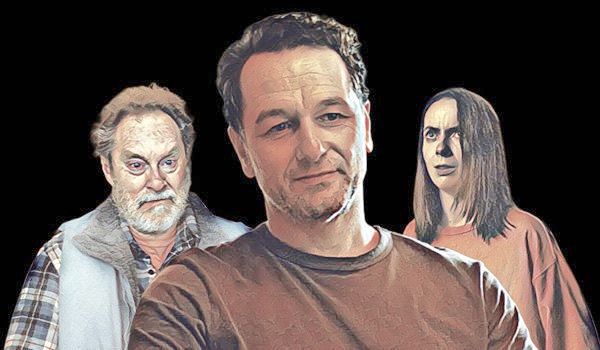
Across ten episodes, Widow’s Bay moved effortlessly between absurd comedy, horror, tragedy, and heartfelt drama. But the final chapter makes it clear that beneath all the ghosts, monsters, and bizarre happenings, the series is interested in something bigger. Its true conflict may ultimately be about fate versus free will.
The biggest revelation involves Ruth. The town’s most enigmatic resident really did have a secret daughter through an affair. That child was given up for adoption and eventually became Lauren, Tom’s late wife. Which means Evan is, in fact, the last living descendant of Richard Warren.
That revelation changes everything. Tom’s immediate instinct is to hide the truth from Bechir, suggesting that protecting his son will become his primary mission. But if Ruth really survived the gunshot wound inflicted by Bechir — and all signs point to that being the case — keeping such a secret may prove impossible. Ruth has never exactly been discreet, and Patricia may know more than she lets on.
Another major mystery has finally been answered. The island truly does demand sacrifices.
The films discovered by Dale reveal the existence of an ancient covenant and explain that victims were selected by a committee, held in underground tunnels until the appointed time, and subjected to a ritual in which fear itself appears to play a crucial role. Even more disturbing is the statement that “it likes the taste.”
But who — or what — is “it”? Is it the island itself? A supernatural entity? Some far older creature? The apparent presence of the word “IT” etched into the door of the execution chamber suggests that the true horror at the center of Widow’s Bay remains far from understood.
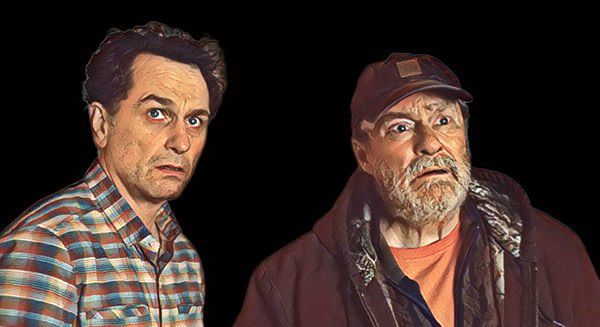
The revelations raise another troubling question. Who belonged to the committee responsible for choosing the victims? And did that group really disappear? It is difficult to believe such an organized system simply vanished. Wyck, for example, appears to know far more about the island’s history than he admits, and his behavior throughout the season suggests his connection to that system may run deeper than anyone realizes.
Now that Dale has seen the films and others know at least part of the truth, a new problem emerges. How do you keep such secrets? More importantly, how do you continue living in Widow’s Bay once you know what is really happening? Knowledge itself seems to function like a curse.
Interestingly, the series appears to have formed a kind of anti-committee. Throughout the season, Tom, Patricia, Wyck, and Bechir alternated between resisting the entity and surrendering to it in the name of survival. Despite their very different motivations, they seem destined to work together. The question is whether this unlikely alliance can break the curse or whether it will simply repeat the mistakes of those who came before.
Comparisons to Lost, present since the earliest episodes, have become nearly impossible to ignore. The instructional films immediately evoke the Dharma Initiative, the island appears to possess a will of its own, and the debate between destiny and free will has moved to the center of the narrative. But while Lost often focused on science versus faith, Widow’s Bay seems interested in a different question altogether: is it possible to escape suffering, or must we simply learn to live with it?
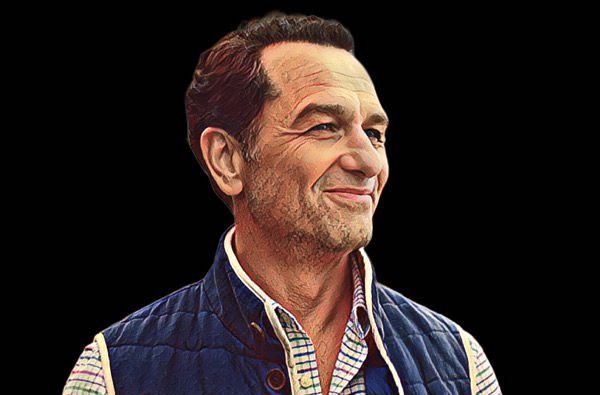
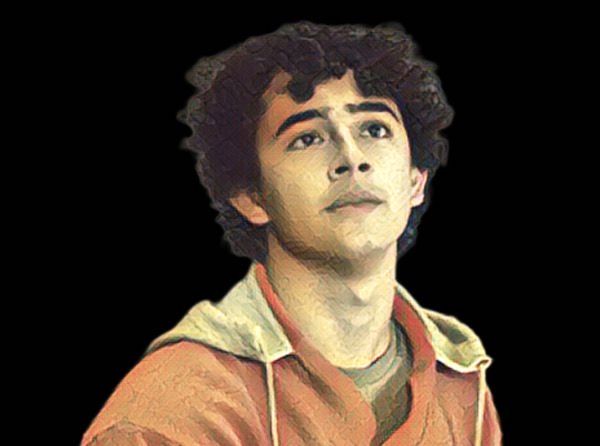
That philosophy emerges beautifully in the remarkable conversation between Tom and Ruth. Quoting Tennessee Williams through a cross-stitched piece of art, she reminds him that “we live in a perpetually burning building, and all we can save from it is love.” Perhaps that is the show’s true message. The problem is that Tom Loftis has never been the kind of man willing to accept that some battles are already lost. His decision to throw the Warren brooch into the sea is an act of rebellion against centuries of fatalism, but the church bells immediately ring eight times. The island is not finished with its inhabitants.
And perhaps that is where the real story of Widow’s Bay begins.
The finale leaves behind almost as many questions as answers. Tom may try to conceal Evan’s lineage, but how can he possibly do that if Ruth remains alive? Another seemingly casual remark from Ruth opens the door to an even stranger possibility. While talking about a former boyfriend, she mentions that he was bitten by an animal and eventually became that very animal. Could the island be home to werewolves? And if so, what exactly lies beneath the surface of the lake, which has felt ominous from the very beginning?
It also remains unclear what caused Pastor Roberts to lose hope. Clues scattered throughout the season suggest that he discovered something so terrible that he was consumed by guilt. Bryce appears to have followed a similar path. How many people before them came too close to the truth?
The underground tunnels remain another enormous mystery. Who built them? What was their original purpose? Were they always intended to house victims, or are they part of something far older? And what about the mysterious basement beneath Tom’s house? In a show where nothing seems accidental, it is hard to imagine that the room was introduced for no reason.
We still do not fully understand how the electric chair and the sacrifices themselves work. Who chooses the victims? What happens to them? Why is fear so important? And who — or what — feeds upon that terror?
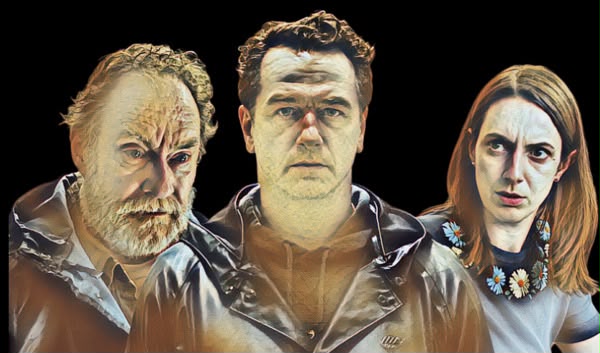
Finally, there is the countdown established by the eight tolls of the church bells. Evan’s two closest friends seem dangerously positioned to become part of the next group of victims, but who are the other six souls? Is there a pattern to these choices? And could the alliance formed by Tom, Patricia, Wyck, and Bechir become the first group in centuries capable of breaking a cycle that has always prevailed?
Tom Loftis has never accepted that some things are inevitable. And the season finale leaves the impression that season two will be less about understanding the curse of Widow’s Bay and more about trying to defeat it.
The problem is that, so far, no one has.
Descubra mais sobre
Assine para receber nossas notícias mais recentes por e-mail.

