
Until now, Widow’s Bay had been playing with the idea of a cursed town without necessarily explaining what that actually meant. There were monsters, disappearances, fog, collective breakdowns, hallucinogenic mushrooms, grotesque figures emerging from the sea, and an entire population behaving as if absurdity were simply part of everyday bureaucracy. But this week’s episodes finally shift the entire axis of the series by confirming something far more disturbing: Widow’s Bay is not merely a place where evil happens. The island itself is the evil.
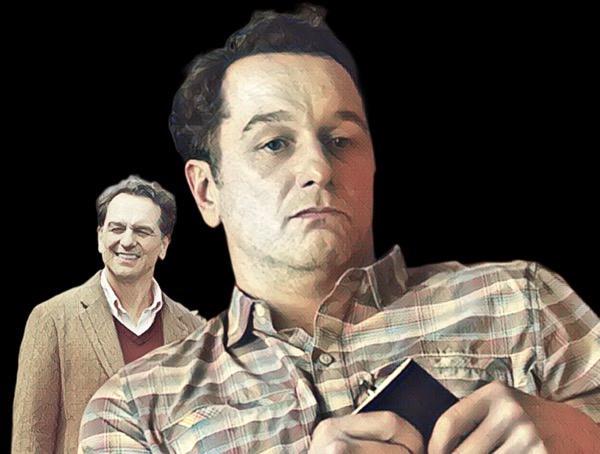
With two episodes released together, the narrative partially abandons its “monster-of-the-week” structure to return to the 18th century and show the founding of the town through Sarah Westcott Warren’s perspective. Her arrival on the island initially feels like a classic gothic horror setup: an isolated woman, a strange husband, townspeople too uncomfortable to say clearly what they know. But Widow’s Bay quickly makes it clear that Richard Warren is not simply a violent man or religious fanatic. He is the first conscious intermediary between the town and whatever inhabits the island.
The explanation the series offers is terrifying precisely because it blends human desperation with cosmic horror. During the first winter in Widow’s Bay, the settlers were starving, falling ill, and resorting to cannibalism. Richard Warren then consumes the “truesight” mushrooms and makes a pact with the island’s entity: prosperity in exchange for human sacrifice. The church bell becomes a ritualistic summons, signaling when the island demands new victims. Most disturbing of all is the suggestion that the townspeople continued obeying this system for generations, long after they had forgotten its origin entirely.
The entire town begins to feel built upon inherited trauma. The absurd rules. The collective fear. The irrational behavior. The way everyone accepts horror as administrative normalcy. Everything takes on a different meaning once we realize that Widow’s Bay is not simply haunted. It functions as a community created to manage an ancestral wound that never healed. And that is where the series becomes something much greater.
Because Widow’s Bay stops being merely a fun piece of strange horror television and becomes a story about societies founded on structural violence. The horror is not only in the monsters. It is in historical repetition. In the generational transmission of fear. In the idea that entire communities can organize their identity around something monstrous without even fully understanding why anymore.
Perhaps the most disturbing sequence is the revelation of the hidden basement beneath the mayor’s house, which turns out to be the same space located underneath the Historical Society. Sarah finds blood smeared between a leather-strapped chair and a mysterious door embedded in the underground structure of the town. The implication is horrifying: Richard Warren tied victims to that chair so the island’s entity could come claim them.
And Widow’s Bay is smart enough not to fully reveal what exists behind that door. We only know that something emerges.
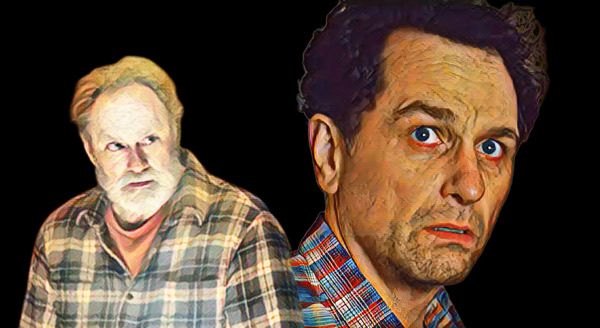
That choice keeps the series in almost Lovecraftian territory, where fear comes precisely from the impossibility of fully comprehending the entity. The island feels alive and hungry, as though Widow’s Bay itself had been built atop a conscious organism buried beneath the ocean.
At the same time, the story never abandons its absurd humor. And that works almost entirely because Matthew Rhys is doing extraordinary work as Tom Loftis.
Rhys perfectly understands the impossible tone of the series. The mayor could easily have become a caricature, a neurotic man overreacting to supernatural events. Instead, Rhys builds Tom as someone permanently exhausted, emotionally overloaded, trying desperately to remain functional while the universe around him collapses. The comedy comes precisely from the fact that he takes everything completely seriously. The more absurd the situation becomes, the funnier Tom is. And the funnier he becomes, the sadder the series feels.
It is an incredibly difficult balance to sustain because the humor in Widow’s Bay never interrupts the horror. On the contrary, it makes the horror even more uncomfortable. There are scenes in which Rhys reacts bureaucratically to the apocalypse as though he were merely trying to solve municipal administrative problems while an ancient entity demands human sacrifices beneath the town. And it works perfectly because of him.
Everyone in the cast is excellent, especially Hamish Linklater as Richard Warren and Betty Gilpin as Sarah, but Rhys has clearly become the emotional center of the series because, through him, Tom no longer seems simply frightened. He seems tired of existing inside that town. And there may be an even larger reason for that
My current theory is that Tom is directly descended from Richard Warren — or from Sarah.
The episodes are clearly beginning to set up this revelation without explicitly stating it. Episode 7 makes it clear that the island’s pact is tied to Warren’s bloodline. When Richard believes his children died trying to leave Widow’s Bay, he assumes his lineage ended. But the painting shown at the hotel suggests one of the children survived. That changes everything.
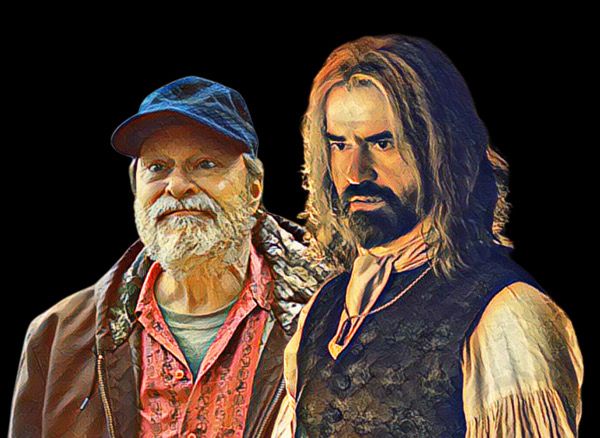
Narratively, it would make perfect sense for Tom to discover that he is the biological continuation of the town’s founder because then the man trying to save Widow’s Bay may actually be the very reason the curse continues to exist.
And that completely recontextualizes his relationship with his dead wife.
The photographs of Lauren with Evan remain one of the strangest elements in the series because the camera lingers on them as though they were hidden evidence. Tom looks at those images with guilt, not simply grief. There is clearly something he is repressing, but now Evan has discovered the photos and cannot understand how his father claimed to be widowed while still keeping such specific records of his wife with their son.
My impression is that Lauren discovered some truth too early, about the island, about their son, or about the origins of the Loftis family itself. Perhaps she realized that Widow’s Bay was not simply targeting that family. Perhaps their family is structurally part of the curse itself, which would make Tom an even more tragic figure.
Because the mayor who spent the entire season trying to prevent the town’s collapse may actually be the unwilling heir of the man who condemned Widow’s Bay centuries ago.
And I desperately want to know what truly happened after Tom, without fully understanding what he was doing, helped Richard Warren return using Wyck’s body. There is still far too much hidden on that island.
Descubra mais sobre
Assine para receber nossas notícias mais recentes por e-mail.

