
House of the Dragon has always had an unenviable task. The series had to keep the Game of Thrones franchise alive, erase the bitter memory of its predecessor’s misguided ending, attract new viewers, and turn an extremely complex fantasy story into something capable of reaching a broad global audience. That inevitably requires compromises, including softening some of the book’s most brutal and graphic moments to remain a mainstream phenomenon rather than a niche obsession. All of this helps explain why the first two seasons have been so divisive.
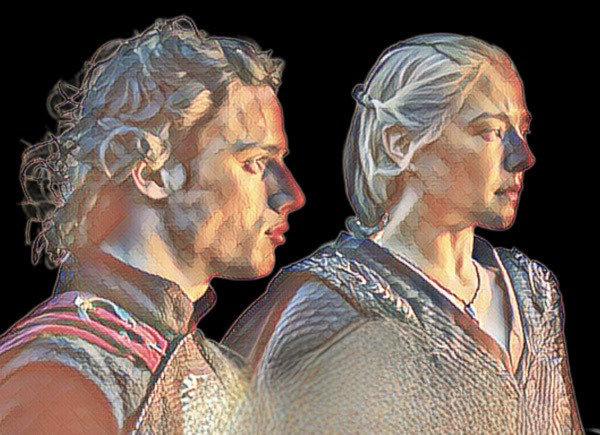
It is also important to remember that, like every adaptation, House of the Dragon changes the source material. Some choices work better than others. I complain about them a lot myself, but I will try to put that aside as much as possible because one thing cannot be denied: House of the Dragon is not the cultural phenomenon that Game of Thrones once was, but it is a great series in its own right.
At its core, the story is relatively simple. Siblings fight over a throne and plunge the realm into a devastating civil war. There are betrayals, misunderstandings, ambitions, and prophecies, but the heart of the story is profoundly human. Or at least it should be. Dragons sometimes make us forget that George R. R. Martin drew heavily from real history when creating the Dance of the Dragons. And perhaps that is precisely when House of the Dragon works best: when it remembers that.
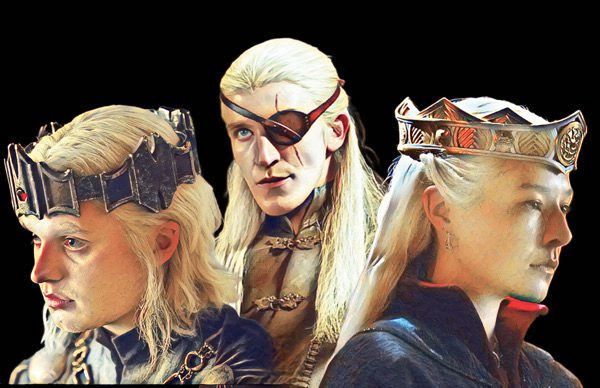
Because this is an expensive, ambitious, and remarkably grounded fantasy series, the battles from the book had to be chosen carefully. The Battle of the Gullet, described as one of the most devastating events of the war and one that personally affects Rhaenyra, could never be left out. The entire second season built toward that moment, only to stop minutes before the tragedy. It was inevitable, then, that Season 3 would begin in the middle of the conflict, which may have confused casual viewers and less dedicated fans. Even so, it was a terrific season premiere.
From the new version of the opening theme — more militaristic, though I still insist there is something in its rhythm that reminds me of Olodum — to the stunning CGI, it is exciting to remember that this is television, not cinema. At 80 minutes, what we watched felt very much like a movie.
Ramin Djawadi’s music once again proves to be one of House of the Dragon’s defining strengths. It is a shame the Emmys do not have a category dedicated solely to score, because he would have dominated it for more than a decade. And yes, nearly every actor gets a chance to shine, and they embrace every scene with enthusiasm. One advantage the series has over the book is its ability to reveal different sides of its characters. Those choices can be controversial, but they also add depth.
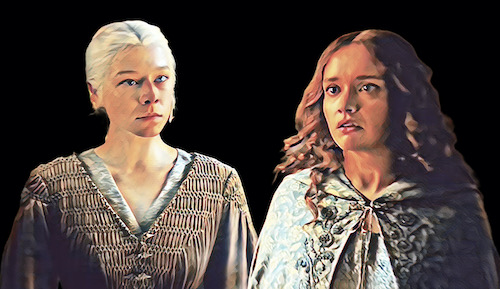
That said, Emma D’Arcy deserves special praise. They navigate Rhaenyra’s insecurity, pride, frustration, and indignation with remarkable transparency, making it easy to stay emotionally invested in her. Steve Toussaint and Abubakar Salim also deliver powerful, dramatic moments, reminding us why Corlys Velaryon is known as the Sea Snake. Action and drama at their finest.
I do have my complaints, of course. The “kiss” is one of them. The series is clearly laying the groundwork for Aemond’s eventual obsession with Alys Rivers. That could have been conveyed without resorting to incest, but creating controversy seems to be a modern necessity, and the show apparently wanted to guarantee people would be talking about the scene.
Ewan Mitchell understood Aemond from the very beginning. On screen, however, the character has always been more ambiguous than he is on the page. At different times, he seems obsessed with his sister, with the Crown, or with the uncle who opposes him. He has also always been more of a mother’s boy than his siblings, while Alicent has never been particularly attached to her children. Whatever affection she shows Helaena seems to come more from recognizing herself in her daughter than from maternal instinct.

Olivia Cooke is exceptional in this version of Alicent, which is almost the opposite of her book counterpart. The change works because it is messier than anything George R. R. Martin imagined: a woman forced into marriage and incapable of truly loving the children she had with a man she despised. In that context, her attempt to “save” Aemond so he does not break her pact with Rhaenyra becomes morally ambiguous. He needs to leave King’s Landing at all costs, and she essentially seduces him into agreeing with her.
Still, the kiss itself never quite works. It lasts too long and feels far more romantic than familial. It confuses Alicent and unsettles the audience. More than anything, it feels like a scene designed to generate headlines rather than one driven by dramatic necessity.

Alicent, the confused, and Rhaenyra the foolish remain trapped within a male interpretation of history. House of the Dragon chose to make the two women closer in age to create stronger female protagonists, but it frequently overcorrects. Yes, both women are victims of patriarchy, and the show is right to emphasize that. The problem is that it often seems to believe empowering them means absolving them.
While the men are driven by ambition, political calculation, or simple lust for power, Alicent and Rhaenyra are repeatedly pushed into misunderstandings, doubts, hesitation, and misinterpretation. Humanizing them is important. Turning them into perpetually confused women is something else entirely. Much of the conflict exists because these two women — especially Alicent — dare to do more than society allows. Yet the narrative often explains their actions away through mistakes and uncertainty. It works, but it is frustrating.
For example, Alicent is deceiving everyone because she is secretly betraying the Greens and needs to move quickly. She writes to her cousin Ormund Hightower, pretending to relay Aemond’s orders, and in doing so makes a decision that will be crucial to Rhaenyra’s success: the army is instructed not to return and defend the capital. Did you catch that? Exactly.
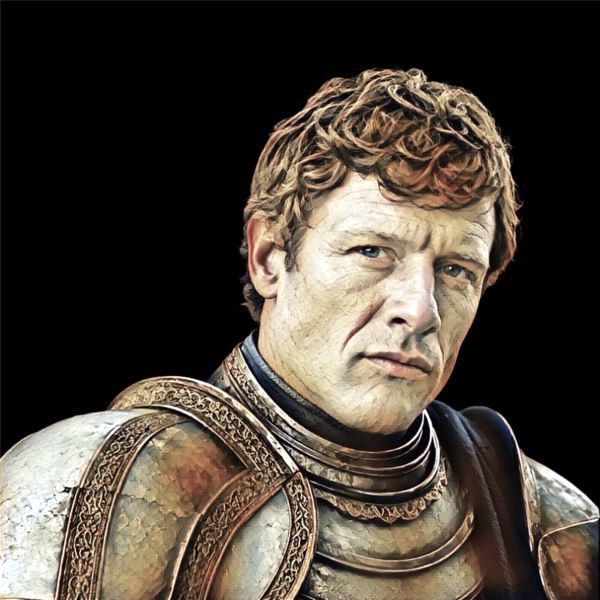

Beyond the kiss, House of the Dragon also indulges in some A Knight of the Seven Kingdoms-style toilet humor when we are forced to watch the thoroughly unpleasant Ulf relieving himself. Why? For what purpose? Seriously?
Here is another change from the book that makes little sense. Rhaenyra knew, or should have known, that Daemon would not return to Harrenhal. Leaving not one but three dragons sitting around in case Aemond appears is absurd. Unless the intention is to highlight the queen’s lack of military preparation, it is astonishingly foolish to keep Addam, Ulf, and Hugh on standby while Daemon is fighting hundreds of miles away.
And the worst part? Ulf is right, and I hate admitting that because he is disgusting. Giving him a traumatic background helps explain why he is the way he is, but one of the strengths of the book is that Ulf and Hugh’s betrayal comes as a surprise. In the series, they are practically against Rhaenyra from the beginning. There is no loyalty, no integrity, not even a clear purpose. Ulf is basically a less charismatic Bronn. From a storytelling perspective, I dislike this change. At the same time, I find it strangely comforting because I truly detest Ulf.
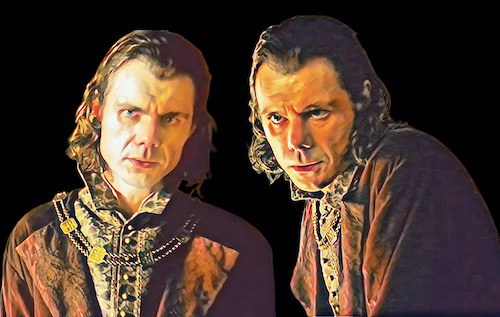
And Larys escaping with Aegon? Perfect. Aegon’s arrogance, pain, and lack of perception stand in sharp contrast to everything Larys possesses in abundance. Denying the king pain relief — part cruelty, part strategy — is terrifying enough, but even more unsettling is the moment when Larys tests the waters and realizes just how easily men can be bought.
He pretends to betray Aegon to see whether the soldiers are greedy, and the entire scene is as deceitful as he is. Larys is a spectacular villain. And for those who know how the story ends, hearing the suggestion that Aegon should be taken to Dragonstone is enough to send chills down the spine. Supposedly, the plan is to hand him over to Rhaenyra. But we know better. It is an excellent adaptation because it provides something the book lacks: an explanation of how Larys devised and executed his plan so brilliantly.
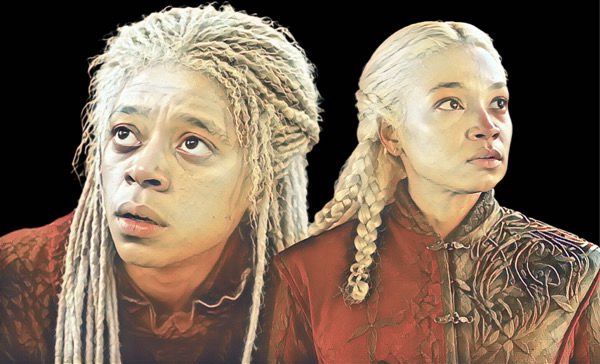
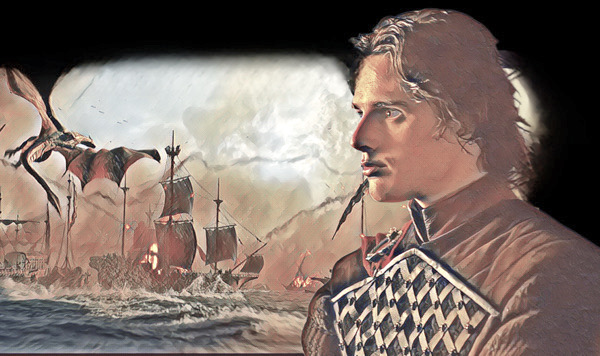
Rhaena indirectly contributing to Jacaerys’ death also works within the message the series keeps emphasizing about the danger and illusion of Targaryen control over dragons. The recurring theme of dragons acting beyond human control fits perfectly. Fine, then, it works.
And so we say goodbye to Rhaenyra’s eldest son, her friend, and her confidant. Even knowing his fate, the scene was exactly what it needed to be: heartbreaking and unmistakably House of the Dragon.
Many questions remain. Where is Otto? How did Ormund become commander? Why is Criston Cole busy painting shields while waiting for Aemond? Presumably, those answers will come soon enough.
It was a great return. Despite all my complaints, House of the Dragon deserves the positive reception it is receiving. And perhaps that is the best compliment I can give this episode: after 80 minutes, I wanted more.
Too bad we only have six weeks left.

Descubra mais sobre
Assine para receber nossas notícias mais recentes por e-mail.


1 comentário Adicione o seu