
To this day, one of the biggest debates among Game of Thrones fans revolves around a question that never received a fully satisfying answer: why did Daenerys Targaryen decide to destroy King’s Landing after the city had already surrendered? The most common explanation has always been that she succumbed to the so-called “Targaryen madness,” repeating a pattern present in her bloodline.
But, looking at the message House of the Dragon has been building since its first season, another interpretation emerges naturally. What if Drogon, the most unruly of the three dragons, simply did what other dragons had done before him? What if, like Vhagar at Storm’s End, he had gone beyond the limits imposed by his rider and acted according to his own instincts?
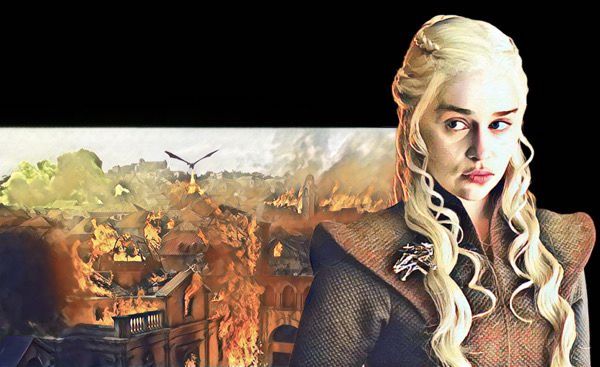
The idea seems less absurd when we remember that Drogon was always different. From an early age, he proved more aggressive, more unpredictable, and far less willing to obey than Rhaegal and Viserion. He was the one who disappeared for months, the one who killed a child in Meereen, and the one who never fully accepted Daenerys’ attempts to control him. From this perspective, the tragedy of King’s Landing ceases to be merely the story of a queen driven mad and becomes the story of a woman convinced that she commanded a creature that never truly belonged to anyone.
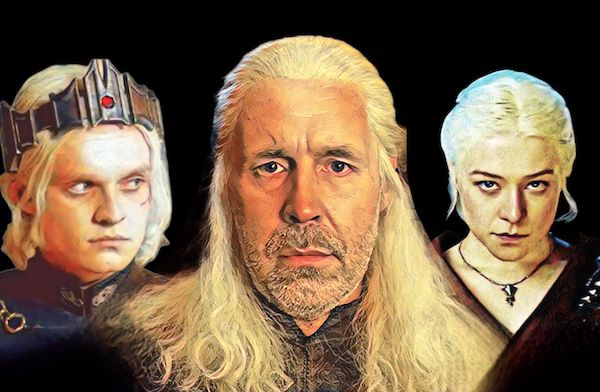
Interestingly, House of the Dragon appears to have been built around exactly this idea. In the first season, Viserys Targaryen makes an observation that does not exist in Fire & Blood, but which became one of the most important statements in the series. Speaking with Rhaenyra, he says that the belief that the Targaryens control dragons is an illusion and that this is a power no man should ever have meddled with. The line is not merely the melancholy reflection of an aging king. It functions as a kind of philosophical manifesto for everything the series would go on to show.
“The idea that we control the dragons is an illusion. They’re a power man should never have trifled with.”
Viserys I, House of the Dragon
There is a special irony in the fact that he is the one making that statement. Unlike Daemon, Rhaenyra, Aemond, or Baela, Viserys did not build his identity around a dragon. Balerion, the creature he rode in his youth, was already old and close to death when the two bonded. After that, Viserys never claimed another beast. In the eyes of many members of his family, that made him seem less impressive. Yet that distance allowed him to perceive something the others refused to admit. While his relatives were fascinated by the power of dragons, Viserys understood that they were something closer to a force of nature than a weapon.
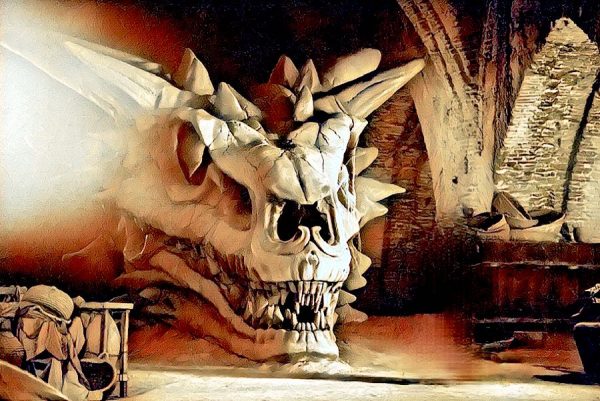
That perception stands in contrast to the culture of House Targaryen itself. Although dragons were seen as an inherent characteristic of the bloodline, the connection between rider and creature was never guaranteed. In Fire & Blood and in the series itself, the bond is treated as something expected, but never assured. Eggs were placed in children’s cradles, young princes and princesses eagerly awaited the opportunity to claim a dragon, and, in many cases, the absence of such a connection became a source of shame or inferiority.
Aemond is the best example of this. For years, he was ridiculed for not possessing a dragon. His decision to claim Vhagar stems as much from courage as from his desire to prove his worth to his brother and nephews. Daemon built part of his identity around Caraxes. Rhaenyra was always associated with Syrax. Even the absence of a dragon carried emotional and political weight. Among the Targaryens, the bond with these creatures was never certain, but it was expected, desired, and transformed into a kind of silent competition.
What House of the Dragon has been showing, however, is that possessing a dragon never meant controlling it. The tragedy at Storm’s End devastatingly illustrates this. In the books, Lucerys’ death is described ambiguously. In the series, however, the choice is clear. Aemond does not intend to kill his nephew. What begins as a pursuit turns into tragedy when Arrax reacts on instinct, and Vhagar responds with a violence her rider is no longer capable of restraining. The episode shows a young man discovering, in horror, that he is riding a creature older, more powerful, and more unpredictable than himself.
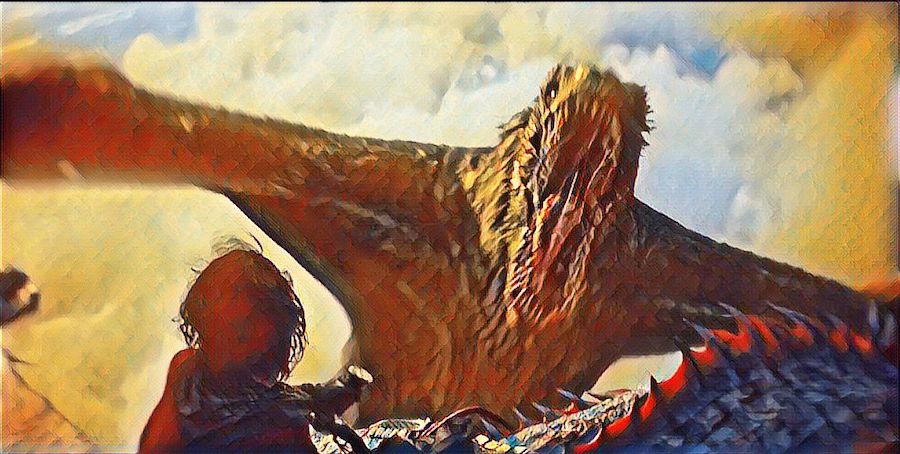
More than a change from the book, that sequence establishes a narrative pattern. House of the Dragon seems less interested in portraying men using dragons as weapons and more interested in exposing the arrogance of those who believed they were capable of taming forces that could never truly be mastered. The war between Blacks and Greens is born, in part, from an illusion shared by both sides.
The second season reinforces this message even further. The Dragonkeepers practically accuse the Targaryens of having forgotten the true nature of dragons. Seasmoke chooses Addam of Hull, reversing the traditional logic that men are the ones who claim these creatures. Instead of mere instruments of war, dragons are presented as intelligent, temperamental, and unpredictable beings capable of making decisions of their own.
With the arrival of the third season, this interpretation gains a new dimension. By transferring part of Nettles’ story to Rhaena, House of the Dragon introduces a significant change to the source material. In the books, Nettles already represented a challenge to the idea that only Valyrian blood could create a bond with a dragon. In the series, the change appears to go beyond that. Sheepstealer remains a wild creature, and the connection between the two is far from representing absolute obedience.
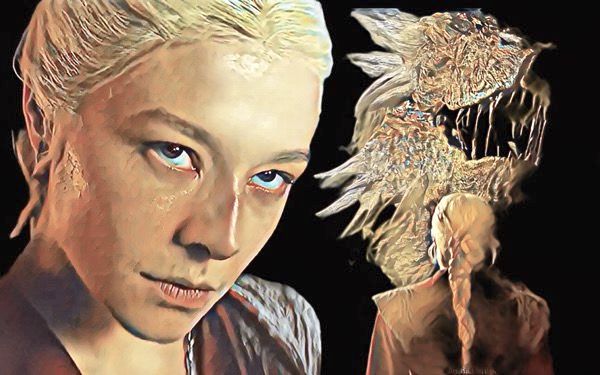
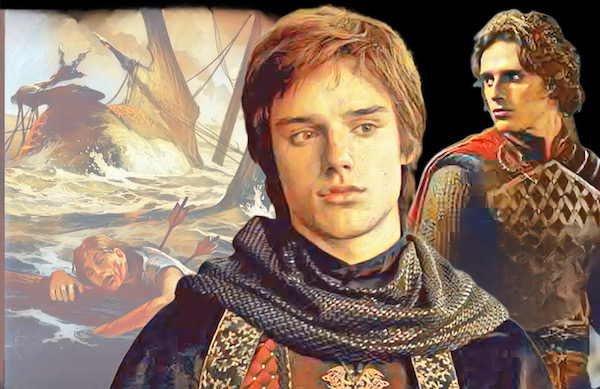
If the leaks prove accurate, Sheepstealer’s participation in the Battle of the Gullet will transform yet another human tragedy into a demonstration of the unpredictability of dragons. While Jacaerys attempts to defend the Black fleet aboard Vermax, the chaos caused by Sheepstealer will end up affecting the men of Corlys Velaryon themselves. The fire unleashed by the dragon ridden by his sister will contribute to the disorganization of the allied forces and to the chain of events that culminate in the prince’s death.
The irony is devastating. Rhaenyra’s two eldest sons will end up losing their lives not only because of the civil war, but also as a consequence of the same mistaken belief that sustained Targaryen power for centuries. Lucerys dies because Aemond discovers too late that he does not control Vhagar. Jacaerys dies in a battle made worse by Rhaena’s inability to fully control Sheepstealer. Both are victims of their family’s shared conviction that dragonriders are always in command.
In Fire & Blood, many of the tragedies of the Dance of the Dragons arise directly from ambition, brutality, and human choices. House of the Dragon does not eliminate these elements, but adds something new to the equation. By turning Lucerys’ death into an accident caused by Vhagar and, apparently, doing the same with the Battle of the Gullet, the series suggests that the Targaryens made a mistake even deeper than simple lust for power. For generations, they believed they were masters of dragons when, in reality, they coexisted with intelligent, temperamental, and unpredictable creatures.
This shift in perspective brings the story much closer to Greek tragedy than to the idea of “Targaryen madness.” The problem was never insanity, but hubris: the arrogance of men and women convinced that they could dominate forces greater than themselves. What the Targaryens called control was, more often than not, merely coexistence.

The creative team behind the series has never hidden this vision. Ryan Condal described dragons as the equivalent of nuclear weapons in Westeros and, more recently, once again compared the Dance of the Dragons to the concept of “mutually assured destruction,” one of the foundations of the balance of power during the Cold War. The Targaryens believed they possessed the ultimate weapon. The problem is that nuclear weapons have no will of their own, but dragons do.
There is an extraordinary irony in all of this. The character who understood this truth was not Daemon, nor Rhaenyra, nor Aemond. It was Viserys, a king often regarded as weak and far removed from the traditional image of the conquering Targaryens. While his descendants built their identities around dragons, he was the only one to recognize that those creatures were not weapons or status symbols, but forces of nature.
That is precisely where House of the Dragon departs from the most common reading of Fire & Blood. The series is not merely narrating the fall of a dynasty. It is telling the story of a family that confused coexistence with domination and connection with possession.
In the end, Viserys was right about dragons.
And there is a beautiful irony in that. Decades later, Daenerys would free entire peoples while repeating that men were not meant to live in chains. But, looking at the saga as a whole, the greater truth seems to be something else.
Dragons were never slaves.
Descubra mais sobre
Assine para receber nossas notícias mais recentes por e-mail.


2 comentários Adicione o seu