
When Irina Morozova first appeared on For All Mankind, she felt less like a person than an institution. As the head of Roscosmos, a powerful figure within Soviet intelligence, and eventually one of the most influential women in the Soviet Union, she quickly established herself as one of Margo Madison’s most dangerous adversaries. While Sergei Nikulov represented the human side of the Soviet space program, Irina embodied its most ruthless face, someone willing to use intimidation, manipulation, and psychological pressure in the service of the state.
Over the course of the series, she was portrayed as a remarkable survivor. Season 5 expands that image even further by depicting her downfall after the Goldilocks asteroid debacle. Removed from her position at Roscosmos and sent to a prison in Krasnoyarsk, Siberia, Irina endures nineteen months of beatings, interrogations, and humiliation before eventually finding her way back into the political arena. Yet despite her importance to the franchise, viewers always knew surprisingly little about her. We knew she had a daughter named Zoya and a background in Soviet intelligence, but the woman behind the authority remained largely invisible.
Star City exists to fill that void.

Set decades before the events of For All Mankind, the series returns to the moment when the Soviet Union wins the race to the Moon and explores the inner workings of the Soviet space program. Rather than focusing exclusively on cosmonauts and engineers, it also follows the intelligence officers tasked with watching everyone around them. It is within this world that we meet the young Irina, played by Agnes O’Casey, and discover something unexpected: the future director of Roscosmos did not begin her journey as a cold, calculating, or particularly ambitious woman.
The early episodes introduce someone who, in the words of the creators themselves, could not be further removed from the woman audiences will eventually meet. Young Irina believes there is a connection between morality and merit. She assumes that doing the right thing will produce the right outcome and places an almost naïve faith in concepts such as justice, truth, and personal responsibility.
Her humanity emerges repeatedly throughout the season. When she becomes involved in the case of cosmonaut Yana Akhmatova, Irina refuses to pull the trigger. In another key moment, she is genuinely shocked to learn that the KGB is more interested in finding someone to blame than in uncovering the truth. For her, it is still inconceivable that a system would rather imprison innocent people than admit an intelligence failure. The distance between this young officer and the leader we encounter decades later is precisely what makes the series so compelling.
No character helps us understand this version of Irina more than Zoya.
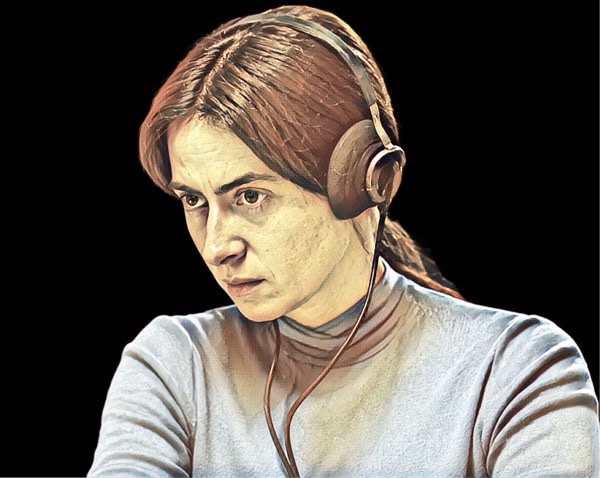
In For All Mankind, Irina’s daughter is little more than a biographical detail. In Star City, she becomes the emotional center of the story. Motherhood serves as more than a tool for humanizing the character; it explains many of her decisions. If Tanya represents the life Irina might have wanted for herself, Zoya represents the life she believes she has a duty to protect.
The series also introduces a mystery that could dramatically reshape how we view her rise to power. In Episode 5, Tanya discovers a photograph in a luxurious Moscow apartment. The image shows a teenage Irina standing beside a high-ranking Soviet official, possibly Leonid Brezhnev himself. The photograph suggests that her connection to the Soviet political elite may run much deeper than anyone suspected.
That revelation helps explain several aspects of the story. From the earliest episodes, Irina appears to enjoy an unusual degree of protection. Her rise is remarkably swift, her proximity to influential KGB figures attracts attention, and she receives opportunities that do not seem available to everyone around her. If the photograph truly points to a family connection within the Soviet leadership, Star City adds an entirely new dimension to the character. Irina would not simply be someone who learned how to survive inside the system; she would be someone who grew up close to its center of power.
Even so, privilege does not erase vulnerability. She remains a young single mother living in a society capable of destroying her life because of a mistake, a suspicion, or a feeling deemed unacceptable.
It is within this context that Tanya enters her life.

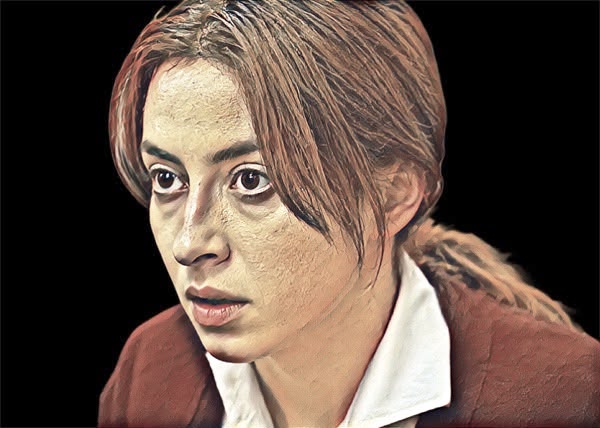
Free-spirited, charismatic, and frequently at odds with the expectations of the regime, Tanya represents everything Irina cannot be. The fascination is immediate and deepens as the two women grow closer. Their connection eventually becomes noticeable enough to raise suspicions within the surveillance apparatus itself.
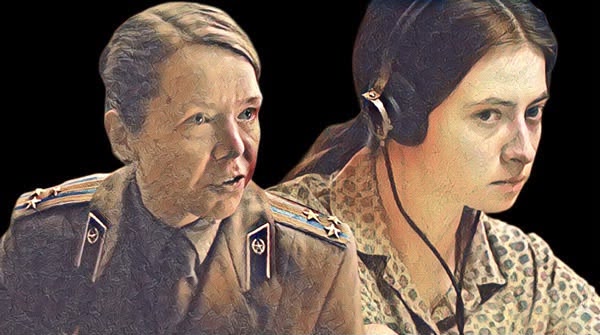
The turning point arrives when Vika delivers a recording to Colonel Lyudmilla Raskova, suggesting that Irina has become inappropriately close to Tanya’s family. Confronted by her superior, Irina realizes she is facing a test that could determine her future within the organization.
Her response is revealing. Rather than denying the relationship, she reframes it as evidence of professional competence. Standing before Raskova, she presents a detailed report arguing that her involvement with Tanya’s family was part of an operation designed to identify Valya as the American mole embedded within the space program. The frequent visits, her growing closeness to Tanya, and even Zoya’s piano lessons are recast as components of a carefully planned intelligence mission.
The strategy works. Raskova accepts the explanation, humiliates Vika for questioning Irina’s abilities, and closes the investigation. Before doing so, however, she asks the question hanging over the entire season: has Irina fallen in love with Tanya?
The series never provides a definitive answer, but it also makes no effort to hide the importance of the relationship. Tanya becomes the emotional center of Irina’s life in a way no other character does. She is the person Irina watches, protects, admires, and tries to understand. Whether that connection is romantic, platonic, or some combination of different emotions, it clearly extends beyond ordinary friendship.
The relationship becomes even more complicated once Valya enters the equation.

In what may be the strongest episode of the season, Irina discovers that he is the American spy operating inside Star City. What she does not know—but the audience does—is that Valya agreed to work with the Americans because Tanya had become a target of Soviet suspicion due to her increasingly liberal views and behavior. In other words, he betrays his country in an attempt to protect her.
Faced with the truth, Irina makes a decision that reveals a great deal about who she still is at this point in her life. She turns Valya in, but takes considerable risks to save Tanya. The choice suggests that she believes their marriage is already over and that secrecy, surveillance, and political pressure have permanently destroyed the relationship. In her view, Tanya deserves a second chance, while Valya is responsible for the tragedy unfolding around them.
Reality proves far more complicated.
Valya still loves Tanya. Tanya still loves Valya. The proof arrives when Irina discovers that Tanya warned her husband about his imminent arrest and actively helped him escape. The disappointment that follows extends well beyond professional betrayal because it shatters the narrative Irina had constructed about the couple. After risking her position to protect Tanya, she realizes that she fundamentally misunderstood the relationship she believed she knew so well.
The fact that Tanya is now hiding in Irina’s apartment in Moscow only makes matters more complicated. While Valya embarks on a mission to Venus from which he is unlikely to return, Tanya remains under the protection of the one person who knows both her secrets and the choices she has made.
At that point, Star City stops functioning merely as a spy thriller or a prequel to For All Mankind and becomes a character study. For the first time, viewers understand that the woman who will one day confront Margo Madison was not simply an efficient bureaucrat or a brilliant political operator. She was someone who believed in truth, cared about innocent people, raised her daughter on her own, and still allowed personal relationships to influence her decisions.
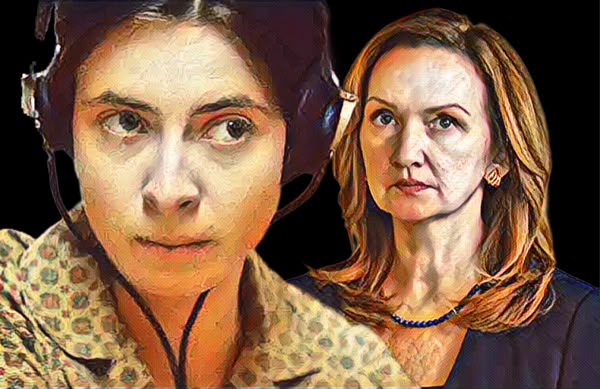
Zoya’s presence is essential to that reading because it prevents the story from being reduced to a tragic romance or a tale of heartbreak. If Tanya represents the possibility of a different life defined by freedom, affection, and personal choice, Zoya represents the responsibility that shapes nearly every decision Irina makes. The character’s journey appears to be built around the tension between those two forces.
By the time we meet Irina in For All Mankind, very little of that internal struggle remains visible. What we see instead is an extraordinarily capable woman, hardened by decades within Soviet power structures and seemingly incapable of allowing emotions to interfere with her judgment. The great achievement of Star City is showing that this transformation did not happen overnight. It was built gradually through choices, losses, compromises, and sacrifices that make Irina Morozova far more complex than the antagonist she initially appeared to be when she first entered the franchise.
Descubra mais sobre
Assine para receber nossas notícias mais recentes por e-mail.

