
With its first season coming to an end, Star City has made one thing clear: it wasn’t created simply to tell the Soviet side of the Space Race. Instead, it serves as a companion piece to For All Mankind, filling narrative gaps that have existed since the original series premiered and giving new meaning to characters and events that once seemed like little more than historical footnotes.
At the same time, the spin-off introduces new mysteries of its own. We now know far more about the Soviet program than ever before, but we still know remarkably little about the American side of this silent intelligence war.
Here’s what Star City has already explained, and what still remains unanswered.
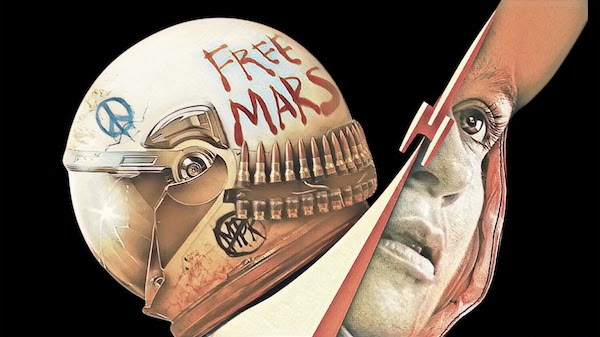
Arseni Vetrov: The Dead Cosmonaut Finally Has a Story
One of the biggest mysteries of For All Mankind‘s first season was the Soviet cosmonaut whose body American astronauts located on the Moon. The original series never explained why the mission had failed.
Star City completely changes that perspective. We learn that Arseni Vetrov died after the KGB ordered a full reboot of the spacecraft upon detecting a signal on an American frequency, a signal ultimately traced back to the transmitter secretly installed by Valya Mironov. What once appeared to be a simple technical failure is now revealed as a tragedy born from espionage, paranoia, and Cold War politics.
Anastasia Belikova Is No Longer Just a Historical Milestone
In For All Mankind, Anastasia was simply remembered as the first woman to walk on the Moon, an achievement that forced the United States to accelerate its own women’s space program and ultimately helped place Danielle Poole at the center of the lunar race.
The spin-off gives Anastasia a complete arc. We learn why she was chosen, the political pressure surrounding her selection, the prejudice she faced within the Soviet space program, and even how her historic speech on the Moon was censored after she abandoned the government’s approved script.


The Origin of Irina Morozova
By the time Irina appears in For All Mankind, she is already a seasoned, ruthless figure within the Soviet establishment.
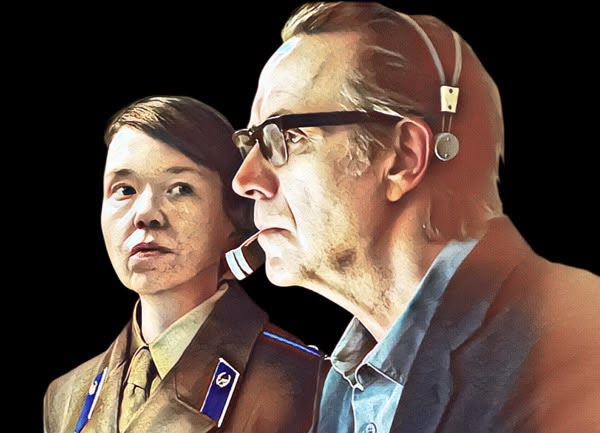
Star City shows exactly how she became that person. The young Irina still believes there is room for morality within the system, but each episode reveals how the KGB gradually reshapes her worldview.
It’s a classic origin story.
Sergei Nikulov Before Margo Madison
The same is true for Sergei.
Fans already knew the brilliant engineer who would later develop a secret relationship with Margo Madison. Now we meet him as a young scientist—curious, inventive, and eager to challenge conventional thinking—long before he becomes one of For All Mankind‘s most important characters.
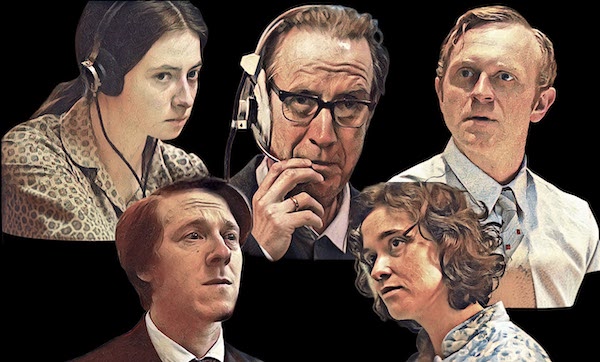
The Theft of the Lunar Base Plans
In the very first episode, we learn that American intelligence has already obtained plans for the future Soviet lunar base.
This information never appeared in For All Mankind.
It helps explain why American intelligence often seemed to know more about the Soviet space program than expected, but it also raises a major question: Did those plans ever reach NASA, or did they remain within the intelligence community?
Valya Mironov Changes Everything We Thought We Knew About Espionage
Perhaps the season’s biggest revelation is Valya.
We now know he was secretly working for the United States and that he planted the transmitter whose discovery ultimately triggered the chain of events leading to Arseni’s death.
Curiously, however, the spin-off shows almost exclusively the Soviet side of that operation.
And that’s where the franchise’s biggest mysteries begin.
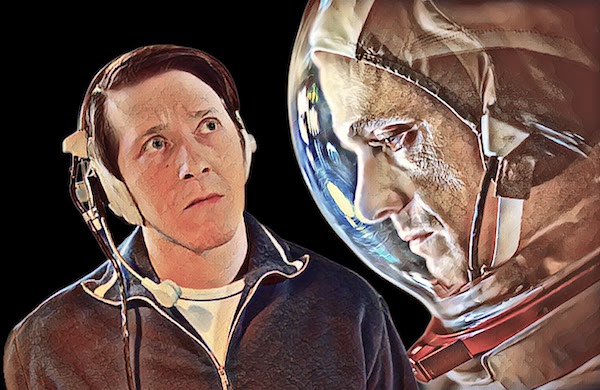
What Star City Still Needs to Explain
Who Recruited Valya?
We know he’s working for the Americans, but we never see who is running the operation.
Who Was Receiving the Intelligence?
Were Valya’s reports going to the CIA? To the White House? Or were they eventually reaching NASA?
So far, the series keeps that answer hidden.
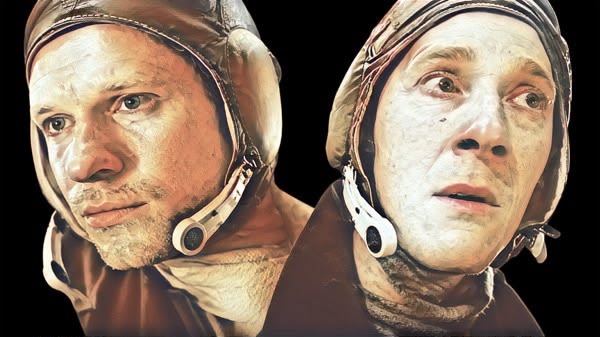
Was the Transmitter Meant for Espionage or Sabotage?
Everything we’ve seen suggests its purpose was simply to collect telemetry, but the writers have never confirmed that.
If the device served another function, America’s responsibility for Arseni’s death changes dramatically.
How Does Zvezda Come to Exist?
For All Mankind introduces the Soviet lunar base as an established reality. Star City is still building the road that leads there.
It may become the central storyline of future seasons.
What Happens to the Venus Project?
From the pilot onward, the Chief Designer makes it clear that returning to the Moon isn’t his ultimate goal. He wants to reach Mars or Venus.
While For All Mankind focused primarily on the Moon, Mars, and later the asteroid belt, the spin-off places Venus at the heart of Soviet ambitions. The remaining question is how that project ultimately fits into the franchise’s larger timeline.
Where Does This All Connect to Apollo-Soyuz?
We already know Sergei, Irina, and Star City itself will play key roles once the United States and the Soviet Union begin cooperating.
What remains to be seen is how that transition unfolds, and how the events we’re watching now shape one of For All Mankind‘s defining moments.
Where Is Mikhail Vasiliev?
One of the most important Soviet characters from For All Mankind has yet to appear: Mikhail Vasiliev. He is the cosmonaut who will later be captured by Ed Baldwin at Jamestown and who, before that, sends his condolences following Shane Baldwin’s death, revealing that the Soviets were already closely monitoring even the astronauts’ personal lives. Since Star City is still set in 1971, his absence makes sense. Even so, his introduction seems almost inevitable once the series moves toward the construction of Zvezda and the establishment of a permanent Soviet presence on the Moon.
Valery Kostikov Still Belongs to the Future
Another notable absence is Valery Kostikov. The character is not introduced until later in the For All Mankind timeline, in the mid-1970s. His absence in Star City is therefore not a plot hole, but simply a reflection of the producers’ decision to remain in the early years of the decade before reaching events already familiar to fans of the original series.
Jack McManus Remains an Unanswered Question
The same applies to Jack McManus. In For All Mankind, the American engineer becomes the target of an FBI investigation over suspicions that he was selling secrets to the Soviets, but the series never confirms whether those allegations were true or merely the product of Cold War paranoia. So far, Star City has not touched that storyline either. Since the investigation takes place later in the timeline, it could become an ideal opportunity for the spin-off to revisit the same events from the Soviet perspective—and perhaps finally answer one of For All Mankind‘s longest-running questions.
We’re Still Only in 1971
Perhaps that’s the most important fact of all.
Unlike For All Mankind, which advanced nearly a decade with each season, the creators of Star City have already confirmed they intend to remain in the 1970s.
That leaves plenty of room to explore the creation of Zvezda, the expansion of the KGB’s influence within the space program, the Venus mission, the evolution of Sergei and Irina, and—most importantly—the unanswered questions that still connect, and separate, the two series.
In the end, Star City isn’t simply telling the other side of the Space Race. It’s transforming what once looked like passing references in For All Mankind into essential pieces of a much larger universe. And if the first season answered questions fans have carried for five years, it also made one thing clear: the biggest mysteries may still lie ahead.
Descubra mais sobre
Assine para receber nossas notícias mais recentes por e-mail.

