
Sometimes the very reason a great series goes unnoticed has nothing to do with a lack of quality or ambition. It’s because audiences never quite understand what it actually is. I can’t help but feel that’s exactly what’s happening with Star City. From the moment it was announced, Apple’s new series was presented as a spin-off of For All Mankind, one of the platform’s longest-running and most successful originals. But Star City, which tells the same story from the perspective of the supposed antagonists, seems to have been dismissed as a companion piece made exclusively for fans of the original series. That is a mistake. Star City was never really about rockets. And perhaps it isn’t truly a spin-off at all.
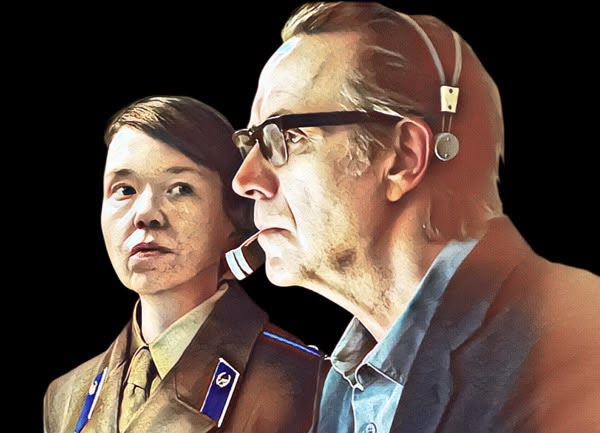
Star City, which barely breaks into Apple TV’s Top 10, is the best drama series of 2026. It is an extraordinarily timely drama about individuals crushed by institutions, about people forced to surrender their own identities in service of causes greater than themselves, and about the human cost behind history’s greatest achievements. The space race is merely the backdrop; the true subject of the series has always been people. And that is precisely where its greatness lies.
While so many prestige dramas rely on major twists or larger-than-life characters, Star City does exactly the opposite. It slows down, observes, and listens. In some ways, quite literally. The series allows us to get to know each character before asking us to care about them. By the time we realize what has happened, we are already deeply invested.
Irina Morozova may serve as the entry point for viewers coming from For All Mankind, but she is far from the emotional center of the narrative. It is fascinating to watch her already displaying the intelligence, precision, and investigative instincts that will eventually define her future role, while still retaining traces of the idealistic woman she once was, slowly being shaped into the cold and manipulative figure we came to know in the original series. In Star City, Irina is ambiguous, but seemingly well-intentioned.
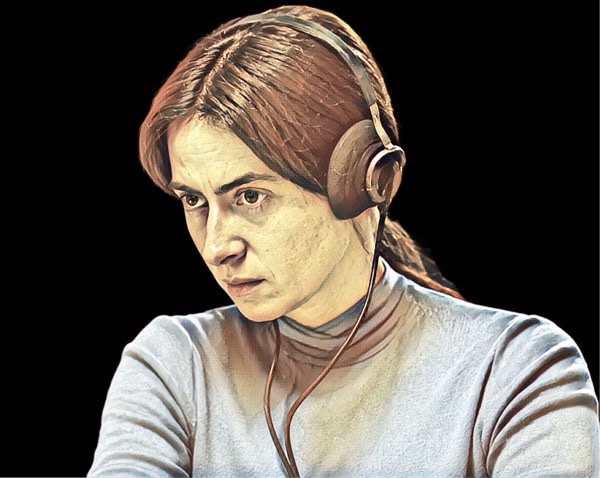
Even so, the true strength of the series lies in its original characters, those who arrive without the burden of franchise history and, by the end of the season, become impossible to forget. Valya, Sasha, and Tanya are written with a remarkable humanity, far removed from any stereotypes about the Soviet Union or the Cold War. They love, fail, dream, suffer, and make impossible choices, all while trying to preserve some space for themselves within a system that demands absolute obedience.
Few recent series have managed to make audiences care so deeply about entirely new characters. By the time the season ends, saying goodbye to them feels less like leaving fictional characters behind and more like parting ways with people we have genuinely come to know.
Perhaps the most powerful example of this approach is the chief engineer whose name remains hidden for much of the story. The choice is brilliant because it turns the narrative itself into a reflection of the regime it portrays. The man responsible for making the Soviet space program possible cannot even exist publicly. His identity must disappear so that all glory belongs to the state. It is a simple but profoundly moving idea because it reminds us that some of humanity’s greatest achievements were built by people who were never allowed to receive recognition.
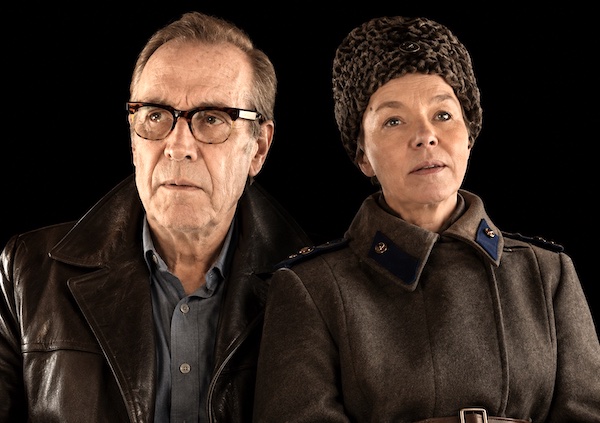
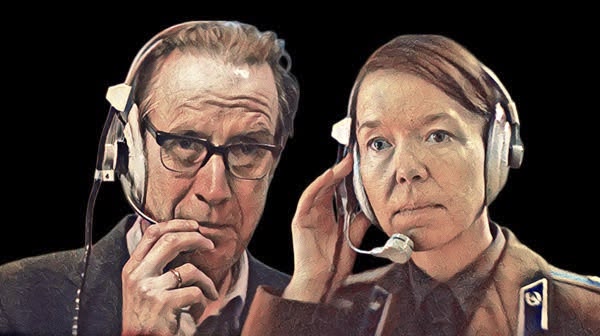
Rhys Ifans understands this paradox perfectly. His performance is defined by restraint, silence, and the delicacy with which he transforms a brilliant scientist into a man permanently torn between his passion for space exploration and the burden of living in anonymity. It is an extraordinary performance, one that stays with us long after the final episode.
At the opposite end stands Anna Maxwell Martin, who delivers one of the most surprising performances of her career. Long associated with warm and compassionate characters, she creates an antagonist whose authority never depends on explicit violence. What makes her frightening is precisely her composure. She deeply believes in everything she does, and that conviction makes each of her decisions even more unsettling. Villains like this, utterly convinced of their own virtue, are often the ones we remember the longest.
All of this is supported by a precise screenplay, breathtaking cinematography, and a score that knows exactly when to guide emotion and when to simply remain silent. Nothing feels excessive. Nothing seeks to impress through scale alone. Everything exists in service of the characters.
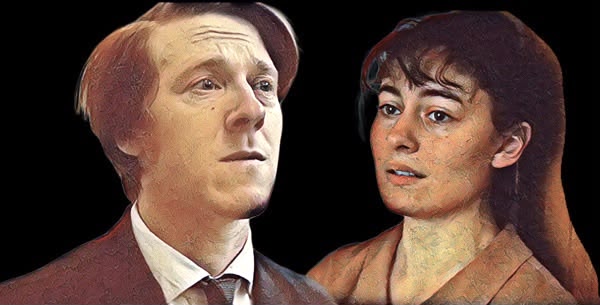
Perhaps that is why Star City has affected me so deeply. I no longer think about the space race, the conflict between the United States and the Soviet Union, or the technological achievements of that era. I think about Valya, Sasha, Tanya, the Chief Engineer, and even the younger version of Irina. I think about the choices they make, the dreams they are forced to abandon, and the injustice of a history that so often turns human beings into footnotes.
Without any exaggeration, I consider Star City one of the finest series Apple TV has ever produced. Remarkably, it reached audiences as an extension of another universe possessing more than enough strength to stand entirely on its own. Perhaps time will ultimately do it justice. After all, some works are not created to dominate the conversation of the week. They are created to remain in the memories of those willing to give them a chance.
And Star City deserves far more people willing to do exactly that.
Descubra mais sobre
Assine para receber nossas notícias mais recentes por e-mail.

