
The first trailer for the new adaptation of Sense and Sensibility is, at the same time, enchanting and concerning. Enchanting because everything appears to be in place: the cinematography is elegant, the cast is excellent, the production design is sumptuous, and there is an obvious care in introducing Jane Austen’s story to a new generation. Concerning this, once again, I have the feeling that I am watching a twenty-first-century Jane Austen heroine dressed in nineteenth-century clothes.

Ever since Joe Wright’s definitive 2005 adaptation of Pride & Prejudice starring Keira Knightley, Hollywood seems to have decided that there is only one way to make Austen appealing to contemporary audiences: by transforming her heroines into more expressive, more spontaneous, and more emotionally transparent versions of themselves. The problem is that not all of Austen’s heroines are Elizabeth Bennet. And even Elizabeth Bennet was not exactly the Elizabeth Bennet that cinema has taught us to recognize.
Lizzy was witty, observant, and opinionated, but she was also a well-bred, reserved young woman who lived within the strict social conventions of her time. She did not run through fields declaring her feelings or turn her desires into a public spectacle. What distinguished her was her intelligence, not her extroversion.
Perhaps no character suffers more from this contemporary tendency than Elinor Dashwood.
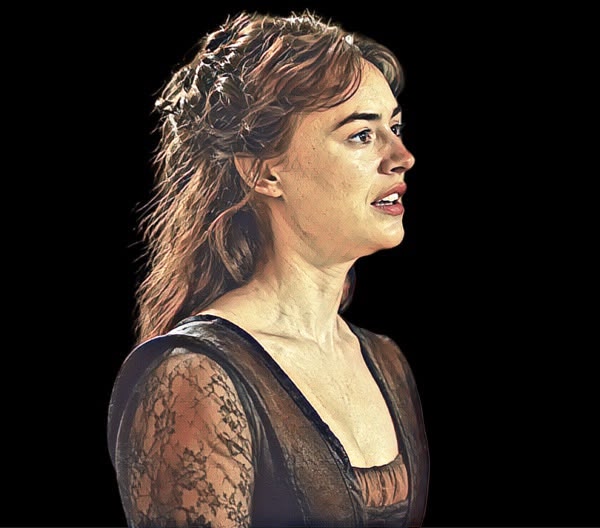

The great virtue — and the great tragedy — of Elinor in Sense and Sensibility is precisely her ability to contain what she feels. Austen creates a heroine whose moral strength lies in discretion, self-control, and responsibility. Elinor is no less passionate than Marianne; she simply believes that openly expressing her emotions could destroy not only her own life but the stability of her entire family.
Marianne, by contrast, embodies sensibility itself: impulsive, romantic, theatrical, and incapable of separating emotion from action. The novel works because the two sisters begin at opposite extremes and gradually move toward one another. Marianne learns prudence. Elinor learns that absolute repression also carries a devastating human cost.
That is precisely why the trailer for this new adaptation left me somewhat apprehensive. Not because Daisy Edgar-Jones does not seem capable of delivering an excellent Elinor — she is undoubtedly one of the most talented actresses of her generation — but because, in several moments, the impression is that the two sisters inhabit the same emotional register. The open laughter, expansive body language, and immediate expression of feeling seem to bring Elinor closer to Marianne, when the dramatic power of the story depends on them beginning as far apart from each other as possible.


Perhaps it is too early to judge. Trailers sell emotions more than nuances, and Elinor’s restraint may emerge in full force in the completed film. Even so, I cannot help thinking that contemporary culture has developed a certain discomfort with a truth that Jane Austen understood perfectly: women do not need to appear modern to be profoundly modern.
Austen never wrote revolutionary heroines because they broke the rules. She wrote revolutionary heroines because she took their inner lives seriously. Anne Elliot did not need to make speeches to be radical. Elinor Dashwood did not need to defy convention to be heroic. And Elizabeth Bennet did not need to abandon her reserve to be intelligent.
That said, I remain genuinely excited to see Sense and Sensibility. Because, despite my reservations, the trailer also suggests something that may be even more important: an adaptation that appears to believe sincerely in the romance, the melancholy, and the emotional intelligence of Jane Austen. And in 2026, that alone feels almost revolutionary.
Descubra mais sobre
Assine para receber nossas notícias mais recentes por e-mail.

