
When I interviewed Anastácia for CLAUDIA magazine in May 2020, she was turning 80 in the middle of lockdown. Her birthday would be celebrated quietly with family at home, while the pandemic postponed plans for a new album and turned every celebration into something necessarily more intimate. Even so, she seemed remarkably at peace.
“I’m ready for whatever little bit still comes,” she told me with a laugh.
Six years later, after another birthday this past May and another São João season that has already turned into the July festivities, I find myself thinking again about that conversation and the playlist she curated for our readers. Not because June is over, but precisely because Anastácia’s work never truly belonged to the calendar of Brazilian midsummer celebrations.
Anastácia wrote songs about longing. And longing, fortunately or unfortunately, has no calendar.
Born Lucinete Ferreira in Recife, she became the undisputed Queen of Forró. She wrote more than a thousand songs recorded by artists such as Luiz Gonzaga, Gal Costa, Nana Caymmi, and Gilberto Gil. Alongside Dominguinhos, her musical partner and companion for more than a decade, she composed around 250 songs. But for most Brazilians, there is one song that encapsulates everything Anastácia represents: “Eu Só Quero um Xodó”.
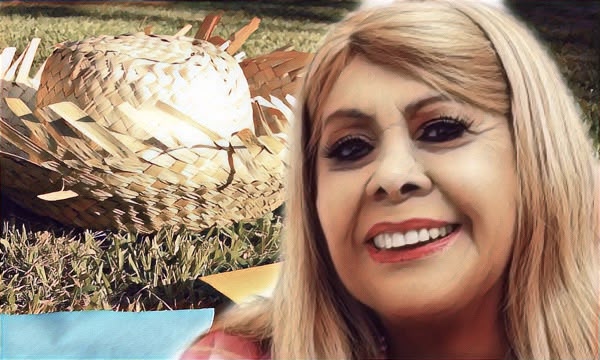
It is difficult to think of another Brazilian popular song that has achieved something similar. Recorded more than 400 times over five decades, it has crossed generations, genres, and performers without ever losing its original simplicity. And perhaps that simplicity is its greatest mystery.
When I asked Anastácia how “Eu Só Quero um Xodó” was born, she told me a story that seems to summarize the entire tradition of Brazilian popular music. Dominguinhos was at home, playing a melody, while she prepared lunch. Suddenly, the word xodó came to her mind. She left the fish cooking on the stove, turned off the heat, and wrote the song’s two verses. Then she returned, sang them to Dominguinhos, and the song was finished.
There was no strategic planning, no creative laboratory, no search for the perfect song.
There was simply life happening.
Perhaps that is why “Eu Só Quero um Xodó” still feels so contemporary. The lyrics do not explain the absence, do not construct a narrative of lost love, and offer no resolution. They simply acknowledge a universal feeling: longing.
“How I miss someone dear…”
Few songs in Brazilian music have ever been so economical and yet so devastating.
Looking back at the playlist Anastácia created for CLAUDIA when she turned 80, another detail stands out. She did not choose only festive songs. She chose songs about memory, desire, belonging, and, above all, longing. Alongside classics by Luiz Gonzaga appeared her own compositions with Dominguinhos, including “Sanfona Sentida,” “Eu Me Lembro,” and, of course, “Eu Só Quero um Xodó.” It was less a São João playlist than an emotional autobiography.
My favorite Anastácia song remains “Eu Só Quero um Xodó.” Perhaps because, in little more than two minutes, it contains everything she always knew how to transform into art: absence, desire, and the hope of recovering something we feel we have lost. And perhaps that is the greatest proof of her genius.
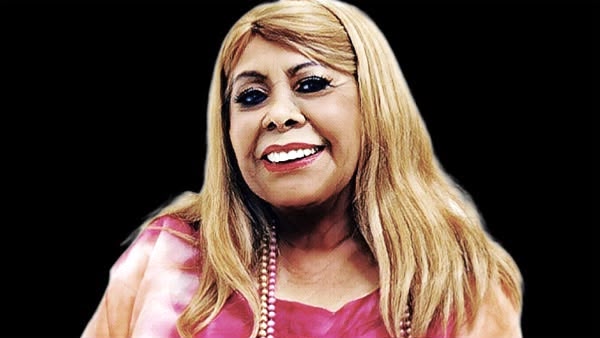
Although she earned the title of Queen of Forró, Anastácia never wrote only to make people dance. She wrote to explain what we often cannot even name: the longing for someone, for somewhere, or even for a version of ourselves that no longer exists.
That is why, even after June ends, Anastácia’s songs remain.
Because, in the end, they were never really about São João.
They were always about feeling.
Descubra mais sobre
Assine para receber nossas notícias mais recentes por e-mail.

