
Those who read MiscelAna know that I practically have an entire category devoted to my “problem with” certain characters. From Billions and The Great to, of course, Game of Thrones and House of the Dragon, I allow myself to blend criticism with personal opinion, making my own argument.
There is an important difference between disagreeing with a performance and questioning an actor. In the case of Emma D’Arcy as Rhaenyra Targaryen, that distinction needs to be preserved. This is not about a lack of talent, presence, or commitment. Quite the opposite. Emma manages to convey virtually every emotion the series asks of Rhaenyra: grief, mourning, maternal love, guilt, exhaustion, intelligence, fear, restraint, and vulnerability. The problem lies precisely in what House of the Dragon rarely allows them to portray: hatred, anger, resentment, a desire for revenge, and a hunger for power.
And, for me, those absences fundamentally change the character.

In Fire & Blood, Rhaenyra is described by biased, misogynistic narrators who are often interested in destroying her reputation. That must always be remembered. The story we receive is not neutral. Even so, filtered through hostile perspectives, the Dragon Queen emerges as a deeply complex figure: envious, jealous, resentful, arrogant, unprepared at times, manipulated at others, fiercely maternal toward her children, yet also ambitious and capable of ruthless decisions. Aegon II is hardly praised either, but the Dance of the Dragons is not the story of a saint versus a monster. It is the story of a dynastic war fought by wounded, vain, violent people who are all genuinely convinced of their own legitimacy.
In the show’s younger version, Milly Alcock seemed much closer to that contradiction, even if humanized. Her Rhaenyra was a young woman raised in the shadow of always being considered lesser because she was female. She witnessed her mother’s death in the pursuit of a male heir. She was used as a political pawn by Otto Hightower and by Viserys himself, partly to contain Daemon. She was betrayed by her closest friend. She discovered and explored her sexuality in secret, with audacity and risk. There was frustration, arrogance, desire, pride, and a rage that did not need to be verbalized to exist.
When we meet the adult Rhaenyra, now portrayed by Emma D’Arcy, she feels like a different person. Softer. More insecure. More melancholic. More vulnerable. Fans love this choice, and it is easy to understand why. Emma creates a profoundly human Rhaenyra, burdened by motherhood, prophecy, and historical responsibility. But this is precisely where my disagreement begins. The Rhaenyra of the book also suffers. She also loses. She is also attacked by a misogynistic system. But her vulnerability never replaces her ambition. In the series, it often does.
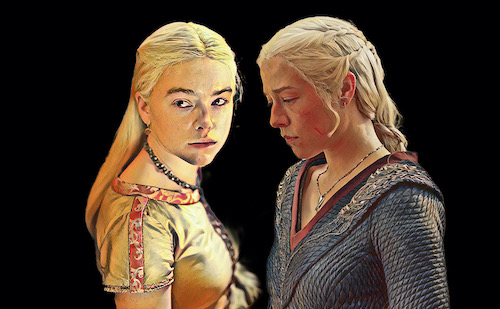
Rhaenyra collapses after each child’s death, as anyone would. The problem is that her dramatic recovery is often too quick for the sake of pacing and, paradoxically, never transforms into the vengeful fury suggested by the book. Lucerys’s death should radicalize her.
Jacaerys’s death should harden her. Each loss should move her closer to a more dangerous version of herself. Instead, the series insists on portraying a Rhaenyra who hesitates, deliberates, attempts to avoid war, and preserves some moral ideal of herself. That may be an interesting choice, but it also creates a problem: the protagonist of the war often seems less like the agent of events than someone being pushed by them.
More than that, we’ve already heard Rhaenyra speak in the trailers about avoiding bloodshed. The Rhaenyra of Fire & Blood, by contrast, becomes progressively consumed by vengeance or, at the very least, indifferent to the human cost of war. After all, she has already paid her own price: she loses three sons (in the series, one is still missing, though two have already died) and a daughter.
This is where I find the character’s greatest inconsistency in the series. In trying to humanize her, House of the Dragon removes something essential: the brutal understanding that power and survival often require taking from others the very things one wishes to preserve for oneself. In that sense, I miss the almost uncomfortable pragmatism of characters like Cersei Lannister—and, in another way, Sansa Stark—women who understood that in Westeros, maintaining power and staying alive are rarely goals compatible with hesitation.
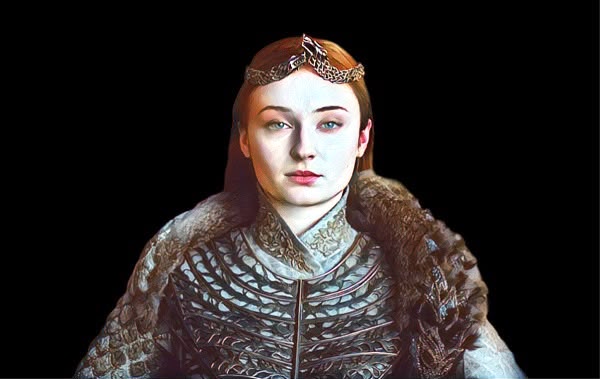

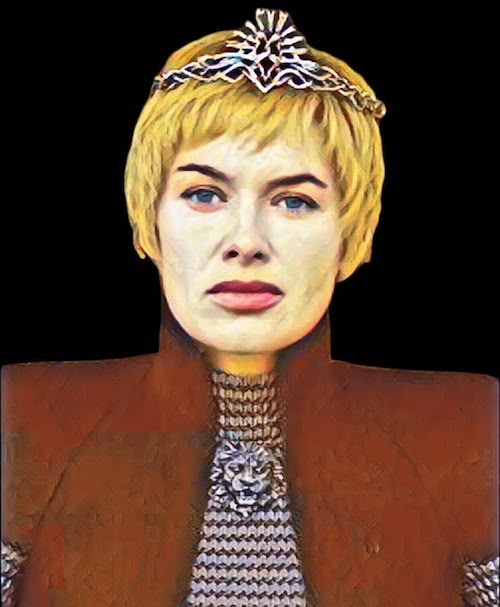
The scene in which Rhaenyra hesitates before sitting on the Iron Throne felt especially wrong to me. By that point, Rhaenyra wants that throne desperately. She believes it belongs to her by right, by oath, by Viserys’s will, by prophecy, and because she has the strength to take it. Stripping her of that direct desire weakens the character. And turning the capture of King’s Landing into something close to a gift from Alicent weakens her even further. Once again, the series removes Rhaenyra’s agency from her own triumph. Perhaps this is the fundamental difference between the Rhaenyra of the series and the one from the book: the latter understands that she achieved what she believed was hers through blood, sacrifice, and injustice, and seems willing to live with that price.
Perhaps this is also the greatest difference between the show’s Rhaenyra and other queens of Westeros. Cersei Lannister, despite being clearly positioned as an antagonist, is also a mother devastated by the loss of her children. She also suffers humiliation, injustice, and irreparable loss. But Cersei never allows grief to replace her ambition or her desire for power. On the contrary: each loss makes her more determined, more dangerous, and, paradoxically, more regal. Her grief does not diminish her authority; it reinforces her conviction that the world owes her reparation.
The Rhaenyra of the book seems to move in a similar direction. Not because she is a villain, or because George R. R. Martin intends to place her in the same moral category as Cersei, but because she understands something fundamental about Westeros: after paying too high a price, it becomes impossible to continue treating power as a moral abstraction. She loses a daughter and three sons. She is betrayed, usurped, and forced to conquer what she believes is hers by birthright, prophecy, and oath. Her suffering does not make her more peaceful; it makes her more aware that, in Westeros, power is rarely gained or maintained without others paying the price.
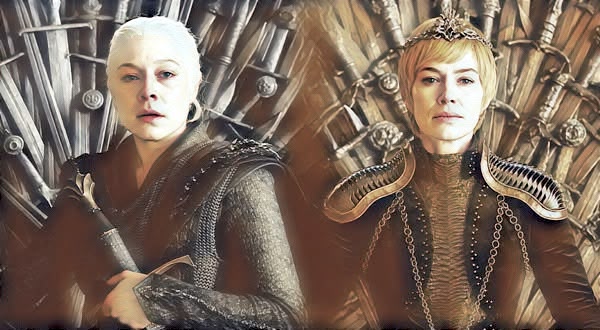
The series, however, seems interested in a different interpretation. A Rhaenyra who remains conscious of the human cost of war, who continues trying to avoid bloodshed even after paying the highest possible price. It is a legitimate choice, but one that, for me, creates a difficult contradiction to ignore: the Dragon Queen who conquered her throne through blood and suffering appears to be the character least willing to accept that power in Westeros has always required both.
There is also a visual detail that perhaps summarizes my difficulty with the show’s Rhaenyra better than any comparison with Fire & Blood. Across the seasons, the series has created a kind of visual signature for the character: her direct gazes into the camera. They are powerful moments, designed to bring viewers closer to her subjectivity. But when viewed together, something becomes strikingly clear: almost all of them show Rhaenyra crying, on the verge of tears, or devastated by grief.
Of course, there is a narrative explanation for this. Nearly all of her victories come attached to profound and immediate losses. She loses a daughter, loses her father, loses sons, loses allies, loses parts of herself. The problem is not that Rhaenyra cries. The problem is that she seems permitted to express almost exclusively this emotion.
Where are the looks of fury? Of resentment? Of ambition? Of revenge? Where is the woman who, in George R. R. Martin’s imagination—even filtered through hostile and misogynistic chroniclers—was also capable of desiring power, feeling envy, nurturing hatred, and making decisions driven by her own rage?
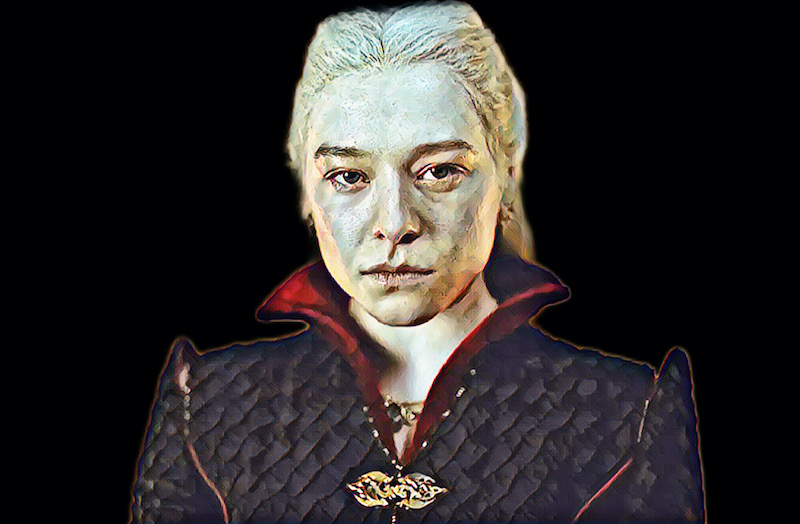


The repetition of these images ultimately reveals something about House of the Dragon‘s own interpretation of its protagonist. Rhaenyra may suffer. Rhaenyra may mourn. Rhaenyra may be a victim. But she is rarely allowed to be dangerous. And perhaps that is precisely the Rhaenyra I miss.
By comparison, Alicent’s portrayal is also very different from the books, but Olivia Cooke finds every contradiction within the character. The adult Alicent possesses a firmness that the younger Alicent lacked. She can be guilty and cruel, religious and hypocritical, loving and manipulative, victim and agent. Olivia Cooke understands that Alicent is built from contradictions, not justifications. She does not need to be softened to be understood.
Rhaenyra and Alicent have always functioned as mirrors. They are shaped by the same system but respond to it in opposite ways. Alicent clings to duty, order, religion, and appearances. Rhaenyra should cling to the right, desire, Targaryen blood, and the conviction that she was born for something greater. Yet while Alicent gains layers of hardness through Olivia Cooke’s performance, Rhaenyra often loses her edges through Emma D’Arcy’s.
And I must say it again: this is not Emma’s fault. It is a writing choice.
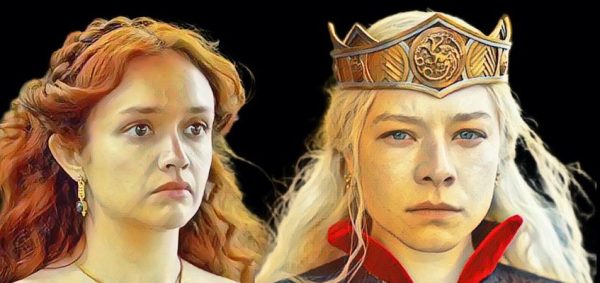
Emma D’Arcy carries an enormous burden as the series lead. Matt Smith appears completely at ease with Daemon, both because of his experience and because of the nature of the role itself. Daemon is chaotic, charismatic, dangerous, contradictory—and the series allows him to be all those things. Emma, by contrast, assumed the central role without being a global star beforehand. Moreover, they portray a Targaryen while standing in the shadow of Daenerys, one of the most beloved and legendary television characters of recent decades. That is an immense burden.
For that reason, my resistance was never about the casting. The problem is that the series seems afraid to allow Rhaenyra to be truly difficult. As though, for audiences to support her, she must be stripped of some of her ambition, arrogance, resentment, and capacity for cruelty. Yet it was precisely that combination that made Rhaenyra fascinating.
A female protagonist does not need to be morally superior to be compelling. Rhaenyra can be a victim of misogyny and still be ambitious. She can be a loving mother and still crave revenge. She can have a legitimate claim to the throne and still be unprepared to rule. She can be betrayed and also betray others. She can be wronged and also commit injustices. To reduce that contradiction in the name of empathy is to diminish the character.
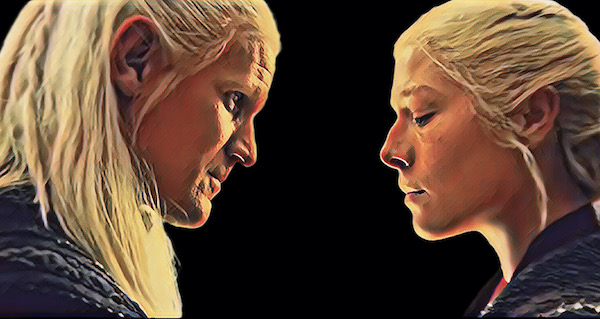
Daemon understands this within the narrative itself. His arguments with Rhaenyra often point to the same issue: she is a questionable leader. After all, she hesitates to act. After all, she tries to preserve an idea of peace after the war has already begun, because she seems unwilling to wield the violence her position requires. In the book, the tension between them comes from a different place. Rhaenyra is not too fragile for power. She is too proud, too wounded, too surrounded, and gradually becomes harder, more distrustful, and more dangerous.
That difference changes everything.
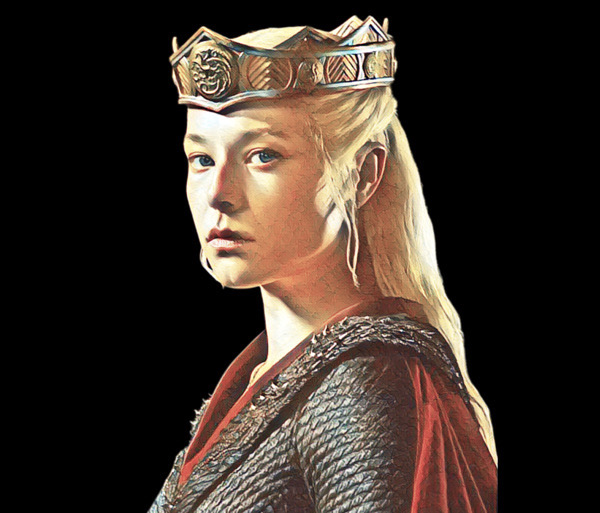
Fans are already hoping for Emma D’Arcy to receive an Emmy nomination, and such recognition would be entirely deserved. The performance is consistent, elegant, intense, and deeply human. A win will depend heavily on the arc the season ultimately provides and on how the industry responds to this restrained approach. The Emmys often reward explosions, transformations, and scenes of rupture. Emma operates in another register entirely: internalized trauma, emotions conveyed through a glance, vulnerability as a language. It is sophisticated work.
And perhaps this season will finally offer the opportunity to reveal another side of this Rhaenyra. In the first two episodes, Emma D’Arcy is already extraordinary, navigating grief, exhaustion, and the political weight of war. But critics and industry professionals who have seen upcoming episodes have pointed to a particular moment as a turning point: we may finally see a Rhaenyra who is more intense, more visceral, and emotionally shattered. If that proves true, Emma may finally have the chance to demonstrate something many of us never doubted they possessed: the ability to portray the Dragon Queen’s fury as well.
Because, in the end, my issue has always been with something else entirely: the Rhaenyra I imagined from Fire & Blood had more fire in her blood. She was the woman who lost children and broke apart, but who also finds within that suffering the strength to set the world ablaze. The heir who knows the throne is hers and never asks permission to claim it.
Perhaps, at last, we are about to meet that Rhaenyra.
Descubra mais sobre
Assine para receber nossas notícias mais recentes por e-mail.


1 comentário Adicione o seu