
When Yellowstone ended, and Taylor Sheridan announced two present-day spin-offs — Marshals, centered on Kayce Dutton, and Dutton Ranch, following Beth and Rip as they attempt to build a new life in Texas — one question seemed inevitable: which of these series would inherit the true spirit of the original show?
After the first season of Dutton Ranch, the answer feels surprisingly clear.
The series not only confirmed one of fans’ biggest theories — that the 10 Petal Ranch was operating in partnership with a Mexican cartel — but also proved something many viewers had suspected for years: Beth Dutton and Rip Wheeler have always been the emotional center of the Yellowstone universe.
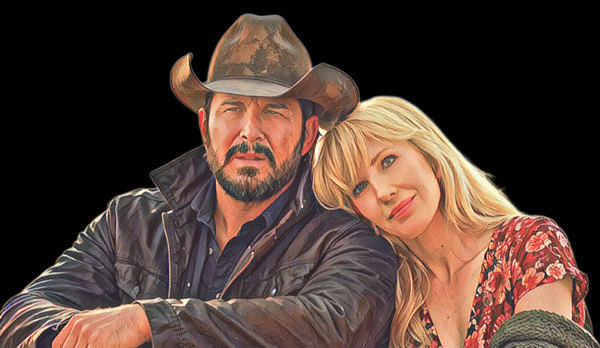
The reveal involving Mariano Reyes and the fentanyl hidden inside cattle shipments works as an effective hook for Season 2. But perhaps Dutton Ranch‘s greatest discovery is something else entirely: removing Beth and Rip from John Dutton’s orbit finally allowed them to become adults.
In Yellowstone, Beth and Rip existed almost exclusively in the service of the patriarch. She was his fiercest warrior; he was his most loyal enforcer. Despite being the show’s most popular characters, their lives remained frozen by their absolute devotion to their father, their boss, and the ranch.
In Dutton Ranch, for the first time, they have to survive without a safety net.
They lost their property in Montana. They invest nearly all their money into a ranch in Texas. They have to deal with disease outbreaks, financial struggles, and perhaps most terrifying of all, raising a teenager.
It is true that, in Taylor Sheridan’s universe, young people often function less as characters and more as instruments of audience irritation. The list is long: Ainsley in Landman, the children in Lioness, the younger characters in The Madison, and now Carter in Dutton Ranch. Sheridan seems to write teenagers under the assumption that they should be simultaneously ungrateful, impulsive, and profoundly exhausting.
Yet Carter works precisely because he exposes something Beth and Rip have never had to face before: the possibility of failing as parents. And perhaps that is exactly where Dutton Ranch distinguishes itself from Yellowstone. The original series was about powerful people trying to preserve an empire. Dutton Ranch is about two broken people trying to build a life.
That does not mean Sheridan has abandoned his old tricks. Quite the opposite.
Beth and Rip remain deeply exaggerated characters, operating on an emotional frequency that belongs more to soap opera than to realism. There is an absolutely irresistible cheesiness to their endless exchanges of “Honey” and “Baby,” especially when they happen immediately before or after acts of extreme violence. There is also a kind of superhero choreography whenever the two go into action: silent glances, unspoken plans, a mutual understanding so complete that it borders on the supernatural.
And it works.
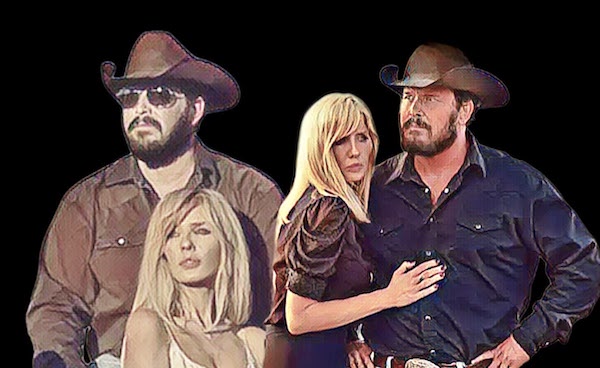
It works because Kelly Reilly and Cole Hauser understand perfectly that Beth and Rip were never meant to be realistic people. They are romantic archetypes. They are Bonnie and Clyde in cowboy boots. They are the leads of an operatic melodrama disguised as a contemporary western.
Taylor Sheridan, after all, may well be the greatest soap opera writer currently working in American television. He instinctively understands something many contemporary writers seem to have forgotten: clichés are not the problem. Poorly executed clichés are. When used well, they become almost infallible emotional tools.
That does not mean, however, that Dutton Ranch is without flaws.
The season’s biggest inconsistency may be Beulah Jackson herself. Annette Bening creates a fascinating character, but the series never fully decides who she actually is. Is Beulah a victim or a villain? A traumatized woman trying to protect her family, or a criminal who built her empire on drug trafficking?
This uncertainty becomes especially apparent in the finale. The same woman who suffers a heart attack after being struck by a decorative bull’s head reacts with surprising restraint to the brutal murder of her own son inside her home. Yes, Rob-Will Jackson was impulsive, violent, and clearly troubled. But the series spent eight episodes insisting that Beulah was willing to sacrifice everything to preserve his future.
His death, therefore, should represent the complete destruction of her world. Instead, it feels like merely one more tragedy among many.
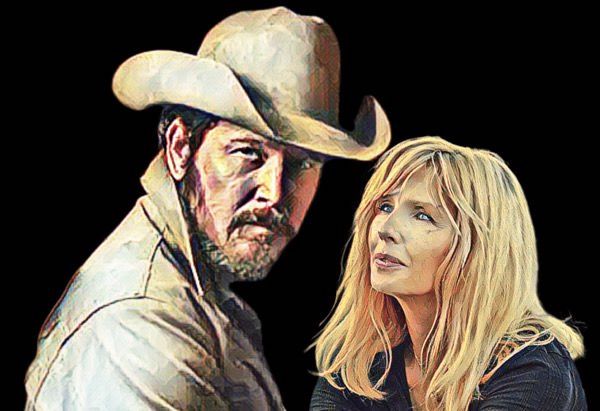
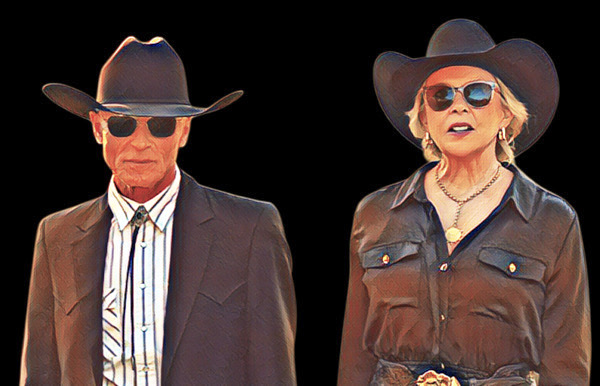
Perhaps that is an inconsistency. Or perhaps it is simply another example of how Sheridan’s characters often obey the logic of melodrama rather than psychology.
And honestly, that may be exactly why we keep watching.
Because, ultimately, Dutton Ranch is not a series about realism. It is a soap opera about love, loyalty, violence, and family — and Beth Dutton and Rip Wheeler remain the most unlikely and irresistible couple Taylor Sheridan has ever created.
Descubra mais sobre
Assine para receber nossas notícias mais recentes por e-mail.

