
Even if you don’t like classical music, it is virtually impossible that you have never heard Antonio Vivaldi‘s The Four Seasons. Few works have crossed so many centuries, generations, and cultural boundaries. Long ago, its music escaped the confines of concert halls to become part of our collective imagination. So, without having read the novel that inspired the film, I went to see Primavera expecting a more conventional biopic, something along the lines of Boléro or perhaps a historical reimagining in the spirit of Hamnet. On some level, I may even have been hoping for a new Amadeus: an exuberant narrative centered on the temperament, excesses, and genius of one of the greatest composers in the history of Western music.
What I found was something entirely different.
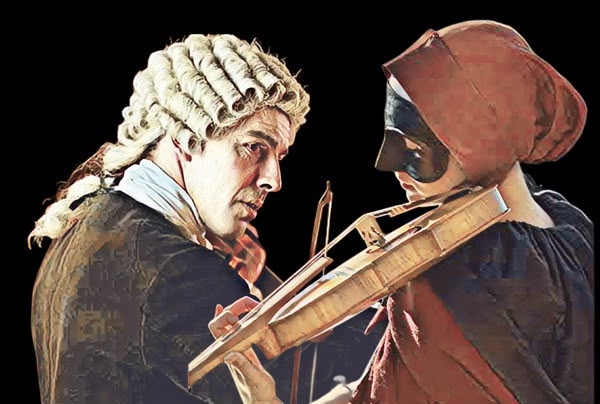
To me, Primavera feels like a distant cousin of one of my favorite films of all time, Gérard Corbiau‘s The Music Teacher. Not only because both films treat music as a vocation, obsession, and inheritance, but because they share a rare insight: that the most important story does not always belong to the artist whose biography we believe we are watching. And the most surprising thing is that Primavera is not really about Antonio Vivaldi at all. It is about the women history chose to forget, even though their talents helped shape one of the most important works in Western culture.
The film marks the feature debut of acclaimed opera director Damiano Michieletto, who does something far more interesting than simply recounting the life of the Venetian composer. Instead, he asks a different question: who were the women who helped create the name, Antonio Vivaldi?
Loosely based on Stabat Mater, the novel by Tiziano Scarpa that won Italy’s prestigious Strega Prize in 2008, Primavera follows Cecilia, played by the extraordinary Tecla Insolia, a young violinist raised at the Ospedale della Pietà, the Venetian institution that cared for abandoned girls and, during the seventeenth and eighteenth centuries, became one of Europe’s most important musical centers.
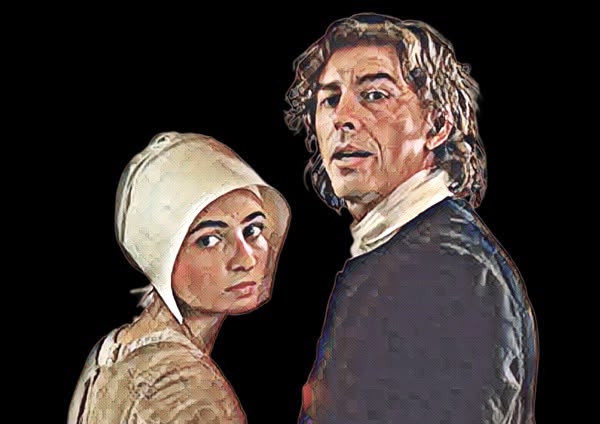
Scarpa’s decision — and later Michieletto’s — is fascinating precisely because it begins with what official history chose to forget. Yes, Antonio Vivaldi existed. Yes, he worked at the Pietà for nearly thirty years. And yes, he composed hundreds of concertos for the institution’s young musicians. What we rarely ask ourselves is who those women were, and how much of what we now call “the sound of Vivaldi” emerged from his daily collaboration with them.
The Ospedale della Pietà was not merely an orphanage. Located on the Venetian lagoon near St. Mark’s Square, it became one of the most prestigious music schools in Europe. Its students, many of whom had been abandoned as infants, received a sophisticated musical education and performed for visitors from across the continent. The irony is that they were rarely seen: they performed behind grilles and decorative screens, turning their concerts into experiences that must have felt almost ghostly.
Among those young women was Anna Maria della Pietà. Abandoned as an infant, she would become one of the greatest violinists of the eighteenth century. Vivaldi wrote dozens of works specifically for her, and many musicologists now believe that part of the extraordinary virtuosity we associate with the composer was only possible because there existed a performer capable of pushing him to his own creative limits. Anna Maria may not have been Vivaldi’s “muse” in the romantic sense that cinema so often seeks, but she was undoubtedly one of his greatest artistic inspirations.
It is within this world that Michele Riondino‘s Vivaldi emerges. And here lies one of the film’s most intelligent choices: Michieletto refuses to turn him into a romantic genius or a biographical hero. His Vivaldi is brilliant, certainly, but also insecure, ill, ambitious, and at times incapable of fully understanding the extraordinary talent standing before him.
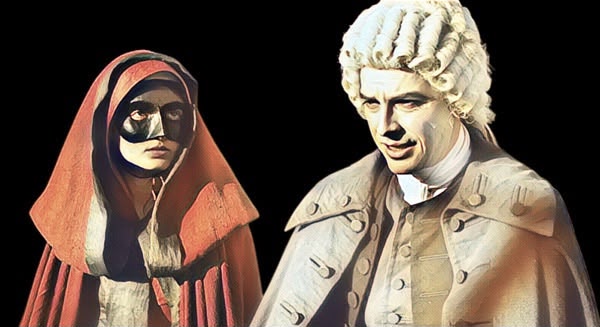
Primavera understands that art is never a solitary act. Cecilia is not merely a disciple. She is not merely a muse. She is not merely an inspiration. She is the very question the film seeks to ask: how many talented women had to disappear for the narrative of the “solitary genius” to survive for three centuries?
The answer is never stated explicitly, and perhaps it does not need to be.
Visually, Michieletto also makes striking choices. His Venice is far removed from postcards. It is damp, dark, melancholic, and almost claustrophobic. The Ospedale della Pietà functions simultaneously as refuge and prison, while music emerges as the only possible form of transcendence available to these young women. The result is a film less interested in historical reconstruction than in the emotional experience of artistic creation.
This approach resonated on the international festival circuit. Primavera premiered in the Special Presentations section at the 2025 Toronto International Film Festival and has since traveled to festivals in Chicago, Palm Springs, Seattle, Toulouse, Victoria, Gasparilla, and numerous events dedicated to Italian cinema around the world. The film won the Audience Award at the Chicago International Film Festival, the top prize at the Victoria Film Festival, both the Jury and Audience Awards at the Gasparilla International Film Festival, and received four David di Donatello awards, including Best Original Score, Best Costume Design, Best Hairstyling, and Best Sound.
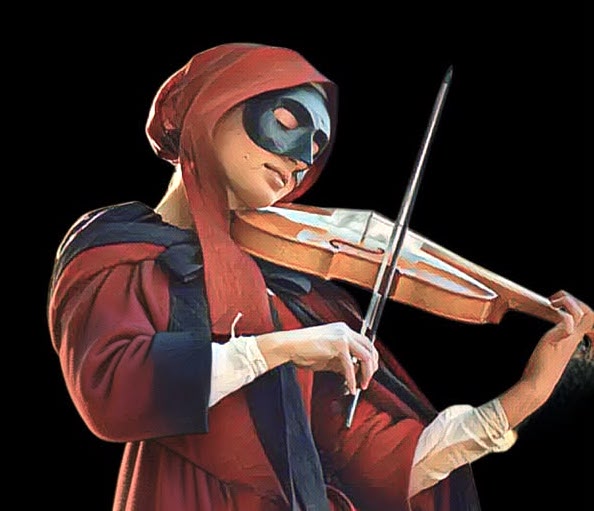
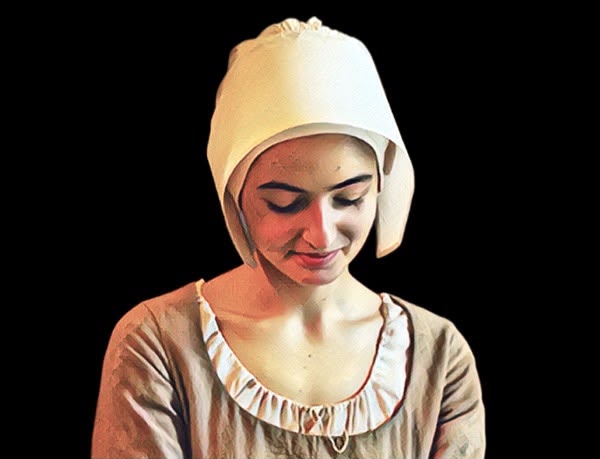
Perhaps the greatest irony of Antonio Vivaldi’s story is that part of the music we associate with his genius was only possible because women whose names we have nearly forgotten were talented enough to expand that very genius.
By the time Primavera ends, the desire to listen to The Four Seasons once again feels almost inevitable. But this time, the experience is different. For the first time, we imagine the women who played this music before we did. And we begin to understand that perhaps we were never listening to Antonio Vivaldi alone.
Descubra mais sobre
Assine para receber nossas notícias mais recentes por e-mail.

