
Robert Smith may be shy, but he has never exactly been silent when something irritates him. Anyone who has followed The Cure’s frontman for decades knows there is a huge difference between being reserved and having no opinions. Smith speaks sparingly, generally avoids the exposure that comes with fame, and has never turned the band into a permanent political platform, but he is also an outspoken anti-monarchist, a fierce critic of greed in the music industry, and someone with an almost instinctive distrust of powerful institutions. So when he essentially told the idea of a World Cup final halftime show to “fuck off,” perhaps the biggest surprise was only how many people still did not know he was like this.
The outrage came over the first major musical performance planned for halftime during a World Cup final, a production inspired by the Super Bowl model, developed with the involvement of Coldplay’s Chris Martin and featuring Madonna, Shakira, BTS, Justin Bieber, Burna Boy, and other major names. The musical segment was designed to last around 11 minutes and is part of a FIFA initiative with Global Citizen aimed at raising funds for early childhood education. It is a difficult cause to criticize. The question raised by critics is something else entirely: why did the final of the biggest football tournament in the world need to become something different to promote it?
Smith was direct, as he usually is when he loses patience. In a post on The Cure’s Instagram account, he mocked Gianni Infantino, used the hashtags #Breadandcircuses and #MUGWANK, and ended with the very undiplomatic “please just fuck off.” When some people interpreted his reaction as an attack on the chosen performers, he clarified that the problem was not really who was organizing or singing, but the very idea of turning the World Cup final interval into a spectacle modeled on American football. He also used the opportunity to mock Infantino’s proximity to Donald Trump, making it clear that his irritation went far beyond a simple dislike of a pop concert.

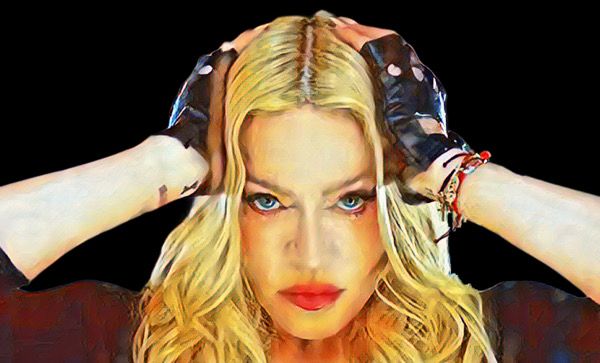
That distinction matters because Robert Smith is not complaining about Madonna, BTS or Shakira occupying a stage he secretly wishes belonged to The Cure. Nor does he seem particularly concerned about Chris Martin acting as curator. His criticism is about the logic behind it. In his view, football did not need to be reinvented as an American-style entertainment product, especially when it is already, by itself, the most globalized sport on the planet.
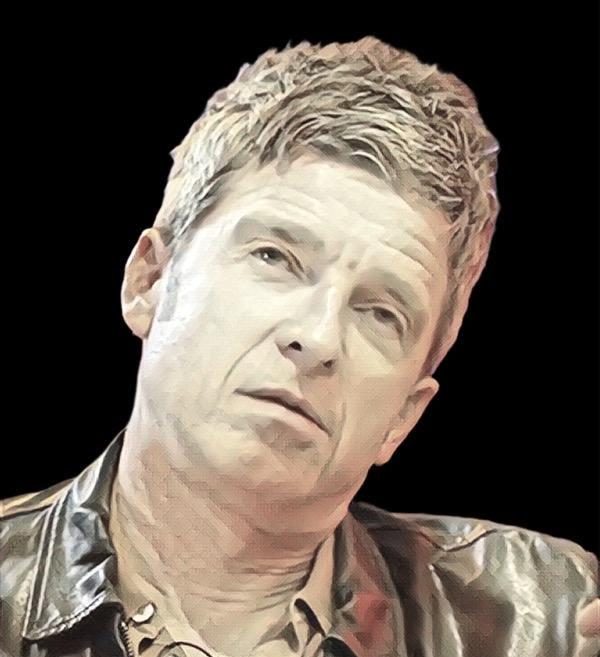
And he was not the first grumpy British rocker — and I use “grumpy” affectionately — to say so during this World Cup. Noel Gallagher, a lifelong Manchester City obsessive whose relationship with football is almost as famous as his complicated relationship with his brother Liam, had already dismissed the halftime show weeks earlier. Asked whether he would take part, he joked that he would be busy handling the “half-time leg of lamb draw,” a reference to the modest kind of entertainment once found in English stadiums decades ago. He later explained that he dislikes the razzmatazz increasingly introduced into football and pointed out that the sport had functioned perfectly well for hundreds of years without it.
Noel also mocked the fact that the selected performers are “not really football people,” but his main argument is more interesting than that little jab. He is not against changes that might improve the game and has even praised rule adjustments designed to reduce time-wasting. What he distinguishes between is changing football and packaging the football product. One tries to improve the sport. The other tries to inflate everything surrounding it.
Robert Smith goes one step further because this discussion touches on an old irritation.
In 2024, speaking about his relationship with football, he was already lamenting that the sport had become increasingly dominated by branding, sponsorship, and betting, reduced in part to appearances and “selling stuff.” Smith has been a Queens Park Rangers supporter for decades. He did not discover football during this World Cup, nor did he suddenly adopt the persona of an outraged purist because Madonna was about to step onto the pitch. The feeling that the game is gradually being transformed into a commercial platform was already bothering him long before FIFA invented its Super Bowl moment.
Perhaps that is why his reaction resonated so strongly. We are not talking about a musician who believes everything should remain frozen exactly as it once was. The Cure is a band that has spent almost five decades changing while somehow still sounding unmistakably like The Cure. Smith’s problem has never seemed to be changing itself. It is when “change” becomes a friendlier word for commercialization.
That was exactly what put him on a collision course with Ticketmaster in 2023. The Cure deliberately tried to keep tickets affordable for its American tour, only for fans to discover that service fees in some cases cost as much as, or more than, the tickets themselves. Smith made his anger public, pressured the company, and managed to secure partial refunds for buyers. He later continued attacking dynamic pricing as a practice driven by greed. His stance had a concrete effect: Neil Young eventually cited Smith when rejecting the model for his own tour.
There is a consistency here that helps explain why FIFA triggered the same reaction. With Ticketmaster, the fan becomes another opportunity to extract more money. With football turned into a megashow, the supporter risks ceasing to be the center of a culture and becoming an available audience placed somewhere between one sponsor and the next.
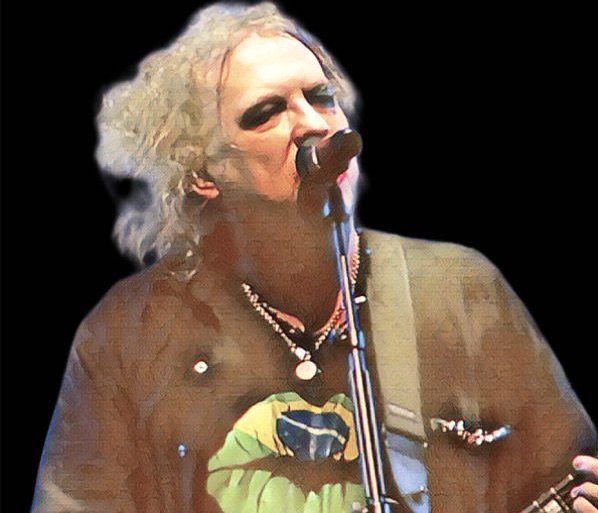
That attitude also appears in Smith’s relationship with an institution even older than FIFA: the British monarchy. He has never hidden his republicanism. In an interview that has repeatedly gone viral over the years, he attacked hereditary privilege as anti-democratic and inherently wrong. He also carried that position quite literally onto the stage: his guitar displayed the phrase “CITIZENS NOT SUBJECTS.” Few statements summarize his view of authority quite so neatly.
That does not mean Ticketmaster, King Charles, and Gianni Infantino are equivalent, obviously. The thread connecting Smith’s criticisms is something else: he seems to have a particular allergy to the idea that institutions can simply decide how people should consume, pay, obey, or accept something because those in power believe they know best.
Perhaps that is why the phrase he used in his criticism of FIFA, “bread and circuses,” is so revealing. The ancient expression refers to distracting the public with spectacle while more important issues remain out of focus. Smith is not saying that music and football cannot coexist, which would be a strange argument coming from a musician who loves the sport. He is asking why a game that already mobilizes billions of people needs to be “improved” through a formula imported from another sport and another cultural tradition.
He is not alone in asking that question. On Irish television, former players Richie Sadlier, Shay Given, and Didi Hamann reacted strongly against the format. Sadlier summed up part of the resistance by asking who had ever looked at football and concluded that what it needed was “more adverts and more songs.” Given raised an even more basic concern: players spend their entire careers conditioned to a 15-minute halftime break, and altering that structure during a World Cup final is not necessarily a neutral change. Hamann pushed the argument further by asking what comes next if every new alteration is accepted simply because it increases audiences and revenue.
FIFA apparently reduced some of the logistical concerns by informing teams that the total interval would be around 17 minutes, with approximately 11 devoted to the performance and the rest to setting up and removing the stage. That is far less than the 25 or 30 minutes initially feared, but it does not solve the argument Smith, Gallagher, and others are raising. The question is not simply how many minutes Madonna or BTS will be allowed to sing.
It is the precedent.
Because football already has spectacle. The spectacle is the game.

A World Cup final already has narrative, tension, villains, heroes, songs from the stands, tears, superstition, anthems, rivalries, and millions of people temporarily unable to breathe properly for 90 minutes. It is no coincidence that images of England’s players spontaneously singing Wonderwall with supporters became so powerful during this World Cup. Noel Gallagher, who wants nothing to do with a manufactured halftime show, loved seeing his song organically adopted by players and fans and perfectly summed up the difference when he said Wonderwall “belongs to the people.”
That is precisely the contrast. Nobody had to put Wonderwall into a script. There was no Chris Martin curation, no marketing plan, and no stage being assembled on the pitch. The music emerged from football because, in that moment, it made sense to the people actually living it.
Perhaps that is what Robert Smith is defending, only in much less delicate language. He is not against spectacle and certainly not against music. Anyone who has ever watched The Cure play a three-hour concert could hardly accuse him of that. He is against the idea that everything must be turned into a product, expanded, sponsored, packaged, and sold back to an audience that was already there.
For decades, he has carried a simple message on his guitar: citizens, not subjects. In FIFA’s case, we could update it slightly.
Supporters, not consumers.
And perhaps that is the real argument hidden underneath all the swearing.
Descubra mais sobre
Assine para receber nossas notícias mais recentes por e-mail.

