
The fifth episode of House of the Dragon Season 3, “Unbowed and Unbent,” does something curious after the destruction and twists of the previous weeks: it once again reduces the presence of dragons to show the damage they leave behind. It is not exactly a slow episode, although at times it seems to move in circles. Above all, it is an hour about consequences. Criston Cole finally understands the war he helped start, Rhaenyra discovers that conquering King’s Landing may have been easier than governing it, Aegon and Aemond each try, in their own way, to come back from the dead, and Ormund Hightower confirms that he does not need a dragon to become one of the most dangerous men in Westeros.
The episode opens in the Riverlands, where Oscar Tully, Roderick Dustin — Roddy the Ruin — and Petyr Piper are trying to lead Rhaenyra’s army south. Criston Cole, however, has turned his small force into a guerrilla unit, attacking camps, destroying supplies, and disappearing before his enemies can respond. Petyr Piper is among those killed in an ambush, and a war that until recently seemed to depend almost entirely on dragons is once again shown for what it has always been to most men in Westeros: mud, blood, and death without any trace of glory.
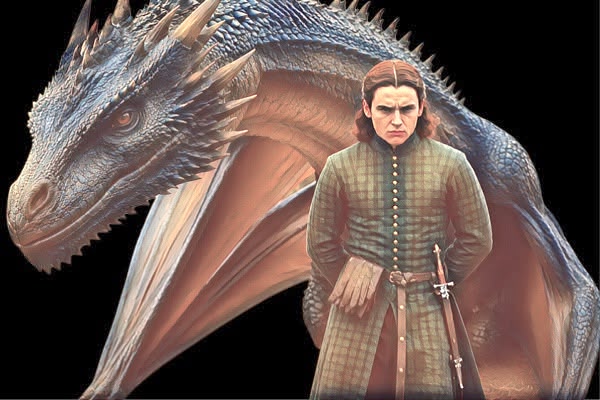
Oscar quickly realizes that conventionally chasing Criston will only allow him to continue controlling the pace of the campaign. If Cole wants guerrilla warfare, then guerrilla warfare is what he will get. The solution is simple and effective: scattering caltrops, small spiked metal devices, along the route used by the Green cavalry. The horses go down, several have to be put out of their misery, and Criston and Gwayne Hightower are forced to continue on foot. The mobility that had kept them ahead of their enemies disappears at once.
Meanwhile, at Harrenhal, Aemond finally wakes after spending much of the past few episodes somewhere between life and death. He is tormented by nightmares in which a burned Aegon appears before him, dragging him back toward the guilt he continues trying to deny. He also learns that Vhagar is missing. For a man who built much of his identity around riding the largest living dragon, being without her is almost like becoming again the boy who lost an eye and constantly had to prove he was not weak.
Alys Rivers continues to care for him while also keeping men interested in Rhaenyra’s bounty from discovering that the prince is hiding at Harrenhal. Their relationship finally begins to take the shape we know from Fire & Blood, although the series adds a very clear layer of emotional dependency. Aemond speaks about his mother, Aegon, and the feeling that he was always less loved, and for the first time in a long while, he allows himself to be cared for. The warrior who supposedly needs no one appears curled up beside Alys, almost like a child.
On the other side of Westeros, Aegon remains obsessed with his brother. He and Larys continue chasing rumors of Vhagar sightings, in a search that begins to test even Larys’s patience. Aegon blames Aemond for almost everything that has happened to him and turns revenge into his only purpose, until Larys finally says what no one dared say when Aegon still sat on the Iron Throne. Aegon had every possible opportunity. He was born the son of a king, received an education, training, privilege, and even Sunfyre. He could have been great and wasted almost all of it.

Curiously, Aegon listens.
Defeated, injured, and seemingly out of options, he agrees to return to Larys’s original plan: flee to Essos, disappear for a while, and wait for the war to destroy everyone else before attempting to return. The plan changes again when someone everyone believed lost suddenly reappears.
Tyland Lannister survived the Battle of the Gullet. After being thrown into the sea by Sharako Lohar, he somehow managed to reach land alive and eventually finds Aegon and Larys. His return matters enormously because Tyland remains one of the few men who know where part of the Crown’s wealth was hidden before the fall of King’s Landing. Instead of Essos, he suggests that Aegon seek protection in Lannisport, where he would have the support of the Lannisters and be far less exposed.
In King’s Landing, Rhaenyra continues discovering that every problem she solves immediately creates two more. Joffrey finally returns from the Vale and is now officially her heir after the deaths of Luke and Jace. It should be a moment that brings mother and son together, but Rhaenyra simply cannot face him. When she finally goes to his chambers, she waits until he is asleep.
It is a small scene, but it says a great deal. Welcoming Joffrey means fully admitting that Jace is dead. Rhaenyra can face armies, dragons, and hostile councils, but she continues avoiding her own grief.

She also receives Lady Sabitha Frey, and another debt left behind by Jace comes due. In exchange for allowing the armies of the North to cross at the Twins, he promised Harrenhal to the Freys. The problem is that Rhaenyra has now offered that exact same castle as a reward to whoever delivers Aemond.
When Sabitha demands that the agreement be honored, Rhaenyra essentially answers that Jace is dead and his promises died with him. Politically, it is a dangerous solution, especially because the Freys fulfilled their side of the bargain. As compensation, Sabitha receives a seat on the Small Council. Once again, Rhaenyra solves one problem by creating another, something that is becoming a pattern since taking the Iron Throne.
Inside the Red Keep, Alicent tries to solve another problem before it becomes impossible to hide. Helaena’s pregnancy is confirmed, and Alicent asks Grand Maester Orwyle for moon tea to end it.
From Alicent’s perspective, the political logic is obvious. If Helaena gives birth to a boy, there will be another Targaryen heir who can be used by the Greens. For Helaena, however, there is nothing to discuss. After losing Jaehaerys, she refuses to give up another child.
When Mysaria realizes that the tea was taken to the chambers, Alicent has to drink the potion herself and pretend it was intended for her to deflect suspicion. It is only a temporary solution, because Mysaria has clearly already understood that something is being hidden.
In Tumbleton, Ormund Hightower continues his private project of turning Daeron into a king.
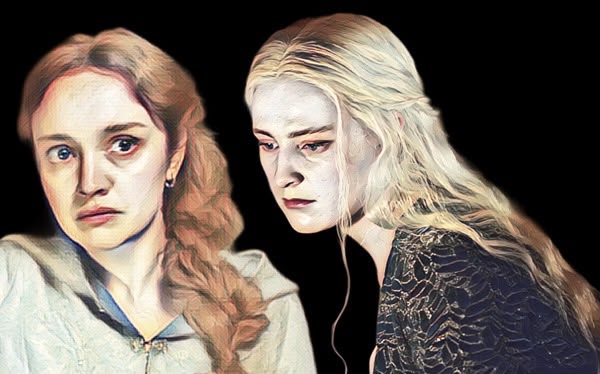
The two play cyvasse while Ormund talks about Meria Martell and how Dorne managed to resist even the dragons of Aegon the Conqueror. Daeron asks whether Meria should be considered a hero or a villain for what she did and immediately realizes he is entering dangerous territory.
Their relationship remains one of the most interesting things in the season. Daeron respects Ormund, fears Ormund, and is being shaped by him, but he is already beginning to show that he is not simply an obedient boy. During the game itself, Daeron defeats his uncle using the dragon piece.
Ormund takes the defeat badly, knocks over the board, but turns even that into a lesson: Daeron should never apologize for winning.
Then we see how far his project has already gone. Ormund has begun minting coins bearing his nephew’s image as king. This is no longer merely a contingency plan to replace Aegon or Aemond if necessary. There is now a concrete campaign to present Daeron as an alternative claimant to the Iron Throne.
And that campaign has already begun in King’s Landing.
Two members of the City Watch are found murdered in the streets. Daemon immediately understands that this is not random violence, especially after Luthor Largent’s crackdown on those spreading anti-Rhaenyra messages.
The queen, however, remains far more concerned with Aemond and Vhagar.
The bodies multiply. Two become four. Then six.

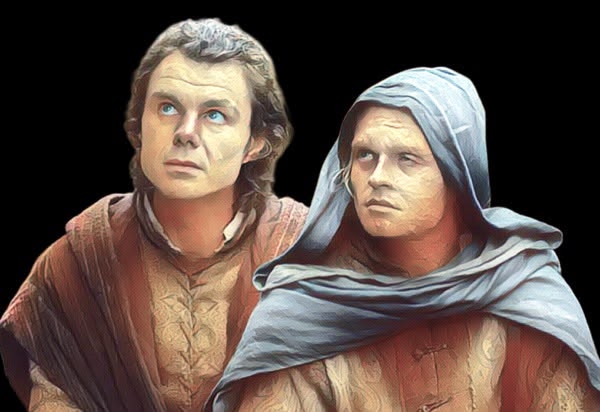
Daemon insists that something organized is happening inside the city, but Rhaenyra wants him to go searching for Vhagar. Their argument once again makes clear how differently they understand threats. She looks at the largest dragon in the world. He looks at dead men in alleyways.
In the Riverlands, Criston and Gwayne discover that their situation is far worse than they imagined. Without horses, they cross forests, marshes, and leech-infested terrain while their men begin dying from exhaustion or considering desertion.
Gwayne tries to convince Criston to abandon the pursuit and head to Tumbleton, where they could join Ormund and rebuild the Green forces.
Criston refuses.
The two share a conversation that finally explains where the character has arrived after everything he has endured since Rook’s Rest. Gwayne even offers the possibility of a life in Oldtown, far from the war. Criston admits that he has spent his entire life serving someone. First Rhaenyra, then Alicent, Aegon, Aemond, vows, noble families, and causes that changed according to the interests of those above him.
Now, at least, he wants to choose how it ends.
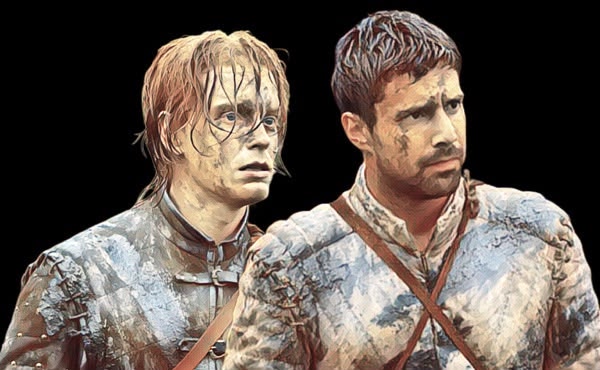
He still believes himself to be the greatest warrior in the realm and wants to die like one.
In King’s Landing, Rhaenyra goes searching for some kind of answer in the Great Sept. Daemon finds her kneeling before the candles, and the two argue in High Valyrian. He believes she is allowing concerns about rumors, bastards, legitimacy, and religion to limit decisions that should be simple. Rhaenyra, on the other hand, understands that dragons can conquer a city but cannot force its inhabitants to accept whoever rules them.
That is precisely the weakness Ormund is exploiting.
The Gold Cloaks are also furious because, on top of being murdered in the streets, they have gone weeks without being paid. Daemon has to intervene before the City Watch itself collapses. He promises that there will be money when the war is over and, being Daemon, turns even unpaid wages into a grand vision of expansion: after the Seven Kingdoms would come Dorne, and perhaps after that a new empire.
He manages to keep the men under control. For now.
Alicent then decides to try to flee with Helaena. The two disguise themselves as servants and attempt to escape the Red Keep amid the chaos in the city, but Mysaria intercepts them.

The scene between Alicent and Mysaria is particularly interesting because Alicent does not simply beg for freedom. She reminds the former White Worm of something Mysaria should understand better than almost anyone: information is power, alliances change, and no one should bet everything on a single person. And, she was occasionally an Otto Hightower’s informant.
Mysaria does not immediately report the escape attempt to Rhaenyra, which is a small detail, but potentially an important one.
In the Riverlands, Oscar Tully definitively wins the strategic contest with Criston. When the Greens finally reach the crossing near Stoney Sept, they discover that Rhaenyra’s forces have already crossed the river and destroyed the bridge behind them.
Criston has lost. Gwayne insists one final time that there is still a way out: Tumbleton, but Criston chooses to stay. Gwayne leaves, while Criston decides to cross the river with the men who still follow him and march directly toward a battle he knows he is unlikely to win.
Back at Harrenhal, Aemond finally begins to recover his strength. Men enter the castle looking for him and threaten Alys. This time, the prince gets out of bed and kills the intruders even though he is still wounded.
The Aemond who seemed reduced to an almost childlike figure beside Alys is still there, but the warrior is returning. And Vhagar is still missing.
At Rook’s Rest, Aegon, Larys, and Tyland’s plan almost ends before it begins. While the three discuss the former king’s fate with far too little discretion, Janos finds a Valyrian steel crown among Larys’s belongings. He immediately understands who is hiding there.
Aegon kills him himself.

It is the first time in a while that we see something different in the former king. This does not mean redemption, obviously. Aegon is still Aegon. But the broken, almost passive man begins to disappear. When he kills Janos to protect his secret, there is again something resembling the will to survive and reclaim power.
Meanwhile, Daemon finally obtains a concrete lead in the King’s Landing murders. A captured man confesses to taking part in the conspiracy and says he acted in the name of the true king. Daemon tortures him. Among the payments received by the assassin is one of the newly minted coins bearing Daeron’s image. The connection to Ormund finally becomes clear.
Daemon takes the coin to Rhaenyra and does not miss the opportunity to remind her that perhaps they should have eliminated Daeron when they had the chance. While Rhaenyra remained focused on Aemond and Vhagar, Ormund was building another war almost from inside King’s Landing itself.
Helaena then finds a possible escape route that no one else had noticed. The cats used to control rats in the Red Keep reveal the existence of a hidden passage in the rooms where she and Alicent are confined. The two enter the tunnel during the night, but there is only one problem: the exit is blocked, and after closing the passage behind them, mother and daughter are trapped inside the walls of the Red Keep, in darkness.
Criston, meanwhile, gathers the men who have chosen to remain with him. His final speech is less about victory than about death. He invokes the Seven, speaks of the Warrior, the Maiden, the Smith, the Crone, the Mother, the Father, and finally the Stranger, the one who represents death. Criston knows perfectly well where he is marching. Those who know Fire & Blood know as well: everything points toward the Butcher’s Ball.
As his voice continues, Daemon enters the City Watch quarters and realizes something is wrong. No one answers. Then he finds the bodies.
Luthor Largent and his Gold Cloaks have been murdered and arranged around a table in a grotesque parody of the Last Supper. Eyes gouged out, bodies mutilated, entrails scattered.
On the wall, a message: “A Feast for Traitors.” That is how the episode ends.
Ormund has managed to turn Rhaenyra’s own City Watch into a target. Daeron is already circulating symbolically as a new king before he has even claimed a crown, Alicent and Helaena are missing inside the walls of the Red Keep, Aemond is alive without Vhagar, Aegon is alive while everyone believes him dead, and Criston is voluntarily marching toward what may be his final battle.
After three seasons spent debating who should sit on the Iron Throne, House of the Dragon finally seems to be entering the cruelest part of the story: the part where perhaps it no longer matters who deserves to rule.
The war has begun, destroying them all before it has even decided who won.
Descubra mais sobre
Assine para receber nossas notícias mais recentes por e-mail.


1 comentário Adicione o seu