
Discussing the major changes House of the Dragon has made to the book has already become a predictable and divisive ritual. I am almost always on the side of the purists, and I have questioned many of the “adaptations” that, at one point, led George R. R. Martin himself to all but break with showrunner Ryan Condal, turning the fandom into its own version of the Dance of the Dragons.
In this particular conflict between the Greens and the Blacks, however, I would prefer to remain somewhere in the grey. I may disagree with Condal, but I still believe he is doing visually and dramatically impressive work. Removing Maelor was a mistake, as was keeping Viserys II and Aegon III away from the main story, although the showrunner has cited the legal and practical difficulties of working with children, especially in a narrative this violent. Condal managed to restore Maelor to the story in Season 3, and as for Nettles, well, she has apparently “become” Rhaena, a change that at least added an interesting dramatic layer to the series.
Even so, one of the most significant alterations made so far does not appear to have attracted much attention. Ormund Hightower is not simply receiving more screen time in the third season because he is being handed an essential part of the storyline that belongs to Larys Strong in Fire & Blood, and this is far from a minor transfer.
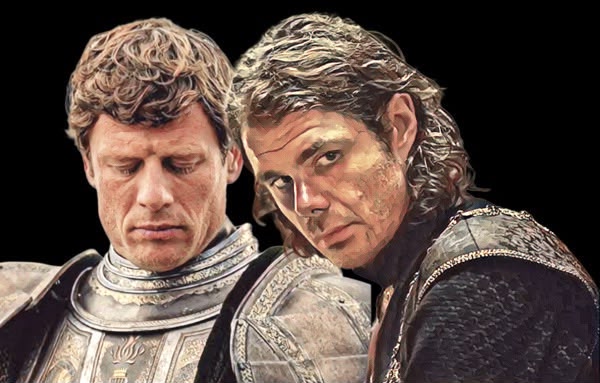
The Cunning of Larys Strong
In George R. R. Martin’s book, Larys is one of the most important figures in the political destabilization of Rhaenyra. He does not need a dragon, he does not command great armies, and he is rarely at the center of a battlefield, because his weapons are information, lies, manipulation, infiltration, and an almost terrifying ability to survive while everyone around him falls. It is frightening, in fact, to see how effectively he acts without ever fully exposing his true intentions.
That is precisely the function the series has begun transferring to Ormund Hightower.
Let us begin, as always, with the book and with a change that started even before the fall of King’s Landing. When Rhaenyra takes the capital in Fire & Blood, it is Larys who arranges Aegon II’s escape through the castle’s secret passages, but he does not personally accompany the defeated king. Larys separates the members of the royal family, sends Jaehaera to Storm’s End and Maelor toward Oldtown, while Aegon is disguised as a common man and secretly taken to Dragonstone, precisely the place where no one would imagine searching for the deposed monarch. Larys, meanwhile, remains hidden in King’s Landing.
This choice is fundamental because it perfectly divides the characters’ functions. Aegon must survive and prepare his return, while Larys must remain behind and destroy Rhaenyra from within.
The series chose a different path.
Where Ormund Becomes Larys
Unlike what happens in the book, at some point, Larys Strong captured and imprisoned Otto Hightower, while everyone believed the former Hand was traveling toward Oldtown after being dismissed by his own grandson. Larys left Otto as a kind of “gift” for the Blacks, offering a sacrifice that might temporarily appease Daemon and Rhaenyra’s fury, and the plan worked exactly as intended.
At the same time, after recognizing Alicent’s movements and Aemond’s ambition, Larys left King’s Landing beside Aegon and travelled with him to Essos, passing through Lys while trying to secure a safe destination for the deposed king. In doing so, he began occupying a role much closer to the Varys and Tyrion dynamic in Game of Thrones, with two unlikely men crossing a war together through dark moments, political conversations, and a certain amount of humor.

The comparison does not need to be literal for the dramatic construction to be obvious. Aegon has been placed in the position of the defeated and mutilated prince who must learn how to exist again, while Larys has become his adviser, protector, and travelling companion. The problem is that this decision removes the character from precisely the place where he should be most dangerous.
In the book, while Rhaenyra believes she controls the city, Larys remains hidden and helps erode her authority. He spreads rumors, creates conflict, and turns distorted versions of events into political weapons. When Helaena dies, a story immediately begins circulating that she was murdered on Rhaenyra’s orders, and Mushroom attributes the origin of that rumor to Larys himself. Because Helaena was beloved by the people, the story spreads rapidly and becomes fuel for the uprising that ultimately makes the capital impossible to govern.
There are also cruel rumors surrounding Maelor’s death, including the story that his head was sent to Helaena in a humiliating manner. Once again, false or deliberately manipulated versions of events help construct the image of Rhaenyra as a monstrous queen.
Larys understands something that perhaps no other figure in the war comprehends quite as clearly: defeating a queen is not enough, because the people must also be convinced that she deserves to be defeated.
That is exactly the work Ormund begins doing in the series. Graffiti against Rhaenyra appears throughout King’s Landing, agents are infiltrated into the city, the Gold Cloaks loyal to Daemon are murdered, and Luthor Largent and his men are found dead in a macabre display accompanied by the message “A Feast for Traitors.” At the same time, coins associated with Daeron circulate as instruments of propaganda, while Ormund works to increase hostility between the population and those who are supposed to represent the queen’s authority.
Even without being physically present in King’s Landing, he conducts a campaign of sabotage within the city, taking over a function that had always belonged to Larys.
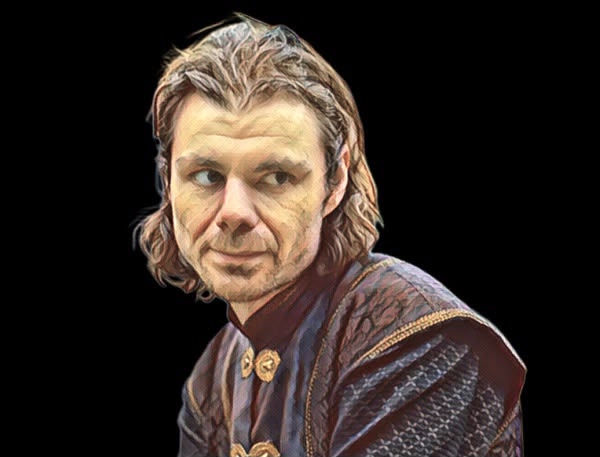
How Ormund Is Winning the War for the Greens
The Ormund of Fire & Blood is important, naturally, but his role is far more military. He commands the enormous Hightower army advancing through the Reach alongside Daeron and takes part directly in the campaign that will culminate at Tumbleton. His fate is also tied to the battlefield because, during the First Battle of Tumbleton, Roderick Dustin, the legendary Roddy the Ruin, manages to reach him and kills both Ormund and his cousin Bryndon Hightower before dying from his own wounds.
In the series, however, Ormund has become much more than a military commander.
Ryan Condal has created an almost entirely original storyline involving Daeron, transforming their relationship into something defined by psychological manipulation, ambition, and a private project of power. Ormund does not seem interested merely in protecting the young prince, because he wants to shape him and apparently place him in a position to replace his own brothers. This version of the character sees in Daeron an opportunity to place a Hightower at the center of power, using the boy as the Targaryen face of a project that primarily benefits his maternal family.
At the same time, Ormund has received the quality that made Larys so terrifying: the ability to strike someone without being physically present. He does not need to enter the city to poison it, nor does he need to confront Rhaenyra directly to weaken her, because he can make the population stop trusting her without ever setting foot in King’s Landing.
This alteration is particularly curious because, from a practical perspective, Larys would have been far better suited to execute exactly this storyline. In the book, he was already hidden in King’s Landing, knew its secret passages, possessed his own contacts, and had served as master of whisperers. There would have been no need to explain how a clandestine network managed to operate across half of Westeros inside the capital, because all the necessary infrastructure already existed.
Ormund, by contrast, comes from Oldtown and is commanding an army on campaign. Even if he already possessed loyal men and a network of agents, the series still needs to explain how he managed to act with such speed and efficiency inside a city he had never directly controlled.
The audience is now asked to accept that Ormund is simultaneously managing a military campaign, a conspiracy involving Daeron, and a sophisticated clandestine operation within King’s Landing.
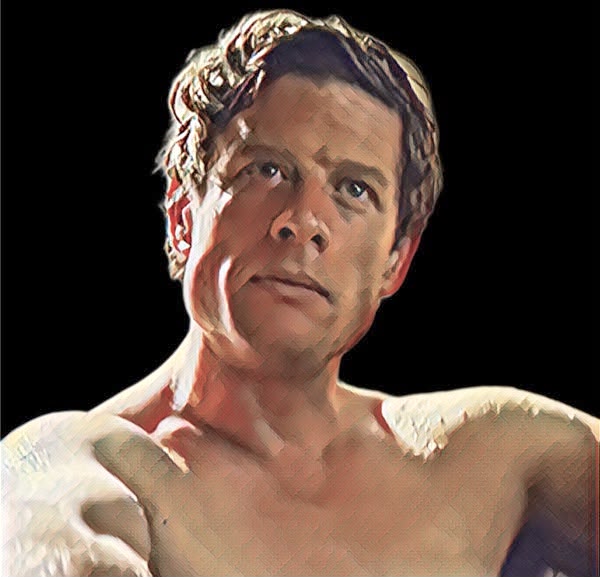
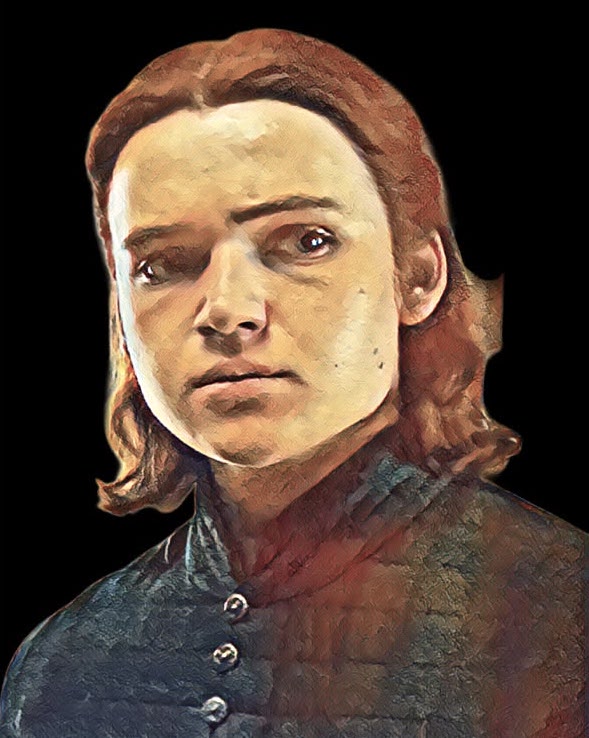
House of the Dragon’s Conspiracies Are Bigger Than Those in Fire & Blood
It would be possible to justify these changes by arguing that Ryan Condal needed to simplify a saga known for its complexity, its many characters with similar names, and its contagious obsession with the Iron Throne. What is happening, however, appears to be precisely the opposite.
While the Dance of the Dragons begins as a struggle between Rhaenyra and Aegon involving their respective supporters, House of the Dragon also turns the conflict into an internal battle within each faction, particularly among the Greens.
Alicent believed she was acting alone and fulfilling what she mistakenly heard Viserys request in his final moments, when he spoke of Aegon becoming king. Soon afterward, she discovered that Otto and the Green Council had already organized an entire operation to prevent Rhaenyra from taking the throne. Father and daughter competed to find Aegon and crown him quickly, only for both of them to be discarded by the new king, who chose instead to follow Ser Criston Cole’s advice.
At the same time, after years of frustration, envy, and resentment, Aemond seized a moment of vulnerability to try to kill Aegon during the Battle of Rook’s Rest and take his place as regent. Away from King’s Landing, we discovered that Daeron, excluded from the first seasons, had been chosen, trained, and used by Ormund Hightower to carry out a project that appears to take Otto’s decades-long plan even further.
Ormund is not merely trying to defeat Rhaenyra because he appears to be preparing Daeron to replace his own brothers and establish a new political order far more directly controlled by the Hightowers. All of this makes the story more difficult to follow than the version presented in the book, rather than simpler.
Even so, the pieces are beginning to fit together. This explains why Ormund accepted without hesitation the order, supposedly signed by Aemond, not to fight the Blacks. It also explains why he delivered a false Daeron for Daemon to take back to King’s Landing and why he maintains agents inside the capital to destabilize Rhaenyra.
There is a coup within the coup, unfolding while Rhaenyra, Aegon, and Aemond are all still alive.
Another Butterfly Effect?
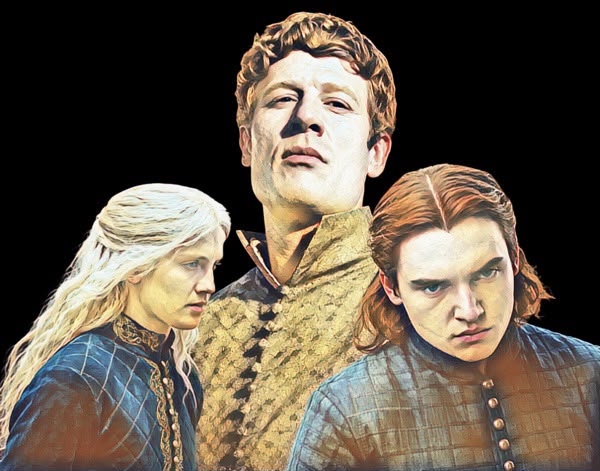
When James Norton was announced as Ormund Hightower, I wondered why such an established actor would accept a role whose trajectory in the book is relatively brief. The explanation is now more than obvious, because the series has transformed Ormund into one of the central figures of the season.
The changes work dramatically because Norton is excellent and because Ormund has quickly become one of the most compelling characters in the series. Even so, the impression remains that Ryan Condal has solved a problem the adaptation simply did not have.
Matthew Needham, another exceptional actor, was already part of the cast and was playing the character who had been waiting for exactly this function. The series must now explain how it intends to transform Larys once again into the essential figure he is in the story.
During the first two seasons, House of the Dragon carefully preserved the mystery surrounding him. Larys murdered his own father, Lyonel Strong, and his brother, Harwin, even though his family had a long and close relationship with the Targaryens. He became indispensable to Alicent, changed sides according to his own convenience, and never fully revealed what he truly wanted.
That was precisely what made the character so compelling. Why did Larys do what he did? Was it power, resentment, envy, survival, or the pleasure of manipulating people more powerful than himself? He was difficult to decipher because he seemed to possess no genuine loyalty to anyone.
This made it even more fascinating that a Strong would work so aggressively against Rhaenyra. Harwin was the biological father of Jacaerys, Lucerys, and Joffrey, while Lyonel had served as Viserys’s Hand, and House Strong had been deeply connected to the royal family. Larys, however, chose another path and ultimately became one of the forces responsible for destroying the daughter of the king, his own father had served.
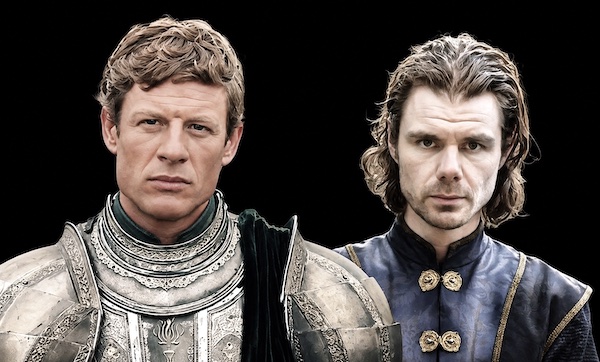
In the third season, much of that promise appears to have been abandoned, because Larys has been transformed primarily into Aegon’s travelling companion, while Ormund has inherited his malice, his capacity for manipulation, and his role as the invisible agent of Rhaenyra’s downfall.
That decision may produce even greater consequences when the story reaches its conclusion, because Larys does far more than help Aegon disappear. He is essential to everything that follows, and dividing his actions between two characters may become another example of the butterfly effects George R. R. Martin has already warned about.
Returning to the book, while Rhaenyra loses King’s Landing, Aegon remains hidden on Dragonstone, recovers his strength, reunites with Sunfyre, and secures support within his half-sister’s own stronghold. When Rhaenyra finally flees the capital and seeks safety on Dragonstone, she walks directly into the trap.
Larys also reappears in King’s Landing after Rhaenyra’s fall, helps dismantle the political chaos left by the so-called Moon of the Three Kings, and participates in the restoration of Aegon II’s power. Later, when Aegon himself becomes impossible to support and insists on continuing a war that has already been lost, Larys changes position once again. The sources place him among the conspirators connected to the king’s poisoning, although Fire & Blood preserves some ambiguity about who actually placed the poison in his cup.
When Cregan Stark finally arrives in King’s Landing during the Hour of the Wolf, Larys is accused of participating in the conspiracy against Aegon II. He refuses to confirm or deny the charges, rejects the possibility of taking the black, and chooses death. Cregan personally beheads him with Ice, and his final request is as strange as the character himself: Larys asks for his deformed foot to be removed from his body after the execution, so that at least in death he might finally be free of it.
It is an extraordinary arc, but it has now been partially divided between two characters.
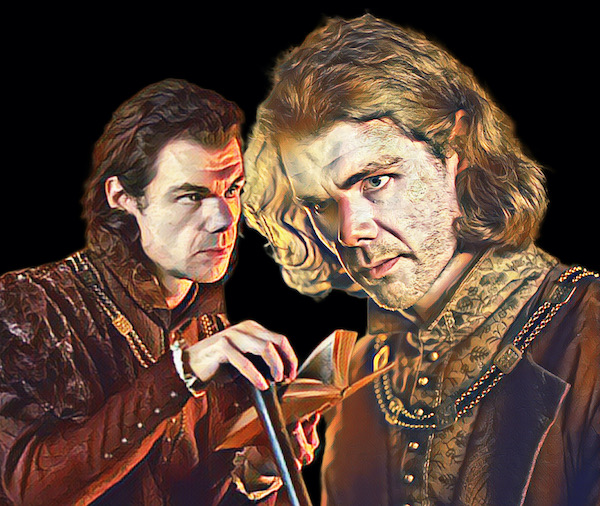

Ormund will probably continue moving toward the military fate he has in the book, especially because his story remains inevitably tied to Daeron, the Hightowers, and Tumbleton. This means that all the political intelligence the series has lent him may simply disappear when he dies.
Larys, meanwhile, will have to find his place in the story again. How will he return to King’s Landing? What role will he play in Rhaenyra’s final downfall if Ormund is already doing much of the work of destabilizing her? Who will spread the rumors about Helaena and manipulate the events surrounding the uprising?
More importantly, the series will need to explain how Larys can recover enough relevance for his role in Aegon’s return and in the king’s own end to carry the same weight it has in the book.
Perhaps House of the Dragon will still find a way to reunite these narrative threads, but at this point, one thing seems clear: the series has transformed Ormund Hightower into a far more powerful character than the one written by George R. R. Martin, and it has done so by borrowing Larys Strong’s most effective weapon.
It is not an army or a dragon, but the ability to destroy a queen without ever needing to enter the room where she sits.
Descubra mais sobre
Assine para receber nossas notícias mais recentes por e-mail.


2 comentários Adicione o seu