
This article contains spoilers for Season 3 and Fire & Blood.
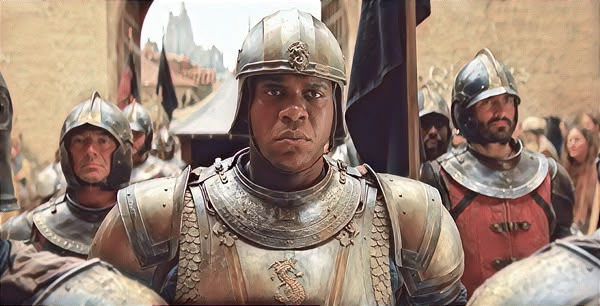
The image lasts only a few seconds. Alyn of Hull walks through the streets of King’s Landing at the head of a group of Targaryen soldiers while, directly behind him, we glimpse a dark, rectangular, and partially covered structure. Is it a coffin? A litter? A carriage carrying someone through the city? Or the body of a character who, according to the pages of Fire & Blood, should not be dead yet?
The trailer for the Season 3 finale of House of the Dragon offers no answer. But the fans’ reaction reveals an anxiety much greater than simply identifying that mysterious box: knowing the characters’ destinies in the book no longer offers any certainty about what will happen in the series.
And, puns aside, we are navigating increasingly turbulent and uncertain waters.
Coffin or litter?
The first question is visual. Some fans believe there is no funeral in the scene at all. The structure behind Alyn could be a litter or a small enclosed carriage, perhaps being used to transport Rhaenyra discreetly through the streets of King’s Landing. We see no flowers, funeral emblems, or any detail confirming that a body is inside.
Others clearly see a procession. Alyn occupies the center of the frame, surrounded by soldiers, dark banners, and a visibly heavy expression. The composition feels deliberately funereal, even if the object itself remains difficult to identify. On social media, the discussion is divided between those who insist it is a carriage and those already trying to determine which character might be inside the supposed coffin.
Perhaps that uncertainty is precisely the effect the trailer intended to create. Because the moment we accept that there may be a dead body inside, three names immediately enter the conversation: Addam, Helaena, and Corlys.
And each one would represent a different way for the series to alter the established chronology.
Addam would be the most personal loss
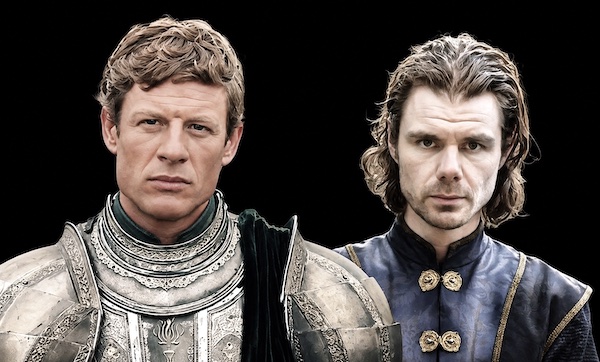
Addam is the most immediate emotional answer. After all, Alyn appears to be leading the possible procession. The camera is not interested only in the movement of the soldiers or the object behind them. It is interesting in his face.
If there is a body inside that structure, the direction seems to invite us to interpret the scene through Alyn’s loss. And no one would be closer to him than his brother.
The problem is that Addam should not be dead yet.
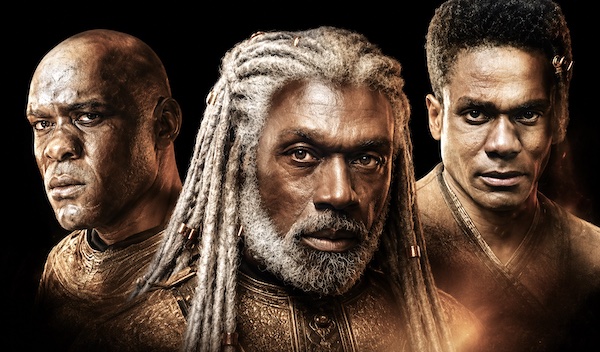
In Fire & Blood, Hugh Hammer and Ulf White betray Rhaenyra during the First Battle of Tumbleton. Their betrayal causes the queen to distrust the other bastard dragonriders as well. Addam is condemned, manages to escape, and decides to prove that not every bastard is a traitor. He gathers a new army and returns to fight in the Second Battle of Tumbleton, where he finally dies. Afterwards, Alyn has a single word carved onto his tomb: “Loyal.”
Killing Addam now would mean combining the two battles of Tumbleton and eliminating the very arc that defines him: the unjust suspicion, the escape, and the decision to return to prove his loyalty.
Fans are also debating that possibility. Since only one season will remain after this one, some believe the series may merge the two battles to save time and concentrate the spectacle in a single episode. Others consider the change far too drastic, since it could trigger the deaths of Addam, Hugh, Ulf, Ormund, and Daeron almost at once, while also closing several storylines that still need room to breathe.
Addam, therefore, is the character who best explains Alyn’s expression. But he is also the one who would lose the most narratively by dying now.
Helaena is surrounded by omens
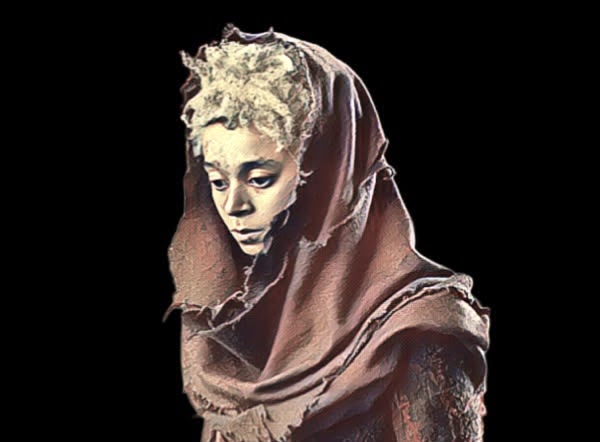
Helaena cannot be dismissed either. Her death is closer to this stage of the war and will have profound consequences for both Rhaenyra and King’s Landing.
In the book, her fall helps ignite the popular uprising that culminates in the attack on the Dragonpit. The people believe Rhaenyra was involved in her death, and a city already impoverished and terrified transforms its rebellion against the queen into a war against the dragons themselves.
The series has also just devoted considerable time to Helaena’s dreams. She sees herself giving birth and having the baby taken from her arms, riding Dreamfyre as a mob advances, and imagining a peaceful life with her children until darkness and winter reach that fantasy.
Those visions do not need to be literal. They may combine prophecy, fear, alternative futures, and events that Helaena can understand only in fragments. Even so, they place her before the certainty that there is no truly safe path for either her or her family. Dreamfyre has also become connected to Helaena’s conflict with the destructive power of the dragons.
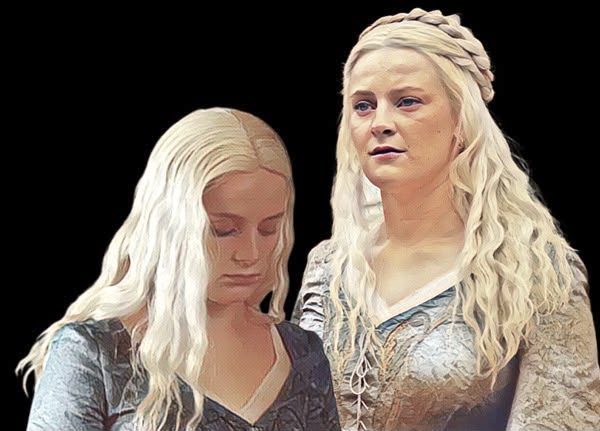
Chronologically, Helaena makes sense. Dramatically, the dreams seem to be leading her towards a point of no return. But the image continues to present the same problem: why place Alyn at the visual center of Helaena’s possible funeral?
He could simply be commanding the escort. Yet the framing makes the loss appear to belong to him.
Corlys seemed safe until he no longer did
That is when Corlys Velaryon becomes the most disturbing possibility.
In Fire & Blood, the Sea Snake survives most of the Dance of the Dragons. He lives through the falls of Rhaenyra and Aegon II, takes part in the political transition, becomes one of the young Aegon III’s regents, and dies only in 132 AC, at the age of 79, after collapsing while climbing the steps of the Red Keep. In theory, his fate was secure. But only in theory.
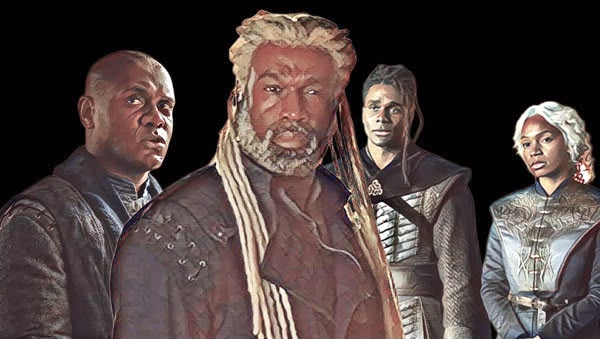
The series has removed Corlys entirely from the path described in the book. He was captured by Ormund Hightower’s men and had one of his fingers cut off. The finger, still wearing the Velaryon ring, was sent directly to Alyn. The threat serves to weaken Rhaenyra’s fleet, but it also appears to be constructing something much more personal: the son being forced to decide how far he will go to save the father who never fully acknowledged him.
Corlys spent years refusing to publicly claim Addam and Alyn as his sons. Now, before that relationship can be repaired, Alyn receives the symbol of the Velaryon name attached to a mutilated piece of his father’s body.
It is an almost brutally symbolic image. The inheritance arrives before the recognition. The name arrives as a threat. The father arrives in pieces.
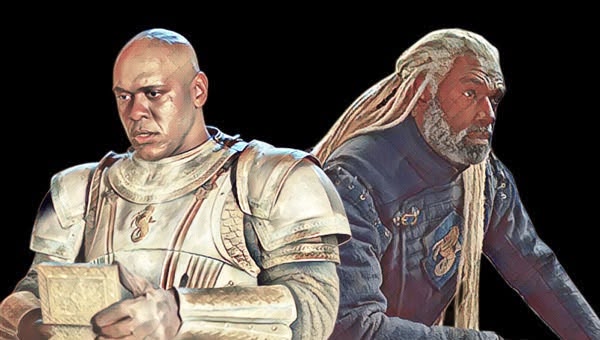
If Corlys dies at Tumbleton, Alyn could lead his body back to King’s Landing and, from that point forward, inherit not only Driftmark, the fleet, and the title of Lord of the Tides, but also part of the political role his father would still have played throughout the rest of the war.
The series has already begun that transfer. Corlys left Alyn to occupy his place beside Rhaenyra, bringing his son into decisions that once belonged to the father. His capture and the delivery of the ring may be preparing not for Corlys’s rescue, but for his succession.
Characters are inheriting other people’s stories
House of the Dragon has already made it clear that it is not merely cutting events from Fire & Blood. The series is redistributing entire story arcs.
Rhaena has effectively inherited much of Nettles’s function by claiming Sheepstealer. Ormund Hightower has acquired a manipulative dimension that recalls the space once occupied by Larys Strong: he identifies resentment, offers what he cannot truly deliver, and transforms Ulf’s weakness into a political opportunity. In the previous episode, he even promised Driftmark to the bastard in exchange for his betrayal.
That does not mean Ormund has literally become Larys, or that Rhaena will reproduce every step of Nettles’s story. It means the adaptation no longer treats the original distribution of functions as sacred. One character can die, and another can inherit what they were still supposed to do.
Corlys can be eliminated while Alyn receives his fleet, his position, and his role in the transition towards Aegon III. Addam can die early, while someone else absorbs part of his function at Tumbleton. Helaena’s fate can be reorganized to connect her dreams, Dreamfyre, and the popular uprising more directly.
For readers of the book, it is precisely this freedom that turns a few seconds of footage into a source of genuine concern.
The question is no longer simply “Who dies?”
During the first seasons, knowing Fire & Blood still allowed us to anticipate the main destinies. The uncertainty was more about how the series would reach them than whether they would happen at all. That has changed.
Corlys’s capture does not exist in this form in the book. Rhaena has absorbed an important character. Ormund has been given a much larger role in preparing the betrayal at Tumbleton. Helaena has become a dreamer capable of understanding fragments of the future. And the possibility of combining the two great battles threatens to bring forward deaths that should still occur at different moments.
The fact that HBO has already confirmed the fourth season will be the last only intensifies that unease. There is a great deal of story left to tell and little time in which to tell it, making mergers, cuts, and transfers of narrative function increasingly likely.
That is why the possible coffin behind Alyn has caused so much debate. Not because anyone can clearly identify who is inside, but because every answer now feels plausible.
Addam should not die yet. Corlys should survive the war. Helaena has a known chronology. But none of those statements offers the reassurance it once did.
Coffin or litter?
Perhaps it is only a litter.
Perhaps someone is simply being transported through the streets of King’s Landing, and there is no funeral at all. Perhaps the trailer chose that angle precisely to turn an ordinary structure into a threat. But if it really is a coffin, the discussion among fans has already revealed something important about this stage of House of the Dragon: no one knows which destinies are still protected by the original story.
The structure behind Alyn may be carrying Addam, Helaena, Corlys, or no one.
What it is certainly carrying is the anxiety of an audience that has realized the series is not merely changing the path towards the ending.
It may also be changing who will survive long enough to reach it.
Descubra mais sobre
Assine para receber nossas notícias mais recentes por e-mail.


1 comentário Adicione o seu