
I have waited 30 years for another Isabel Archer. Perhaps even longer, considering that The Portrait of a Lady is my favorite Henry James novel and one of those stories I keep returning to, finding something different in it as time passes. Now, finally, a new adaptation is on the way. Filming has already begun in the UK, Hungary, and Croatia on a six-part co-production that will air on the BBC in the UK and on MASTERPIECE/PBS in the United States and Canada. No premiere date has been announced yet.
Nell Tiger Free will play Isabel Archer, the young American who crosses the Atlantic determined to experience the world and, above all, not to live according to rules established for her by other people. Jim Sturgess plays Gilbert Osmond, the man who will turn that search for freedom into a trap. Gemma Arterton will be Madame Merle, perhaps the most dangerous and fascinating character in the story, precisely because she understands far better than Isabel how the social structures that constrain women actually work.
The cast also includes Bill Nighy as Mr. Touchett, Miranda Richardson as the eccentric Mrs. Touchett, Jack Wolfe as Ralph Touchett, Hugh Skinner as Lord Warburton, Hamish Frew as Caspar Goodwood, Calypso Cragg as Pansy Osmond, Maisie Richardson-Sellers as Henrietta Stackpole, and Lydia Leonard as the Countess Gemini. Rebecca Lenkiewicz, whose credits include Colette and She Said, is adapting the novel, with Aisling Walsh directing.
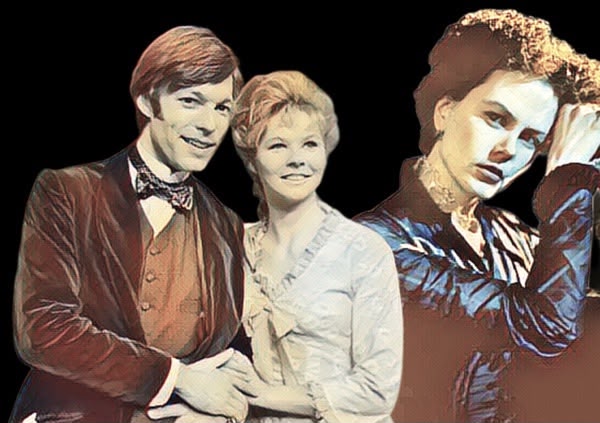
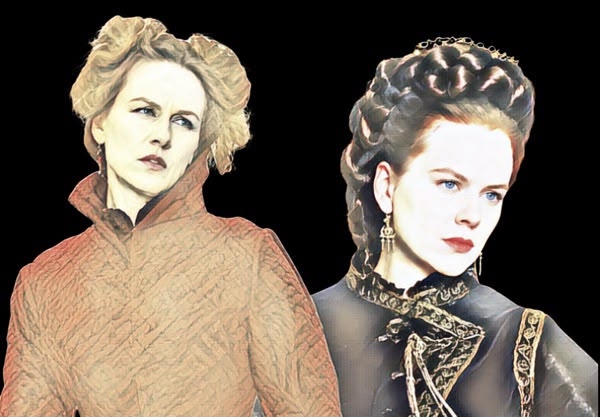
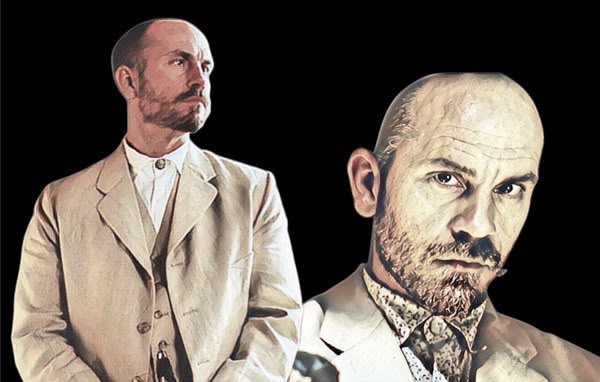
It is curious that such an important novel, first published in 1881, has reached the screen so few times. The BBC made a six-part version in 1968, starring Suzanne Neve as Isabel and Richard Chamberlain as Ralph. Nearly 30 years later, Jane Campion directed the 1996 film with Nicole Kidman, John Malkovich, and Barbara Hershey, an ambitious, beautiful, and deeply divisive adaptation that deserves an article of its own — and will get one. Since then, silence.
Nearly 60 years separate the two television adaptations. And 30 years separate this new Isabel Archer from the one played by Nicole Kidman.
An 1881 story that still feels dangerously modern
Perhaps the scarcity of adaptations is even stranger because The Portrait of a Lady remains extraordinarily modern. Not because Isabel Archer is a “woman ahead of her time” in the simplistic sense that so many contemporary adaptations like to impose on women from the past, but because her contradictions remain instantly recognizable.
Isabel simply wants freedom.
That is why she rejects marriage proposals, resists social expectations, and believes her life should be larger than what others are prepared to offer her. When her cousin Ralph Touchett recognizes that desire and intervenes so that she can receive an inheritance capable of giving her financial independence, Isabel finally acquires something almost no woman of her time possessed: the genuine possibility of choosing. And then she chooses badly. That is Henry James’s extraordinary cruelty.
Isabel is not trapped because she never had freedom, but only after she has finally acquired it. She uses the very independence that should have opened the world before her to enter voluntarily into the universe she had been trying to escape. I challenge you to follow her story without eventually dissolving into tears.
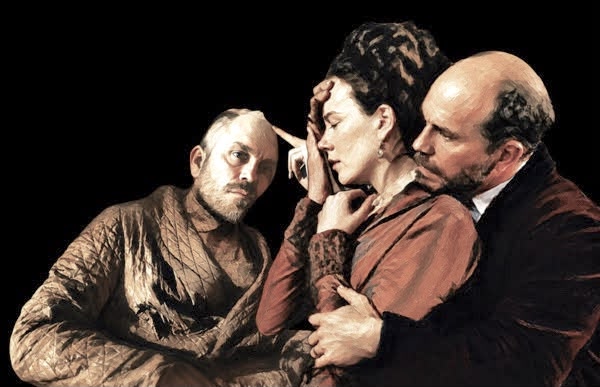
Gilbert Osmond does not appear to be the obvious choice for an ambitious woman. After all, he has neither the fortune, the title, nor the social position that other suitors could offer her. What he does have is refined taste and an apparent disdain for society in general. He deserves endless analysis himself because he represents almost everything a woman should know to avoid — and somehow cannot.
In Isabel’s eyes, his lack of material wealth and abundance of culture are precisely part of his appeal. Choosing him seems to confirm her independence: she believes she is rejecting money, convention, and status in favor of intelligence, refinement, and affinity. Except that Osmond is a far more sophisticated prison.
Isabel is intelligent enough to challenge the world, yet still naïve enough to believe that intelligence prevents someone from being manipulated. And without realizing it, it is her closest friend who blinds her to the truth and leads her toward unhappiness.
Perhaps that is what continues to make the story so uncomfortable. Henry James does not give us a flawless heroine who rebels against an unjust system and is rewarded for it. Like so many female characters who dared to want more in the novels of their time, Isabel pays an enormous price for her attempt at autonomy.
But her tragedy is even more complicated because James actually gives her choices. She simply does not fully understand what she is choosing.
And that is exactly where my fear begins
I am very excited about this new version, but I am also, honestly, terrified.
We are living through a period in which costume dramas often seem compelled to reassure audiences that their heroines think exactly like progressive women of the 21st century. I am not talking about diverse casting, costumes, or aesthetic freedom. I am talking about psychological anachronism. My fear is that they will try to “fix” Isabel Archer.
That they will turn her independence into slogans. That they will make her intentions constantly explicit. That they will allow her to recognize in advance the traps Henry James deliberately constructed so that she would not recognize them. Or that they will try to turn The Portrait of a Lady into something halfway between Bridgerton and The Buccaneers, with 19th-century characters expressing contemporary conflicts through perfectly modern language, behavior, and self-awareness.
There is nothing wrong with those series within the choices they have made, but The Portrait of a Lady needs something else. Isabel is already modern. She does not need shortcuts or updates. We need to allow her to be contradictory.
She can desire independence and still desire love. She can reject convention and still be fascinated by a man who, without her realizing it, represents its most rigid form. She can be intelligent and foolish. She can acquire money and remain emotionally vulnerable. She can believe she is choosing freely without understanding how much of that choice comes from her own vanity, from the fantasy she has created of who she wants to be, and from her need to prove that no one else will decide for her.
Removing those contradictions to turn her into a more easily admirable heroine would mean removing precisely what makes her Isabel Archer.
The chance Henry James finally gave her
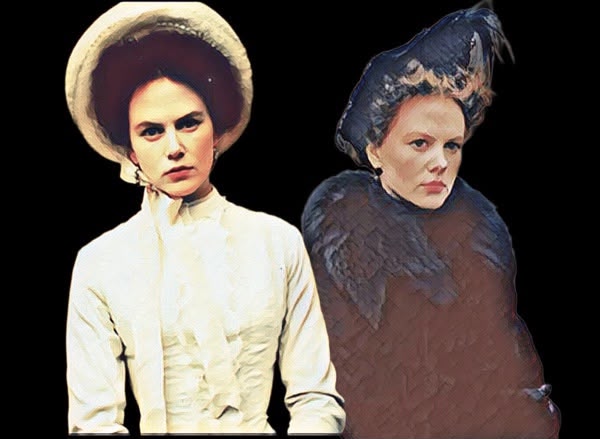
There is another irony that makes her downfall especially painful. Ralph helps Isabel because he believes in her and sees her curiosity, her intelligence, and her hunger for the world. He imagines that money will free her from the limitations imposed on women and, for the first time, she really could live the life she wanted. The inheritance does not create her tragedy because it is too much money. It creates the possibility of tragedy because it gives Isabel the power to act. It is precisely when she gains freedom that she must discover what to do with it.
And perhaps that is why The Portrait of a Lady remains so current nearly 150 years later. Freedom has never automatically meant wisdom. Having choices does not mean understanding our own choices. And financial, intellectual, or social independence does not make us immune to desire, manipulation, or the fantasies we construct about ourselves.
Isabel Archer wants to escape a world determined to decide who she should be, and the cruelest part is that once she finally succeeds, she helps build her own prison.
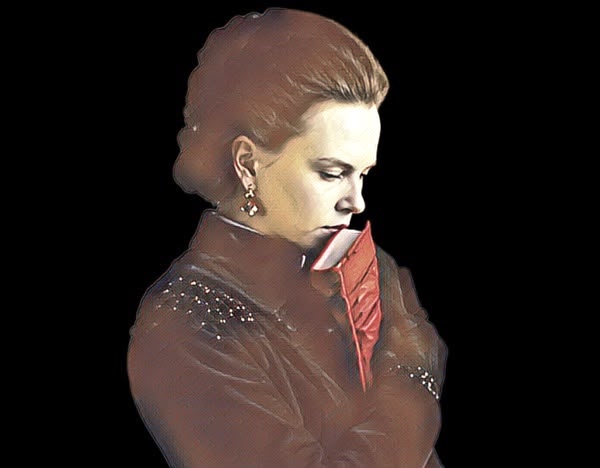
That is why I am waiting for this series with such anticipation. Six episodes offer something Jane Campion’s film, fascinating as it is, could never have in abundance: time to enter Isabel’s mind.
I only hope the people behind this new adaptation trust Henry James.
And, above all, that they trust Isabel Archer enough not to try to save her from her own contradictions.
Descubra mais sobre
Assine para receber nossas notícias mais recentes por e-mail.

