
In Westeros, dying has never been enough. You must also fight over how that death will be told, because stories, more than facts, are what survive across generations. Men die, castles fall, and witnesses disappear, but songs remain. That is why so many characters in this universe seem obsessed not only with winning, but with doing something that may one day be considered worthy of song.
I have already written here about two of the most important songs in Game of Thrones. “The Rains of Castamere” transforms the destruction of an entire family into a permanent demonstration of Lannister power. It does not merely preserve the memory of one of Tywin’s victories; it functions as a threat. The first few notes are enough for everyone to understand what happens to those who challenge his house. “Jenny of Oldstones,” by contrast, preserves what has already been lost. It is a song about absence, longing, and people who continue to dance only in the memories of those left behind. In the series, it appears before the Battle of Winterfell, when everyone knows they may be living through their final night.
Now, House of the Dragon presents a third possibility. For Criston Cole, a song can serve as absolution.
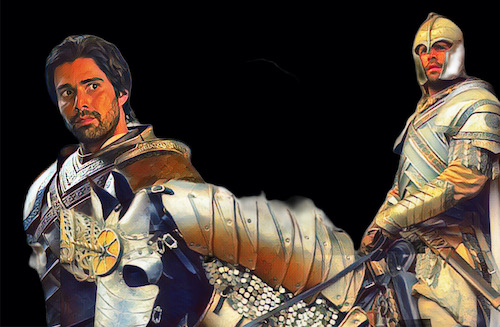
Criston Wants to Choose How He Is Remembered
In the fifth episode of Season 3, Criston leads an army that is growing smaller, more exhausted, and increasingly surrounded by the riverlords. He knows he is unlikely to survive the march, but he transforms the proximity of death into one final fantasy of control. Having lost control of the war, of the men he is supposed to command, and of his own life, he decides that he may still control the way he believes he will be remembered.
Criston says he will die free, as the greatest warrior in the realm, and that songs about his death will eventually reach Alicent. He is not merely talking about dying with a sword in his hand. He is imagining his own death as spectacle, legacy, and declaration of love. In the version of the story he creates for himself, he will not be remembered as a man consumed by resentment, responsible for placing Aegon on the throne and leading thousands of soldiers into an increasingly hopeless war. He will be the glorious knight who chose his final battle.
It is an important line because it reveals that Criston is still trying to do with posterity what he has spent his entire life doing with himself: rearranging his own actions until they resemble honor.
He broke the vows that defined his identity, killed in the name of his personal wounds, helped turn a family dispute into a war, and transformed Rhaenyra’s rejection into a kind of moral justification for everything that followed. Every choice had to be presented as duty, loyalty, or honor, even when humiliation, desire, and resentment were always underneath.
The song would be his final attempt to put that story in order. What can no longer be corrected in life would be beautified after death.
It is no coincidence that he wants the song to reach Alicent. She was the one who found him when he was ready to die and offered him a new place, a new loyalty, and a way to continue believing that he was still a man of honor. Alicent became not only his lover or his queen, but the primary witness to the version of himself he needed to preserve. By imagining her hearing the song, Criston is also imagining that she will finally understand him.
But Fire & Blood has already prepared a cruel response to that fantasy.

The Man Who Refuses to Sing of Criston Cole
At the battle known as the Butcher’s Ball, Criston realizes that his army has been surrounded and initially tries to negotiate the survival of his men. When that fails, he offers to face three Black commanders alone: Roderick Dustin, Garibald Grey, and Pate of Longleaf. It would be the perfect death for the legend he wants to create. The Kingmaker, standing alone before his enemies, was dying in combat against three great warriors.
They refuse to give him that ending.
Criston is struck by the arrows of Robb Rivers’s archers, without a duel, without a grand gesture, and without the opportunity to transform the final seconds of his life into a display of heroism. Pate of Longleaf then declares that there will be no songs celebrating his courage in death, because tens of thousands have already died because of him.
The line is more than a provocation. Pate understands that killing Criston is not enough. He must also prevent him from transforming his own death into a redemptive version of his life.
The irony is even greater because Pate himself already has the kind of story that appears made for song. Of humble birth, he was a grey-haired squire when he mortally wounded Jason Lannister during the Battle of the Red Fork. He was later knighted and became known as Longleaf the Lionslayer. The man who denies Criston the right to become a legend is therefore someone who earned his own name by killing a Lannister in battle.
But there is a fundamental difference between performing a deed that will be remembered and planning your own death as propaganda. Pate has no interest in preserving Criston’s honor. He is interested in preserving Criston’s responsibility for what happened.
The Series May Have Cut Pate, but It Should Not Cut His Idea
House of the Dragon appears to have removed Pate as an independent character. In the Season 3 premiere, it was Roderick Dustin who appeared carrying Jason Lannister’s head, absorbing precisely the feat that turned Pate into the Lionslayer in the book. This suggests that the series may have merged the two characters or distributed Longleaf’s original function among other men.
We still do not know, therefore, who will deny Criston the heroic death he wants. It may be Roderick Dustin, another commander, or even someone created specifically for that moment. But after having Criston speak so explicitly about the songs that will be written about him, it is difficult to imagine the series removing the response George R. R. Martin constructed for that fantasy.
Criston does not simply need to die. He needs to discover that he will not be allowed to determine the meaning of his death.
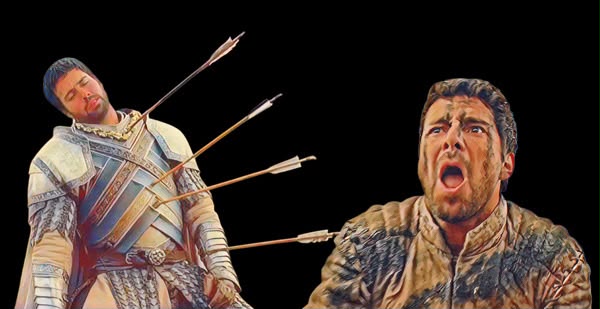
The Songs of Westeros Can Lie Too
Songs are often treated as the memory of Westeros, but that does not mean they tell the truth. They simplify people, transform massacres into glorious victories, erase victims, and offer the powerful the version of themselves they would like to leave behind.
“The Rains of Castamere” transforms violence into authority. “Jenny of Oldstones” transforms loss into permanence. Criston wants his song to transform guilt into heroism.
That is why Pate refuses to sing it.
By denying him the duel, he prevents the Kingmaker from using one final act of courage to erase everything that came before. There will be no beautiful death capable of absolving the life that preceded it. There will be no solitary knight facing three opponents while his men look on. There will be no romantic melody crossing Westeros until it reaches Alicent’s ears.
Criston Cole has spent his life trying to make his desires look like principles and his choices look like duty. In the end, he tries to do the same with his own death.
His true punishment will not simply be to die beneath a volley of arrows. It will be to die knowing that someone refused to turn his vanity into memory, and that Westeros may remember him not as the greatest warrior who ever lived, but as the man who desperately wanted to become a song and failed.
Centuries later, Jaime Lannister would find Criston Cole in the pages of the White Book of the Kingsguard. To him, the Kingmaker belonged neither simply among the best nor among the worst, but among those who had been a little of both. Ser Criston was not condemned to oblivion, but he never became the hero of any version of the story.
Descubra mais sobre
Assine para receber nossas notícias mais recentes por e-mail.


1 comentário Adicione o seu