
This article contains spoilers for House of the Dragon Season 3 and George R.R. Martin’s Fire & Blood.
We have been talking about Ormund Hightower and other men, but an even greater danger began to take shape in Episode 5 of House of the Dragon Season 3. And questioning Mysaria’s true intentions in this game is entirely justified.
The question is not simply whose side Mysaria is on, but how long her interests will continue to align with Rhaenyra’s. The White Worm built her life around the knowledge that survival in King’s Landing depends less on loyalty than on understanding what people want, fear, and hide. So far, she has chosen Rhaenyra. That does not mean she has agreed to die for her, and the way Mysaria dies in the book makes her quiet understanding with Alicent even more dangerous.
Mysaria had been watching Alicent and Helaena, uncovering their attempt to escape, and realized they were hiding something even more consequential. After following the trail left by the moon tea Grand Maester Orwyle delivered, she discovered the truth: Helaena is pregnant.
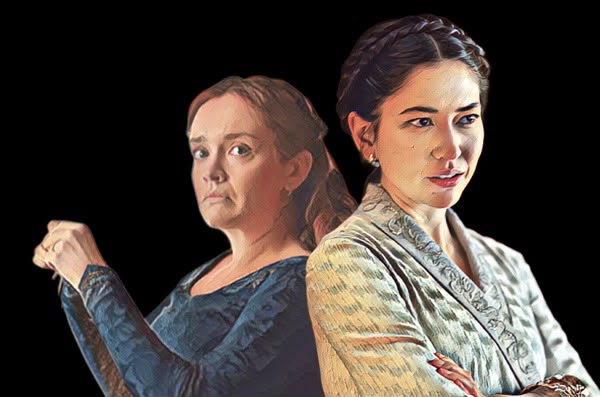
Instead of immediately reporting everything to Rhaenyra, however, Mysaria stayed long enough to hear what Alicent had to offer. The Dowager Queen reminded the White Worm that she had once sold information to Otto Hightower, suggested that anyone who had survived the political game for this long should preserve relationships on both sides, and offered the Hightowers’ gratitude should they ever return to power.
Alicent did not need to persuade Mysaria to betray Rhaenyra that night. She only needed her to keep one secret. Mysaria withheld both the pregnancy and the attempted escape, at least for now, turning their conversation into something more dangerous than a temporary bargain. It was the beginning of a silent alliance—or, at the very least, the opening of a private channel that bypasses the Queen.
Alicent’s final move, however, was emotional. She recognized Mysaria’s attachment to Rhaenyra and struck at the deepest insecurity within that relationship: Rhaenyra will always choose Daemon.
Alicent was not merely offering political protection. She was planting the possibility that no matter how indispensable Mysaria becomes, she will never truly be chosen.

Mysaria has always worked for Mysaria
Mysaria insists that her primary purpose is to protect the people of King’s Landing, and there is no reason to dismiss that claim as entirely false. She understands hunger, exploitation, and the violence the nobility rarely sees. She taught Rhaenyra that a queen cannot rule through dragons, banners, and ancient oaths alone. She also needs food, information, and a population that still believes power can serve someone other than those who hold it.
That does not make Mysaria selfless. She rose from the brothels of Flea Bottom, created a vast network of informants, and entered Rhaenyra’s council as her unofficial Mistress of Whisperers. Her concern for the smallfolk may be sincere while remaining inseparable from her own ascent. In Westeros, survival can become an ideology of its own.
Season 1 had already established that Mysaria’s young spies supplied Otto with intelligence. A boy connected to the White Worm’s network reported Rhaenyra and Daemon’s night at the brothel, setting off Viserys’ confrontation with his brother and contributing to Otto’s temporary dismissal as Hand of the King.
There is, however, an important distinction. The series has never confirmed that Mysaria was also the source behind the story of Daemon’s “heir for a day” toast. Otto merely said that his sources had heard it, while Daemon made little effort to explain what had actually happened.

It is possible to theorize that Mysaria played a role in that earlier report, particularly because she already had access to the brothels Daemon frequented, but the theory cannot be presented as an established fact. Otto may have received an incomplete, exaggerated, or deliberately distorted version of the remark.
The central point remains the same: Mysaria does not merely control the collection of information. She controls its timing, its presentation, and the person who receives it. So far, she appears to have told Rhaenyra the truth. That does not mean she has told her everything, or that she will continue telling the truth when it no longer serves her interests.
A withheld fact can be every bit as lethal as a lie.
Daemon is the blind spot in their relationship
Alicent was especially clever to use Daemon because he is not merely Rhaenyra’s husband. He also belongs to Mysaria’s past.
In Fire & Blood, Mysaria actually becomes pregnant with Daemon’s child while living with him on Dragonstone. Daemon gives a dragon egg to the unborn child, infuriating Viserys, who orders the egg returned, and Mysaria sent back to Lys. During the voyage across the Narrow Sea, she loses the baby in a storm. The tragedy deepens Daemon’s resentment toward his brother and those responsible for separating them.
The television series removed most of that emotional weight. Daemon invents the pregnancy to provoke Viserys and announces a marriage that Mysaria does not even want. She is furious when she realizes she has been turned into a prop in yet another battle between two princes and makes it clear that she never asked for marriage, a child, or a dragon egg.
For me, it was not as powerful a development as the book’s version. By removing the pregnancy and the loss of the child, the adaptation weakened the emotional history connecting Mysaria and Daemon, while also diminishing the significance of their confrontation with Otto and Viserys.
What remains is intimate knowledge. Mysaria knows who Daemon is, and Daemon knows what she is capable of doing.
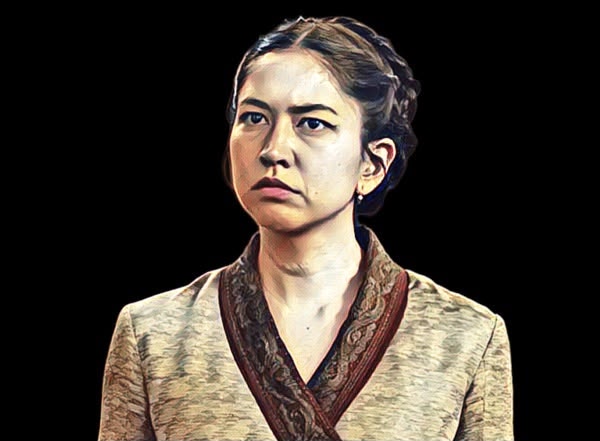
Although they now formally serve the same cause, the two are competing for Rhaenyra’s ear, trust, and even affection. Daemon sees Mysaria as someone who has acquired far too much influence inside the Black Council. Mysaria sees him as the man who can always claim a closeness to Rhaenyra that no adviser, lover, or friend will ever be able to match.
Daemon also fails to explain clearly enough what Mysaria did in the past. Part of that is a mechanism designed to preserve dramatic tension, but it is also consistent with his arrogance. Daemon often considers his suspicions so self-evident that he does not believe they require explanation. When Rhaenyra refuses to listen, he responds with anger, contempt, or violence instead of building an argument she might accept.
As a result, Mysaria and Daemon are not simply competing for political power. They are competing to define the version of reality presented to the Queen.
The kiss between Rhaenyra and Mysaria mattered
The kiss between Rhaenyra and Mysaria may remain an isolated moment, but that does not make it meaningless. It happened after Mysaria revealed part of her history and found comfort, desire, and recognition in Rhaenyra.
For a woman who has spent her life being used by more powerful men, that connection could have represented something genuinely different. Perhaps, for the first time, Mysaria believed she was not merely useful but truly seen.
That is exactly where Alicent finds the key to manipulating her.
The Dowager Queen realizes that Mysaria is not connected to Rhaenyra solely through political convenience. There is affection, desire, or at least the expectation of an intimacy that goes beyond the relationship between sovereign and adviser. Alicent, therefore, does not attempt to compete by offering Mysaria more power. She offers her a wound: no matter how close she becomes, Rhaenyra will still return to Daemon.
The warning works because it probably contains some truth.
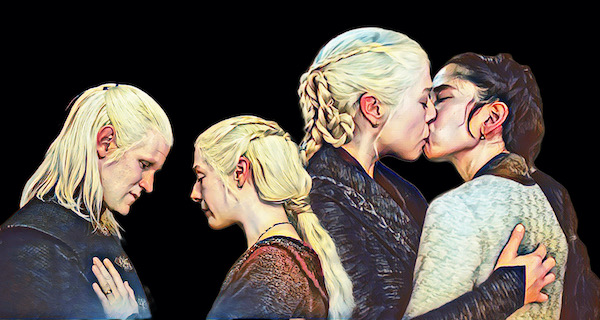
Rhaenyra can argue with Daemon, send him away, distrust him, and seek comfort elsewhere, but she continually returns to the Targaryen bond between them. They share blood, language, dragons, marriage, history, and a belief in their own exceptionalism that inevitably turns everyone else into an outsider.
There is no need to identify a single moment when Rhaenyra chose Daemon over Alicent or Mysaria. Alicent is describing a much larger pattern: when the final decision comes, the Targaryens will close the circle around themselves.
Mysaria will remain the woman who came from outside it.
Rhaenyra is caught between two visions of power
The conflict between Daemon and Mysaria also represents two very different ideas about ruling. Mysaria believes in intelligence, patience, public opinion, and attention to the needs of the smallfolk. Daemon believes in force, fear, dragons, and the immediate destruction of enemies.
The tragedy is that both of them frequently recognize truths Rhaenyra would prefer to avoid.
Mysaria understands that a queen hated by the population cannot remain on the throne merely because she possesses a legitimate claim. Daemon understands that a war will not end because one side continues negotiating with opponents who have repeatedly shown no intention of honoring their promises.
That does not mean every act of violence Daemon proposes is defensible. He often crosses the line between military strategy and cruelty, vengeance, or personal pleasure. Yet many of his tactical warnings are eventually vindicated because Rhaenyra keeps repeating Viserys’ central mistake: she postpones difficult decisions until they become unavoidable and far more costly.
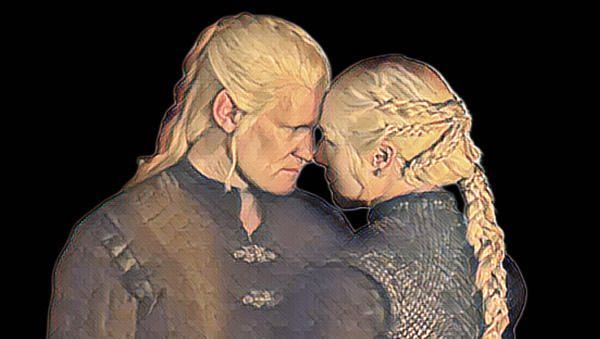

Every attempt at peace with Alicent has produced further complications. Every delay in confronting a threat has allowed it to grow. Rhaenyra wants to rule without becoming a tyrant, but her hesitation does not prevent violence. It often merely hands the initiative to her enemies.
By swinging between Mysaria and Daemon, Rhaenyra fails to develop a strategy that is truly her own. She listens to one, rejects the other, and changes direction again when the consequences arrive. Her advisers, therefore, begin competing to determine which version of reality reaches her first.
Alicent has now entered that struggle.
Alicent is not acting through love or innocence alone
The scene once again undermines the interpretation that Alicent acts solely out of love for Rhaenyra, remorse, or innocence. That does not mean her feelings for her former friend are false. It means Alicent knows how to turn genuine emotion into a political weapon.
She recognized Mysaria’s affection, located her insecurity, and used it to protect Helaena and the child she is carrying. It was a precise act of manipulation from someone who spent years watching men such as Otto, Larys, and Criston exploit the vulnerabilities of everyone around them.
Alicent learned from all of them, even while continuing to imagine herself as fundamentally different.
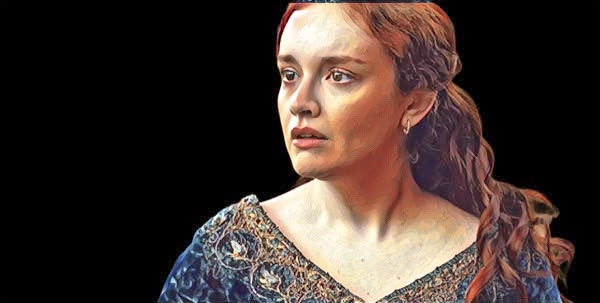
She is dangerous precisely because she rarely sees herself as dangerous. In her own version of events, Alicent is always protecting her children, preventing an execution, or attempting to stop a war. The problem is that her solutions depend on secrets, impossible promises, and emotional bargains that repeatedly lead to catastrophic consequences.
Alicent can move between the Blacks and the Greens because she has emotional access to both. Among the Greens, she remains the mother of Aegon, Aemond, Helaena, and Daeron. Among the Blacks, she still possesses a hold on Rhaenyra built through their childhood friendship and an intimacy the series has never treated as entirely resolved.
She enters both camps beneath the cover of good intentions and almost always changes the balance.
Now she may have created a divided informant inside Rhaenyra’s closest circle.
How does Mysaria die in the House of the Dragon book?
Unlike Alicent, Mysaria does not survive the Dance of the Dragons.
During the uprising in King’s Landing, Rhaenyra abandons the city. Mysaria remains in the Red Keep and attempts to escape after it is captured by the men of Ser Perkin the Flea. She is taken prisoner and offered a cruel bargain: she will be allowed to live if she can walk naked through the city to the Gate of the Gods while being whipped.
Mysaria does not complete the journey. She dies before reaching the halfway point, on the cobblestones of King’s Landing.
Her end is especially ironic. Mysaria rose from the streets, built her intelligence network among the invisible people of Flea Bottom, reached the center of royal power, and was ultimately destroyed by the very city whose people she claimed to defend.
The television adaptation may change her death, as it has changed so many other events from Fire & Blood. Even so, her original fate helps explain why the understanding with Alicent is so dangerous. Mysaria has spent her entire life trying not to depend completely on anyone. Once she begins to suspect that her safety beside Rhaenyra is temporary, the temptation to preserve another escape route becomes almost impossible to resist.
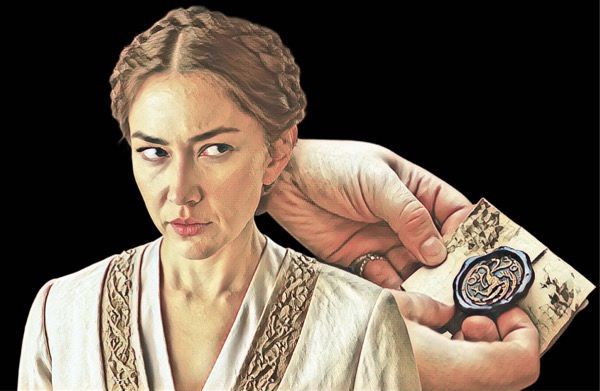
What happens to Alicent in the book?
Alicent survives the war, Rhaenyra, Daemon, Aegon II, and all of her children.
After Aegon III ascends the throne, she remains confined within the Red Keep. She spends her final months weeping, speaking to herself, and developing a profound aversion to the color green, the symbol of the faction she helped create.
In 133 AC, Alicent contracts Winter Fever and dies during the epidemic that sweeps through King’s Landing. In her final hours, she speaks of the children she lost and her desire to see them again.
The irony is equally brutal. Alicent wore green to turn her family into a dynasty, only to end her life hating the color that represented her cause. Mysaria rose through her ability to move between every faction, yet dies without any faction willing to protect her.
The two women do not survive the Dance together, nor do they form an alliance in the book.
Mysaria and Alicent are enemies in Fire & Blood
The Mysaria of Fire & Blood is considerably darker than the character presented by the television series. She serves as Daemon’s intermediary in the hiring of Blood and Cheese, feeds Rhaenyra’s growing paranoia toward the dragonseeds, and claims that Daemon is sleeping with Nettles.
The accusation leads Rhaenyra to order the young dragonrider’s death and directly contributes to the final separation between Rhaenyra and Daemon. Whether Daemon and Nettles were actually lovers remains disputed within the book itself, but Mysaria knows exactly what effect the allegation will have on the Queen.
There is also the horrific story of the so-called Brothel Queens. According to Mushroom’s testimony, Mysaria suggested that Alicent and Helaena should be taken to a brothel and subjected to sexual violence.
Fire & Blood treats the story with suspicion, and other sources reject the claim entirely, so it cannot be presented as an established fact. Its existence nevertheless reveals how Westerosi history associates Mysaria not with protecting the two women but with the possibility of their humiliation.
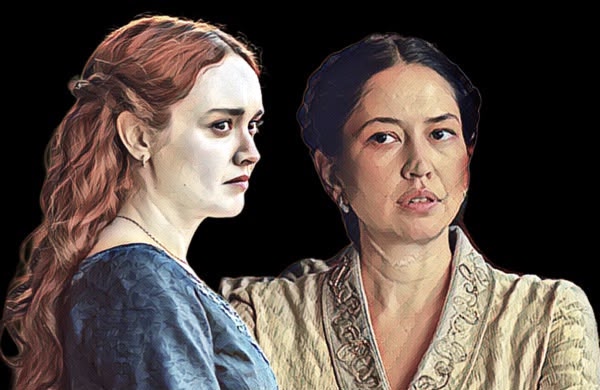
The book also offers different accounts of Helaena’s death. One version claims Mysaria told the Queen about Maelor’s brutal fate and that the news helped drive Helaena to throw herself from a window. Once again, this is one account within the historical narrative, not an unquestionable certainty.
The series is therefore constructing an entirely new relationship between Mysaria and Alicent. Instead of meeting only when one possesses power and the other is a prisoner, they now recognize in each other the ability to negotiate, deceive, survive, and exploit Rhaenyra’s emotions.
Alicent may replace Nettles’ narrative function
The removal of Nettles and the decision to give Sheepstealer to Rhaena make this new connection even more significant.
In the book, Mysaria provides the information that transforms Rhaenyra’s insecurity into persecution and permanently separates the royal couple. Since the series no longer has an outsider whom Mysaria can accuse of becoming Daemon’s lover, the adaptation needs another mechanism to create that rupture.
Alicent may be the missing piece.
Instead of Mysaria convincing Rhaenyra that Daemon has betrayed her with Nettles, Alicent may convince Mysaria that Rhaenyra will inevitably betray her by choosing Daemon.
It is an intelligent reversal. Mysaria could still be responsible for feeding the paranoia that separates the couple, but she would now act first out of fear that she will be discarded. The betrayal would no longer emerge solely from jealousy. It would grow from the differences in class, blood, and belonging that the series has been building since Mysaria’s introduction.
Alicent’s warning may also lead Mysaria to observe Daemon differently. Every disagreement between him and Rhaenyra can now be interpreted as evidence that the Queen remains emotionally bound to her husband. Every reconciliation will confirm the warning. Once suspicion has been planted, every future event can be used to feed it.
That is how effective manipulation works. It does not offer a complete lie. It offers a partial truth and allows the target to construct the rest.
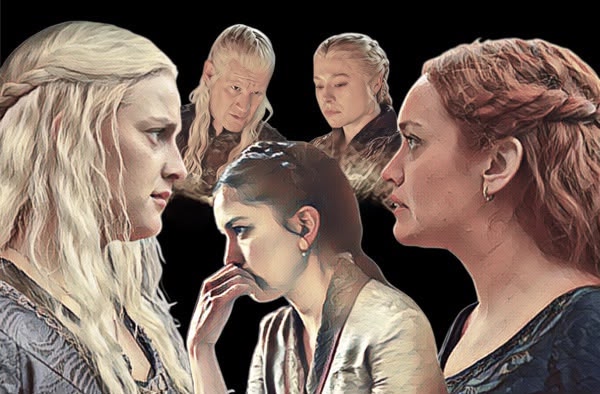
Mysaria has not betrayed Rhaenyra yet. She has, however, already chosen not to tell her everything.
Alicent achieved something almost as dangerous as recruiting a spy: she gave Mysaria a reason to withhold information, seek guarantees, and imagine a life after Rhaenyra’s fall.
In the game of thrones, a truth delivered too late can kill as efficiently as a lie. The question, then, is not exactly whose side Mysaria is on.
The question is what she will do once she begins to believe that, despite all the power she has earned, Rhaenyra will never truly be hers.
Descubra mais sobre
Assine para receber nossas notícias mais recentes por e-mail.


2 comentários Adicione o seu