
Bruno Gagliasso traveled to Bonito, in Mato Grosso do Sul, to present Honestino, one of the most necessary films in the 2026 Bonito CineSur program. Directed by Aurélio Michiles, the feature combines documentary and fiction to recover the story of Honestino Guimarães, a student leader, president of Brazil’s National Students’ Union, known as UNE, and one of the political dissidents disappeared during the country’s military dictatorship.
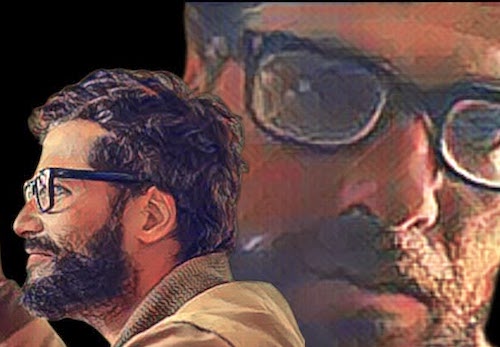
Bruno plays Honestino in the film’s dramatized passages, which were built from letters, poems, documents, and the memories of those who knew him. During the conversation after the screening, however, the actor made it clear that he did not want to portray only a symbol of resistance. His effort was to find the young man who existed before becoming a figure in History.
“I was making a film about a man, a boy who had a mother, who had friends, who loved writing poetry, who was moved by things, who had a relationship with his father,” he said. “Because all these people we talk about in our history, who fought against the dictatorship and became heroes, were human. And they were so human that they fought for us.”
That may be one of Honestino’s greatest strengths. By combining real footage and testimony from relatives and fellow activists with the scenes performed by Bruno, the film refuses to reduce its subject to an old photograph, a name on a list, or another victim mentioned in history books. Honestino becomes a 26-year-old man again, with desires, emotional bonds, and a future that was stolen from him.

The Invitation to Play Honestino
Bruno said he became involved in the film through filmmaker Sérgio Machado, a mutual friend of his and Aurélio Michiles. They met over dinner, while the actor was still physically transformed for another role: extremely thin, with a shaved head and a marked eyebrow.
Aurélio, however, saw something in him that went beyond his appearance.
“He has a sensitivity that brings out the best of your own sensitivity. He saw somewhere in me that I needed to talk about this, not only in my life, but through art,” Bruno said.
The actor also drew an inevitable connection between Honestino and Wagner Moura’s Marighella. In the 2019 film, Bruno played Lúcio, an agent of the repressive state involved in the persecution and assassination of the guerrilla leader. This time, he stands on the other side of the story.
“I did this in Marighella, but I was on the side of the scum. Now I was able to do it from the right side of history,” he said.
This is not, of course, about confusing an actor with his characters. It is about recognizing the unusual journey of a performer who has explored, through fiction, both sides of one of the most violent chapters in Brazilian history.
“There Was Truth, There Was Determination”
Bruno never met Honestino, and very little moving footage existed from which he could study his gestures, the way he walked, or the sound of his voice. The performance emerged from letters, poems, testimony, and, above all, an identification with the ideals defended by the student leader.
“I did not try to create anything. I tried to live it. I believe in freedom, I believe in education, and healthcare. So it came entirely from the inside out,” he explained.
The most emotional validation came from Honestino’s family. After one of the screenings, Honestino’s widow held the actor for a long time and asked how he had managed to reproduce even the way her husband walked.
“I looked at her and said, ‘I don’t know, because I never saw him.’ But I did it with an enormous sense of truth. I did it with love, with a desire to change the world. And that desire to change the world was the desire he had, which allowed him to face everything he faced,” Bruno recalled. “I don’t know whether there was an invention. There was truth, there was determination, there was passion in doing it.”
The actor also remembered the reaction of one of Honestino’s daughters, who was surprised to recognize her father in someone she had never met. For Bruno, the emotion visible onscreen does not belong only to the character. In some passages, particularly while reading the texts left behind by the student leader, it was also the actor himself who was crying.
A Film About a Story That Remains Open
Honestino Guimarães was arrested in 1973, at the age of 26, and never returned. His body has never been found. More than half a century later, his story still has no true ending, like those of so many Brazilian families who were never given the remains of their children, siblings, parents, and partners.
For this reason, although the film addresses events that took place more than 50 years ago, Bruno rejects the idea that Honestino is simply another work about the past.
“The film is about something that happened 50 years ago, but we are still fighting for democracy, healthcare, and education today. It is not just another film about this. It is a film about our history,” he said.
Its release during an election year makes the discussion even more urgent. The actor understands that his presence may attract viewers who have never heard of Honestino and sees that visibility as part of his responsibility as an artist.
“If I can bring these people here so they can learn about their own history, why wouldn’t I do it? My role as an actor and artist is to bring to light what actually happened in our country,” he said. “They tried to erase the story of these young people, and they failed. They killed the body, but they did not kill the spirit.”
Bruno admitted that he himself knew little about Honestino before making the film. Now he hopes the feature will help that story circulate, particularly among young people who continue to take to the streets, defend their rights, and imagine a different country.
“We are all Honestino. All it takes is thinking about other people, thinking collectively, and wanting to change the world,” he said.

Cinema cannot restore the life that was interrupted, locate the body that disappeared or give the family all the answers denied by the state. It can, however, prevent silence from completing the work begun by violence.
“Look at who died because of this. Young people disappeared during the dictatorship. We cannot normalize it,” Bruno said.
Honestino arrives in theaters on August 4. More than a biography or a documentary about the dictatorship, it is an attempt to restore a face, a voice, and humanity to someone they tried to turn into an absence.
As Bruno summarized in Bonito: “Honestino lives.”
Descubra mais sobre
Assine para receber nossas notícias mais recentes por e-mail.

