
Bonito is known in Brazil and around the world for its crystal-clear rivers, caves, waterfalls and for a tourism model deeply connected to environmental preservation. What many people probably do not know is that, despite its international profile, this city in Mato Grosso do Sul has just over 25,000 residents and no commercial movie theater.
That may be precisely why it makes so much sense for South American cinema to find one of its most interesting spaces for exhibition, debate and education here, about 260 kilometers from Campo Grande. During Bonito CineSur, the auditoriums at the Convention Center are adapted into screening rooms, and for several days, the city experiences a collective relationship with cinema that is not part of its permanent routine.
The rooms fill up, screenings are free, guests mingle with the audience and conversations continue long after the final credits. For nine days, a city without a commercial cinema becomes a meeting point for audiovisual work from across the continent.
There is also a geographical logic that is often overlooked when Brazil is viewed almost entirely through the Rio–São Paulo axis. Bonito lies in southwestern Mato Grosso do Sul, in the Serra da Bodoquena region, in a state bordering Paraguay and Bolivia and culturally and economically connected to Argentina and the rest of the Southern Cone.
The Paraguayan border is much closer to Bonito than Brazil’s major capitals. Bolivia is also part of this regional landscape, while São Paulo, Rio de Janeiro and Brasília require much longer journeys. That changes the perspective. Holding a South American film festival here does not mean taking the continent’s cinema to an isolated point on the map. It means recognizing that Bonito belongs to a Brazilian region profoundly connected to its neighboring countries.
Bonito is not removed from South America. It is part of it.
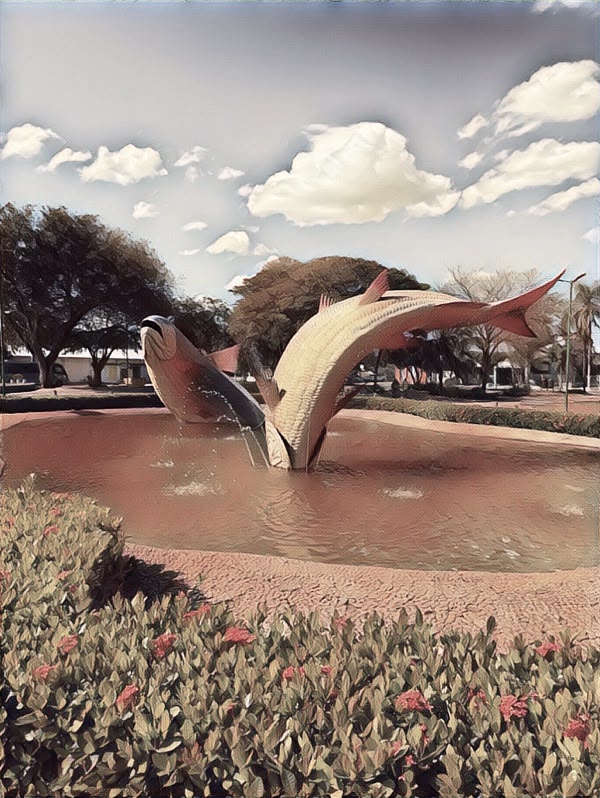
A City Without a Cinema That Begins to Breathe Cinema
Aurélio Michiles offered a precise description of one of the central functions of a festival such as CineSur. During the presentation of Honestino, the director emphasized that festivals help create audiences by taking viewers away from the increasingly solitary habits of phones, television and streaming platforms.
Suddenly, people leave home and enter a place where cinema is discussed, debated and breathed. Not only during screenings, but also in corridors, workshops, public conversations and informal encounters among filmmakers, students and audiences.
This experience becomes even more meaningful in a city without a commercial movie theater. For Bonito residents, the festival represents an opportunity to see films on the big screen that would be unlikely to reach the traditional circuit and to experience the collective ritual that streaming has never fully replaced: entering a dark room, following a story alongside other people and, afterward, hearing the filmmakers discuss their choices, difficulties and what they hoped to communicate.
It sounds simple, but it is becoming increasingly rare.
CineSur does not occupy Bonito solely with films aimed at specialists or devoted cinephiles. Its program includes screenings for children and teenagers, animation, premieres, environmental films, productions from Mato Grosso do Sul, historical documentaries and works from different countries across the continent. Throughout the week, audiences who would not normally attend a film festival can find a very concrete point of entry into cinema.

A Festival That Is Growing Without Losing Its Purpose
In its fourth edition, held from July 24 to August 1, Bonito CineSur brings together productions from ten of South America’s 12 countries, more than 150 national and international guests, five competitive sections and a non-competitive children’s and youth showcase.
The festival’s growth can also be measured in the number of submissions. More than 900 films were entered in 2026, a significant increase from the first edition in 2023. But the numbers, important as they are, do not fully explain what the festival is building.
The program is entirely free and goes far beyond screenings. It includes workshops on documentary filmmaking, screenwriting, animation for children, project development and the audiovisual market, as well as post-screening discussions and conversations about criticism, production, circulation and content acquisition.
That matters because a festival should not merely bring in famous guests, stage an elegant ceremony and leave. It needs to leave something behind: training, curiosity, cultural repertoire, connections and the sense that cinema can also be a professional possibility for people living far from the traditional centers of production.
Among this year’s initiatives is Bonito CineSur Educa, with workshops and meetings led by experienced professionals. Luís Carlos Lacerda, known as Bigode, teaches documentary filmmaking; Thiago Amendoeira works on screenwriting; PJ Maia addresses project development and the market; and Ara Martins leads animation activities for children.
It is not only a week to watch films. It is also a week to understand how cinema is conceived, written, filmed, produced, negotiated and brought to audiences.
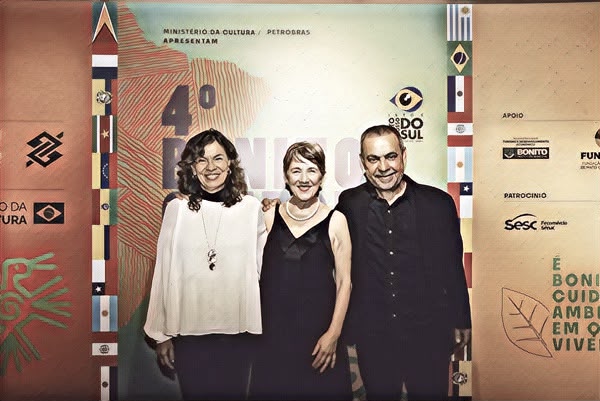
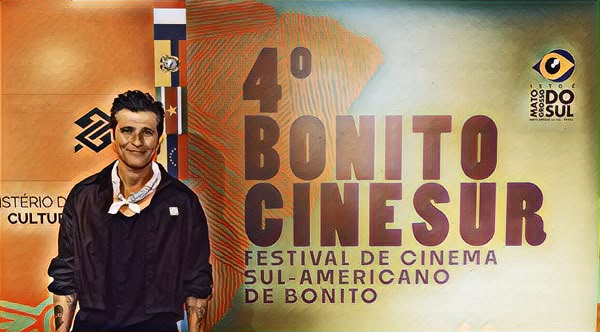
Paulina García and a Continent That Needs to See Itself
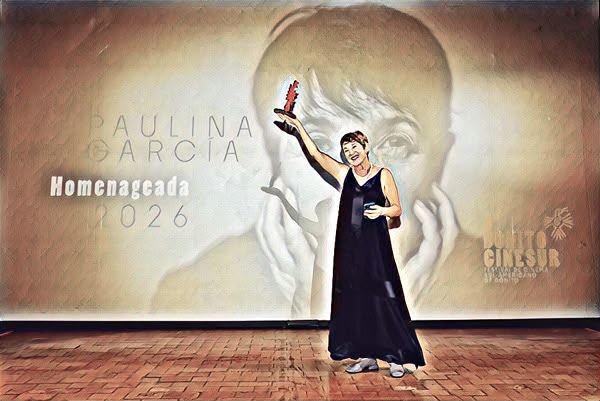
The fourth edition opened by honoring Paulina García, one of the most important figures in contemporary Chilean cinema. Winner of the Silver Bear at the Berlin Film Festival for Gloria, she received the Pantanal Trophy for a career built across cinema, theater, directing and playwriting.
Choosing Paulina goes beyond the prestige of her name. Her career represents exactly the kind of cinema CineSur wants to bring closer to Brazilian audiences: films deeply connected to the social, emotional and political questions of South America, but which still circulate far less among our countries than they should.
At the opening ceremony, the actress spoke about cinema’s ability to preserve languages, customs, memories and stories. It is a central idea for understanding the festival. We share borders, colonial histories, dictatorships, inequality, migration and environmental conflict, yet we still know surprisingly little about the images neighboring countries produce of themselves.
The program seeks to reduce that distance. The opening film, Ana Endara’s Beloved Tropic, is a co-production between Panama and Colombia. The selection also includes films from Paraguay, Argentina, Bolivia, Uruguay, Chile, Peru and other countries, alongside sections devoted to environmental cinema and films from Mato Grosso do Sul.
One of the competition titles is the Paraguayan film ¿Quién Mató a Narciso?, by Marcelo Martinessi, director of The Heiresses. The Peruvian film Naira, by Gabriela Quiroz, follows a nine-year-old girl who dreams of becoming a condor to escape violence and poverty. Uruguay’s Agua Invadida, by Carolina Sosa, investigates the exploitation of marine resources. The Bolivian production Uma Uñjirinaka — Cuidadorxs del Agua explores the relationship between communities and water preservation.
They are very different films, but they speak to one another and to the place in which they are being shown.
Cinema, Memory and the Environment
Bonito also gives CineSur a context that would be difficult to recreate in a convention center in a major capital. Here, the environmental debate does not feel like an item added to the program simply to follow a trend. It is right outside the screening room.
The transparent rivers, limestone formations, caves and biodiversity have made the city one of Brazil’s most important ecotourism destinations. That makes the existence of a competitive environmental cinema section, as well as debates about territory, water, Indigenous communities and development models, especially coherent.
Among the highlights of the program is Minha Terra Estrangeira, by João Moreira Salles and Louise Botkay, which follows Indigenous leader Almir Suruí and his daughter Txai amid threats to the Amazon and Brazil’s political climate.
There is also a screening devoted to the audiovisual memory of the region itself, with Aldeia de Nalike, footage recorded in 1936 by Claude and Dina Lévi-Strauss among the Kadiwéu people.
Vídeo nas Aldeias, which celebrates its 40th anniversary, is also the subject of a special conversation with Vincent Carelli and Daniela Siqueira. It is another reminder that discussing South American cinema in Mato Grosso do Sul inevitably means discussing Indigenous peoples, borders and the struggle to preserve territories and memories.

Films Finding Their Audience
Bruno Gagliasso’s visit to the festival to present Aurélio Michiles’s Honestino also demonstrated the importance of connecting recognizable names with stories that have not yet reached a broad audience.
The actor’s presence attracts attention, but the film redirects that attention toward Honestino Guimarães, the student leader arrested and disappeared during Brazil’s military dictatorship. A packed screening for a historical documentary confirms something festivals understand very well: the audience exists. Often, what is missing is access.
The premiere of Honestino was only one of the edition’s highlights. The festival also screened The Official Story, Luis Puenzo’s Argentine classic and the first Latin American film to win the Academy Award for Best International Feature; the premiere of Marcelo Galvão’s Colegas e o Herdeiro; environmental productions; films not yet seen in the Brazilian commercial circuit; and meetings with filmmakers from different generations and nationalities.
There is political cinema, children’s cinema, documentary, fiction and experimental work. There are films by established filmmakers and others still seeking their first meaningful encounter with an audience.
That variety is essential if CineSur is to avoid becoming merely a showcase of prestige. Above all, it must remain a space of discovery.
The Encounter Brazilian Cinema Still Needs
Bonito CineSur cannot, by itself, solve the circulation problems faced by Latin American cinema. Many of the films shown here will continue to struggle to reach commercial theaters, streaming platforms and audiences in other countries. Brazil still watches very little cinema from its neighbors and often knows equally little about films made outside the most visible center of its own industry.
But festivals exist precisely to create these openings.
In Bonito, a city of just over 25,000 people and no commercial movie theater, the audiovisual arts take over for several days. Children watch animation, students learn how to develop projects, filmmakers meet potential partners, environmental films engage directly with the surrounding landscape and South American productions cross borders that often seem more resistant in culture than in geography.
That may be CineSur’s greatest strength. The festival is not trying to reproduce a smaller version of the major events held in capital cities. It is building an identity from the place where it was created.
Bonito only seems distant to those who believe Brazil ends with the Rio–São Paulo axis. For a festival that wants South America to recognize itself, it is exactly where it should be.
Descubra mais sobre
Assine para receber nossas notícias mais recentes por e-mail.

