
As published on CLAUDIA magazine
Marilyn Monroe would have turned 100 in 2026. She was born on June 1, 1926, died on August 4, 1962, at the age of 36, and has therefore been gone for almost 64 years. Hollywood, however, continues to behave as though there were still one final door to open, one definitive explanation to uncover, or one more actress capable of finally revealing the woman behind the most photographed, analyzed, imitated, and exploited star of the 20th century.
Now it will be Dakota Johnson’s turn.
Johnson will play Marilyn in Flesh Impact, a short film directed by Maggie Gyllenhaal. Dakota will portray Monroe at the height of her fame, while Ellen Burstyn will embody the woman the world never had the opportunity to meet: an older Marilyn, one who survived, aged, and was allowed to exist beyond 36.
It is not exactly another conventional biopic, which makes the project somewhat more interesting. Flesh Impact does not appear to be simply revisiting the marriages, the films, the pills, the Kennedys, the exploitation, and the circumstances surrounding her death. Instead, it begins with the absence created by that early death and imagines the life Marilyn was never able to live.
It may be a beautiful idea. It may even produce a moving film.
But the question remains: why do we still need to invent new Marilyns?
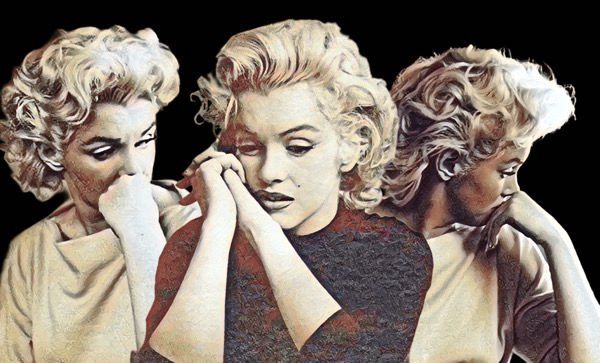
How many Marilyns do we still need?
Marilyn Monroe has been portrayed, recreated, quoted, imitated and evoked by dozens of actresses in film, television, theater, advertising and music. Some were major stars. Others became known precisely because they stepped into her platinum hair, her breathy voice, and the gestures the public immediately recognizes.
There was Misty Rowe in Goodbye, Norma Jean, Catherine Hicks in Marilyn: The Untold Story, Theresa Russell in Insignificance, Susan Griffiths in Marilyn and Me, Barbara Niven in The Rat Pack, and Melody Anderson in Marilyn & Bobby: Her Final Affair.
Ashley Judd and Mira Sorvino divided the character between them in Norma Jean & Marilyn. Poppy Montgomery starred in the first television adaptation of Blonde. Michelle Williams received an Academy Award nomination for My Week with Marilyn. Kelli Garner played her in The Secret Life of Marilyn Monroe. Even Smash built an entire television series around actresses competing for the opportunity to portray her in a Broadway musical.
Madonna, Uma Thurman, Margot Robbie, Blake Lively, and countless others have also borrowed the clothes, the voice, the poses, or the mythology. Marilyn eventually ceased to be only a historical person and became a visual language that any production can summon with a white dress, a beauty mark, and a little platinum hair.

Ana de Armas was the most recent actress to embody her in a major film. Blonde was a very bad movie: manipulative, punishing, and, at times, almost cruel toward the woman it pretended to understand. It reduced Marilyn almost entirely to suffering, as though every second of her existence had to lead inevitably toward destruction.
Ana de Armas, however, was sensational. Her performance survived the film and earned her an Oscar nomination.
The problem has never been a lack of talented actresses. Michelle Williams found an unexpected delicacy in Marilyn. Mira Sorvino captured the constructed persona. Ana de Armas found her anguish. Dakota Johnson may very well deliver another excellent performance.
I like Johnson. She has a dry intelligence, an unusual screen presence, and an introspective quality that can be far more interesting than some of the projects that first made her famous. I have no reason to doubt that she can create a sensitive and compelling version of Marilyn.
The question is not whether Dakota Johnson will be good.
The question is what exactly we are still searching for in Marilyn Monroe.
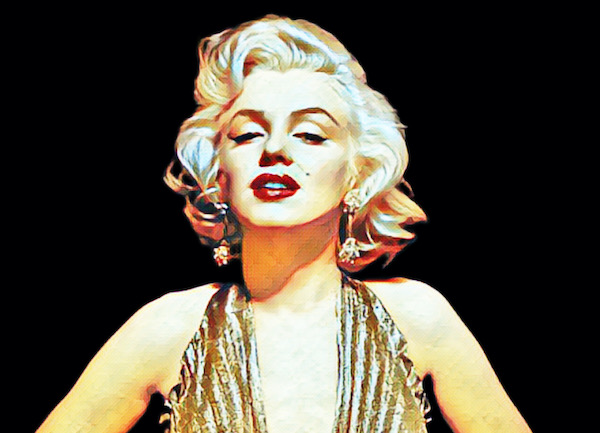
Two Marilyns, once again
There is also reason to approach Maggie Gyllenhaal’s project with some caution.
After the remarkable The Lost Daughter, Gyllenhaal directed The Bride!, a reinvention of the Bride of Frankenstein shaped around a forcefully feminist reading. Defending feminism in cinema is always necessary, especially when so many classic narratives were created by silencing, punishing, or reducing their female characters.
The difficulty begins when the argument becomes heavier than the character, and the political thesis starts dictating every creative decision. The Bride! was not well received, and part of the problem was precisely the impression that the film was trying so hard to state its position that it lost some of the ambiguity, emotional depth, and complexity the story required.
It is not a question of whether feminism belongs in the film. Of course it does. The question is how it is transformed into drama rather than delivered as a declaration.
That concern becomes relevant because imagining two Marilyns is not, in itself, particularly innovative.
The division between Norma Jeane and Marilyn Monroe is perhaps the most frequently used device in any narrative about her. There is the woman, and there is the star; the private person and the public fantasy; the vulnerable individual and the luminous persona; the woman who desperately wanted to be loved and the image desired by the entire world.
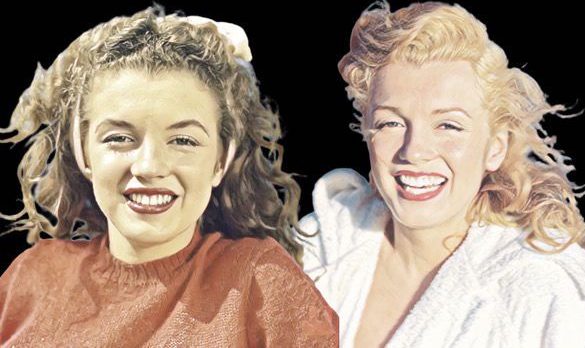
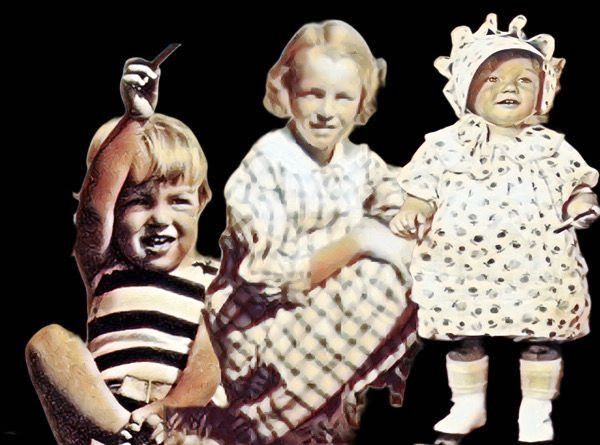
Marilyn herself contributed to that narrative. She spoke about the strange separation between Norma Jeane and “Marilyn,” sometimes describing the star persona almost as though she were watching another woman appear. She understood that Marilyn Monroe had become something larger than herself, a performance she could activate but could not always control.
Cinema and television have explored that duality repeatedly, as in the 1996 movie, in which Ashley Judd played Norma Jeane while Mira Sorvino portrayed Marilyn Monroe, turning the internal conflict into two separate actresses and practically two separate women on screen.
The contrast between the person and the myth is therefore not a new discovery. It has become the default structure of almost every attempt to explain her.
And if this new project is once again returning to that familiar division, the question becomes even more pressing: if it is not offering a genuinely new way of seeing Marilyn, why tell the story again?
Is imagining an older Marilyn beautiful, or cruel?
Ellen Burstyn’s presence as an older Marilyn introduces another possibility. It allows the film to imagine the face Marilyn never had the opportunity to grow into, the choices she might have made, and the woman she could have become once Hollywood could no longer demand that she remain eternally young. It is undeniably a beautiful image. It may also be a cruel one.
Everyone who loves Marilyn has, at some point, imagined the life she might have lived had she survived. We want to believe she would eventually have found peace, escaped the men who hurt her, broken free from the studios that exploited her, and received the artistic recognition she spent years trying to earn.
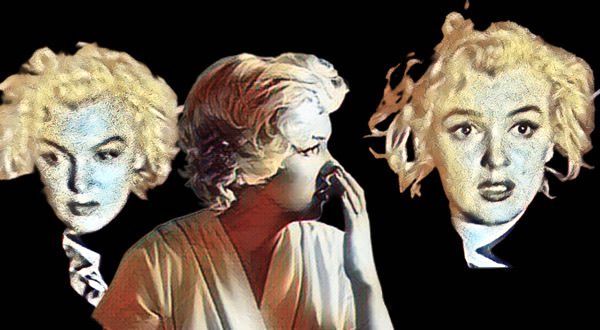
We imagine her producing her own films, choosing more serious roles, perhaps directing, perhaps writing, perhaps finally being treated as the intelligent and ambitious actress she always wanted the world to acknowledge. We imagine her aging with dignity and becoming one of those great Hollywood women who look back on their youth with irony and distance. Personally, I am not so sure.
Marilyn’s pain did not begin with fame, and I find it difficult to believe that it would simply have ended with age. Her childhood was marked by abandonment, instability, foster homes, the absence of a secure family, and different forms of violence. Her adult life repeated many of those wounds through marriages, relationships, and professional environments in which she continued searching for the safety she had never known.
At 36, still extraordinarily young, she was already being treated by Hollywood as though she were approaching old age. The industry that had built her as the ultimate symbol of youth and sexuality was beginning to see her as unreliable, difficult, and increasingly replaceable.
Emotionally, she was lost, confused, and profoundly lonely. That does not mean Marilyn was never happy. I hope she was. I hope she experienced real moments of affection, friendship, pleasure, professional pride, and joy. Her humor was real. Her intelligence was real. Her gift for comedy was real. Her pleasure in performing was not false simply because it coexisted with anxiety and despair.
But there was also in her a very old sadness, accompanied by bitterness, fear, disappointment, and an enormous difficulty believing that she could be loved without first becoming whatever other people wanted her to be. A longer life would not automatically have meant a peaceful one.
Perhaps Marilyn would have found effective treatment, emotional stability, and another way of living. Perhaps time would have given her the distance necessary to understand the forces that had shaped her. Perhaps she would have built a different career and found relationships that did not repeat the abandonment of her childhood. But perhaps she would not.
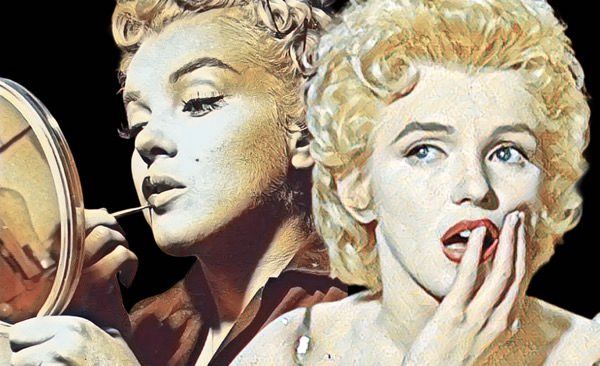
At the point she had reached in 1962, she was so vulnerable, so dependent on a system that both adored and destroyed her, and so unsure of where Norma Jeane ended, and Marilyn Monroe began, that finding peace would have required far more than simply surviving one terrible night.
Imagining her old age may come from a place of tenderness. It may be an attempt to return the future that death took away from her. But it also risks creating one more fantasy around a woman who spent her entire life imprisoned inside the fantasies of others.
Even the future she never lived now belongs to filmmakers, actresses, and audiences.
Dakota Johnson and the inheritance of desire
Dakota Johnson’s casting adds another interesting layer to the project because she herself was born into a family shaped by cinema, beauty, and the public’s desire.
She is the daughter of Melanie Griffith and Don Johnson and the granddaughter of Tippi Hedren, three performers whose images were, in different ways, transformed into objects of fascination. Tippi Hedren, in particular, knows the cost of being selected by a powerful filmmaker to embody a specific idea of femininity on screen.
Dakota also understands what it means to be reduced to the image created by one project. For years, she was treated primarily as the woman from Fifty Shades of Grey, even though later roles revealed a much more unusual actress, with a quiet comic sensibility, a certain emotional distance, and an intelligence that often works beneath the surface.
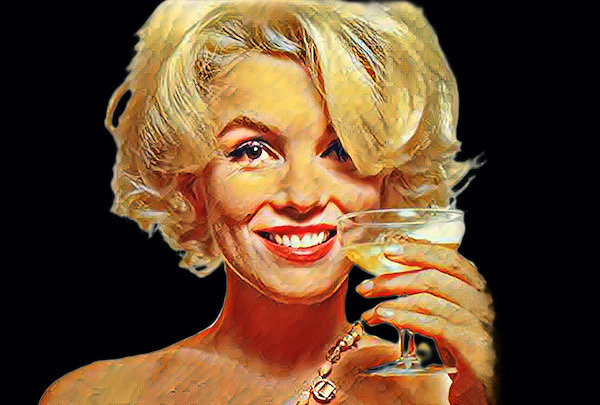
That may be precisely what makes her an interesting choice for Marilyn. She does not need to reproduce Marilyn perfectly. She does not need to offer the most accurate voice, the most faithful walk, or the most convincing smile. She needs to understand the exhaustion of a woman trapped inside an image that continues to exist independently of her.
Dakota may also understand something about growing up surrounded by women whose beauty became part of their public identity. She is the daughter and granddaughter of women who were treated as sex symbols and who had to negotiate the distance between the roles projected onto them and the people they actually were.
There is valuable material there. There is a potentially meaningful film there.
But the existence of a potentially good interpretation does not answer the larger question.
The greatest legend Hollywood ever created
Marilyn Monroe may be the greatest legend Hollywood ever produced precisely because the magnitude of her permanence bears little relation to the conventional measures of a great career.
She did not live long enough to build an enormous filmography. She did not have decades in which to reinvent herself, disappear, return, fail, recover, and be rediscovered. She did not win an Academy Award and was never even nominated.
Her career lasted little more than a decade and was marked by conflicts with studios that profited from her body and image while distrusting her intelligence, her ambition, and her desire to be taken seriously. And yet no other actress occupies the same place. It does not matter how many stars won more awards, made more films, or sustained much longer careers. Marilyn remains above them as an image, a symbol, a fantasy, and a tragedy.
She is recognized by people who may never have watched Some Like It Hot, Gentlemen Prefer Blondes, The Seven Year Itch, or The Misfits. Her image escaped the films and became larger than the work itself.
Her permanence comes partly from cinema, but it also comes from everything she was made to represent: sexuality, vulnerability, the construction of stardom, the loneliness of fame, the exploitation of women, and the cruel promise that being desired by the entire world might compensate for never feeling truly loved by it.
It did not.
Marilyn achieved an immortality that has very little to do with awards or even with the number of films she made. It comes from the public’s love, from the mystery created around her death, and from the strange intimacy people continue to feel with a woman they never knew.
That love is genuine. It is also part of the reason we refuse to release her.
Why can’t we let Marilyn go?
Perhaps we continue returning to Marilyn because she died too young to correct our interpretation of her.
She did not grow old in public. She never had the opportunity to abandon the sex-symbol image, choose radically different roles, direct, produce, fail, return, or simply become an older woman who no longer needed to seduce anyone.
She could not tell her own story with the distance that only time might have provided. And so everyone continues telling it for her.
Each generation believes it will finally uncover the real Norma Jeane behind Marilyn Monroe. But perhaps that woman has already been buried beneath so many versions, theories, books, films, documentaries, and projections that every new attempt reveals more about the period producing it than about Marilyn herself.
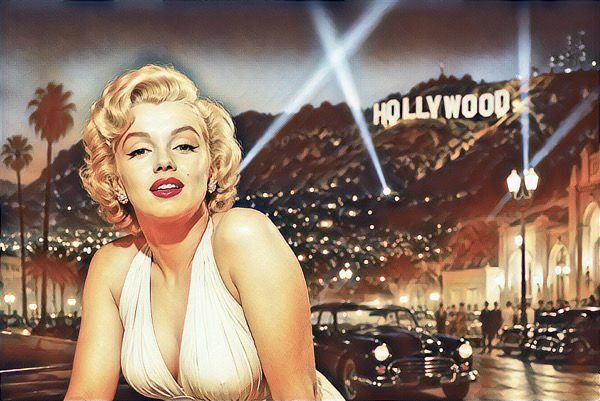
She has been portrayed as a victim, a seductress, a wounded child, a Kennedy mistress, a misunderstood artist, an addict, a feminist symbol, a manipulator, and a martyr of Hollywood.
Her trauma became entertainment. Her death became a commercial mystery. Her body became public property.
Now, even the woman she might have become at 70 or 80 will be performed by someone else. Again, I do not doubt Dakota Johnson. I like her, and I believe she may create a delicate, intelligent, and less obvious Marilyn. I do not doubt Ellen Burstyn’s power or Maggie Gyllenhaal’s sincere desire to imagine another destiny for a woman who was denied one. I doubt only our ability to look at Marilyn Monroe without demanding something else from her.
She has already given us the films, the photographs, the voice, the humor, the beauty, the vulnerability, and even the tragedy. She gave far more than she ever received.
Perhaps, in the year she would have turned 100, the most generous tribute would not be to recreate Marilyn once again, explain Marilyn once again, or invent another version of Marilyn.
Perhaps it would be, finally, to let Marilyn Monroe rest.
Descubra mais sobre
Assine para receber nossas notícias mais recentes por e-mail.

