
I was convinced I had already written about The Portrait of a Lady. Perhaps because I have written so often about Henry James, about the women who inspired his characters, about The Wings of the Dove, about Edith Wharton, and about this entire universe of intelligent women trying to breathe inside societies constantly telling them how they should live. But no. Somehow, Isabel Archer had never been given her own piece here, an omission that feels even stranger in 2026, when Jane Campion’s film turns 30 just as a new adaptation of The Portrait of a Lady begins filming.
Perhaps this is the perfect moment to return to a work that arrived burdened with almost impossible expectations, sharply divided critics, disappointed commercially, and now, three decades later, seems far more interesting than its original reputation allowed. In 1996, Jane Campion was coming off the enormous impact of The Piano, which three years earlier had won the Palme d’Or and established her as one of the most important filmmakers of her generation. Her next choice looked, on paper, almost foolproof: adapting one of Henry James’s greatest novels, with a screenplay by Laura Jones and a cast that now seems almost unbelievable.
Nicole Kidman, John Malkovich, Barbara Hershey, Martin Donovan, Mary-Louise Parker, Shelley Winters, Shelley Duvall, Richard E. Grant, Christian Bale, Viggo Mortensen, Valentina Cervi, and John Gielgud were all gathered for a prestige literary production. Kidman herself was also reaching a decisive moment in her career. After Batman Forever and, above all, the excellent reception of To Die For, she was finally beginning to be seen as an actress in her own right rather than simply as Tom Cruise’s then-wife. Isabel Archer seemed like exactly the kind of role that could consolidate that transition.
Kidman herself pursued the project. When she learned that Campion intended to adapt Henry James, she approached the director because she wanted to play Isabel. There was also an almost cinematic coincidence in that connection: Campion had noticed Nicole when she was very young and had written that she would one day like to make a classic with that actress. Years later, there they were, facing The Portrait of a Lady, surrounded by expectations of prestige, critical acclaim, and awards.
Almost nothing happened as expected.
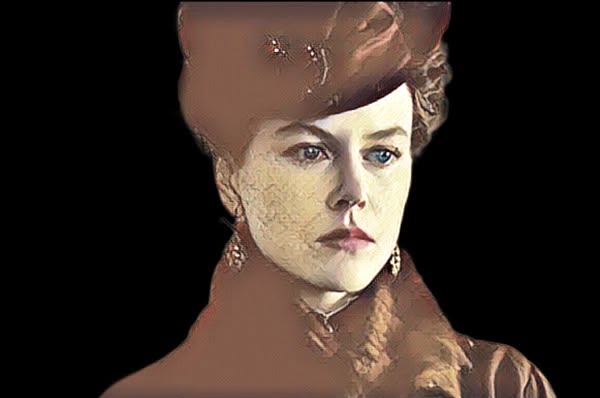
Jane Campion did not want to simply illustrate Henry James.
The first warning appears before we even enter the 19th century. Anyone starting The Portrait of a Lady expecting carriages, gowns, grand houses, and Victorian England immediately encounters something else: contemporary women sitting together on the grass while female voices talk about love, kissing, desire, and intimacy. It is a deliberately strange opening for a Henry James adaptation, and it functions almost as a declaration of intent.
Campion did not want to treat the novel like a museum piece. By placing women from her own time before Isabel Archer, she seems to create a bridge between them, suggesting that a character written in 1881 can still speak to something recognizable in women more than a century later: the relationship between desire, freedom, choice, and the illusion that every decision we make belongs entirely to us.
That approach reappears in other liberties taken with the novel. Isabel has sexual fantasies involving her suitors, something Campion brings to the surface far more explicitly than Henry James ever does. The character’s extensive travels, described at length in the book, are compressed into a stylized montage, almost like a miniature silent film. Important parts of the narrative are condensed, others removed, and some images simply invented because Campion and screenwriter Laura Jones faced an almost impossible problem: how do you turn into cinema a novel whose greatest drama takes place inside its protagonist’s consciousness?
Henry James spends pages following what Isabel thinks, rationalizes, desires, misreads, and only understands when it is already too late. Cinema has no automatic access to that interiority. Campion chose not to reproduce it literally, but to search for visual and sensory equivalents. That is perhaps where both the film’s strength and some of its problems begin.
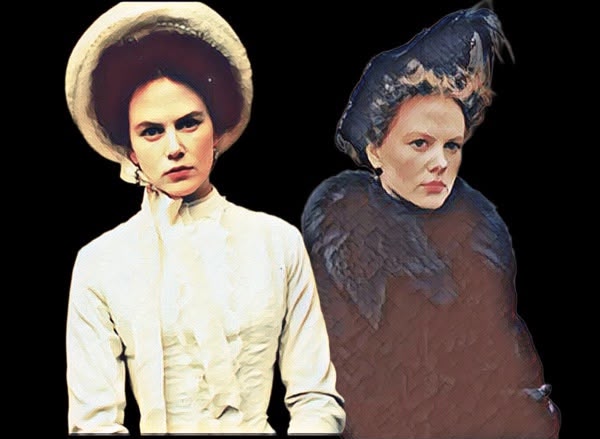
Isabel’s sexual awakening, according to Jane Campion
I do not think it is accurate to define Henry James’s novel simply as a story about Isabel Archer’s sexual awakening. The book is much broader, more indirect, and more psychological than that. But Campion clearly identifies that dimension in the character and brings it to the foreground, transforming into bodily experience what James often keeps within consciousness and suggestion.
Isabel does not merely want abstract freedom. She desires, fantasizes, feels curiosity, and tries to understand her own body and what attracts her. This perspective connects her to other women in Campion’s cinema, a filmmaker repeatedly drawn to female protagonists whose desires bring them into conflict not only with the world but also with the image they have constructed of themselves.
The crucial difference is that Isabel believes she has already acquired the very thing that should protect her: freedom. When she receives the inheritance that allows her to travel, reject proposals, and choose her own destiny, she finally possesses something almost unimaginable for a woman of her time. It is precisely then that she makes the choice that will imprison her.
Viewed through a psychoanalytic lens, this may be the most fascinating part of the story. Isabel does not simply choose Gilbert Osmond; she also chooses a particular image of herself. Osmond seems to confirm everything she wants to believe about who she is. He lacks the wealth, title, and position of her other suitors, and for that very reason, choosing him appears to prove that Isabel has not been seduced by the conventional values she claims to reject.
Lord Warburton represents rank and aristocracy. Caspar Goodwood carries an intensity that Isabel experiences almost as a threat to her autonomy. Osmond seems to offer something different: culture, refinement, taste, an apparent indifference to wealth, and a posture of superiority toward society. In her eyes, choosing him means choosing intelligence and affinity instead of money, title, or convention.
That is exactly why admitting the mistake becomes so devastating. Isabel does not merely have to acknowledge that she married a cruel and controlling man. She has to face something far more painful: the possibility that she did not know herself as well as she believed. The failure of the marriage also becomes the failure of a fantasy she had built around herself, the fantasy of a woman sufficiently independent and lucid never to fall into the traps she wanted to escape.
Leaving Osmond, then, does not simply mean leaving a husband. It means mourning the woman Isabel believed herself to be when she chose him.
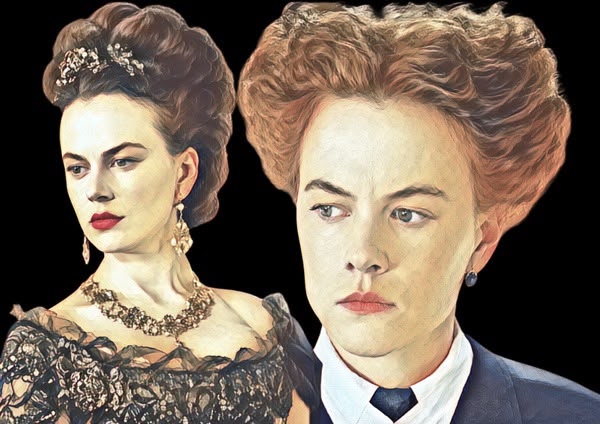
Malkovich, Osmond, and the ghost of Valmont
John Malkovich may be one of the film’s most fascinating and problematic casting choices. His Gilbert Osmond is intelligent, cold, refined, cruel, and frighteningly controlling, but one question has followed the performance since 1996: Do we realize too quickly that he is dangerous?
Malkovich arrived at the role carrying the unavoidable memory of Valmont in Dangerous Liaisons. It was difficult to watch him enter a story about seduction, manipulation, and power without immediately remembering the aristocrat who turned human emotion into a game of conquest. That history may have worked against Osmond’s construction, because Isabel’s tragedy depends, in part, on our understanding of how she could have believed in this man.
I sometimes think of Osmond as an even darker revision of Valmont. Valmont knows he is a predator and makes seduction into an openly cruel art. Osmond is different because he turns control into taste, domination into refinement, and cruelty into supposed intellectual superiority. He does not merely seem to want to possess Isabel; he wants to shape her as he shapes the rest of his aesthetic universe.
That may make him even more disturbing. Valmont knows exactly what he is doing, while Osmond seems capable of convincing himself that he is not destroying a woman, merely correcting whatever in her does not conform to the ideal he has created.
The problem is that Malkovich communicates that danger very early. For Isabel’s tragedy to be even more painful, perhaps we needed to be seduced by Osmond along with her, at least for a while. With Malkovich, we want her to run almost immediately. The question remains fascinating 30 years later: did he misjudge the tone, or was he simply too brilliant at revealing what Isabel was not yet capable of seeing?
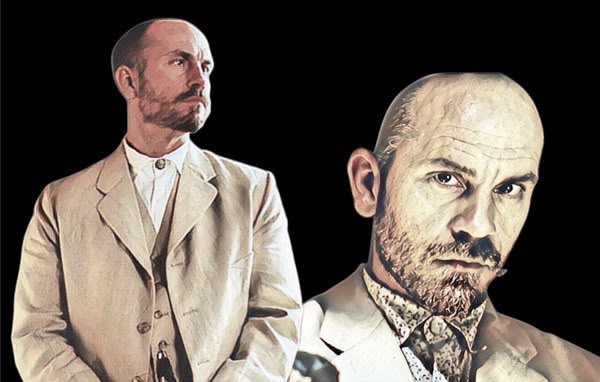
Barbara Hershey and a Madame Merle far larger than a villain
If Malkovich divided opinion, Barbara Hershey is much harder to dispute. Her Madame Merle is extraordinary precisely because she is never reduced to the manipulative woman who leads Isabel toward disaster. She understands the world she lives in far better because she has already learned what Isabel has not: women possess very little formal power, and when they cannot break a structure, some learn how to use it.
Isabel wants to escape the rules. Madame Merle has learned how to operate them.
That difference makes the character far more tragic than simply evil. Merle is intelligent, sophisticated, warm when she needs to be, calculating when necessary, and deeply shaped by the limitations of the same world she has learned to manipulate. The more I revisit her, the less I can see her as merely an antagonist. She, too, is a product of that system, perhaps even a dark possibility of what Isabel herself might become: a brilliant woman who gave up trying to defeat the game directly and decided instead to master it from within.
Pansy, of course, is the one who ultimately pays for the choices made by the adults.
Barbara Hershey received an Academy Award nomination for Best Supporting Actress, one of only two nominations the film earned, the other being Janet Patterson’s costumes. Nicole Kidman, who had entered the project surrounded by expectations of career-defining recognition, was left out of the Best Actress race.
That outcome helped fuel stories over the years about a supposed rivalry between Kidman and Hershey, but it is important to separate fact from legend. The expectations surrounding Nicole were real and enormous, and Isabel Archer clearly represented an important step in her attempt to establish herself as a major dramatic actress. The fact that Hershey became the performer recognized by the Academy creates an irresistible professional irony, but I have not found sufficiently solid contemporary documentation to claim that the two women actually had a personal feud because of it.
There is also no secure basis for saying that Kidman publicly expected a nomination or expressed disappointment when she did not receive one. An Oscar nomination may have seemed natural to those following the campaign and the prestige surrounding the project, but turning that external expectation into the actress’s personal frustration would go beyond what is documented.
Shelley Winters and a set less glamorous than the film suggests
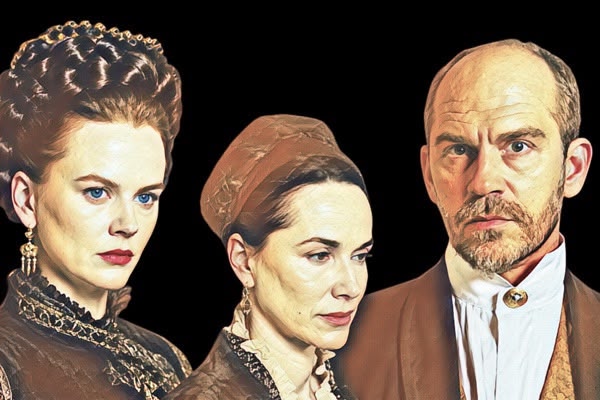
Behind-the-scenes footage reveals a Jane Campion quite different from the distant or authoritarian image one might associate with the film’s visual formality. Records of the production show a director unusually close to her actors and attentive to the emotional and physical toll of particular scenes.
Nicole Kidman appears shaken after especially intense moments opposite Malkovich, and Campion comforts her. Barbara Hershey finishes a sequence soaked by artificial rain and receives the same care. Shelley Winters, who plays Mrs. Touchett, seems to have faced more delicate difficulties during the production.
The veteran actress appears in some footage, confused and struggling to follow particular moments of filming. This has sometimes been remembered as a difficult situation on set, but it would be unfair to turn it into an anecdote about a “difficult actress.” What the images suggest is something far less amusing and far more human: an older performer facing genuine difficulties while Campion tried to guide her patiently and protect her even as she still had a film to finish.
Perhaps that care helps explain a curious quality in The Portrait of a Lady. Visually, the film can feel cold and extremely controlled, yet its performances often carry an almost uncomfortable intimacy. Campion brings the camera close to faces as though she were searching there for exactly what Henry James located inside the consciousness of his characters.
A cast that now seems impossible
Looking back at the credits 30 years later is also a remarkable exercise. Christian Bale plays Edward Rosier, Viggo Mortensen is Caspar Goodwood, Richard E. Grant is Lord Warburton, Mary-Louise Parker appears as Henrietta Stackpole, Shelley Duvall plays the Countess Gemini, John Gielgud is Mr. Touchett, and Valentina Cervi is Pansy. Alongside them are Nicole Kidman, John Malkovich, Barbara Hershey, Shelley Winters, and Martin Donovan.
It is an almost absurd concentration of talent, especially when we consider how much larger many of those careers would become in the years that followed. Even so, Martin Donovan may give one of the film’s most delicate performances as Ralph Touchett. His love for Isabel is the opposite of Osmond’s desire for possession. Ralph sees in her a curiosity and hunger for the world that he believes deserves to be liberated, not controlled. Seeing the pair playing a married couple in Lioness Op warms our hearts three decades later.
The inheritance he helps place in Isabel’s hands comes directly from that desire. Ralph wants to give her the possibility of living without dependence on marriage or any man. The devastating irony is that the money really does give her freedom, but also creates the conditions for the choice that will imprison her most completely.
Ralph offers Isabel the possibility of life. Osmond turns that possibility into a prison. Few things in Henry James are crueler.

Wojciech Kilar’s extraordinary score
There is one thing in the film that, for me, has never aged: Wojciech Kilar’s score. It does not function merely as musical accompaniment, but almost as a second consciousness for Isabel.
That role is especially important in a Henry James adaptation because much of what drives the novel happens in silence. Isabel thinks, observes, rationalizes, and only slowly understands the extent of the trap she has entered. Cinema must find other ways to express what the words of the novel reveal internally.
Kilar does it through music.
There is desire, foreboding, melancholy, and a growing sense of inevitability in his composition. Nicole Kidman often keeps her face controlled, while the score seems to reveal what the character still cannot articulate. It is almost as though there were a visible Isabel, trying to remain inside the rules she has created for herself, and another one underneath, already understanding that something has collapsed.
The film also uses Schubert, but Kilar provides its true emotional pulse. Thirty years later, I still find it surprising that such a powerful score received so little recognition during awards season.
How do you film a woman thinking?
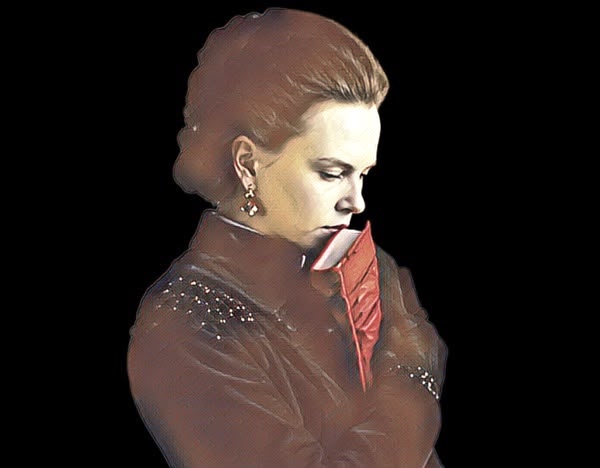
That may have been the central problem from the beginning. The Portrait of a Lady is not a work driven primarily by external events. Its true action is the transformation of Isabel’s consciousness, and that is much easier to write than to film.
Henry James can spend pages showing how she interprets a situation, justifies a decision, ignores a warning sign, and slowly realizes that what she imagined was freedom may have been another form of illusion. Campion and Laura Jones knew they could not reproduce this process literally and chose instead to dismantle the novel and reconstruct it in cinematic language.
The travels are compressed, characters and situations lose space, fantasies that do not exist in the book appear on screen, and the contemporary opening creates an entirely authorial frame. Even the ending undergoes an important change. In the novel, after her encounter with Goodwood, we know that Isabel returns to Rome, although Henry James leaves considerable ambiguity around what that decision means. Campion prefers to leave her almost suspended at a threshold, turning James’s movement into a question.
That choice significantly changes the effect of the story. The novel forces us to deal with the fact that Isabel makes a decision, even if we can debate its meaning for decades. The film seems more interested in asking whether anyone can simply walk out of a prison after discovering that they took part in building it.
A psychoanalytic reading of Isabel Archer
This is precisely where Isabel becomes even more fascinating through a psychoanalytic lens. Not because she “likes to suffer,” or because her staying can be reduced to some simplistic explanation of masochism. What exists is something far more uncomfortable: the difficulty of abandoning a choice when admitting the mistake threatens the identity we have built for ourselves.
Isabel has made freedom an essential part of her self-image. She does not merely want to be free; she needs to recognize herself as a woman capable of choosing freely. Osmond enters through exactly that vulnerability. He does not conquer her despite her independence, but through it, because he seems to represent the choice that will prove Isabel has not been seduced by money, title, or convention.
When she understands who he really is, therefore, it is not enough to conclude that she was deceived. Isabel has to recognize that her own fantasy took part in the deception. That may be the most painful discovery of all: intelligence does not prevent us from desiring badly, and freedom does not guarantee self-knowledge.
Campion makes this dimension more bodily and sexual than Henry James does. By adding fantasies, bringing faces close to the camera, and gradually turning Isabel into someone almost motionless inside Osmond’s aesthetic universe, the director suggests that the character is ceasing to be a subject and becoming an object.
At the beginning, Isabel wants to look at the world. Later, she becomes something to be looked at.
Osmond is a collector. His house, his objects, his taste, and even his daughter belong to a carefully organized system. Isabel, who believed she had chosen a man free from the conventions she despised, discovers that she has entered the collection of someone obsessed with controlling the shape of things.
Perhaps it is not accidental that the story is called The Portrait of a Lady.
A failure larger than what actually happened
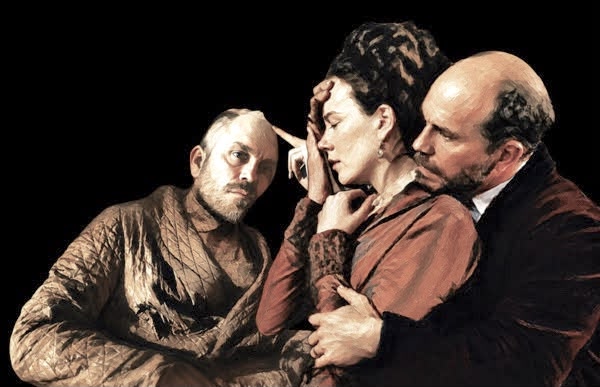
When The Portrait of a Lady reached cinemas, it carried a problem that was almost impossible to overcome: the expectation that Jane Campion would somehow repeat the impact of The Piano. There was Henry James, Nicole Kidman on the rise, an extraordinary cast, lavish costumes, a newly acclaimed director, and every ingredient normally associated with a major prestige event.
Campion delivered something far less comfortable. Her film is cold in some moments, intensely sensual in others, deliberately strange, and largely uninterested in providing the conventional pleasures of a grand costume drama. Critics were deeply divided. Some recognized its intelligence and audacity, while others repeatedly accused it of pretension, slowness, and emotional distance.
Commercially, the result also fell far below expectations. The film earned around $3.7 million in the United States and Canada and became associated with the beginning of a period in Campion’s career in which her work would be met with far more resistance than The Piano had faced.
The Academy Awards summarized that sense of a missed opportunity rather perfectly. The film received only two nominations, for Barbara Hershey and Janet Patterson’s costumes. Campion was absent, as were Nicole Kidman, John Malkovich, Wojciech Kilar, and the rest of a project that, before release, had seemed almost designed to dominate this kind of awards season.
Perhaps the real problem was expecting it to be something else.
Thirty years later, perhaps it is time to look again.
I find it difficult to call The Portrait of a Lady simply a failure. It is an imperfect film, sometimes excessively conscious of its own beauty and, at certain moments, so interested in turning Henry James into Jane Campion that it loses the nuances the novel develops with far greater patience. Malkovich may reveal Osmond too soon, and Nicole can sometimes feel distant precisely when we most want to enter Isabel’s mind.
Yet perhaps those imperfections are exactly what make the film so fascinating three decades later. Campion did not make the definitive Henry James adaptation and probably never intended to. She made her own reading of him, profoundly female, sexual, psychological, and deeply suspicious of the comforting idea that freedom alone is enough to save anyone.
Isabel can travel, inherit money, reject men, and choose her own destiny. She can still make the wrong choice. More disturbingly, she can use that very freedom to choose what will ultimately imprison her.
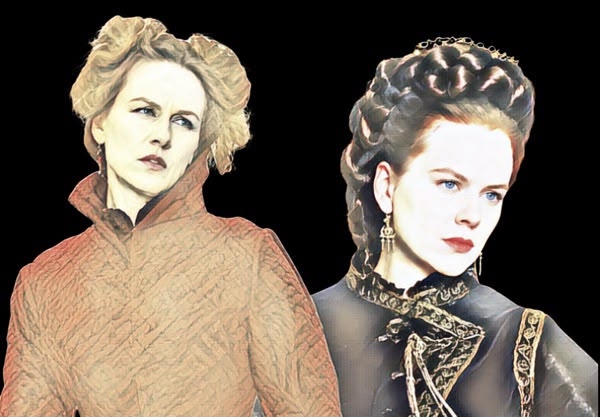
In 1996, perhaps audiences expected Jane Campion to deliver another grand and elegant literary drama after The Piano. Instead, she gave them something far more uncomfortable: the story of a woman discovering that independence does not necessarily mean understanding one’s own desires, and that having the power to choose does not mean understanding why we choose what we choose.
Thirty years later, at a time when so many period adaptations seem compelled to make their heroines more self-aware, easier to admire, and conveniently modern, The Portrait of a Lady may seem almost radical in allowing Isabel to remain contradictory, vain, intelligent, naïve, desirous, and disastrously wrong.
Perhaps that is why I thought about this film so many times without ever writing about it. And perhaps that is exactly why, while we wait for a new Isabel Archer to arrive on television, I want to return to the one Jane Campion gave us in 1996.
Not because she solved the mystery of Isabel Archer, but because she had the courage not to try.
Descubra mais sobre
Assine para receber nossas notícias mais recentes por e-mail.

