
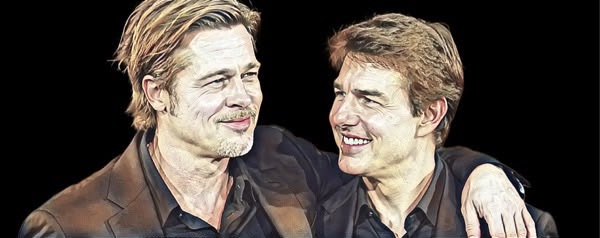
In recent years, several children of very famous men have begun removing their fathers’ surnames from their public names and, in some cases, from their legal documents as well. Suri, the daughter of Tom Cruise and Katie Holmes, began using the name Suri Noelle. Among the children of Brad Pitt and Angelina Jolie, Shiloh legally removed “Pitt,” while others have chosen to use Jolie alone.
We do not know the intimate process behind any of these decisions, and psychoanalysis should not turn them into diagnoses. But we can ask what such a gesture represents symbolically. A surname is more than a civil identifier. It conveys belonging, continuity and recognition.
When someone decides no longer to carry it, they may be trying to change the way that relationship is presented to the world.

The real father and the paternal function
The first necessary distinction is between the actual father and the paternal function.
The actual father is the man within the family history: the one who was present or absent, who cared, loved, disappointed, abandoned or remained emotionally distant.
The paternal function is something else.
In Freud, the father occupies a fundamental place in the Oedipus complex because he represents the limit placed upon the child’s fantasy of possessing the mother exclusively. The child must discover that they cannot occupy every position or be everything to the person who cares for them.
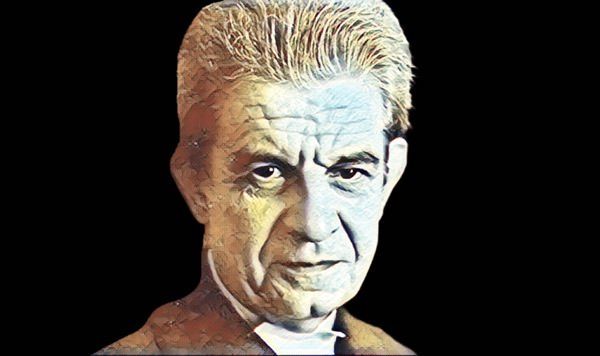
Lacan develops this idea through the Name-of-the-Father. This does not literally mean the father’s surname, but a symbolic function that introduces law, separation and the presence of a third element into the early relationship between the child and the maternal figure.
The child discovers that the mother has other desires, attachments and interests. The child is not the absolute centre of the world, and no relationship can completely eliminate lack.
The discovery is painful, but structurally necessary.
The limit that liberates
The paternal function is not simply the act of prohibition. Its purpose is to introduce a limit that organises experience without destroying the subject.
The symbolic “no” teaches that not every desire will be fulfilled, that other people do not exist solely to satisfy us and that love does not mean possession.
But that limit is also liberating. When the child realises that they cannot be everything to the other, they begin to ask who they are. Lack creates room for thought, fantasy, language and a desire of one’s own.
The symbolic father, therefore, is not merely the one who says, “You cannot.” He is also the one who communicates, “You do not have to be my extension.”
A man may pass on his surname without exercising this function. He may appear on the birth certificate, in photographs and in headlines while remaining emotionally absent. He may also impose authority without offering protection, confusing limits with control.
A limit is not abandonment
This distinction is essential.
A structuring limit frustrates the child but preserves the child’s place within the bond. The child learns that they cannot have everything while still knowing that they are loved and recognised.
Abandonment communicates something else. A father who disappears, rejects or ignores the child is not necessarily introducing that child to reality. He may instead be producing helplessness.
Paternal absence should not be romanticised as though every frustration encourages maturity. Some experiences help the child grow. Others leave wounds that may reappear in adulthood as fear of rejection, a need for approval or repeated attachments to emotionally unavailable people.
The paternal function separates without abandoning.
Winnicott and the family environment
Winnicott broadens this discussion by thinking about emotional development through the idea of a good-enough environment.
The child needs to be held and sustained while still unable to exist independently. The paternal figure can participate in this environment, protect the early bond between mother and baby and gradually help introduce the child to a world larger than that primary relationship.
This does not mean that only a man can perform this function. Mothers also establish limits. Fathers also nurture. The same person may offer care, protection, separation and an opening towards the world.
These functions are not rigidly determined by the sex of the person performing them.
That does not make actual people emotionally irrelevant or easily replaceable. A child may receive love and support from several figures and still suffer because of the absence or rejection of their own father.

The surname as a promise
The paternal surname turns filiation into a public identity.
It communicates that a person belongs to a family and participates in the continuation of that man. In famous families, the weight is even greater. Before achieving anything independently, the child is already presented as the heir to an image, a fortune and a narrative.
“Cruise” and “Pitt” are not neutral surnames. They carry enormous cultural force. They may open doors, but they can also imprison the child in the permanent role of being an extension of the father.
The person risks being observed not for who they are, but for what they inherited, rejected or failed to reproduce.
Removing the name may be an attempt to create distance between the subject and the identity handed to them.
When the name does not correspond to the bond
A surname may announce a closeness that emotional experience never confirmed.
A document records filiation, but it says nothing about intimacy, care or presence. There may be a father in the name and an absence in the life.
In that case, removing the surname may mean:
I do not want my public identity to announce a relationship I do not recognise.
I do not want to continue being presented as an extension of this man.
I do not want biological filiation to be confused with emotional closeness.
By adopting a name associated with the mother, the child may also be recognising the person who actually sustained daily life. Even so, only the individual concerned can explain the particular meaning of that choice.
The imaginary father
Beyond the real father and the symbolic father, there is also the imaginary father: the one constructed within the child’s fantasies.
He may be the idealised, powerful and protective father. He may also be the father blamed for every wound. Very often, both images coexist.
The child may reject the father they had while continuing to hope that he will become the father they wished for. That he will return, recognise the pain he caused, apologise or finally offer the love that was expected.
Removing the name may therefore involve mourning. Not only for the real father, but also for the imagined one.
Perhaps the gesture marks the decision to stop waiting for recognition from that man. But changing a document does not complete a psychic process. The father may disappear from the surname and remain in memories, choices, comparisons and attempts not to resemble him.
Even rejection can keep the subject attached to the person being rejected.

The father who permits separation
There is an important irony here.
The paternal function is supposed to help the child separate. A good-enough father does not demand that the child remain his extension. He tolerates disagreement, independent choices and an identity that does not confirm his own narcissistic wishes.
A father who needs to be repeated in the child’s name, choices and achievements may want an heir more than a subject.
Exercising the paternal function also means accepting one’s own limits. The father must recognise that he will not be everything to the child and that one day he will no longer occupy the centre of that child’s life.
When this separation is not permitted, the child may need to produce it alone.
Removing the surname may function as that belated cut:
You are part of my origins, but you will not be my entire identity.
Putting the father in his place
Removing “Cruise” or “Pitt” does not erase Tom Cruise or Brad Pitt from the history of their children. Biology, memory and lived experience do not obey the registry office.
But a name is also a way of narrating that history.
By changing it, the child may be claiming the right to decide what place the father will occupy in their presentation to the world. The gesture may contain anger, love, mourning, identification with the mother, a desire for autonomy or several of these emotions at once.
Freud showed that love and hostility may coexist in relation to the same figures. Lacan distinguished the actual father from the symbolic function. Winnicott emphasised the importance of an environment capable of holding the child and gradually allowing them to encounter the world.
Together, these authors help us understand why removing the name does not necessarily mean eliminating the father.
It may mean something more difficult: no longer carrying him as an identity.
The father remains part of the story.
He simply stops being its title.
Descubra mais sobre
Assine para receber nossas notícias mais recentes por e-mail.

