
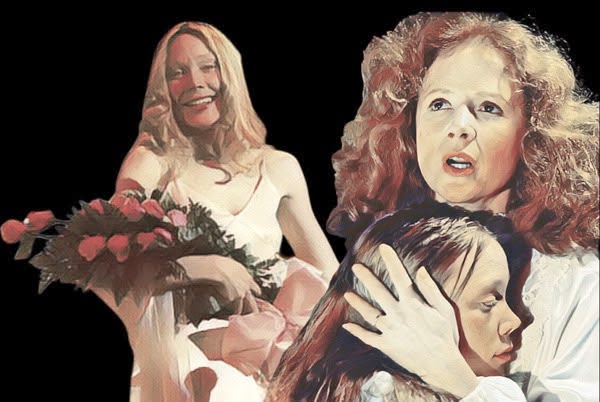
It is impossible to announce a new version of Carrie without provoking the immediate question of whether we truly need to return to that school, that mother, that prom, and, above all, that bucket of blood. Stephen King’s debut novel already received what many consider its definitive adaptation in Brian De Palma’s 1976 film, with Sissy Spacek and Piper Laurie turning Carrie and Margaret White into two of the most recognizable characters in horror history. Exactly 50 years later, Mike Flanagan has decided to revisit a tragedy whose ending we all know, but which has never felt entirely finished.
The timing is significant. De Palma’s film was released in the United States in November 1976 and reached its fiftieth anniversary still regarded as one of the great works of American horror. Sissy Spacek and Piper Laurie were both nominated for Academy Awards, a rarity for the genre, while some of the film’s images — the white dress covered in blood, the burning ballroom, and the hand suddenly emerging from the ground — transcended the movie itself to become part of popular culture. In 2022, the film was added to the United States National Film Registry for its cultural, historical, and aesthetic importance.
Mike Flanagan knows he cannot erase that memory. More than that, he has turned the question “Why make Carrie again?” into the starting point for the new Prime Video series. During the production’s presentation at San Diego Comic-Con, he said that this was also Stephen King’s first question when he heard the proposal. The answer was not to repeat Brian De Palma with more blood, better effects, or smartphones in the teenagers’ hands, but to dismantle the story, locate its essential pieces, and build something new from them. The approach convinced King, who is involved as an executive producer.
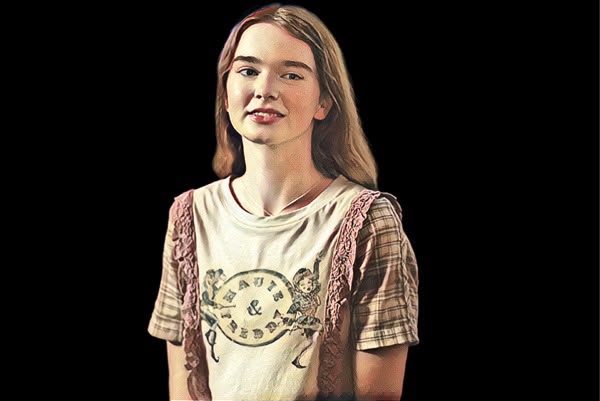
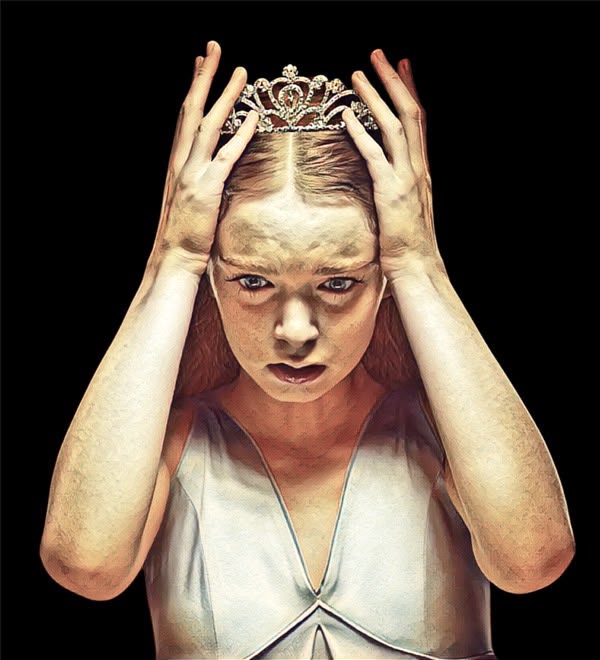
Set to premiere on October 7, 2026, the new Carrie will consist of eight episodes and will be the first adaptation of the story developed as a series. Flanagan serves as creator, writer, showrunner, and director, while Summer H. Howell plays Carrie White and Samantha Sloyan, a familiar presence in the filmmaker’s work, takes on the role of Margaret, the religious, controlling, and terrifying mother who believes she is protecting her daughter while destroying any possibility that Carrie might understand her own body, her desires, or the world around her.
How Carrie Was Born
Before reaching the screen, Carrie emerged from a far more intimate and painful combination of memories. Published on April 5, 1974, Carrie was Stephen King’s first published novel, although he had already written other books that had not yet found a publisher. The story began as a short tale about a teenage girl experiencing her first period in a school locker room and discovering that she possessed telekinetic powers. King had read about telekinesis and wondered what might happen if such an ability emerged during the most humiliating moment of a girl’s life.
He wrote a few pages and threw them in the trash. His wife, Tabitha King, recovered the manuscript and convinced him to continue, while also providing a female perspective that he openly admitted he did not possess. As the story developed, two girls King had known began to shape Carrie White. One had been bullied because of her family’s poverty and the clothes she wore; the other had grown up in a deeply religious household. Both were already dead when the writer explained how his memories of them eventually merged into the character.
Carrie was therefore born not only from the imagination of an author interested in supernatural abilities, but from the memory of real girls who had been mistreated, isolated, and reduced to everything that made them different from those around them. The extraordinary element of telekinesis appeared alongside a much more ordinary form of violence: the humiliation of someone who has no money, social vocabulary, acceptable clothes, friends, or family capable of preparing her for the world.
The novel’s structure also helps explain why a series may find space where the films were forced to condense. King did not tell the story in a purely linear form. Carrie is constructed as the reconstruction of a catastrophe, blending the main narrative with newspaper reports, testimonies, letters, books, investigations, hearings, and studies about the so-called Carrie White phenomenon. From the beginning, we know that something terrible has happened, and we follow a society attempting to explain the disaster after having participated in its creation.
Flanagan intends to recover precisely this material, which previous adaptations have frequently left aside. Instead of treating the prom as a surprise, the series can investigate the path that led to it, the shared responsibilities involved, and the way a community reorganizes the narrative after a tragedy to minimize its own guilt.
Every Time Carrie Returned
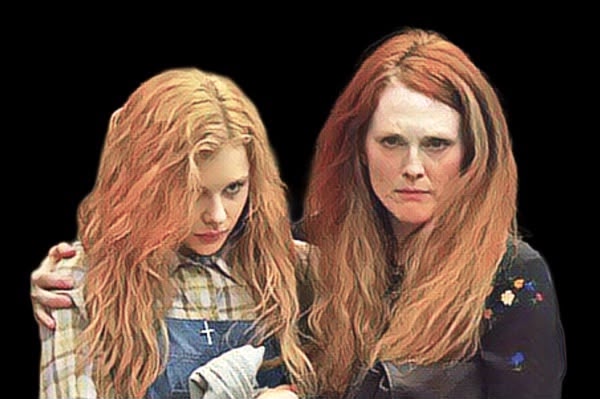
After Brian De Palma’s classic, several attempts were made to bring Carrie back to film, television, and the stage. In 1999, The Rage: Carrie 2 introduced another telekinetic teenager pushed to the limit by the cruelty of her classmates. In 2002, Angela Bettis played Carrie in a television film, with Patricia Clarkson as Margaret. In 2013, Chloë Grace Moretz and Julianne Moore starred in a new version directed by Kimberly Peirce, which attempted to bring Carrie’s humiliation into the era of smartphones, recordings, and shared videos.
Carrie also reached Broadway in a 1988 musical, remembered for years as one of the most famous failures in the history of musical theatre, but later revised, reworked, and revived. A new Off-Broadway production opened in 2012, and even Riverdale devoted an entire episode to staging the musical, proof that the story no longer belongs exclusively to horror but to a collective repertoire about adolescence, exclusion, and the desire for revenge.
None of these versions, however, managed to replace De Palma’s film. Perhaps that is because its power does not depend only on what happens, but on how the director constructs the approach to the tragedy. For a few minutes at the prom, Carrie believes that she can be loved, desired, and accepted. The camera circles around her and Tommy as though the world has finally become a safe place. When the blood falls, it is not merely a cruel prank coming true, but the calculated destruction of the only happy memory that girl has managed to create.
It is also impossible to measure exactly how many films and series have been influenced by Carrie, because its legacy has become an archetype: the humiliated, repressed, or ignored teenage girl who discovers within herself a force capable of violently disrupting the established order. Echoes of the character can be recognized in works such as The Craft, Ginger Snaps, and Jennifer’s Body, very different stories that are nevertheless equally interested in female puberty as a moment of transformation, fear, desire, rage, and power.
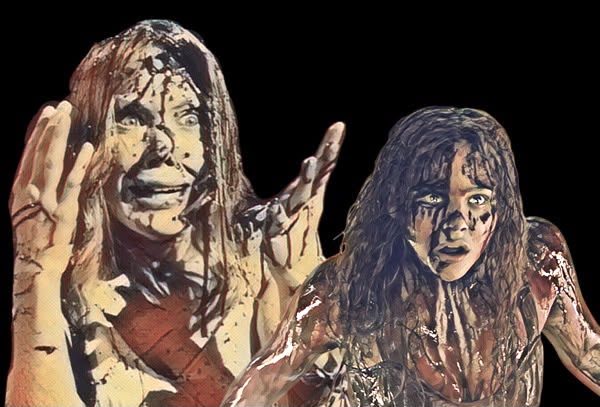
There is something of Carrie in every girl who realizes that what others consider weakness can become a threat. Even Eleven, from Stranger Things, belongs to that lineage: a girl kept in isolation, raised under control, initially unable to understand the extent of her own powers, and feared once she finally uses them. The very image of an apparently fragile, blood-covered teenage girl capable of moving objects with her mind has become an instantly recognizable visual language.
Why Mike Flanagan Is the Right Person
Flanagan makes sense as the person to revisit this legacy because he has never treated horror merely as an exercise in delivering scares. In The Haunting of Hill House, Midnight Mass, and The Fall of the House of Usher, ghosts, monsters, and deaths are almost always manifestations of something already consuming his characters from within: grief, guilt, faith, addiction, ambition, or family wounds.
His affinity with Stephen King is even more evident. Flanagan directed Gerald’s Game, Doctor Sleep, and The Life of Chuck, understanding that in King’s strongest stories, the supernatural horror usually arrives after a long coexistence with profoundly human horrors. He does not adapt King simply by reproducing the most famous situations from the books, but by searching for the emotional wound that sustains each of them.
That is precisely why Flanagan seems such a good choice to rescue Carrie. Few contemporary directors have demonstrated the same ability to enter familiar stories without treating them as untouchable relics or simple opportunities for commercial exploitation. He respects the original text, but does not limit himself to recreating it; he looks for what is still alive inside it and asks how that pain manifests itself in the present.
In Doctor Sleep, he managed to engage simultaneously with Stephen King’s novel and Stanley Kubrick’s film, two works that did not always see The Shining in the same way. In Gerald’s Game, he transformed a book long considered difficult to adapt into an intimate story about abuse, memory, and survival. Flanagan does not copy King. He reads him.
He is also a director who rarely confuses suffering with spectacle. His characters may be surrounded by ghosts, haunted houses, religious fanatics, and destroyed families, but the horror never exists merely to lead to the next scare. He is interested in what happens to a person before, during, and after the violence, in what they carry, what they attempt to hide, and how a family or a community participates in their destruction.
That sensitivity is essential to Carrie, a story frequently reduced to the image of a girl covered in blood, even though its true tragedy lies in everything that was done to her long before the bucket fell. The telekinesis is extraordinary, but the humiliation is ordinary. The girl who can move objects with her mind is also a teenager who does not understand why she is bleeding, has no tools to defend herself, and has been raised to feel ashamed of existing.
Her powers do not create her rage; they merely provide a terrifying way to express it. Before Carrie destroys the prom, many people participate in destroying her, some through cruelty, others through cowardice, and several simply because they could have intervened and chose to watch instead. Flanagan often observes wounded characters with compassion without automatically absolving them of everything they do, and Carrie requires exactly that balance.
She is a victim, but she also becomes responsible for terrible destruction; she inspires sympathy, fear, sadness, and horror at the same time. In the wrong hands, she could be reduced to a monster, a martyr, or a symbol of revenge. Flanagan tends to resist such easy answers. He understands that the most enduring horror emerges when we can still recognize someone’s humanity at the very moment when we can no longer justify their actions.
Flanagan also knows two territories that are essential to understanding Carrie White: family horror and religious fanaticism. He knows that a house can be more terrifying than any monster and that faith, when transformed into an instrument of power, can justify devastating forms of cruelty. At the same time, as he demonstrated in Midnight Mass, he does not need to ridicule religion to denounce those who use it to control, exclude, and punish.
This increases the possibility that Margaret White will cease to be only a frightening caricature and emerge as something even more disturbing: a mother capable of calling abuse protection and violence love. The horror lies in the way she constructs a closed system in which every reaction from her daughter confirms her guilt. If Carrie obeys, she must continue to be purified; if she questions her mother, she proves that she has been consumed by sin; if she manifests her powers, she becomes the evidence that Margaret was right all along.
Bullying in the Age of Social Media
The new series updates this process without abandoning the essence of the book. In this version, Carrie has spent her entire life hidden at home with her mother, until the sudden death of her father forces her to enter a public school for the first time. The shock would be violent in any era, but it becomes even more brutal in a world where humiliation does not end when the bell rings and the students go home.
Carrie will become the center of a bullying scandal that spreads across social media, turning her pain into a video, a comment, a joke, and shareable content. Teenage cruelty was not created by the internet, but the internet has given it a permanent audience, one that is incapable of forgetting or allowing a victim to escape the worst image of herself.
That may be the element that truly justifies another version. Carrie has always been destroyed by the gaze of others, but now that gaze is continuous. In 1976, the girl humiliated in the locker room had to face her classmates who witnessed her first period. In 2026, she must also face those who watch, share, comment, edit, and transform the violence into entertainment.
Bullying no longer depends on physical proximity, and the victim can continue to be attacked by people who have never entered her school and do not even know her name. What might once have become a painful memory now circulates as a permanent record, recovered by algorithms, reposted by strangers, and repeatedly returned to the person who tried to survive it.
Social media also changes the responsibility of those who watch. In the original story, there were witnesses. Now there are viewers, followers, and participants capable of amplifying an attack with an apparently insignificant gesture. Sharing is not the same as throwing the object, recording is not the same as initiating the assault, and commenting is not the same as cornering someone in a locker room. Even so, every action helps transform someone’s pain into spectacle.
Carrie’s tragedy has always begun with a group believing that it could hurt her without facing any consequences. The internet simply makes that group potentially infinite.
Religious Fanaticism Did Not Remain in the Past
Margaret White’s religious fanaticism does not belong only to 1974, either. Her violence does not arise simply from faith, but from transforming religion into an instrument of control. Margaret teaches her daughter that the female body is a source of sin, that desire demands punishment, and that every attempt at independence represents a moral threat. She does not need to understand Carrie; she only needs to ensure that Carrie fears herself.
Today, that control can assume a more modern appearance, circulating through videos, online communities, discourses about family protection, and profiles that promise to teach girls how they should behave, dress, desire, and obey. The vocabulary changes, but the mechanism remains recognizable: a young woman’s body is treated as contested territory, while her curiosity, sexuality, and independence are presented as signs of corruption.
Margaret is not frightening because she believes in God. She is frightening because she uses God to justify abuse and calls her own cruelty love. This is a distinction Flanagan can explore better than many filmmakers, because his work has already demonstrated an interest in faith as a genuine human experience and in fanaticism as the appropriation of faith by those who wish to control others.
We All Know the Bucket Will Fall
The teaser makes it clear that Flanagan has no intention of hiding the story’s most famous outcome. There is the prom, the crown, the dress, and the blood, because no adaptation of Carrie could pretend that the audience does not know what will happen. The suspense, therefore, does not lie only in waiting for the bucket to fall, but in understanding how each character contributed to making that night inevitable.
The series will follow the small, everyday decisions that accumulate until the tragedy, asking whether we are witnessing the creation of a victim, a heroine, a monster, or something far more complicated. In a story this familiar, the surprise may not lie in the ending but in the possibility of recognizing responsibilities and wounds that previous versions did not have the time to investigate.
Flanagan also appears interested in placing Carrie within a larger universe. When King published the novel in 1974, the connections that would eventually unite so many of his books had not yet been fully established. Today, however, it is impossible to ignore that Carrie belongs to a world inhabited by other children and adults whose abilities defy rational explanation. The director has suggested that, in another place and among different people, her powers might receive a name familiar to King’s readers: the shining.
The season has been designed to offer a complete story, but Flanagan has already acknowledged that the universe could continue beyond the eight episodes. That does not necessarily mean prolonging Carrie’s tragedy, but exploring its consequences, the investigations surrounding it, and the existence of other people with similar abilities.
The first reactions to the two episodes screened in advance were positive, particularly praising Summer H. Howell and the way the adaptation addresses teenage anxiety and cycles of violence in the digital age. Viewers also reported being surprised, an important indication for a story whose ending has become part of popular culture and which would appear to have no secrets left.
Naturally, there is still a risk in expanding such a concentrated narrative into a series longer than the story requires. Carrie is a relatively short novel, and contemporary television has repeatedly demonstrated that expanding characters does not necessarily mean deepening them. The series will also need to resist the temptation to explain too much of a story whose power has always rested in discomfort, ambiguity, and the realization that no one leaves that school entirely innocent.
Even so, Mike Flanagan may be one of the few directors capable not only of justifying Carrie’s return but of finding something new inside a story that appeared to have been exhausted. Not because he can surpass Brian De Palma or replace Sissy Spacek, goals he correctly does not seem to be pursuing, but because he knows how to adapt without imitating, update without erasing, and look at wounded characters without reducing them to the trauma they carry.
Flanagan understands that Carrie White was never merely the girl covered in blood. She is the child raised to fear her own body, the teenager chosen as a target because no one believes there will be consequences, and the victim who, when she finally acquires the power to fight back, can no longer distinguish justice from destruction.
Fifty years after Brian De Palma’s film and more than half a century after the publication of Stephen King’s novel, the bucket remains suspended above Carrie’s head. What has changed is the size of the audience waiting for it to fall — and the number of people prepared to film it.
Descubra mais sobre
Assine para receber nossas notícias mais recentes por e-mail.

