
It is almost impossible to talk about Sylvia Plath without her death eventually entering the conversation. Perhaps that is precisely part of the problem. More than six decades after her suicide at the age of 30, the tragedy still competes for space with the extraordinary writer she was. Her turbulent relationship with poet Ted Hughes, their separation, her depression, and the final months of her life helped create a mythology around her that has often turned everything she wrote into a premonition of her death. Yet reducing Sylvia Plath to the young woman who died so tragically means losing sight of an author who wrote about death, identity, marriage, motherhood, ambition, and suffering because, above all, she was trying to understand how to live.
It is this woman, rather than simply the tragic figure constructed by posterity, who is returning to the spotlight with a new adaptation of The Bell Jar, Plath’s only novel. Sarah Polley is writing and directing the film, currently in production, and has chosen a leading actress who immediately sparked curiosity: Billie Eilish will play Esther Greenwood, in her first starring role in a feature film. Carey Mulligan will play Esther’s mother, while Connor Storrie has also joined the cast. No release date has yet been announced.

At first glance, casting Billie may seem like a bold choice, particularly because we are talking about one of the most complex young women in modern American literature being played by one of the most famous singers in the world. The more you think about it, however, the less random the choice seems.
Sylvia Plath was born in 1932 and, from a very young age, was brilliant, competitive, fiercely ambitious and determined to become a writer at a time when female ambition still had to negotiate constantly with marriage, motherhood and expectations about what women were supposed to want. A student at Smith College, she went to New York in 1953, at the age of 20, after being selected as a guest editor at Mademoiselle. In theory, it was exactly the kind of opportunity a young woman like her should have celebrated, almost a confirmation that the extraordinary future she had imagined for herself was beginning to happen.
In reality, during that same summer, Plath entered a severe depressive episode, attempted suicide, was hospitalized and underwent electroconvulsive therapy, experiences she would later recreate in fictional form in The Bell Jar. After graduating, she went to Cambridge on a Fulbright scholarship, met British poet Ted Hughes, and married him in 1956. They had two children and shared an intellectually intense, passionate, and turbulent relationship. Their marriage collapsed amid Hughes’ infidelity, and they separated in 1962. A few months later, on February 11, 1963, Sylvia died by suicide in London.
That is the best-known part of her story, but it should certainly not be the whole of it. Plath had already published poetry during her lifetime, including The Colossus, but her reputation grew dramatically after her death, particularly with Ariel, published in 1965. Poems such as Lady Lazarus, Daddy, and Ariel established a fierce, uncomfortable, and deeply original voice capable of transforming the body, motherhood, marriage, anger, desire, death, and rebirth into powerful, often violent imagery. Frequently associated with the so-called confessional poets, Plath is more complicated than that definition suggests, because although her poetry begins in the personal, it transforms experience artistically. It is not simply a diary turned into verse.
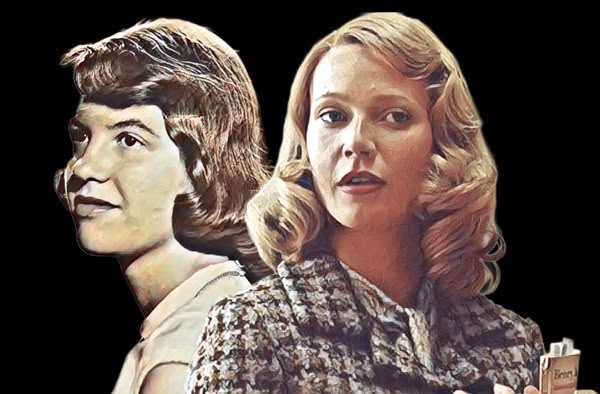
Perhaps that is also why separating her work from her biography has always been so difficult. Hollywood has already tried to tell her story directly in Sylvia, the 2003 film starring Gwyneth Paltrow as Plath and Daniel Craig as Ted Hughes. Directed by Christine Jeffs, the film focused primarily on their relationship and the emotional downward spiral that preceded Plath’s death. Paltrow gave a delicate performance, but the very choice of focus reinforced a recurring problem in the way Sylvia is remembered: once again, the woman who died took up more space than the writer who created.
The Bell Jar offers a different, and perhaps more interesting, way into her story.
Originally published in England in January 1963, only weeks before Plath’s death and under the pseudonym Victoria Lucas, the novel follows Esther Greenwood, an exceptionally talented young college student who spends a summer in New York working at a women’s magazine. Everything should be perfect. She has achieved something she wanted, she is surrounded by opportunities, and she seems to be entering adulthood with an extraordinary advantage over other women her age. And yet she cannot feel the happiness that should supposedly come with those achievements.
Perhaps that “should” is the novel’s real antagonist. Esther should enjoy New York, should want a good marriage, should choose a career, should want children, should be sexually respectable without ceasing to be desirable, should be brilliant without intimidating anyone, and, above all, should know exactly which of the many possible lives available to her she wants to live. As she tries to find an answer, she feels every one of those possibilities beginning to close in around her.
The famous bell jar of the title represents precisely that sensation of living as though trapped beneath glass, breathing the same poisoned air and separated from the world even while apparently participating in it. After returning home and suffering a professional rejection, Esther begins to unravel. She cannot sleep, read, or write, undergoes traumatic psychiatric treatment, attempts suicide, and is hospitalized. Slowly, she begins to recover under the care of a female doctor who, for the first time, seems to treat her as someone capable of participating in decisions about her own existence. The story is fiction, but its parallels with what Sylvia herself experienced in 1953 are unmistakable.
That is also where the lasting importance of The Bell Jar lies. It is not simply a novel about depression, but about a depressed woman living inside a society that was itself suffocating for women who wanted more than one possible version of life.
One of the novel’s most famous images helps explain why it still feels so current. Esther imagines her life as a fig tree, with each fig representing a different future: career, marriage, children, literature, travel, love. Choosing one means giving up the others, and as she hesitates, the figs begin to wither in front of her. More than 60 years later, it is difficult to think of a metaphor that has aged less, particularly for women who were taught that they could have everything, only to discover that the problem was never merely having opportunities but deciding who they wanted to be without disappointing every expectation built around them.

The novel also contains acidic humor, cruelty, and contradiction, and Esther does not always want to be likable. That matters. She can be selfish, envious, snobbish, and unsettling, while also reflecting some of the prejudices of her time. Perhaps that is exactly why she has survived as a character. Plath allowed a young woman to be intellectually ambitious, sexually curious, furious, unwell, and unpleasant without turning every one of those characteristics into a moral lesson.
Adapting all of this for the screen is difficult. The Bell Jar was made into a film in 1979, directed by Larry Peerce and starring Marilyn Hassett, but the adaptation never achieved anything close to the cultural significance of the novel. Other projects followed but never materialized, including a version that at one stage had Kirsten Dunst attached to direct and Dakota Fanning set to play Esther. Perhaps the problem lies in the very nature of the book, because almost everything that truly matters is happening inside Esther’s mind. Translating her interior language into images without reducing the story to a conventional narrative about mental illness is the central challenge.
And this is precisely where Sarah Polley becomes such a promising choice. She has never been a filmmaker interested only in what happens, but rather in what is unfolding emotionally when very little seems to be happening on the surface. In Away from Her, she followed a marriage transformed by Alzheimer’s disease and managed to explore memory, love, fidelity, and loss without reducing her characters to ideas. In Take This Waltz, she looked at desire, marriage, and female dissatisfaction without offering comfortable answers. In Stories We Tell, she turned the camera on her own family to question memory, narrative, and whether a single true version of our lives can ever really exist.
Then came Women Talking, perhaps the strongest argument for why Polley is one of the most interesting filmmakers to enter Esther Greenwood’s mind. A story about women forced to decide whether to stay, leave, or confront the structure that had abused them could easily have become little more than a statement. Instead, Polley turned it into a reflection on autonomy, faith, fear, desire, and choice. The film was nominated for Best Picture and earned her the Academy Award for Best Adapted Screenplay. The Bell Jar will be her first feature as a director since then.
And then there is Billie Eilish.
It is worth remembering that this will not technically be her first acting role. Billie already surprised audiences with an appearance in Swarm in 2023, playing Eva, a cult leader, but this will be her first time carrying a feature film as its protagonist, which comes with an entirely different responsibility. Acting is also not completely foreign to the world in which she grew up. Her mother, Maggie Baird, is an actress, screenwriter, and teacher, while her father, Patrick O’Connell, has also worked as an actor. Billie and Finneas grew up in a home where performance, music, and creativity were part of everyday life.
Even so, it is the artistic connection with Esther that makes the casting truly interesting. There is no reason to manufacture a biographical or literary bond between Billie and Sylvia Plath that has never actually been established. The strongest connection lies elsewhere, in the questions that run through their work and public personas.
Since adolescence, Billie has built an important part of her work around the discomfort of existing inside her own skin, the difficulty of recognizing herself in the image other people have created, the relationship between body and gaze, depression, desire, loneliness, and the strange distance between achieving what you once wanted and realizing that success does not answer the most important questions. When speaking about fame, her body, and the expectations imposed on women, she has repeatedly returned to the conflict between what she feels and what the world expects to see.
It is impossible not to think of What Was I Made For?, not because the song has any direct connection to Sylvia Plath, but because its central question could easily belong to Esther Greenwood. What was I made for? Which of these lives is mine? Whom am I supposed to satisfy? Who am I once I strip away everything other people expect me to be?
There is another interesting irony in the casting. Esther arrives in New York because she is an exceptionally talented young woman who has achieved an extraordinary opportunity too early in life to know exactly what to do with it. Billie Eilish became globally famous while she was still a teenager. One belongs to the 1950s, when an exceptional young woman had to fight for room to exist; the other belongs to an era in which a young woman can conquer the world and discover that being seen by everyone can itself become another form of confinement.
That does not turn Billie into Sylvia, and making that psychological or biographical equivalence would be a mistake. Esther is not simply Sylvia Plath either. It is precisely in that distance, between personal experience, fiction, and performance, that the film may find something new.
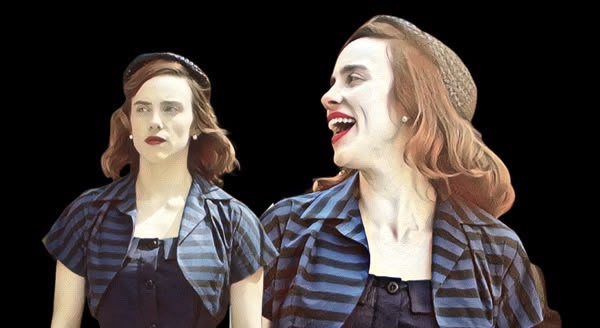
The first images from the production show Billie transformed for the 1950s, with reddish-brown hair and period clothes, makeup, and styling. The film recreates the New York that welcomes Esther at the beginning of the novel, the city filled with promise that gradually becomes part of her alienation. Carey Mulligan playing Esther’s mother adds another promising layer to the project, particularly because she is an actress especially skilled at portraying characters who conceal enormous emotional conflicts beneath an appearance of control.
The costumes, however, are unlikely to be Billie Eilish’s real test. Her challenge will be to find Esther’s quiet violence, the suffering of a character whose breakdown often takes place in that terrible space between appearing functional to everyone watching from the outside and realizing that internally something has stopped working. Billie already knows how to use silence, discomfort, gaze, and stillness as a performer, while Sarah Polley knows how to film women thinking, hesitating, and trying to find language for experiences they cannot always explain.
If they can trust each other, perhaps that is where the combination so many previous attempts to adapt The Bell Jar have been looking for can finally emerge. There is, however, an even greater responsibility: Sylvia Plath cannot return to the screen simply to die all over again.
Perhaps the best possible adaptation of her novel will be one capable of remembering that The Bell Jar does not end in death. Esther survives, even though she understands that the bell jar may descend again. There is no miraculous cure and no guarantee of happiness, only the possibility of continuing to live. For a writer whose life has so often been read backwards, beginning with its ending, that may finally be the fairest way to look at her again.
Descubra mais sobre
Assine para receber nossas notícias mais recentes por e-mail.

