
As published on Caderno B+
At first glance, Ted Lasso is a series about football. After a few episodes, we understand that the sport is merely the playing field chosen to explore mental health, friendship, leadership, masculinity and everything that happens when wounded people try to help one another. But when we look at Ted’s journey from the beginning, perhaps an even more central story emerges: that of a man trying to learn how to be a father without repeating the pain he inherited from his own.
More than football, Ted Lasso has shown us different ways of being a father and of carrying what our fathers gave us. Jamie Tartt grew up enduring the violence and humiliation of an abusive father. Rebecca had to come to terms with a womanising and emotionally absent father. Nate spent much of his life trying to earn the approval of a demanding, silent man who seemed incapable of expressing pride in his son. That absence fed Nate’s insecurity and led him through the most painful character arc in the series.
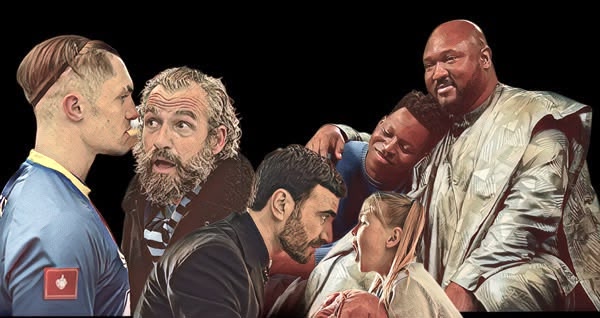
Sam Obisanya found in Ola a loving and present father, capable of guiding him without trying to control his choices. Higgins, so often relegated to comic relief, is also one of the most affectionate and dependable fathers in the story. Roy Kent has become a kind of father figure to his niece Phoebe, who is being raised by his single sister. He offers the girl the presence, protection and attention he does not always know how to give the adults in his life.
And at the centre of everything is Ted: the son of a man who died far too soon and the father of a boy from whom he fears he may be equally absent.
Ted is introduced as someone tirelessly willing to care for others. He listens, observes, forgives and finds words of encouragement even for people who despise him. At first, his positivity seemed almost innate, as though he had simply been born more generous, patient and optimistic than the rest of us.
But when we learn about his relationship with his father, we understand that the light also concealed a wound.
Ted was 16 when his father died by suicide. The secret emerges in the second season, during his therapy sessions with Dr Sharon, and changes our understanding of everything we had previously seen. Ted does not try to save people simply because he is kind. He learnt at a very young age what can happen when someone suffers in silence and no one manages to reach them in time.
His devotion to others comes, at least partly, from a private promise: never to allow someone close to him to feel as alone as his father probably did.
There is beauty in that, but also a trap. Ted becomes so skilled at caring for other people’s problems that he takes far too long to acknowledge his own. He helps players, colleagues and even opponents while enduring panic attacks, the end of his marriage and the distance from his son behind a smile that does not always reflect what he is feeling.
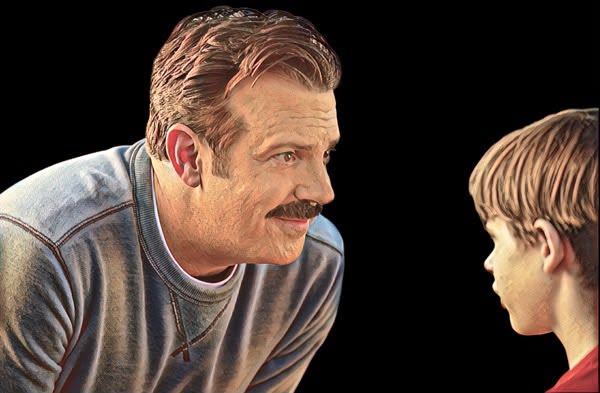
I would therefore not describe Ted as an exemplary father because he never fails. For much of the series, he lives on another continent and knows how much his absence costs Henry. His greatest quality as a father is precisely that he does not pretend the distance is unimportant. He tries to listen to his son, recognises his sadness and eventually accepts that professional success can no longer compensate for everything he is missing.
At the end of the third season, Ted is at the height of his success. He has earned the supporters’ respect, transformed AFC Richmond and built a chosen family in England that loves him deeply. Even so, he chooses to leave. Not because he has failed, but because he understands that no victory could return the years he might lose with Henry.
The final image of that chapter does not show Ted lifting a trophy. It shows him on the touchline in Kansas, coaching his son’s team. His decision to return closed what appeared to be the final season and reaffirmed that, for Ted, the greatest measure of success had never truly been football.
The fourth season, however, introduces an even more interesting challenge. Ted is once again close to Henry, working away from football and trying to help his son become the best version of himself. When he is invited to return to Richmond and coach its new women’s team, his first reaction is hesitation. He fears that accepting the job would mean repeating the absence he had tried to correct.
It is his mother, Dottie, who offers a different perspective: it is also important for a boy to see his father doing something he loves.
The remark reframes the entire question. Being a good father should not require Ted to disappear as an individual, abandon his vocation or turn his presence into a permanent sacrifice. This new path will be built with Henry rather than away from him. By the end of the first episode, Ted is considering moving to London with his son and Michelle, bringing family and work together in a way that once seemed impossible.
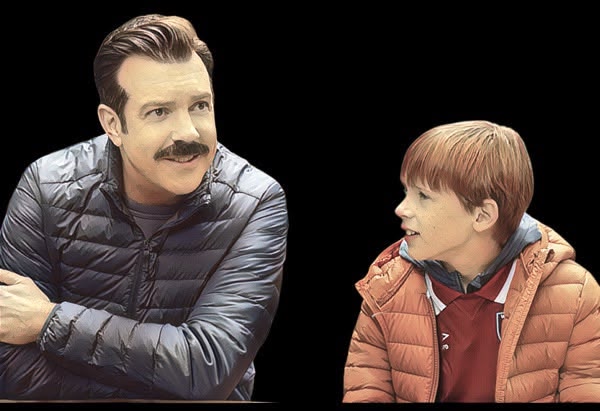
Perhaps this is the most difficult step for someone whose life was marked by the loss of his father. Ted spent years believing that love meant remaining constantly available to save other people. First, he had to learn that he could not save everyone. Then, that he needed to be present for his son. Now, he is beginning to discover that being present does not mean giving up his own life.
Ted’s fatherhood is not built around authority. He does not need to be the man who has every answer, conceals his sadness or overcomes every difficulty alone. On the contrary, his greatest strength appears when he admits that he is afraid, seeks help, apologises and changes direction.
He also gives Henry something his own father was unable to leave him: the possibility of speaking about pain before it becomes silence.
That may be why Ted Lasso is such a moving figure on Father’s Day. Not because he represents a perfect model of fatherhood, but because he shows us that being a father can also be an act of repair.
Ted cannot change what happened to his father or erase the impact of that loss. He can, however, interrupt the repetition. He can return. He can stay.
And this time, he can take his son with him.
Happy Father’s Day!

Descubra mais sobre
Assine para receber nossas notícias mais recentes por e-mail.

